A sigmoidoscope is an endoscope used to examine the rectum and the sigmoid colon — the lower left part of the large bowel. It is passed through the anus to inspect the bowel lining for inflammation, polyps, bleeding sources and tumours, and it provides the working route for biopsies and polyp removal. Unlike a full colonoscopy, which examines the entire colon, sigmoidoscopy is limited to the lower bowel, which makes it quicker, often needs only limited or no bowel preparation, and can be done without sedation. For buyers, the split is between the simple rigid instrument and the flexible video scope, and the choice drives everything else.
This guide covers how each type views the bowel, the specifications to compare, the standards that apply in the UK, and the reprocessing and consumable costs that decide long-term value.
Rigid and Flexible Sigmoidoscopes
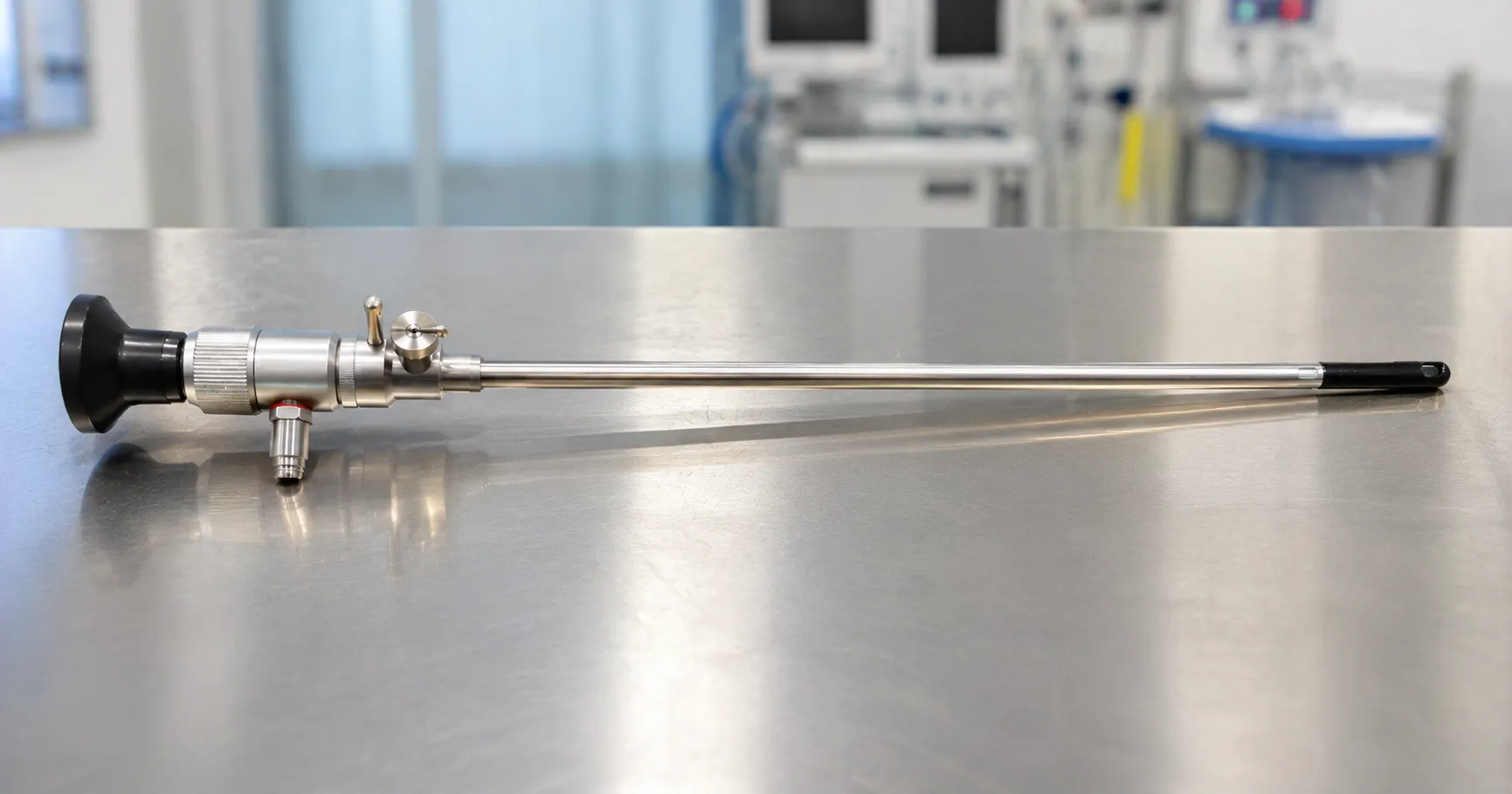
The rigid sigmoidoscope is a straight tube, often disposable clear plastic or reusable metal, with a light source and an obturator for insertion. It reaches the rectum and lower sigmoid, is used for quick assessment of rectal bleeding, haemorrhoids and low lesions, and needs little preparation. It is inexpensive, simple and common in outpatient and clinic settings. The flexible sigmoidoscope is a steerable video or fibreoptic endoscope that follows the bends of the sigmoid colon and reaches considerably further than a rigid instrument, giving a far better view of the mucosa and a working channel for biopsy and polypectomy.
Proctoscopes are a related, even shorter instrument for the anal canal and lowest rectum; they are not sigmoidoscopes but often sit alongside them on the same trolley for lower-bowel assessment.
How the Bowel Is Viewed
A rigid sigmoidoscope gives a direct line-of-sight view down the tube, with air insufflation to open the bowel and a light source at the eyepiece end or built into a disposable unit. A flexible sigmoidoscope works like other flexible endoscopes: illumination through fibre-optic light guides, an image returned either through a coherent fibre bundle to an eyepiece or, in modern systems, from a digital chip at the tip to a processor and monitor. The tip deflects under control at the handle, air or CO2 insufflation distends the bowel, and a water jet and suction keep the view clear. Digital video scopes give a sharper image, allow several viewers and support capture for the record and for screening documentation.
Key Specifications to Compare
-
Working length — how far along the sigmoid the scope reaches, the main functional difference between rigid and flexible.
-
Insertion tube diameter, affecting patient comfort and manoeuvrability.
-
Working-channel size for suction and for biopsy forceps and snares.
-
Tip deflection angles on flexible scopes, determining how well the bends are negotiated.
-
Image type and quality — fibreoptic or digital, resolution, field of view and illumination.
-
Insufflation option — air or CO2, with CO2 more comfortable for the patient.
-
Processor compatibility — connector, light source and monitor for flexible video systems.
Standards and Regulation
A sigmoidoscope on the UK market needs UKCA or CE marking and registration with the MHRA. Flexible video systems follow IEC 60601-1 for electrical safety and essential performance, with IEC 60601-2-18 for endoscopic equipment, while any electrosurgical accessory for polypectomy brings IEC 60601-2-2 into scope. Reprocessing of reusable flexible scopes is validated against the BS EN ISO 15883 washer-disinfector series and ISO 17664 for manufacturer cleaning and sterilisation instructions. Bowel-cancer screening and lower-bowel investigation pathways are informed by guidance from NICE and delivered through NHS screening programmes. Request the declaration of conformity and full instructions for use before purchase.
Decontamination and Single-Use Considerations
Reusable flexible sigmoidoscopes are heat-sensitive and cannot be autoclaved; they run the full flexible-endoscope pathway: bedside cleaning, a leak test, manual brushing of the channel, then machine high-level disinfection or low-temperature sterilisation, forced-air drying and traceable storage. Because these scopes contact a heavily contaminated site, reprocessing quality is critical and every cycle should be traceable to the patient. Rigid metal sigmoidoscopes are more robust and tolerate steam sterilisation, while disposable rigid and proctoscope units remove reprocessing entirely for those low-level examinations. Single-use flexible scopes are also emerging for settings without on-site reprocessing, trading a per-case cost for the removal of that workload.
Use Across Care Settings
Rigid sigmoidoscopes and proctoscopes are common in GP practices, outpatient clinics and surgical assessment units for quick, low-level checks with minimal preparation. Flexible sigmoidoscopy sits in endoscopy units and bowel-screening services, where a full reprocessing pathway and video stack support higher throughput and biopsy work. The setting decides the specification: a clinic may only need robust reusable or disposable rigid instruments, while a screening unit needs a fleet of flexible video scopes, processors and reprocessing capacity. Veterinary practices also use flexible endoscopy for lower-bowel examination in animals.
Routine Checks, Insufflation and Integration
Flexible sigmoidoscopes need routine checks before use: a leak test, a working-channel patency and suction check, confirmation of full tip deflection, and a white balance so the mucosa reads in accurate colour. The insufflation and water-jet functions are checked so the bowel distends and the view stays clear, and CO2 delivery is verified where it is used. Rigid instruments need only inspection of the light source and optics. Digital video systems can feed still images and video into reporting and screening record systems, which matters in a bowel-screening service that must document findings, so confirm the processor's outputs and integration before buying. Light sources and processors follow the manufacturer's planned maintenance with periodic electrical-safety and light-output checks, and a per-scope maintenance log supports uptime and traceability.
Consumables, Servicing and Total Cost of Ownership
Rigid disposable sigmoidoscopes and proctoscopes are a straightforward per-use consumable with no reprocessing. Flexible systems carry the larger long-term cost: biopsy forceps, snares, single-use valves and caps, CO2 and cleaning consumables, plus reprocessing labour, disinfectant and periodic repairs to bending sections and working channels. Angulation systems and channel liners are common wear items, so repair turnaround and a clear spares list protect uptime in a screening service that cannot afford downtime. Build a cost-per-examination model across your expected volume — capital, warranty, repairs, reprocessing and consumables for a flexible platform against the simple per-use cost of disposable rigid instruments — rather than comparing purchase prices. Our buyer resources help structure that comparison, and suppliers can be reached through MediGear to verify current specifications.
Procurement Checklist
-
Confirm UKCA/CE marking, MHRA registration and a current declaration of conformity.
-
Decide rigid or flexible, and reusable or disposable, for your setting and workload.
-
Check working length, insertion diameter, channel size and deflection against your needs.
-
Verify processor, light source and connector compatibility for flexible video scopes.
-
For reusables, confirm the reprocessing pathway and drying against ISO 15883/17664.
-
Prefer CO2 insufflation where patient comfort and throughput matter.
-
Cost consumables, reprocessing and repairs across caseload, plus warranty and spares.
Conclusion
A sigmoidoscope can be as simple as a disposable rigid tube or as involved as a flexible video system with its own reprocessing and consumable chain, and the right choice depends entirely on the setting and workload. Check working length, channel size, imaging, insufflation and standards, then model cost per examination before you buy. Comparing verified specifications from reputable suppliers through MediGear helps a service match the right instrument to the right clinic and buy well.
Disclaimer
This article is for informational purposes only. It is published by MediGear (medigear.uk) for general information and procurement guidance, and is not clinical, diagnostic, treatment, technical, engineering, legal or regulatory advice, nor a product endorsement, guarantee or substitute for professional assessment. MediGear does not provide medical consultations. Buyers should consult their clinical, biomedical, estates and regulatory contacts, and the manufacturer's documentation, and independently verify all specifications, certifications, compatibility and suitability before purchase. Specifications, certifications and availability are correct at the time of publication and may change without notice. MediGear is a medical-equipment distributor and does not sell medicines or pharmaceutical products.