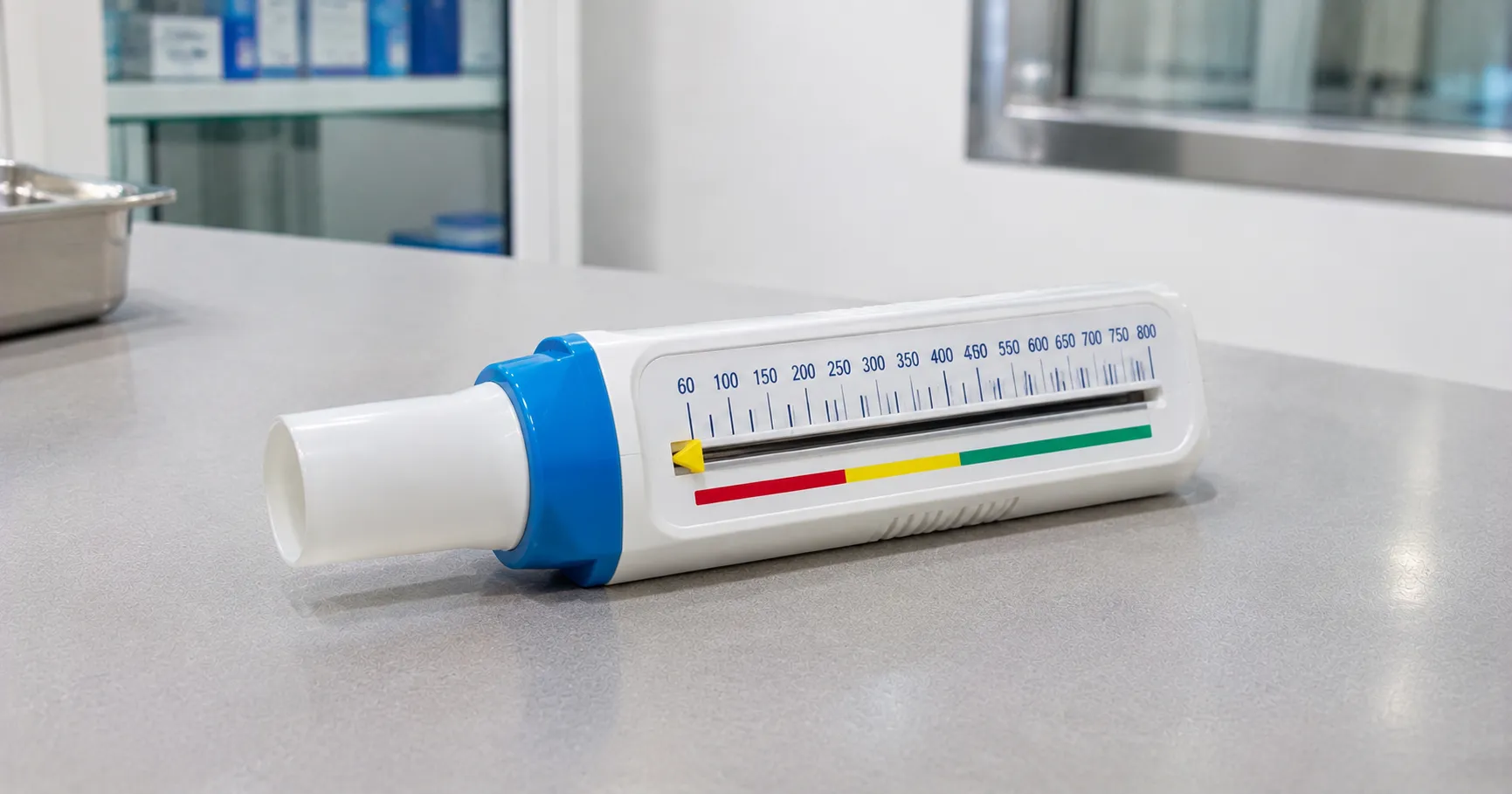
Biometric screening devices are the instruments used in primary and occupational health to capture a person's core physiological measurements — blood pressure, height and weight, body mass index, waist circumference, body composition, and point-of-care markers such as blood glucose and cholesterol. Together they build a snapshot of cardiovascular and metabolic risk in a single short appointment. Some are stand-alone instruments; others are combined into a screening station or self-service kiosk.
For a procurement lead fitting out an NHS Health Check service, a workplace wellbeing programme or a GP practice, the questions are about accuracy, validation, throughput, hygiene and how the numbers reach the record. Buy well and a screening round runs smoothly; buy poorly and you inherit calibration headaches and questionable data.
What these devices measure and why
Each measurement targets a recognised risk factor. Blood pressure flags hypertension; a validated automated sphygmomanometer with the correct cuff size is the workhorse. Height and weight feed body mass index, so a stable stadiometer and a class-approved scale matter. Waist circumference adds central-adiposity risk. Point-of-care analysers give a capillary blood glucose or a lipid profile from a finger-prick sample in minutes. Body-composition analysers use bioelectrical impedance to estimate fat and muscle proportion. The value of a screen depends on every one of these being measured accurately and consistently, because a risk score is only as good as its inputs.
Stand-alone instruments versus integrated stations
Stand-alone devices
Buying separate validated devices — a blood pressure monitor, a scale, a stadiometer, a glucose meter — gives flexibility and lets you replace one item without discarding the set. It suits clinics that already own some equipment and want to fill gaps.
Integrated screening stations and kiosks
A combined station or self-service kiosk bundles several measurements, prints or uploads a summary, and speeds throughput at events and in workplaces. It reduces staff time per person but concentrates cost and single points of failure, and each built-in measurement still needs its own validation and calibration. Weigh the convenience of one device against the resilience of several independent ones.
Accuracy, validation and standards
Accuracy is non-negotiable in screening. Blood pressure monitors should be independently validated to a recognised protocol, not merely CE marked. Weighing scales used for a health assessment should meet the appropriate class of the non-automatic weighing instruments requirements so the reading is legally traceable. Point-of-care analysers must be quality-controlled and, where relevant, enrolled in an external quality-assurance scheme. Every device is a medical device requiring valid UKCA or CE marking, and mains-powered instruments follow the IEC 60601-1 family for electrical safety. The MHRA regulates these devices, and screening programme standards are set out on GOV.UK with clinical thresholds from NICE. Ask for validation evidence, not just a conformity mark.
Key specifications a buyer must check
For blood pressure, check the range of cuff sizes, including large and small, and whether the monitor detects irregular rhythms. For scales, check capacity, graduation, class and whether they hold for bariatric weights. Confirm the stadiometer's range and stability. For point-of-care analysers, look at sample volume, test menu, time to result, and consumable shelf life. Across all devices, examine how results are captured — manual entry invites error, so connectivity to the clinical record or screening software is a strong advantage. Battery and mains options matter for outreach events. A device that cannot export cleanly turns a fast screen into slow data entry.
Calibration, quality control and maintenance
Screening data is only trustworthy if the instruments stay accurate. Blood pressure monitors need periodic verification against a reference. Scales require calibration checks and, where legally used, formal verification. Point-of-care analysers demand daily or per-batch internal quality control and participation in external quality assurance. Keep a calibration log for every device and set a planned-maintenance schedule. Build these obligations into the purchase decision, because a screening programme that skips quality control produces numbers no clinician will act on with confidence.
Connectivity, data capture and reporting
A screen produces value only when its numbers reach the right place cleanly. Manual transcription is slow and a common source of error, so favour devices that export directly to the clinical record, screening software or a secure results summary the person can take away. Check the export format, whether the device connects by cable, Bluetooth or network, and how a batch of results from an event day is reconciled against patient identity. Where a kiosk stores or transmits personal data, confirm it meets information-governance and data-protection requirements before deployment, including how records are secured and retained. Clean, automatic data flow also makes it far easier to audit a programme, follow up abnormal results and report outcomes to commissioners, all of which are part of running a screening service well rather than simply owning the hardware.
Decontamination, single-use and hygiene
High-throughput screening means many people touching the same equipment, so hygiene design matters. Blood pressure cuffs should be wipeable or fitted with single-use sleeves. Lancets for capillary sampling are strictly single-use and require sharps disposal. Test strips and cuvettes are single-use consumables. Scale platforms and stadiometer contact points need routine cleaning. Choose wipe-compatible surfaces and confirm the instructions for use name a disinfectant your infection-control team accepts. Plan sharps bins, gloves and waste handling into any programme that takes blood samples.
Use across care settings
In a GP practice the devices support the NHS Health Check and long-term-condition reviews, favouring durable validated instruments wired into the record. Workplace and occupational-health programmes prize portable stations and kiosks that screen many staff quickly. Pharmacies offer walk-in checks with compact analysers. Community outreach at events needs battery-powered, rugged kit that packs down. Matching the format to the setting — fixed clinic, mobile event or self-service — keeps both cost and reliability sensible, and prevents buying a delicate station for a rough outreach schedule.
What to check before you buy
-
Confirm blood pressure monitors are independently validated and supplied with the cuff sizes you need.
-
Check scales meet the appropriate weighing-instrument class and capacity for your patients.
-
Verify point-of-care analysers support internal quality control and external quality assurance.
-
Confirm every device carries valid UKCA or CE marking and, for mains models, IEC 60601 compliance.
-
Prioritise connectivity so results flow into the record without manual re-entry.
-
Plan single-use consumables, sharps disposal and wipe-compatible surfaces for hygiene.
-
Request calibration and maintenance schedules before committing.
Consumables, total cost of ownership and support
The purchase price is a fraction of the lifetime cost. Point-of-care testing runs on strips, cuvettes, lancets and control materials with real per-test costs and expiry dates that create waste if over-ordered. Cuff sleeves, printer paper and cleaning supplies add up. Factor calibration visits, quality-assurance scheme fees and staff training into the annual figure. Confirm warranty terms, spares availability and the guaranteed supply of matching consumables, since a discontinued strip can strand an analyser. Sourcing devices and consumables from one supplier keeps compatibility and reordering simple — register as a buyer or contact us to plan a screening set.
Conclusion
Biometric screening stands or falls on accurate, validated devices whose results reach the record cleanly and whose consumables you can sustain. Decide between stand-alone instruments and an integrated station for your setting, insist on validation and quality control, and cost the strips and sleeves honestly. MediGear can assemble a screening set matched to your programme so every measurement you capture is one clinicians will trust and act on.
Disclaimer
This article is for informational purposes only. It is published by MediGear (medigear.uk) for general information and procurement guidance, and is not clinical, diagnostic, treatment, technical, engineering, legal or regulatory advice, nor a product endorsement, guarantee or substitute for professional assessment. MediGear does not provide medical consultations. Buyers should consult their clinical, biomedical, estates and regulatory contacts, and the manufacturer's documentation, and independently verify all specifications, certifications, compatibility and suitability before purchase. Specifications, certifications and availability are correct at the time of publication and may change without notice. MediGear is a medical-equipment distributor and does not sell medicines or pharmaceutical products.