Selecting a suction machine starts with matching its flow rate and vacuum level to the job, because a high-flow theatre demand and a gentle ward aspiration are very different requirements met by very different machines. A suction machine, or medical aspirator, generates negative pressure to remove blood, secretions, fluids and debris through a catheter or surgical sucker, and the right choice depends on where it works, how much fluid it must move and whether it draws from a pipeline, a wall point or its own pump. The three things to fix first are the required vacuum and flow, the power source and portability, and the collection capacity and filtration. Set those and the rest of the specification narrows fast.
This guide helps theatre, ward and procurement teams choose suction that suits the clinical setting, and it names the standard a compliant medical aspirator should meet.
Vacuum level and flow rate: sizing to the task
Two figures define a suction machine's capability, and buyers often confuse them. Vacuum level, the negative pressure measured in kilopascals or millimetres of mercury, sets how strongly the unit pulls, while flow rate, in litres per minute, sets how much air and fluid it can move. High-flow theatre suction must clear large volumes quickly during surgery, so it needs both strong vacuum and high flow, whereas gentle oral or nasopharyngeal ward suction and paediatric use need adjustable, regulated vacuum to avoid mucosal trauma. A regulator with a clear gauge is essential so the setting matches the clinical need. Do not buy a single machine for both extremes; specify high-flow units for theatres and adjustable lower-flow units for ward aspiration.
Pipeline, wall-mounted or portable
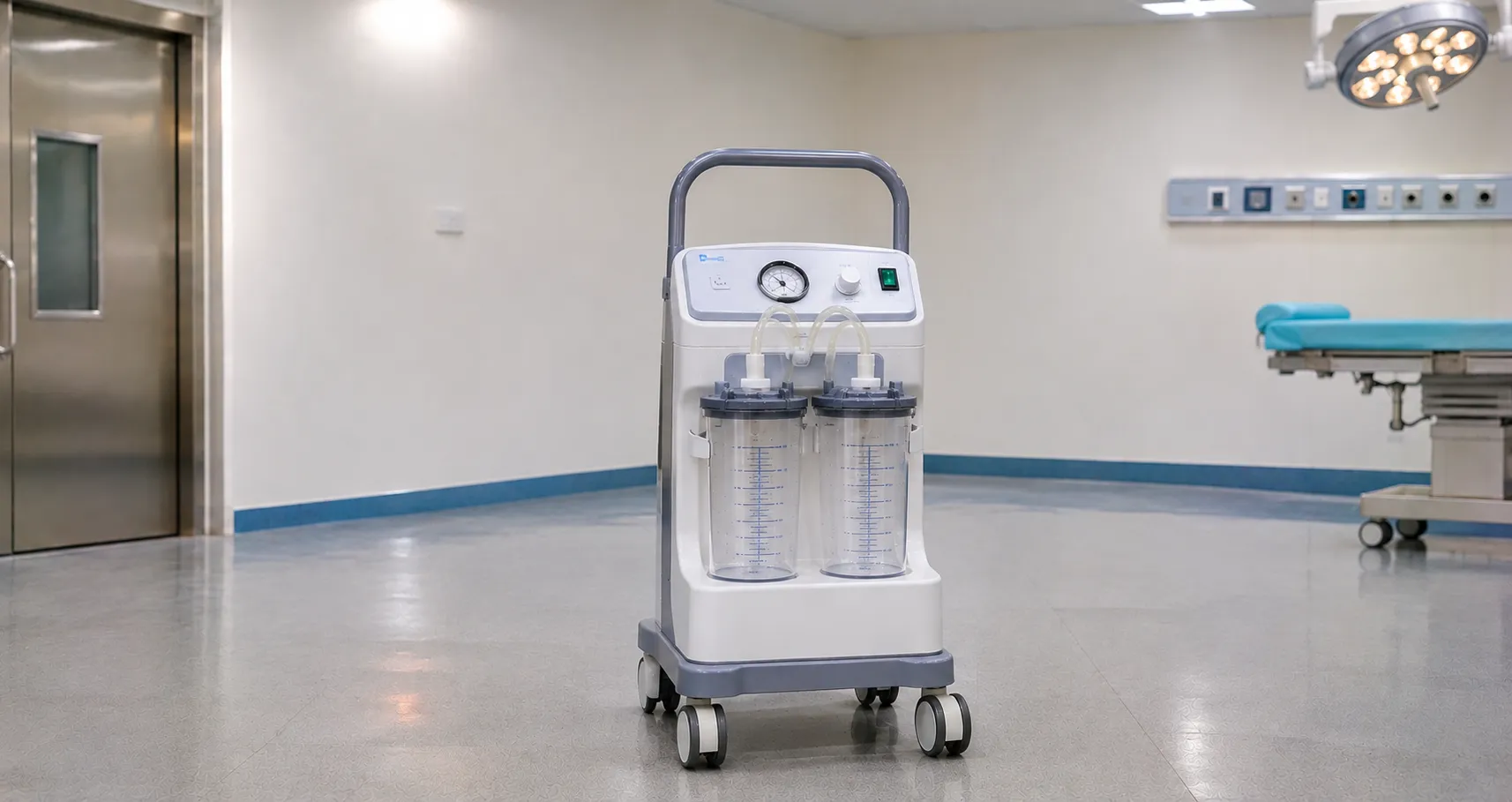
Where the suction draws its vacuum shapes the whole purchase. Pipeline suction uses the building's medical vacuum system through a wall terminal, with a regulator and collection jar at the bedside or in theatre, and it offers continuous high performance without an onboard pump. Wall-mounted units are fixed at a bed space or bay. Portable suction machines carry their own electric pump and, often, a battery, so they work where no pipeline exists, during transfers, in clinics, in domiciliary care and as backup if the pipeline fails. Most facilities need a mix: pipeline or wall suction for fixed high-use points, and portable machines for transport, resilience and areas without piped vacuum. Battery endurance and recharge time matter for any unit used on the move.
Collection jars, capacity and overflow protection
The collection system is where safety and practicality meet. Jar capacity should suit the setting, since a theatre clearing large volumes needs a larger or twin-jar arrangement, while a ward aspirator needs less. Reusable polycarbonate jars are autoclavable and economical over time; disposable liner systems reduce handling of contaminated fluid and speed turnaround at a per-use cost. Crucially, the collection system must have overflow protection, a float or shut-off that stops fluid being drawn into the pump and vacuum system when the jar is full. Confirm the jar graduations are clear for fluid measurement and that the lid seals reliably, because a poor seal cripples suction performance.
Filters, decontamination and cross-infection control
Filtration protects both the machine and the next patient. A hydrophobic bacterial and viral filter between the collection jar and the pump prevents aspirated fluid and aerosols reaching the vacuum system and cross-contaminating it, and it must be changed per the manufacturer's schedule. Decontamination differs by design: reusable jars, lids and tubing must be cleaned and, where required, autoclaved between patients, while single-use liners and tubing are discarded. When comparing machines, weigh how easily the fluid path is dismantled, cleaned and reassembled, because a unit that is awkward to decontaminate will be done poorly. Factor the consumables, filters, liners, tubing and canisters, into the running cost, not just the purchase price.
Standards and compliance for medical suction
Medical suction equipment is governed by BS EN ISO 10079, the standard series for medical suction: part 1 covers electrically powered suction, part 2 manually powered suction, and part 3 suction powered from a vacuum or pressure source such as a pipeline. Pipeline medical vacuum itself is part of the medical gas system installed and tested to HTM 02-01. The machine is a medical device requiring UKCA or CE marking under the framework overseen by the MHRA, and workplace exposure to aspirated fluids falls under duties enforced by the HSE. This guide is compiled from those published standards and manufacturer specifications; as a UK distributor, MediGear helps facilities compare verified suppliers rather than promote a single brand. Ask each supplier to confirm the ISO 10079 part their unit meets.
Battery endurance, portability and noise
For any suction machine that leaves a fixed point, the practical details decide whether staff can rely on it. Battery endurance sets how long a portable unit runs during a transfer or in an area without piped vacuum, and recharge time sets how quickly it is ready again, so check both against your longest realistic use. Weight and handle design matter when a nurse carries the machine to a deteriorating patient, and a mount for a trolley, bed rail or ambulance bracket keeps it secure in transit. Noise is easy to ignore at purchase and irritating in use, particularly on a quiet ward at night, so compare the sound level at full flow. A unit that is heavy, short on battery or loud will be left in a cupboard when it is needed, however good its vacuum figures look on paper.
Comparing suction options across settings
Place your requirement by setting. High-flow mains or pipeline units serve theatres and emergency departments clearing large volumes. Regulated wall or portable units with adjustable vacuum serve general wards for airway and wound aspiration. Compact battery-powered aspirators suit patient transfer, ambulances, clinics and domiciliary use. Foot-operated or manual suction provides pump-free backup for emergencies and field use. Buying a low-flow ward unit for a theatre leaves surgeons short of suction at the worst moment; buying a bulky high-flow unit for gentle ward use is impractical. Match flow, vacuum, power source and portability to each clinical area.
Servicing, calibration and spares
A suction machine holds negative pressure and moves contaminated fluid, so it needs planned servicing to stay safe and accurate. The vacuum regulator and gauge should be checked and, where required, calibrated so the displayed setting matches the delivered vacuum, because a drifting gauge either under-suctions or risks mucosal trauma. Pumps, seals and float valves wear, and a unit that will not reach its rated vacuum is often failing at a seal or a blocked filter rather than the pump itself. Confirm the supplier stocks jars, lids, tubing, filters and seal kits in the UK and can service the units on a sensible schedule, and check whether portable units include battery health monitoring, since a tired battery is a common reason a transfer suction unit lets a team down. Building routine checks into your medical-device maintenance programme keeps the fleet dependable.
Before you order a suction machine
Check these points with the supplier before committing:
-
Required vacuum level and flow rate for the specific setting, theatre high-flow or ward aspiration.
-
An accurate regulator and gauge so vacuum can be set to the clinical need, including paediatric use.
-
Power source and portability: pipeline, wall-mounted, mains or battery, with battery endurance if mobile.
-
Collection jar capacity, reusable or disposable liner, and clear graduations for fluid measurement.
-
Reliable overflow protection to stop fluid entering the pump and vacuum system.
-
Hydrophobic bacterial and viral filter, and how easily the fluid path is decontaminated.
-
Compliance with the relevant part of BS EN ISO 10079 and UKCA or CE documentation.
-
Consumable costs, UK spares, servicing and warranty for the units and their canisters.
Common errors when buying suction machines
The frequent mistake is buying one model for every setting, leaving theatres under-suctioned or wards over-powered with poorly regulated vacuum. Another is neglecting overflow protection and the bacterial filter, risking fluid in the pump and cross-infection. Buyers also underestimate consumable costs, discovering that disposable liners and filters add up across a fleet. And forgetting portable backup means a pipeline fault leaves a bay without suction. Specifying vacuum, flow, filtration and a sensible mix of fixed and portable units against each clinical area avoids these traps.
Matching suction to the clinical area
A suction machine performs when its vacuum, flow, power source and collection are matched to the setting and it meets BS EN ISO 10079. Specify high-flow units for theatres, regulated adjustable units for wards, and portable machines for transfer and resilience, and weigh the consumables in the true cost. To compare suction options or verified suppliers across theatre and ward needs, reach the MediGear team via the contact page.
Disclaimer
This article is for informational purposes only. It is published by MediGear (medigear.uk) for general information and procurement guidance, and is not clinical, diagnostic, treatment, technical, engineering, legal or regulatory advice, nor a product endorsement, guarantee or substitute for professional assessment. MediGear does not provide medical consultations. Buyers should consult their clinical, biomedical, estates and regulatory contacts, and the manufacturer's documentation, and independently verify all specifications, certifications, compatibility and suitability before purchase. Specifications, certifications and availability are correct at the time of publication and may change without notice. MediGear is a medical-equipment distributor and does not sell medicines or pharmaceutical products.