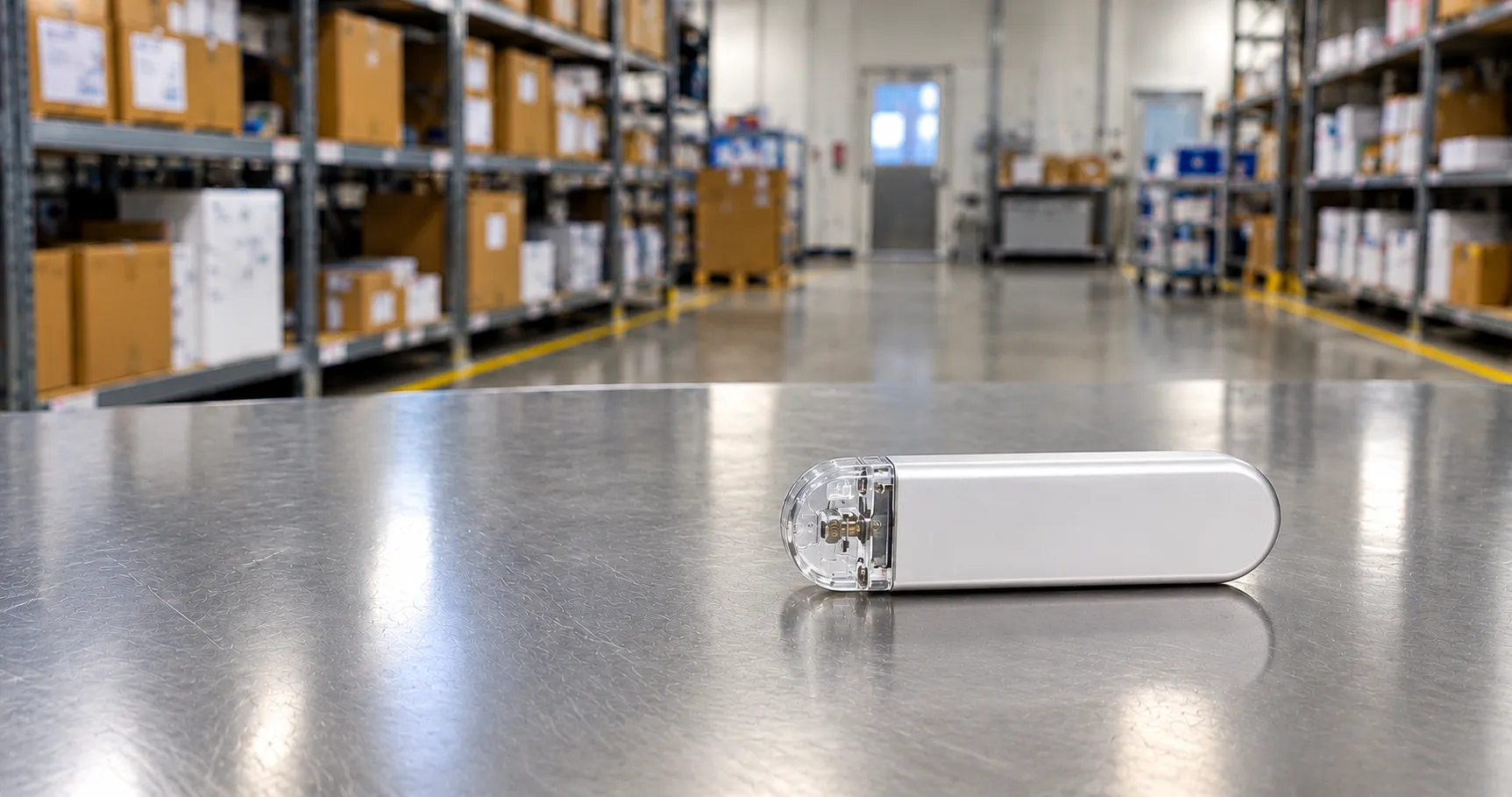
An implantable loop recorder is a small single-lead cardiac monitor placed just under the skin of the chest to record the heart's electrical rhythm continuously for up to about three years. Unlike a 24-hour Holter or an adhesive patch, this implantable loop recorder stays in place long enough to catch infrequent events: the blackout that happens once every few months, or the silent atrial fibrillation a short recording would miss. It is a diagnostic device, not a pacemaker. It watches and stores rhythm, but never paces or shocks the heart.
For a procurement lead, the device sits where cardiology, day-case theatres and remote-monitoring IT meet, so the buying decision is rarely about the implant alone. You are specifying an ecosystem: the recorder, the insertion tools, the programmer and the transmission service that carries data back to the clinic.
How the rhythm is caught and stored
Two sensing electrodes on the metal can pick up a bipolar electrogram, a simplified version of the surface ECG taken from inside the tissue. The device runs a rolling memory loop, hence the name: it constantly overwrites older data while its algorithms watch for pauses, bradycardia, fast ventricular rates and the irregular signature of atrial fibrillation. When a threshold is crossed,d the episode is frozen and saved with a time stamp. Patients can also press a handheld or smartphone activator to mark a symptom, capturing the seconds before and after a faint. Storage is finite, so most units keep a mix of the longest automatic episodes and the most recent patient-triggered strips.
When cardiology reaches for a loop recorder
The classic indication is recurrent unexplained syncope where the resting ECG and short-term monitoring have drawn a blank. It is also used to hunt for paroxysmal atrial fibrillation after a cryptogenic stroke, and to correlate palpitations with an actual rhythm. Clinical selection follows published pathways rather than procurement preference; the clinical guidance published by NICE on atrial fibrillation and transient loss of consciousness sets out where prolonged monitoring belongs. Your job is to make sure the service can deliver whichever device the cardiology team specifies, at the volume the referral pattern demands.
Inside the device: size, sensing and battery life
Modern injectable recorders are tiny, typically a few centimetres long and only a couple of grams, inserted through a small incision with a dedicated tool rather than a formal surgical pocket. Battery chemistry is fixed and non-rechargeable, giving a stated longevity of roughly three years depending on how much data the device transmits. Sensing quality depends on electrode spacing and the signal-processing firmware, which is why two units with identical size specifications can differ markedly in how well they reject noise from muscle movement. Check the MRI status too: most current recorders are MRI conditional, but the conditions on field strength and scan region must be documented for your radiology colleagues.
The programmer and remote monitoring behind every implantable loop recorder
Every implantable loop recorder needs a programmer to set thresholds at implant and a transmission path to move episodes to the clinic between visits. That usually means a bedside or plug-in home transmitter, or increasingly a smartphone app, feeding a manufacturer cloud platform that clinicians review in a browser. The volume of alerts this generates is a real workload, so ask how false positives are filtered and whether the platform can push data into your cardiology information system rather than living in a separate portal. Integration, data residency and who holds the patient record are procurement questions, not afterthoughts.
The day-case insertion pathway
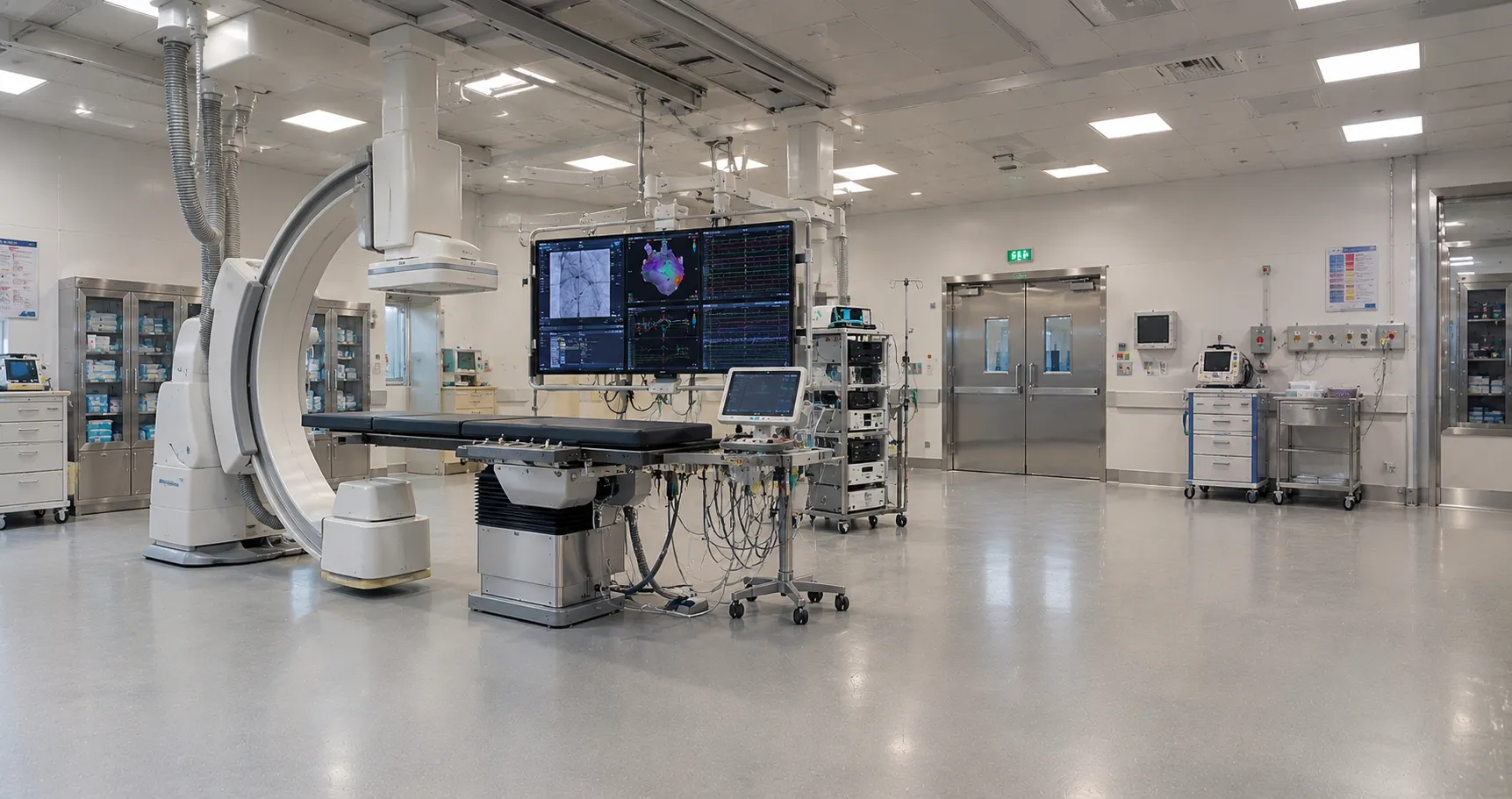
An implantable loop recorder is placed in a short, sterile procedure under local anaesthetic, not a formal operation. A small incision is made over the left chest, the device is delivered through a dedicated single-use insertion tool, and the wound is closed with a suture or adhesive strip. Because it needs only a clean procedure room or a cath-lab side room rather than a main theatre, many services run insertion as a nurse-led or physiologist-supported day case, which shapes staffing and throughput. When you plan the service, account for the sterile insertion kit per patient, aseptic technique and wound-care follow-up, and confirm the manufacturer's guidance on incision site and depth so sensing quality is not compromised at the outset.
What really differs between recorders
Two implantable loop recorders can look identical on a size chart and behave very differently in service, because the value lives in the firmware. Detection sensitivity for atrial fibrillation, the false-positive rate, how the algorithm handles ectopic beats and whether it undersenses low-amplitude signals all vary by platform, and those differences decide how much noise your clinic must wade through every day. Ask vendors how their detection thresholds are set, whether the atrial fibrillation algorithm can be tuned, and what independent evidence supports the quoted sensitivity. A recorder that reliably distinguishes true arrhythmia from artefact is worth more to a stretched service than one that simply stores more strips, so weigh algorithm quality as heavily as battery life and size.
Regulation and safety standards for an implantable loop recorder
An implantable loop recorder is an active implantable medical device. In Great Britain,n it is regulated under the UK Medical Devices Regulations 2002 and overseen by the device regulator, the MHRA, which also runs the reporting route for any adverse incident. As an active implantable, the recorder itself is designed to the ISO 14708 family for active implantable medical devices, with ISO 14708-1 setting the general safety, marking and information requirements that underpin the more device-specific parts. The external programmer and home transmitter are medical electrical equipment and are built to the general safety standard IEC 60601-1. Confirm UKCA or CE marking, the MRI-conditional labelling and the manufacturer's declared electromagnetic compatibility before anything reaches a patient. This guide draws on manufacturer instructions for use and UK regulatory guidance; it is written for buyers, and clinical decisions stay with the implanting team.
Warranty, replacement and end of life
Because the battery is sealed and finite, warranty and replacement terms carry real weight for an implantable loop recorder. Ask what the manufacturer offers if a device reaches end of life earlier than its stated longevity, or fails prematurely, and whether that cover includes the cost of an explant and re-implant. At the end of service,ce the recorder is removed and must be handled as clinical and electronic waste, with the battery managed accordingly, so confirm the manufacturer's return or disposal route. These terms rarely appear on the headline quote but can swing the true cost of a fleet, so pin them down in writing before you commit to a supplier.
Before you commission an implantable loop recorder service
Use a device-specific checklist rather than a generic monitor form when you go to market:
-
Stated battery longevity and the transmission volume that figure assumes.
-
MRI-conditional status with the exact field-strength and body-region limits.
-
Insertion tool supply: single-use kits, shelf life, and reorder lead time.
-
Whether the remote platform exports to your cardiology system or stays siloed.
-
Alert-filtering options to keep the daily triage burden manageable.
-
Programmer compatibility across your existing device fleet to avoid duplication.
-
Explant and disposal guidance, including battery and clinical-waste handling.
-
UKCA or CE certification, MHRA registration and post-market surveillance record.
Beyond the purchase price of the implant
The recorder itself is only part of the spend. Each implant consumes a single-use insertion kit, and every patient adds a remote-monitoring seat that may carry an annual fee. Then there is the hidden cost of staff time: someone has to read the transmissions, dismiss the noise and act on the true findings, often daily. A cheaper device that floods the clinic with false alerts can cost more in labour than a dearer one with better discrimination. Weigh warranty length, replacement policy for early battery depletion and the price of the programmer when you compare quotes. Comparing these total-cost elements across vendors is exactly where a marketplace helps, and buyers can line up verified suppliers through MediGear on like-for-like terms.
The bottom line for buyers
An implantable loop recorder earns its place by turning months of uncertainty into a dated rhythm strip, but its value to a service depends on the plumbing around it: tools, transmitters, integration and triage capacity. Specify all of that, not just the can. MediGear is a UK medical-equipment distributor, and our role is to help facilities compare compliant suppliers and their supporting kit; talk to us through the MediGear enquiry desk when you are ready to scope a purchase.
Disclaimer
This article is for informational purposes only. It is published by MediGear (medigear.uk) for general information and procurement guidance, and is not clinical, diagnostic, treatment, technical, engineering, legal or regulatory advice, nor a product endorsement, guarantee or substitute for professional assessment. MediGear does not provide medical consultations. Buyers should consult their clinical, biomedical, estates and regulatory contacts, and the manufacturer's documentation, and independently verify all specifications, certifications, compatibility and suitability before purchase. Specifications, certifications and availability are correct at the time of publication and may change without notice. MediGear is a medical-equipment distributor and does not sell medicines or pharmaceutical products.