When a resuscitation call goes out, the crash cart is what stands between the team and a fatal delay: they have seconds, not minutes, to reach a defibrillator, draw up adrenaline and open an airway. Select a crash cart for your emergency resuscitation bays on one principle above all others: that every drawer is laid out identically to every other cart in the trust. Hence, a nurse who has never worked your ward still finds the airway kit exactly where they expect it. Build quality, locking and the defibrillator mount all matter, but they exist to serve that goal of instant, muscle-memory access under pressure.
A crash cart is a wheeled, lockable trolley that carries the drugs, airway equipment and defibrillator needed to run an in-hospital cardiac arrest. This guide takes a UK procurement lead or resuscitation officer through the decisions that separate a cart the team can trust from one that costs precious seconds. It draws on Resuscitation Council UK guidance on standardised resuscitation equipment and on manufacturer documentation written for UK settings.
Standardising the crash cart drawer layout
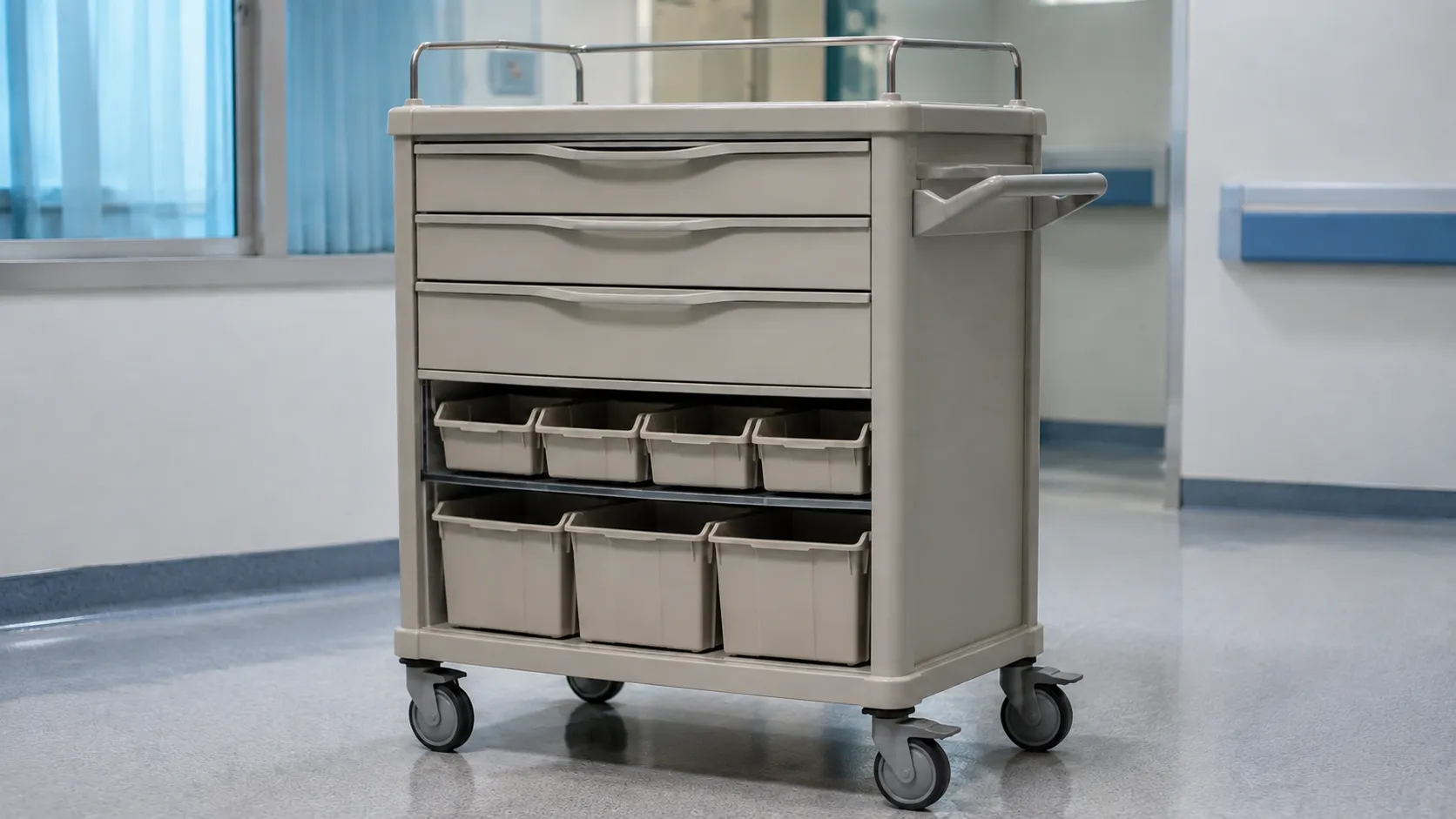
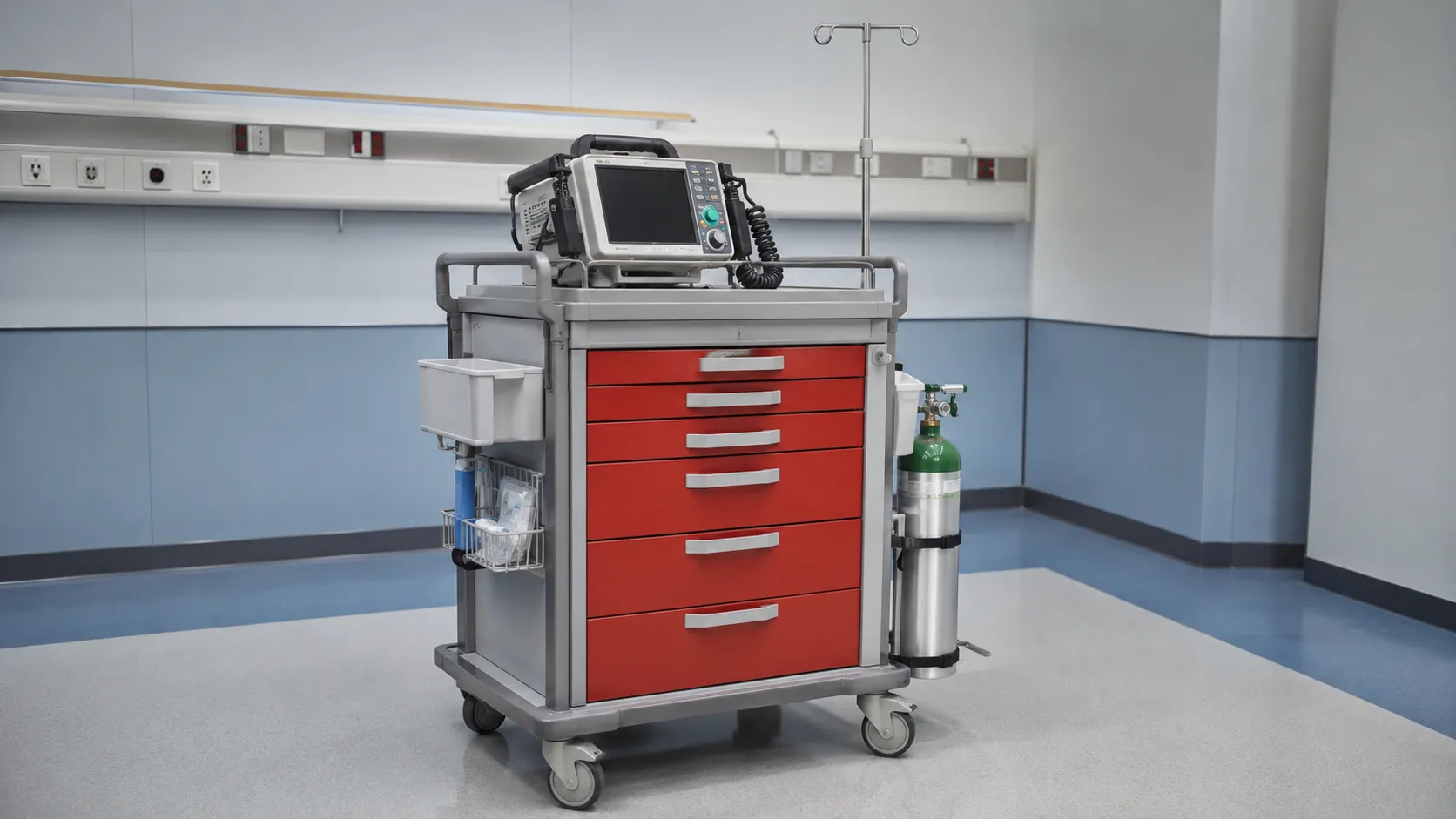
The single most valuable feature of a crash cart is a drawer layout that never changes. Most services organise drawers by the resuscitation sequence: an airway and breathing drawer, a circulation and access drawer, a drugs drawer, and a lower drawer for fluids and larger items, with a printed drawer map on the side. Colour-coded drawer fronts help, but consistency across the whole estate matters more than the scheme you pick. When you specify a crash cart, insist the internal dividers are configurable so you can mirror your trust's agreed layout exactly, and buy the same model for every bay. Hence, bank and agency staff meet one familiar cart. A cart that forces a different layout is a cart that will one day cost time in an arrest.
Breakaway locks and tamper-evident seals
A crash cart must be secure enough to prove nothing has been removed, yet open in one movement when the alarm sounds. The common answer is a numbered breakaway or tamper-evident seal rather than a keyed lock: an intact seal indicates the cart is fully stocked and in-date, and it snaps off instantly when needed. Some carts use a central locking bar with a single break-seal; others fit a coded push-button lock. Avoid any arrangement that requires a key to be hunted down from a drawer or a distant office. Specify a seal system that your pharmacy and resus team can audit at a glance, and confirm that replacement seals are cheap and quick to reorder, since a cart is resealed after every check and every use.
Mounting the defibrillator, oxygen and monitor
The heaviest items live on top of the crash cart, and how they are mounted decides whether it stays stable. Look for a reinforced top shelf or a dedicated defibrillator shelf rated for your device's weight, ideally with a swivel or tilt feature so the screen faces the operator. A crash cart should carry a secured oxygen cylinder holder on the side or rear, sized for the CD or D cylinder your service uses, plus mounts for a sharps bin, a glove box and a suction unit. The defibrillator itself is a medical device that must be maintained under the MHRA framework and tested to IEC 60601-2-4, the specific safety standard for cardiac defibrillators, so make sure the shelf does not obstruct its cooling vents or charging connector.
Frame, castors and braking for a fast, safe move
A crash cart is pushed at speed down corridors and into cramped bays, so the chassis has to be both mobile and stable. Aluminium column carts are light and corrosion-resistant; powder-coated steel carts are heavier but very durable. Whichever you choose, specify at least 125 mm castors with two braked and ideally a central braking bar, plus a fifth directional castor on longer carts to stop them crabbing. A push handle, corner buffers and an anti-tip footprint all earn their place. Check the loaded cart does not become top-heavy once the defibrillator and a full oxygen cylinder are fitted, because a cart that tips as it turns into a bay is a safety incident waiting to happen.
Sharps, CPR board and the extras that matter
Around the drawers, a well-specified crash cart carries the things a team reaches for without thinking. A CPR backboard clipped to the side or slotted behind the cart lets staff start effective compressions on a soft mattress at once. A sharps container mounted at working height, a waste bag holder, an IV pole that raises from the frame, and a writing surface for the scribe all reduce fumbling. For paediatric and neonatal areas, specify a cart with a length-based dosing tape holder and drawers sized for smaller consumables. These details cost little but shape how smoothly the first two minutes of an arrest run go.
Comparing crash cart types and tiers
Carts fall into a few broad tiers. A basic steel resuscitation trolley with three or four drawers suits a low-acuity ward that rarely runs an arrest. A modular aluminium column cart with configurable drawers, an integral defibrillator shelf, and central locking is the mainstream choice for acute wards and A&E resuscitation bays. A specialist cart adds an integrated power supply, a roll-out laptop shelf or an anaesthesia layout for theatres and critical care. There are also compact paediatric and neonatal carts. Most acute trusts standardise on one adult model and one paediatric model across the estate rather than mixing brands ward by ward, which keeps training and restocking consistent.
Keeping the crash cart ready between calls
A crash cart is only as good as its last check, so factor the readiness routine into your purchase. Specify a cart whose seal number and next-check date are visible without opening it, and confirm the drawer map lists par levels so a restock after use is quick and unambiguous. Wards run a documented check each shift or day against the seal and expiry dates, and a full restock and reseal after every activation, so the layout should make a two-minute visual check realistic rather than a drawer-by-drawer hunt. Ask whether the supplier offers pre-packed, colour-coded refill modules or exchange drawers, which cut the time a cart spends out of service after a call. A cart designed around checking and restocking stays ready; one that quietly resists the routine drifts out of compliance.
Power and integration on advanced carts
Higher-acuity areas increasingly want a powered crash cart. If your bay needs an integrated monitor-defibrillator kept on charge, a barcode scanner for stock, or a laptop for the arrest record, look for a cart with a built-in medical-grade power supply, a socket strip and cable management rather than trailing leads. An uninterruptible supply keeps a charging device alive while the cart moves between mains points. Any powered cart is an electrical assembly that must be tested to the relevant IEC 60601 safety requirements and included in your portable-appliance and medical-device testing regime. Weigh the added weight and cost against genuine need, because a plain mechanical cart is lighter, cheaper and perfectly suited to most general wards.
Crash cart buying checklist
Before you commit to a fleet of resuscitation trolleys, confirm the following with each supplier:
-
Drawers are configurable to your trust's standardised resuscitation layout, and the same model is available for every bay.
-
The locking method is a tamper-evident breakaway seal or coded lock that opens in one action, with cheap replacement seals.
-
The top shelf and oxygen holder are rated for your specific defibrillator and cylinder size and do not block device vents.
-
Castors are at least 125 mm with a central brake, and the loaded cart passes a tip-stability check.
-
A CPR backboard, sharps holder, IV pole and waste bag mounting are included or available as fitted accessories.
-
Paediatric bays are covered by an appropriately sized cart with dosing-tape provision.
-
Surfaces are non-porous and wipe-clean with your infection-control disinfectant.
-
UK spares, warranty terms and restocking consumables are confirmed in writing.
Mistakes to avoid when buying a crash cart
The costliest error is letting each ward buy its own cart, so layouts drift and staff moving between areas hesitate at the worst moment. Another is choosing a cart whose top shelf won't hold your defibrillator, forcing a wobbly aftermarket bracket. Buyers also overlook seal logistics and end up with unlocked carts because replacement seals arrive slowly. Finally, a cart bought purely on price often arrives with small castors and no central brake, so it drifts in the bay and is awkward to steer under pressure. Matching the cart to a trust-wide standard, and to the actual devices it must carry, avoids all of these.
Getting your resus bays ready
A crash cart earns its keep in the two minutes after an alarm, so specify it for that moment: one standardised layout across the estate, an instantly openable seal, a stable frame that carries your defibrillator and oxygen safely, and surfaces that decontaminate to policy. Standardise before you buy, involve your resuscitation officer and infection-prevention team, and verify UK compliance and spares up front. To weigh resuscitation trolley options across verified suppliers, the MediGear team can help you compare equipment suppliers or answer questions through the contact page.
Disclaimer
This article is for informational purposes only. It is published by MediGear (medigear.uk) for general information and procurement guidance. It is not clinical, diagnostic, treatment, technical, engineering, legal or regulatory advice, nor a product endorsement, guarantee or substitute for professional assessment. MediGear does not provide medical consultations. Buyers should consult their clinical, biomedical, estates and regulatory contacts, and the manufacturer's documentation, and independently verify all specifications, certifications, compatibility and suitability before purchase. Specifications, certifications and availability are correct at the time of publication and may change without notice. MediGear is a medical-equipment distributor and does not sell medicines or pharmaceutical products.