A wheelchair issued for occasional use can be approximate. One used every day cannot. Seat width, cushion choice, backrest support and propulsion method all shape posture, skin health and independence over months and years, so long-term provision deserves proper assessment rather than a stock selection.
The ten chair types below cover self-propelled, attendant and powered provision. Each entry explains where it fits and what to confirm before issue.
Measurement before model
Seat width, seat depth, backrest height and footplate distance should be measured for the individual, not estimated. A chair that is too wide encourages leaning and poor posture, while one that is too narrow risks pressure at the hips. Depth affects thigh support, and the distance between the user's legs extends.
Cus seating position selection is a separate decision from the chair. Pressure care needs should be assessed on their own terms, since the standard cushion supplied with a chair is rarely the right long-term answer for a full-time user.
The ten wheelchair types
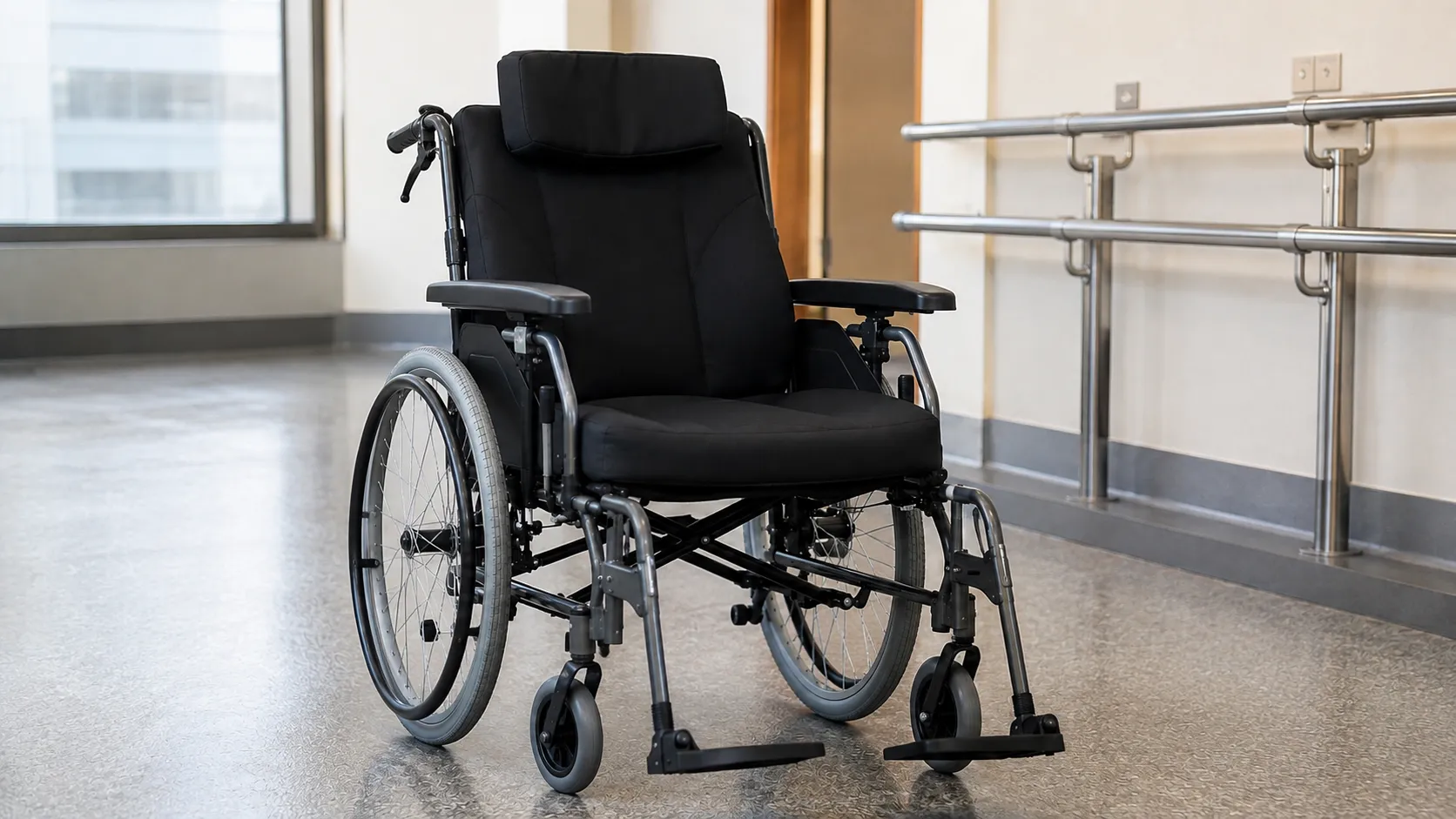
1. Self-propelled manual wheelchairs
Large rear wheels with handrims for independent propulsion—the default for users with sufficient upper limb function.
2. Attendant-propelled transit chairs
Smaller rear wheels pushed by a carer. Lighter and more compact, but they remove independent propulsion.
3. Lightweight folding wheelchairs
Cross-brace frames that fold for transport and storage. A practical choice where the chair travels regularly by car.
4. Rigid frame active wheelchairs
Non-folding frames offering energy transfer and responsiveness for active, full-time users, usually with configurable geometry.
5. Bariatric wheelchairs
Reinforced frames with wider seats and higher safe working loads. Confirm the rating covers the user together with any equipment carried.
6. Tilt-in-space wheelchairs
Tilt the entire seating unit while maintaining hip and knee angles that support distribution and posture management.
7. Reclining backrest wheelchairs
Recline the backrest independently, useful where the user needs rest positions or has limited hip flexion.
8. Powered wheelchairs
Motorised chairs with joystick or alternative controls. Battery range, kerb capability, indoor turning circle and charging arrangements are the key questions.
9. Paediatric wheelchairs
Sized for children with growth adjustment built in, so the chair adapts over time rather than needing early replacement.
10. Hospital transport chairs
Robust attendant chairs used for moving patients within a site. Durability, cleanability and brake reliability matter more than configurability.
The environment the chair works in
Daily surroundings shape the choice more than most assessments allow for. Door widths, corridor turns, thresholds, ramp gradients and the surfaces a user crosses each day all affect which frame, wheel and castor combination is workable. A chair that performs well indoors may be unmanageable on rough pavements, and one specified for outdoor use can prove too wide for a small bathroom. Visiting the home, or at least discussing it in detail, prevents most of these mismatches.
What to confirm before issue
-
Measurements. Seat width, depth, backrest height and footplate position measured for the individual.
-
Safe working load. Confirm the rating and whether it includes carried equipment.
-
Cushion. Assess pressure care needs separately and specify the cushion accordingly.
-
Transport. Check the folding method, the weight of the heaviest component and whether the chair is approved for use in a vehicle.
-
Tyres. When needed, pneumatic tyres require maintenance with a firm, safe castor brake type, reach for the user, and castor size for the surfaces used daily.
Maintenance, review and lifecycle
Long-term chairs need scheduled review, not just repair. Posture changes, cushions compress, and users' needs change, so planned review points include maintenance covers tyre pressure, brake adjustment, castor bearing condition, upholstery wear and fastening security. For powered chairs, add battery condition, charger function and control calibration.
Agree on servicing arrangements, spares, and repair turnaround time before the issue time, when a user has no alternative chair. Ensure the service receives published device safety alerts so field safety notices reach the equipment team.
Measurement and cushion assessment should precede any model decision for a full-time user. Services provisioning at scale can review configurations through buyer services.
Final thoughts
Fit the chair to the person and the environment they use it in. Fuluse ineuse inn which rs needa seated positiong, a cushion chosen on its own merit,s and a review schedule. Confirm safe working load, transport arrangements and repair turnaround before the chair is issued.
This article provides general procurement guidance for healthcare organisations and services. It is not clinical or seating assessment advice and does not replace manufacturer instructions or specialist assessment.