A medical trolley earns its place on a ward by keeping the right items together and moving them to where care happens. The difference between a good trolley and a frustrating one shows up in daily use: whether the drawers hold what a task needs, whether it steers cleanly through a doorway, and whether it wipes down without catching soil in every corner.
The ten medical trolley types below cover use in procedures, medication, treatment, and specialist wards. Each entry explains its role and what to confirm before ordering.
Layout, movement and cleaning
The drawer configuration should follow the task rather than the other way round. A dressings trolley needs different compartments from a phlebotomy round or a medication round, and a trolley bought without reference to its intended use tends to be reorganised into something less tidy within weeks.
Movement and cleaning are the two properties that decide whether staff actually use a trolley or work around it. Castors that steer smoothly when loaded, a handle at a comfortable height, and surfaces that wipe clean without seams collecting soil all matter over the course of a long shift.
The ten trolley types
1. Dressings and procedure trolleys
Two-tier or drawered trolleys for aseptic procedures, with a clean top surface and storage below. The general ward workhorse.
2. Multi-drawer treatment trolleys
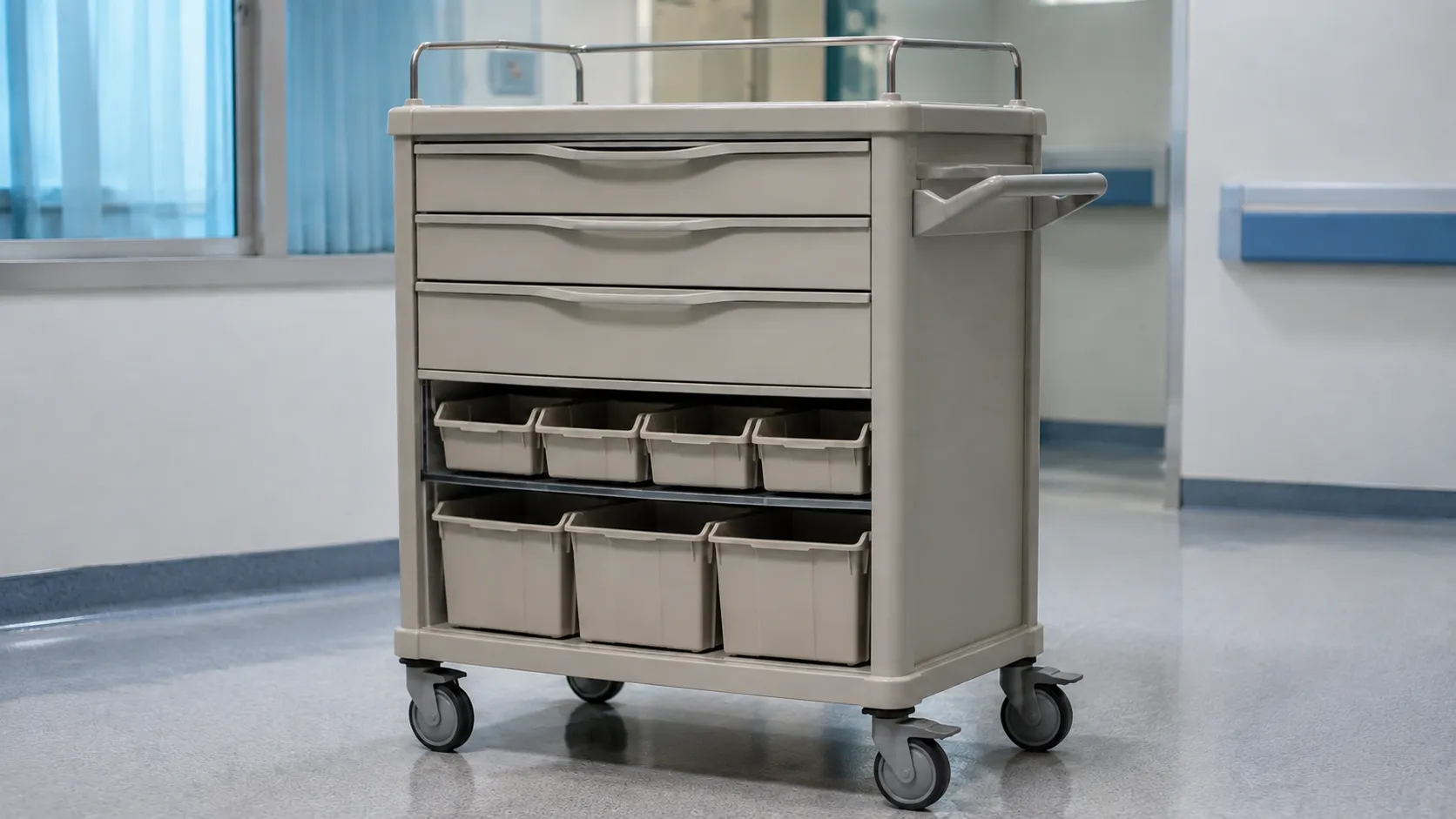
Several drawers of varying depth for organising a range of consumables, suited to treatment rooms and busy wards.
3. Medication trolleys with secure drawers
Lockable trolleys for medication rounds, with drawer security and, in some designs, individual patient compartments.
4. Medication trolleys with electronic access
Use keypad or card access with logging. Confirm the fallback in the event of a power failure, so access does not depend on a battery.
5. Phlebotomy and specimen trolleys
Configured for blood collection rounds with sharps provision, tube racks and specimen handling in a compact frame.
6. Anaesthetic and procedure preparation trolleys
Organised drawers for procedure preparation, often with dividers and labelling to keep contents in a defined order.
7. Emergency drug trolleys
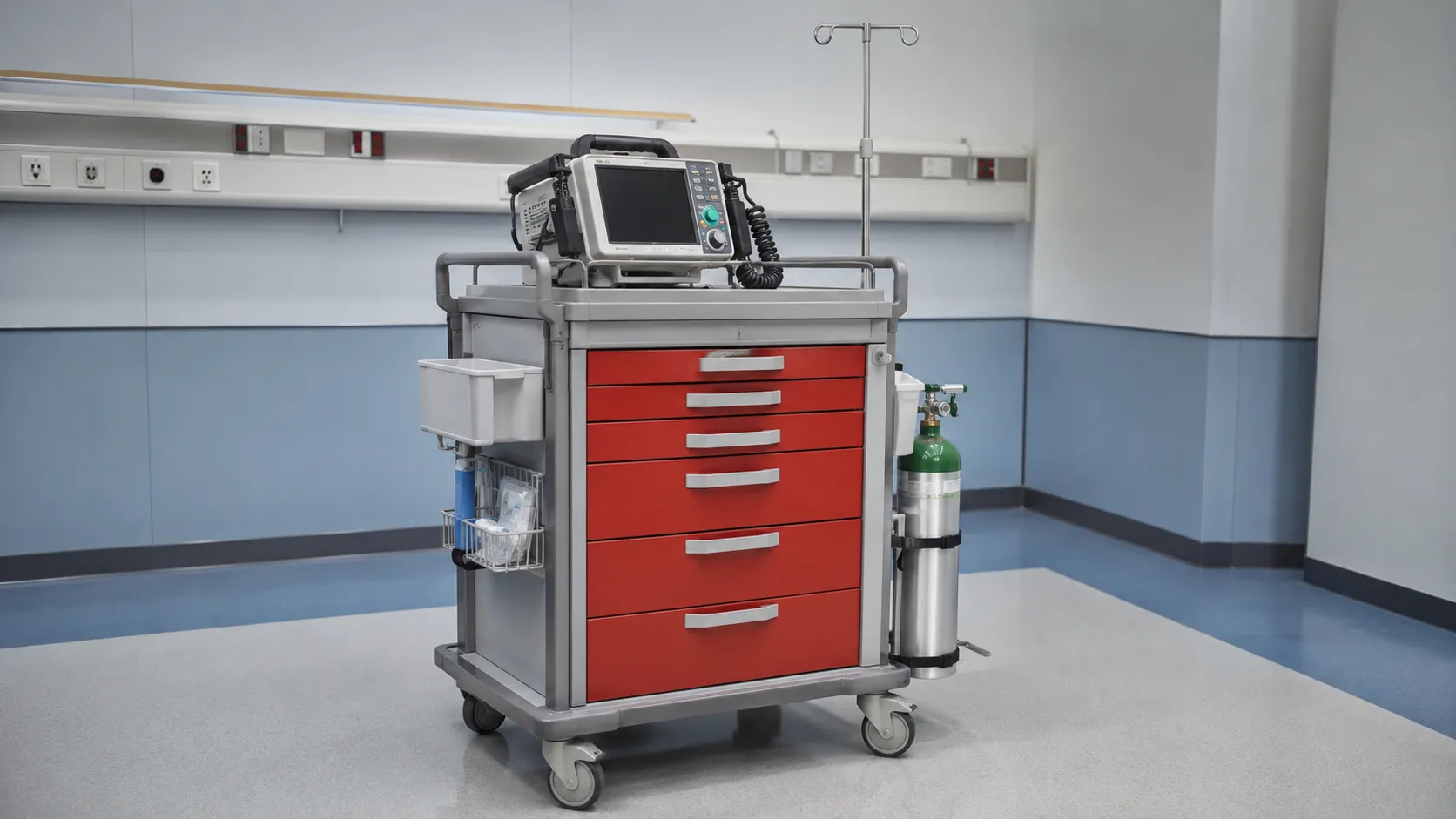
Trolleys holding a defined set of drugs and equipment for urgent use, kept in a consistent layout and checked on a routine.
8. Isolation and PPE trolleys
Hold protective equipment outside a room for isolation precautions, with shelves and dispensers arranged for the donning sequence.
9. Instrument and transport trolleys
Sturdier trolleys for moving instrument sets or heavier equipment between areas, with the load capacity that implies.
10. Compact trolleys for clinics and side rooms
Reduced-footprint trolleys for tight spaces, retaining useful storage where a full ward trolley cannot manoeuvre.
Security, workflow and the ward round
Security is a real decision for medication and controlled-item trolleys, and it should match ward policy rather than default to the most complex lock available. Where electronic access is used, a reliable manual fallback matters, since access to items cannot depend on a working battery. Workflow shapes the rest: a medication round works best when the trolley layout matches the round sequence, and a dressings trolley works best when the clean surface stays clear. The consumables are listed below in logical order. Consider where trolleys are stored and charged between uses, since a trolley parked out of the way to keep a corridor clear is the one that goes missing when it is needed.
What to confirm before ordering
-
Drawer layout. Confirm the configuration matches the intended task.
-
Security. Establish the lock or access method in accordance with ward policy, with a manual fallback.
-
Castors. Check steering, braking and clearance through your doorways when loaded.
-
Accessories. Specify sharps holder, waste bag, rails, dividers and drip pole as required.
-
Surfaces. Verify wipeable finishes without seams that trap soil.
-
Charging. For powered trolleys, confirm charging arrangements and battery life.
Infection prevention, training and servicing
Cleaning between uses is constant, so the trolley must wipe down effectively. Confirm approved agents for the frame, drawers and any soft components, and check that drawer runners and joints do not trap soil where cleaning cannot reach.
Training is light but worthwhile: how the system works, where items are stored, and the cleaning routine between patients. Consistency across a ward keeps trolleys usable when staff move between them.
For servicing, agree castor and brake maintenance, drawer runner inspection, lock or access system checks and, for powered trolleys, battery replacement. Ensure the ward receives the MHRA alerts and recalls page so any field safety notices reach the relevant teams.
Drawer layout and security should follow the task and ward policy rather than a generic design. Wards equipping several areas can compare options through buyer services for healthcare organisations.
Final thoughts
Choose the trolley for the task, movement, and cleaning routine. Most wards are best served by trolleys whose layout matches their intended use, with security suited to policy, smooth loading and steering, wipeable surfaces, and a consistent parking and charging position agreed on each ward.
This article provides general procurement guidance for healthcare organisations. It is not clinical advice, and it does not replace manufacturer instructions or local ward policy.