Hoists reduce injury risk for both patients and staff, but only when the right type is available in the right place and paired with a sling that genuinely matches it. Most handling problems on a ward trace back to one of three things: the wrong hoist for the task, an incompatible sling, or a battery left off charge.
The ten hoist types below cover ward, bathroom and specialist transfer needs. Each entry explains its purpose and what to confirm before ordering.
Slings are part of the decision.
A hoist and a sling form one system. Slings are designed and tested with particular hoists and spreader bars, and mixing manufacturers without written confirmation of compatibility is not safe practice. Specify the sling range at the same time as the hoist, and include the sizes your patient population actually needs.
Lifting equipment used to lift people is subject to periodic thorough examination under UK health and safety law. Establish early who arranges that examination, at what interval, and how records are kept.
The ten hoist types
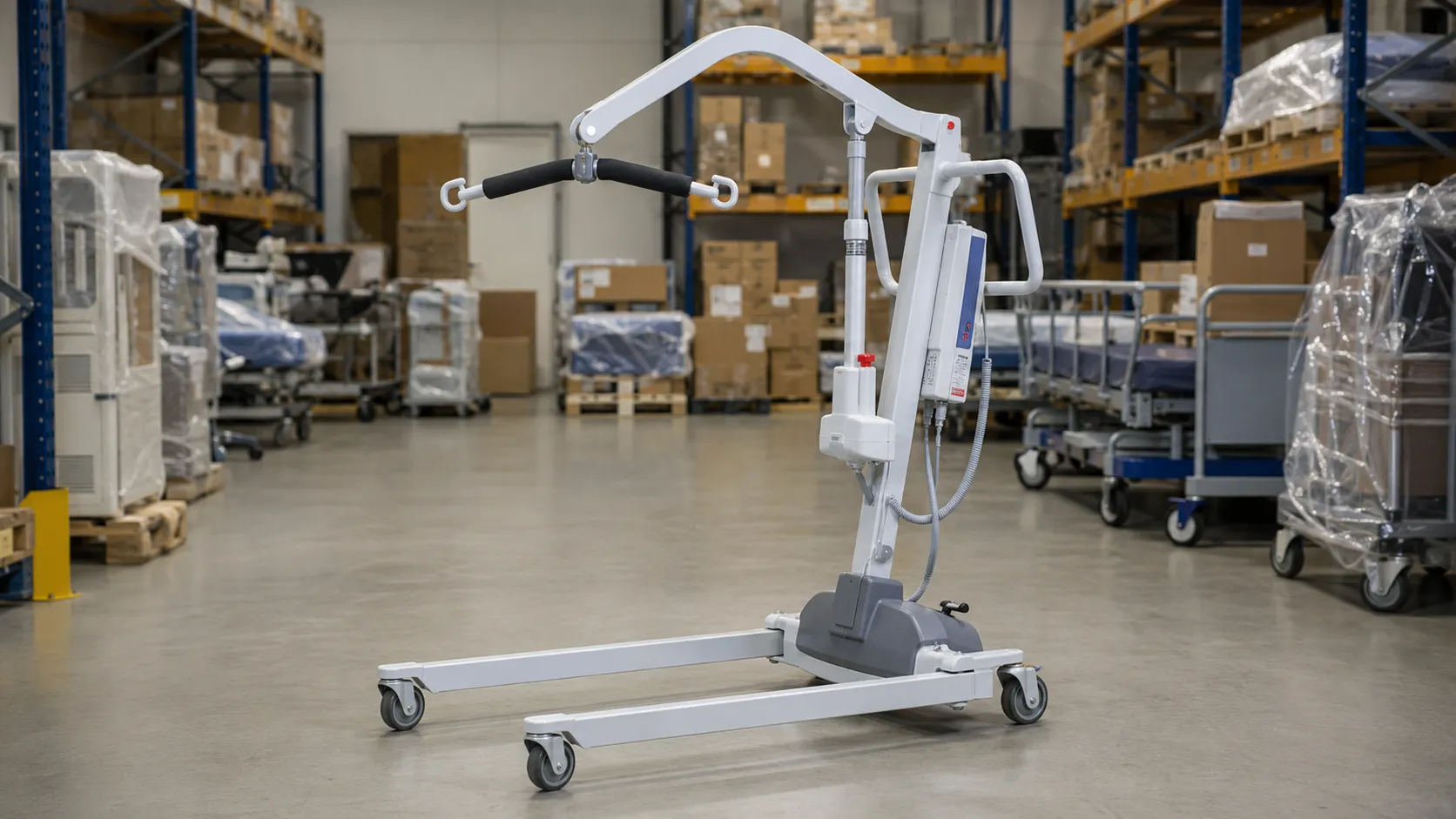
1. Mobile floor hoists
Wheeled hoists with adjustable legs, used for bed-to-chair transfers. Versatile and familiar, though they need floor space and a clear route.
2. Sit-to-stand hoists
Support patients who can weight-bear, assisting the transition from sitting to standing. Patient assessment determines suitability.
3. Fixed ceiling track hoists
Permanently installed rails carrying a motor unit. They save floor space and effort, and they are used in rooms where transfers happen securely
4. Portable gantry hoists
Freestanding frames providing overhead lifting without building work. Useful where a fixed installation is impractical.
5. Bariatric hoists
Higher safe working loads with wider frames and reinforced spreader bars. Slings must be rated to match, not just the hoist.
6. Bath and pool hoists
Designed for wet environments with appropriate materials and corrosion resistance. Confirm the installation and servicing arrangements for the location.
7. Floor recovery hoists
Lift a patient from floor level after a freaching whenn ing lower than a standard mobile hoispracticaltical addition wherever falls are a recognised risk.
8. Hoists with integrated weighing
Record weight during the transfer, avoiding a separate weighing procedure. Confirm calibration arrangements for the scale function.
9. Stretcher attachment hoists
Use a stretcher-style attachment for patients who must remain supine during transfer.
10. Standing and walking support hoists
Support supervised standing or stepping practice as part of a rehabilitation programme, under clinical direction.
What to confirm before ordering
-
Sling compatibility. Obtain written confirmation of which slings are approved with the hoist and spreader bar.
-
Safe working load. Confirm the rating for the hoist, the spreader bar and every sling separately.
-
Leg spread and clearance. Check the hoist fits under the beds and chairs on your wards.
-
Battery and charging. Confirm the charge time, capacity, and where the charging points will be located.
-
Emergency lowering. Verify the manual lowering method and ensure staff are trained in it.
-
Storage. Identify where the hoist lives when not in use, since inaccessible storage discourages use.
Matching the hoist to the transfer
Different transfers require different equipment, and keeping only one hoist type forces staff to make compromises. Bed-to-chair movements, bathroom transfers, floor recovery after a fall, and supine moves each have a hoist designed for them, and using an unsuitable device is where handling injuries and patient discomfort usually begin.
Training, examination and maintenance
Training must cover both the hoist and the specific slings in use, including size selection, correct application, attachment checks and emergency lowering. Refresher training matters because handling technique drifts over time.
Alongside statutory thorough examination, agree planned maintenance covering actuator function, battery replacement, sling inspection and electrical safety testing. Slings need their own inspection routine, since fabric and stitching wear with laundering.
Confirm spare parts availability, repair turnaround times, nd loan arrangements in writing, and ensure the organisation receives published device safety alerts so that field safety notices reach the manual handling and engineering teams.
Hoists and slings must be specified together, with compatibility confirmed in writing. Current hoist and sling ranges can be compared through verified supplier listings.
Final thoughts
Buy the hoist and the slings together, and plan where each will be stored and charged. Most wards need mobile hoists with a matching sling range, a floor recovery option for falls, and ceiling tracks in rooms with daily transfers. Settle thorough examination, training and sling inspection before the equipment enters service.
This article provides general procurement guidance for healthcare organisations. It is not clinical or manual handling advice, and it does not replace manufacturer instructions, risk assessment or local policy.