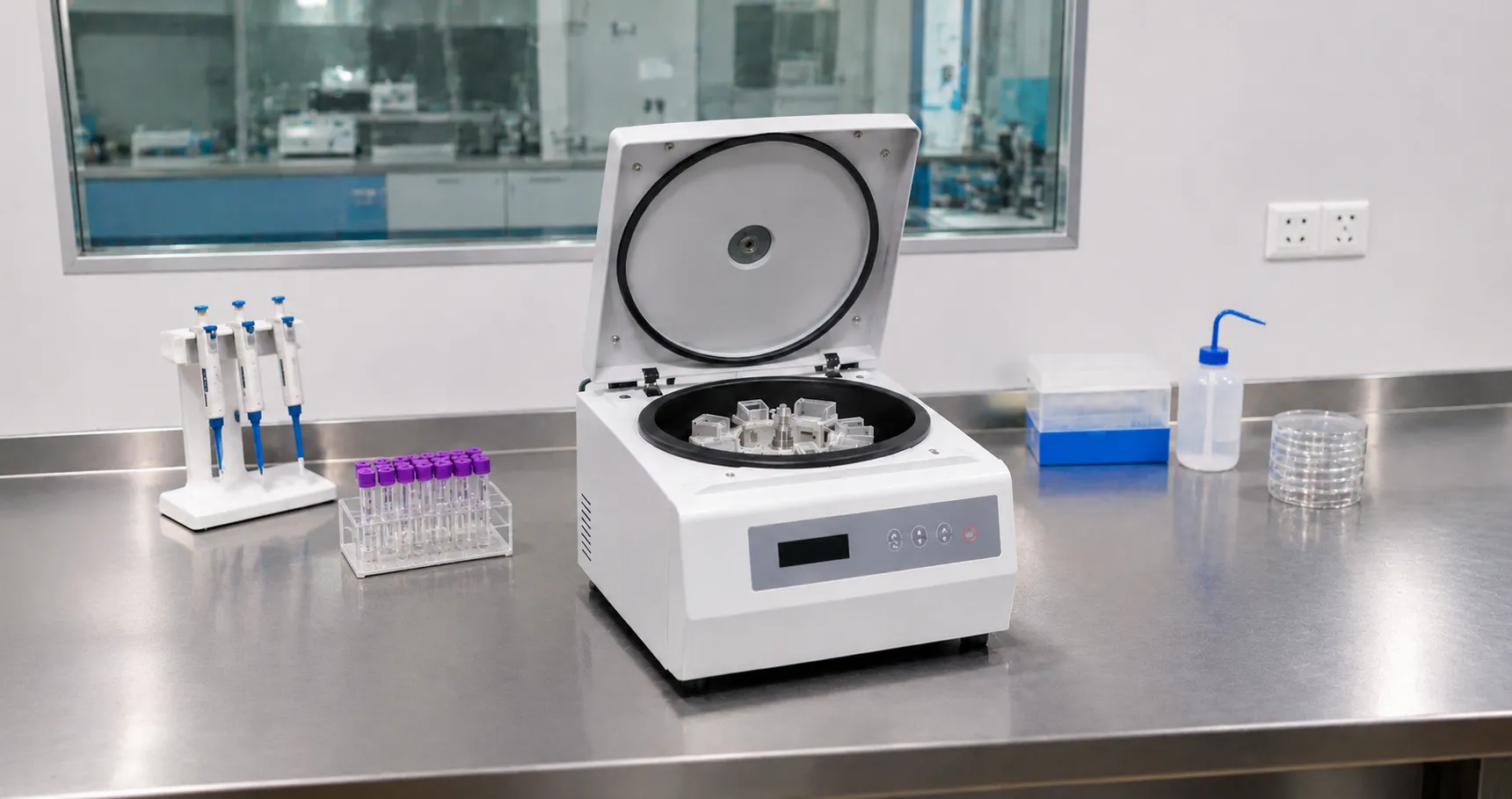
A cytospin centrifuge, or cytocentrifuge, is a specialised low-speed centrifuge that concentrates cells from a dilute fluid directly onto a small area of a microscope slide. It spins fluid held in a disposable funnel chamber so that cells are deposited in a thin, even monolayer while excess liquid is drawn off into an absorbent filter card. The result is a well-preserved cell button ready for staining and microscopy, made from samples that would otherwise yield too few cells to examine.
For a cytology or haematology laboratory buyer, the cytocentrifuge is the workhorse behind slides from cerebrospinal fluid, effusions, urine and fine-needle aspirates. This guide covers how it works, the specifications that matter and how to buy one that fits the workload.
Why Low-Cellularity Fluids Need It
Many diagnostic fluids contain very few cells suspended in a large volume. Cerebrospinal fluid, serous effusions, bronchoalveolar lavage, synovial fluid and washed-out urine all fall into this category. A standard smear would spread the handful of cells too thinly to find, and ordinary centrifugation damages fragile cells and loses morphology. The cytocentrifuge solves this by concentrating the cells from a measured aliquot onto a defined spot, typically a few millimetres across, so the scientist can scan the whole population in one field of view.
How the Deposition Works
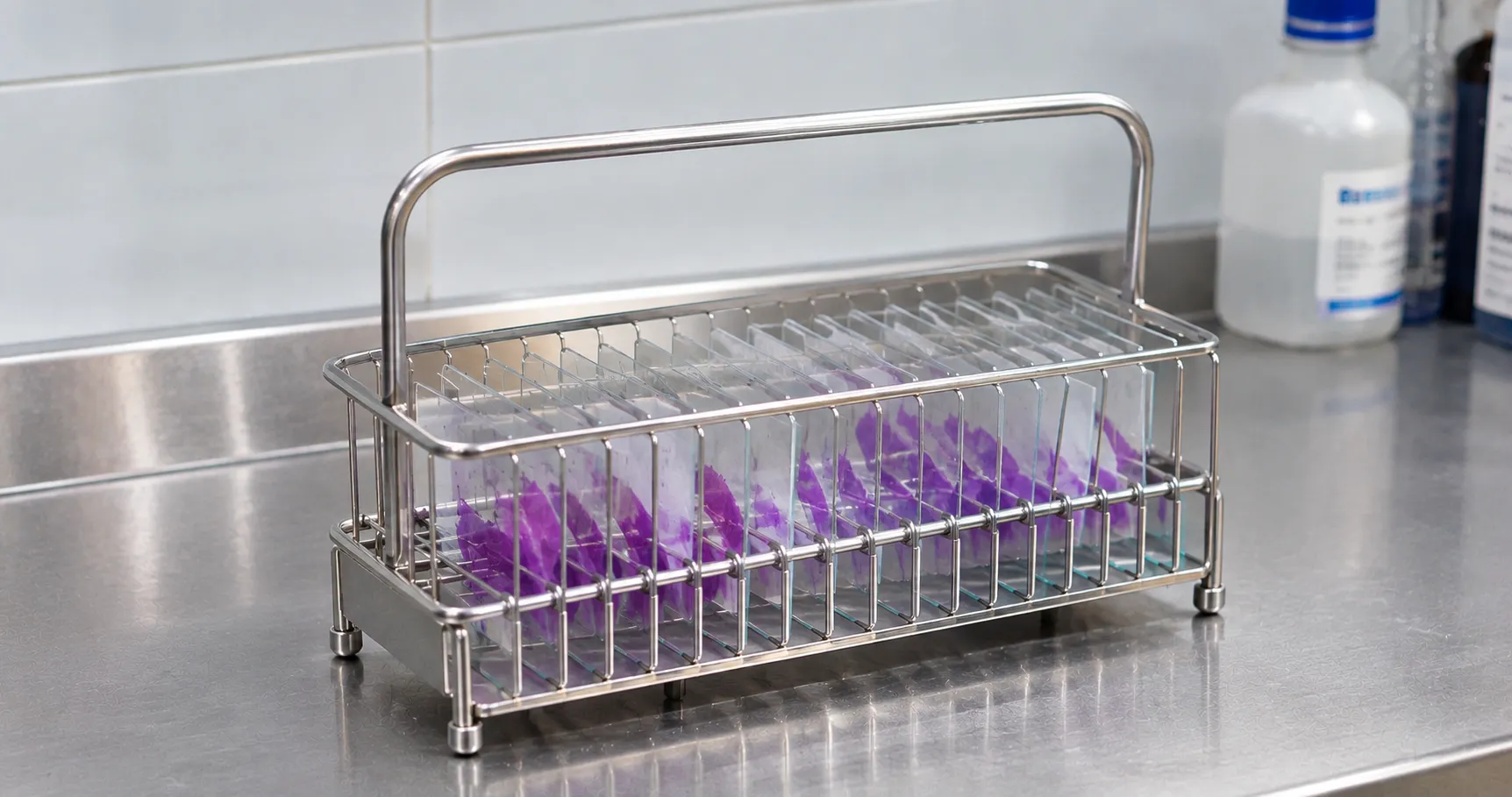
The sample is loaded into a sealed funnel chamber assembly that clips a slide, a filter card with a central hole and the funnel together. During the spin, centrifugal force drives the cells towards the slide while the supernatant passes through the hole into the absorbent card. Because the card wicks away fluid, cells settle gently as a monolayer rather than being crushed, preserving nuclear and cytoplasmic detail. The prepared spot is then air-dried or fixed and stained — Romanowsky stains such as May-Grunwald-Giemsa for haematology, or Papanicolaou and equivalents for cytology.
Concentration and Cell Recovery
Cell recovery depends on spin speed, time, sample viscosity and protein content. Low speeds — commonly in the region of a few hundred rpm, translating to a low relative centrifugal force — protect morphology; too high a speed distorts cells. Highly cellular or bloody samples are often diluted or pre-treated so the monolayer is not overcrowded. Good technique and the right consumables matter as much as the instrument itself.
The funnel chamber design also shapes the result. Single-chamber funnels put one spot on a slide; double-chamber or multi-spot funnels place two or more deposits from the same fluid, letting the laboratory stain replicate spots differently or keep one unstained for later special stains. Sealed disposable chambers reduce aerosol risk and cross-contamination, while reusable chambers with clip-on cards lower per-slide cost but demand thorough decontamination between samples. Match the chamber type to your fluid range and biosafety policy before standardising on a consumable.
Specifications a Buyer Should Check
Rotor capacity is the headline: how many slides can be processed per run, from single-place units to twelve or more chambers. Check the achievable speed and RCF range and, crucially, the resolution of speed and time control, because reproducible low-speed spins are the whole point. Programmable memory for stored protocols, gentle acceleration and braking ramps, and a clear display all help standardise results between staff.
Safety and containment matter because these fluids may be infectious. Look for a sealed rotor or bio-containment lid, a lid interlock that prevents opening while spinning, and imbalance detection. Ease of loading the funnel-card-slide sandwich, and how easily the rotor is removed for cleaning or autoclaving, affect daily use. Confirm compatibility with the funnel chambers, filter cards and clips you intend to use, as consumables are often system-specific.
Standards, Regulation and Decontamination
A laboratory centrifuge sold in the UK must carry UKCA or CE marking and meet laboratory electrical-safety requirements under IEC 61010-1, with the specific part IEC 61010-2-020 covering laboratory centrifuges; confirm both are declared in the technical file and that the manufacturer is registered with the MHRA where the device is used for diagnostic purposes. Because samples can be biohazardous, decontamination is central. The rotor, buckets and sealed heads should tolerate routine disinfectant and, ideally, autoclaving. Follow your local containment guidance and the principles set out by the Health and Safety Executive for handling infectious material.
Consumables and Total Cost of Ownership
The recurring cost is dominated by single-use funnel chambers, filter cards and slide clips. Because these are consumed on every preparation, cost per slide can outweigh the capital price over the instrument's life, so model it at your real sample volume. Reusable metal clip systems reduce per-slide cost but add cleaning and decontamination labour. Add a service contract covering rotor inspection, speed calibration verification, motor and brush wear where applicable, and loan cover for breakdowns. Because a speed error directly affects cell morphology and recovery, periodic verification of the set speed against an independent tachometer, or as part of a scheduled service, should be built into the quality plan rather than assumed.
-
Confirm rotor capacity matches your run sizes, from single-slide to multi-chamber batches.
-
Check the low-speed RCF range and the precision of speed and time control for reproducibility.
-
Look for a sealed or bio-containment rotor, lid interlock and imbalance detection.
-
Verify UKCA/CE marking and IEC 61010-1 / 61010-2-020 declarations in the technical file.
-
Confirm the rotor and heads tolerate your disinfectant and autoclave cycle.
-
Check compatibility with the funnel chambers, filter cards and clips you plan to use.
-
Model cost per slide from single-use consumables versus reusable clip cleaning labour.
-
Review speed-calibration verification, servicing intervals and loan-instrument cover.
Slide Quality and Common Pitfalls
A good cytospin gives an even monolayer with well-preserved cells confined to a defined circle. Poor results usually trace back to a few causes: too high a spin speed distorting nuclei, an overloaded sample producing a thick, unreadable spot, or a protein-poor fluid such as neat CSF allowing cells to spread or detach. Adding a little albumin or a proprietary cell-suspension medium to low-protein samples improves adhesion, and diluting bloody or cellular samples prevents overcrowding. These techniques depend on consumables and reagents as much as on the centrifuge, so include them in the buying conversation.
Chamber leakage and cross-contamination are the other risks. A worn or poorly seated funnel-card-slide assembly can leak, spoiling the preparation and contaminating the rotor, which is why disposable sealed chambers are popular despite their per-slide cost. Whichever system you choose, staff training and a validated local protocol for each fluid type do more for slide quality than any single instrument feature.
Use Across Different Settings
Cytocentrifuges appear in haematology for CSF cell counts and differentials, in cytopathology for effusions and fine-needle aspirates, and in microbiology and research settings. A high-throughput cytology department needs multi-place rotors and stored protocols; a smaller laboratory processing occasional CSF samples may be well served by a compact bench unit. Turnaround also matters for CSF, where cells degrade quickly, so a unit that is always ready and simple to load reduces pre-analytical delay. In shared laboratories the same cytocentrifuge may serve several disciplines, so agree booking, cleaning and validation responsibilities across teams before purchase to avoid contention and inconsistent protocols.
Conclusion
The cytospin centrifuge makes readable slides from fluids that are almost empty of cells, gently concentrating them into a monolayer that preserves the detail a cytologist needs. Buying well means matching rotor capacity and low-speed control to your workload, confirming the centrifuge safety standards, and modelling the consumable cost per slide. MediGear helps UK laboratories compare centrifuges and cytology consumables; register as a buyer or contact our team to find a suitable cytocentrifuge.
Disclaimer
This article is for informational purposes only. It is published by MediGear (medigear.uk) for general information and procurement guidance, and is not clinical, diagnostic, treatment, technical, engineering, legal or regulatory advice, nor a product endorsement, guarantee or substitute for professional assessment. MediGear does not provide medical consultations. Buyers should consult their clinical, biomedical, estates and regulatory contacts, and the manufacturer's documentation, and independently verify all specifications, certifications, compatibility and suitability before purchase. Specifications, certifications and availability are correct at the time of publication and may change without notice. MediGear is a medical-equipment distributor and does not sell medicines or pharmaceutical products.