Nebulisers are easy to overlook and awkward to get wrong. The device changes how much aerosol reaches the patient, how long a treatment takes, and how much decontamination work the department takes on. Departments that standardise thoughtfully spend far less time managing spare parts and cleaning routines.
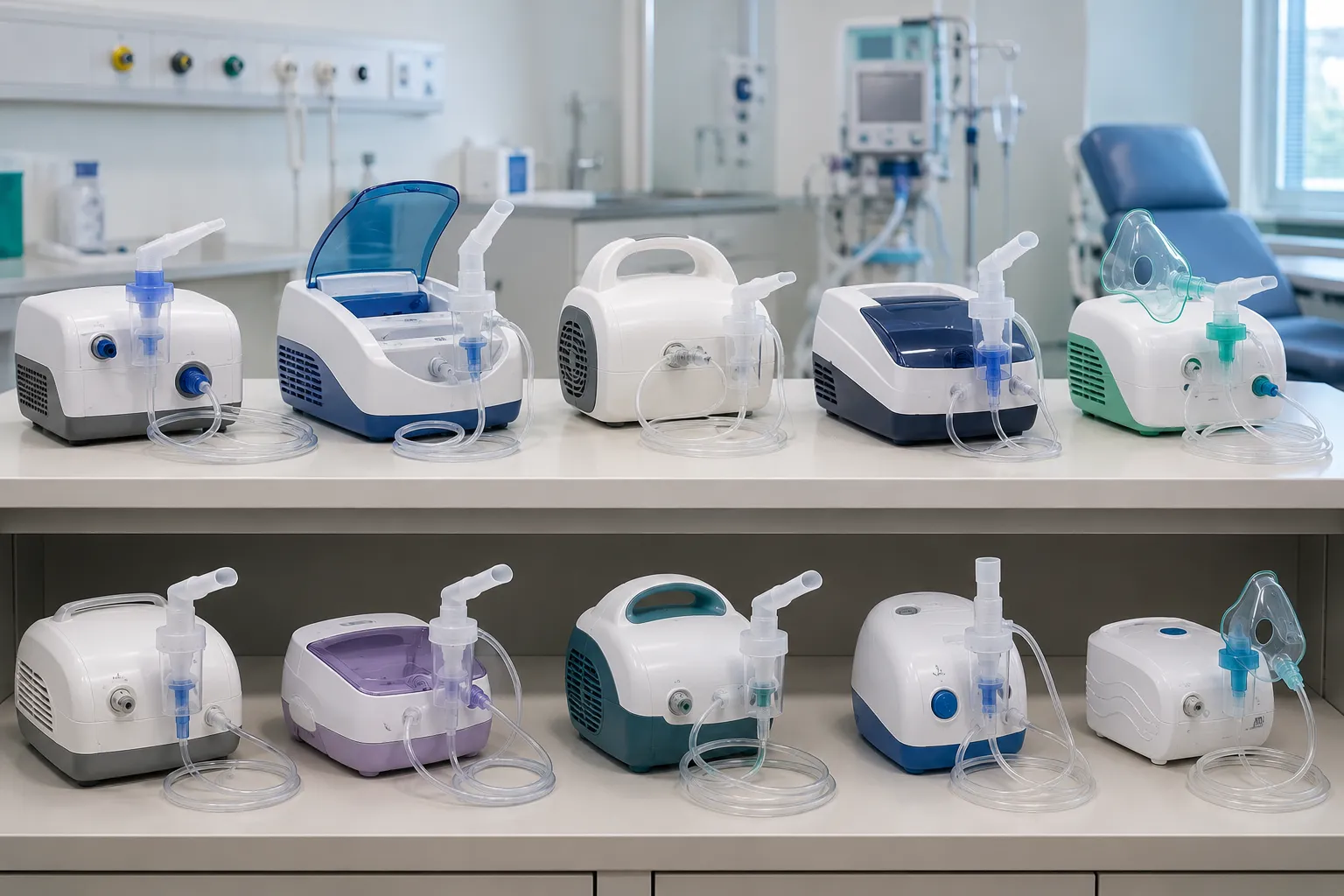
The ten types below cover ward, clinic and community respiratory work. Each entry explains the design and what to confirm before ordering.
What separates one nebuliser from another
Aerosol characteristics come first: the proportion of the output in a particle-size table for the intended part of the airway, and the output rate that determines treatment time. Then comes the delivery interface, since a mask, mouthpiece or in-line connection each behaves differently.
Finally, consider the decontamination burden. Reusable components need requirefined cleaning and drying routine, while single-patient devices shift the work to stock management inst ten nebuliser types
1. Jet nebulisers with electric compressors
The familiar arrangement, using compressed air from a small compressor to generate aerosol. Reliable and widely supported, with compressor filters and servicing as ongoing tasks.
2. Piped gas drgas-drivenisers
Driven from wall oxygen or medical air rather than a compressor. Common on wards, though the driving gas and flow rate must match the device to achieve the intended output.
3. Breath-enhanced nebulisers
Increase output during inspiration to reduce loss to the room. Useful where treatment time or waste is a consideration.
4. Breath-actuated nebulisers
Generate aerosol only during inspiration. They further reduce waste; they require a patient who can maintain an adequate breathing pattern.
5. Vibrating mesh nebulisers
Push liquid through a fine mesh, producingproducing an aerosol quietly and quickly with very little residual volume. Mesh cleaning and replacement are the ongoing considerations.
6. Ultrasonic nebulisers
Use ultrasonic vibration to generate aerosol. Suitable for some solutions, but not all; check compatibility with the medicines your department administers.
7. Portable battery-powered nebulisers
Compact devices for community, transport and home use. Battery endurance, noise and simplicity for patients matter more than maximum output.
8. Large volume nebulisers
Deliver continuous aerosol or humidification over longer periods, typically for airway humidification rather than short drug treatments.
9. In-line nebulisers for ventilated patients
Fitted within a breathing circuit, with placement affecting delivery. Confirm compatibility with your ventilator circuits and the arrangements for changing devices.
10. Single-patient nebuliser kits
Chambers, tubing and interfaces assigned to one patient and then discarded. These remove reprocessing work but create a stock and supply commitment.
Practical points to settle
-
Driving gas and flow. Confirm the flow rate the device requires, and that ward outlets can supply it.
-
Interface choice. Specify masks, mouthpieces and paediatric sizes alongside the device.
-
Residual volume. Ask how much liquid remains in the chamber at the end of treatment.
-
Cleaning routine. Establish the approved method, drying arrangements and who carries it out.
-
Compressor filters. Confirm filter type, replacement interval and supply for electric compressor units.
-
Noise. Consider sound output for bay use and for patients using devices at home.
Infection prevention, training and servicing
Cross-infection risk sits mainly in reusable chambers and tubing that are inadequately cleaned or dried. Decide early whether the department will run reusable kits with a robust reprocessing routine or single-patient kits with the stock implications that follow. A mixed approach without clear rules tends to produce the worst of both.
Training should cover assembly, correct filling, interface fit, recognising the end of treatment and the cleaning routine. Patients and carers using devices at home need the same content in plainer terms, with written instructions to take away.
For seon compression oranceression orance intervals, filter replacement, electrical, spares parts, e-spare parts, the department receives published device safety alerts. Hence, field safety notices are sent to the respiratory team.
Final thoughts
Choose the nebuliser around the patient and the decontamination plan. Most departments need a dependable jet or mesh option for routine treatments, single-patient kits where reprocessing is impractical, and in-line devices specified alongside the ventilator circuits already in use. Settle cleaning routines and consumable supply before rollout.
This article provides general procurement guidance for healthcare organisations. It is not clinical advice, does not cover medicine selection, and does not replace manufacturer instructions or local infection prevention policy.