Best Nebulisers for Hospital and Home Respiratory Therapy
What happens when an inhaler is not enough? When the child is too young to use one, the patient too breathless to coordinate a puff, or the dose too large for a metered device to deliver? The answer is a nebuliser — a machine that turns a liquid drug into a fine mist, which is inhaled through a mask, delivering it straight to the airways where it is needed. No coordination. No timing. Just breathing. For hospitals managing attacks and homes managing chronic conditions, it is not a backup plan. It is the front line that keeps airways open when nothing else can.
She was four years old. An asthma attack at two in the morning. Her inhaler with a spacer was not cutting through. Her breathing was tight, rapid, and getting worse. Her mother drove to A&E. Within three minutes of arriving, a nebuliser mask was on her face, delivering salbutamol in a steady mist. Within ten minutes, the wheeze was loosening. Within thirty, she was sitting up, drinking water, and asking for her teddy. The machine did what the inhaler could not — a high dose of drug to airways too tight to accept anything less.
This guide covers how to choose the best nebuliser for hospital and home use with the honest detail that respiratory teams, ward managers, parents, and procurement leads need. Medigear supplies certified nebulisers to hospitals and clinics across the UK — and every point here comes from real respiratory care, not product brochures.
How Nebulisers Work
They work by breaking liquid drugs into particles small enough to reach the lower airways — where asthma, COPD, and other conditions do their damage. The particle size matters. Too large, and the drug hits the mouth. Too small and it floats out with the next breath. One to five microns is the sweet spot. A good machine holds that range from the first puff to the last.
Jet Nebulisers
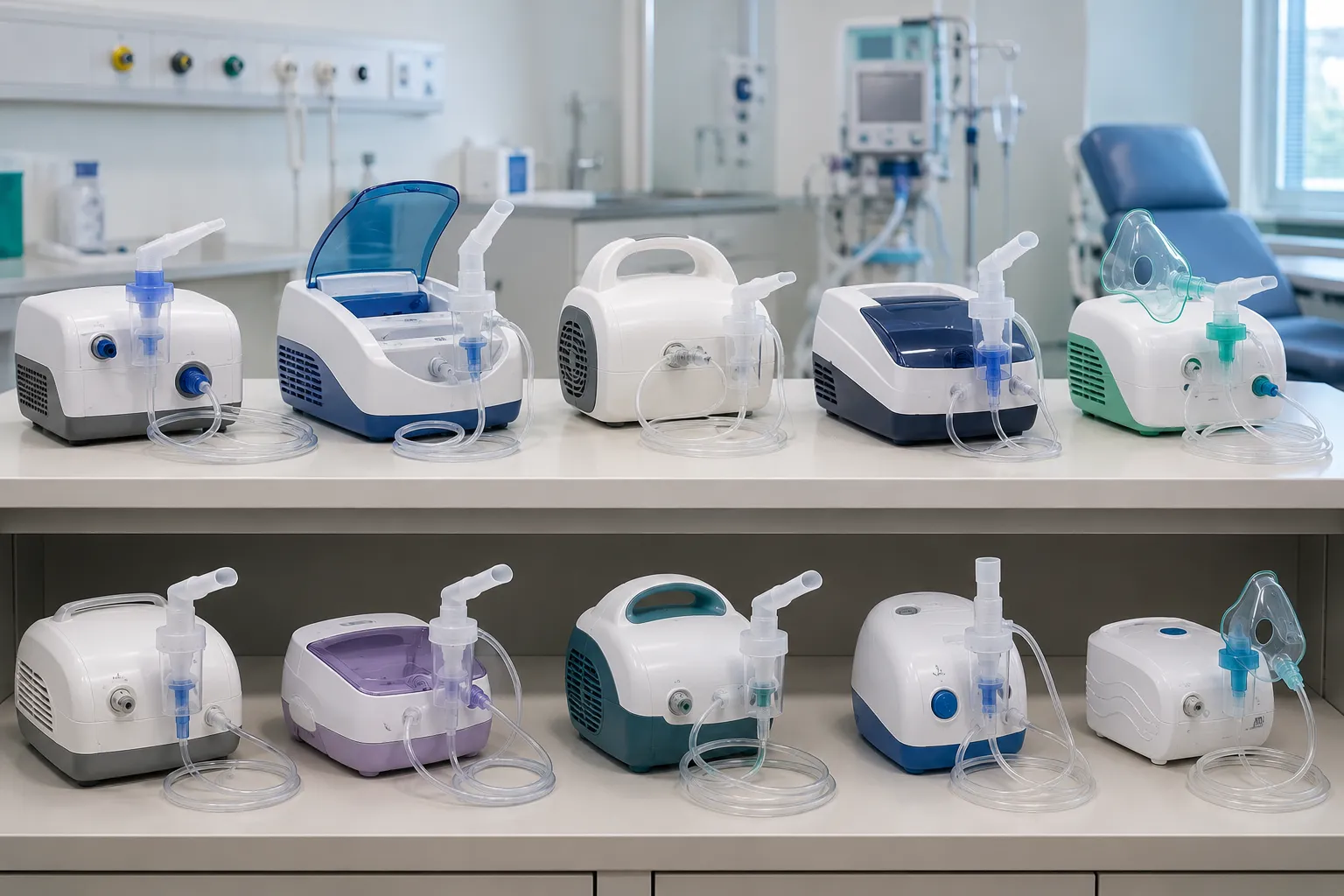
Jet nebulisers — also called compressor nebulisers — use compressed air to blast liquid through a small opening, breaking it into mist. Most common in hospitals. Reliable. Cheap. Works with almost every drug. The downside is noise — like a small motor beside the bed. That matters when a scared child is already fighting to breathe.
Ultrasonic Nebulisers
Ultrasonic nebulisers use high-frequency vibrations to turn liquid into mist. Quieter than jet types. Finer, more even particles. But they make heat — which can wreck drugs like budesonide and some antibiotics. Check drug compatibility before picking an ultrasonic.
Mesh Nebulisers
Mesh nebulisers — also called vibrating mesh — pass liquid through a fine metal mesh with thousands of tiny holes, producing a precise, consistent mist without heat or excessive noise. Most efficient type. Less waste. Faster runs. Best particle size. Also, the most expensive. For busy hospitals or quiet homes, mesh gives results that jet and ultrasonic cannot match.
Linked Guides
For hospitals managing respiratory care alongside broader monitoring, our guide to vital signs monitor features covers the bedside oxygen, heart rate, and respiratory tracking that supports nebulised therapy — because a patient receiving a bronchodilator needs SpO2 monitoring throughout to confirm the drug is working and the oxygen is rising. Our guide to portable vs stationary X-ray machines covers the chest imaging that guides treatment decisions in patients whose breathing does not improve after nebulisation.
Drug Delivery Efficiency
Drug delivery efficiency varies between nebuliser types — and it matters more than most buyers realise. A jet unit gets ten to fifteen percent of the drug to the lungs. A mesh gets up to fifty. That means jet patients breathe less active drug per dose — longer sessions, more medicine, same result. On a busy ward, the time saved per patient adds up across every shift.
Portability
Portability decides where the nebuliser works. Hospital units are large, mains-powered, and built for bedside. Home devices must be small, light, and quiet enough for a bedroom. Portable mesh units fit in a pocket and run on battery — travel, work, life, no plug needed. Match the device to the setting — not just the drug.
Mask vs Mouthpiece
Mask versus mouthpiece changes how the drug reaches the lungs. Masks cover nose and mouth — for young children, confused patients, and anyone who cannot hold a mouthpiece. Mouthpieces get more oxygen to the lungs and waste less on the face — for older children and adults who can mouth-breathe on cue. The wrong interface means fewer drugs and more side effects. Steroid landing on the face and eyes is a mask problem, a mouthpiece would stop.
Noise
Noise level matters more than spec sheets suggest. A machine used on a screaming toddler at 3 am must be as quiet as possible. Noise adds to the fear of a child already struggling. In a hospital bay, it must not wake the patient next door. Mesh runs at twenty-five decibels — barely a whisper. Jet runs at fifty to sixty — louder than a chat. For children and night use, noise is not comforting. It is compliance.
Cleaning
Cleaning and maintenance shape how long a nebuliser lasts and how safely it works. Drug residue, moisture, and bacteria build up after every session. Hospitals clean between patients. Home users must clean after every session — rinse, dry, replace parts on time. A device that is hard to clean breeds the infections it is meant to treat.
Paediatric Use
Paediatric nebuliser use needs smaller masks, lower flow rates, and child-friendly designs that reduce fear and improve compliance. Animal masks, coloured parts, and quiet running turn fear into tolerance — and tolerance into a full dose. A child who pulls the mask off gets half a dose. The device that keeps it on delivers the drug that keeps the child breathing.
Drug Compatibility
Can your nebuliser handle the drug your patient needs? Not every device works with every medication. Suspensions like budesonide need jet or mesh — not ultrasonic. Antibiotics such as tobramycin require a mesh for efficient delivery. Hypertonic saline needs a device rated for the volume and the salt load. Assuming any nebuliser works with any drug is a clinical error that wastes medication, under-treats patients, and risks harm from drug damage during delivery.
Power Backup
What does your home patient do when the power goes out? A mains-only nebuliser becomes useless the moment the plug dies. For patients who depend on regular nebulised therapy — severe COPD, cystic fibrosis, chronic asthma — a battery backup or a portable mesh unit is not a luxury. It is the device that keeps them breathing when the lights go off.
Parts Replacement
How often are your nebuliser parts replaced? Chambers crack. Tubing yellows. Masks lose seal. Mesh plates clog. Every part has a lifespan set by the manufacturer — and daily use shortens it. Running a nebuliser past its parts' life reduces drug delivery, increases the risk of infection, and renders a certified device uncertified. Replace on schedule. Not when it breaks.
Nebuliser vs Inhaler
Does your team know the difference between a nebuliser and an inhaler — clinically? An inhaler delivers a fixed dose in a single puff. A nebuliser delivers a continuous dose over minutes. The choice depends on the patient's ability, the drug, the dose, and the severity of the episode. Giving a nebuliser when an inhaler would do so wastes time and resources. Giving an inhaler when a nebuliser is needed wastes the chance to open the airway before it closes.
Cost Per Treatment
Cost per treatment is the honest way to compare. A cheap jet unit with high drug waste costs more per session than an expensive mesh unit that delivers three times more drug per dose. Add the device price, masks, tubing, chambers, replacement parts, and cleaning supplies. Divide by treatments over the device's life. That gives the real cost per breath — the number that separates a budget buy from a smart one.
Travel
Travelling with a nebuliser requires planning that healthy people never think about. Carrying medication, a spare device, batteries, masks, and a letter from the prescriber. Knowing which airlines allow nebulisers on board. Knowing which countries stock the drug. A patient who depends on nebulised therapy cannot just pack a bag. They must pack a respiratory plan.
Elderly Patients
Elderly patients using nebulisers at home face challenges that younger users do not. Weak grip makes assembly harder. Poor eyesight makes dosing uncertain. Forgetting to clean leads to infection. A nebuliser chosen for an elderly patient must be simple to assemble, easy to see, and easy to clean with shaky hands. The best device in the world fails if the patient cannot use it alone.
COPD vs Asthma
COPD patients use nebulisers differently from asthma patients — and the device must match the disease. COPD needs longer sessions, higher doses, and often multiple drugs delivered in sequence. Asthma requires rapid relief with a single bronchodilator. A device that suits one may frustrate the other. Matching the machine to the condition — not just the drug — is the step most buyers miss.
Certification
Always confirm CE marking, ISO 27427 for nebuliser performance, and full MHRA compliance before buying any nebuliser. Ask about drug compatibility, particle size testing, warranty, and replacement part availability. It delivers drugs straight into the lungs. What goes in, and how, shapes whether the patient breathes easier or not at all.
Why Choose Medigear
Medigear supplies certified nebulisers, masks, tubing, and respiratory accessories to hospitals, clinics, GP surgeries, and home users across the UK — with clear pricing, honest guidance, and after-sales support built for the demands of daily respiratory care. Whether you are equipping an emergency department, a respiratory ward, or a family home, our team matches the right nebuliser to the patient. Reach out to our team directly for guidance built around the airways that need opening — and the mist that opens them.
Conclusion
What happens when the inhaler is not enough? When the child is too young, the patient too breathless, the dose too large? A nebuliser fills that gap — turning liquid into mist, mist into breath, and breath into the difference between an airway that opens and one that does not. Jet, ultrasonic, or mesh. Hospital, home, or pocket. Mask or mouthpiece. The choice shapes how much drug reaches the lungs, how fast it gets there, and whether the patient breathes easier or fights harder. Medigear stands alongside respiratory teams and families with certified nebulisers and the honest support that airway care demands. Speak to our team today — because the mist that opens the airway starts with the machine that makes it.
⚠️ This post is for general information only. We do not sell medications or provide prescriptions — Medigear.uk is a medical equipment supplier only.