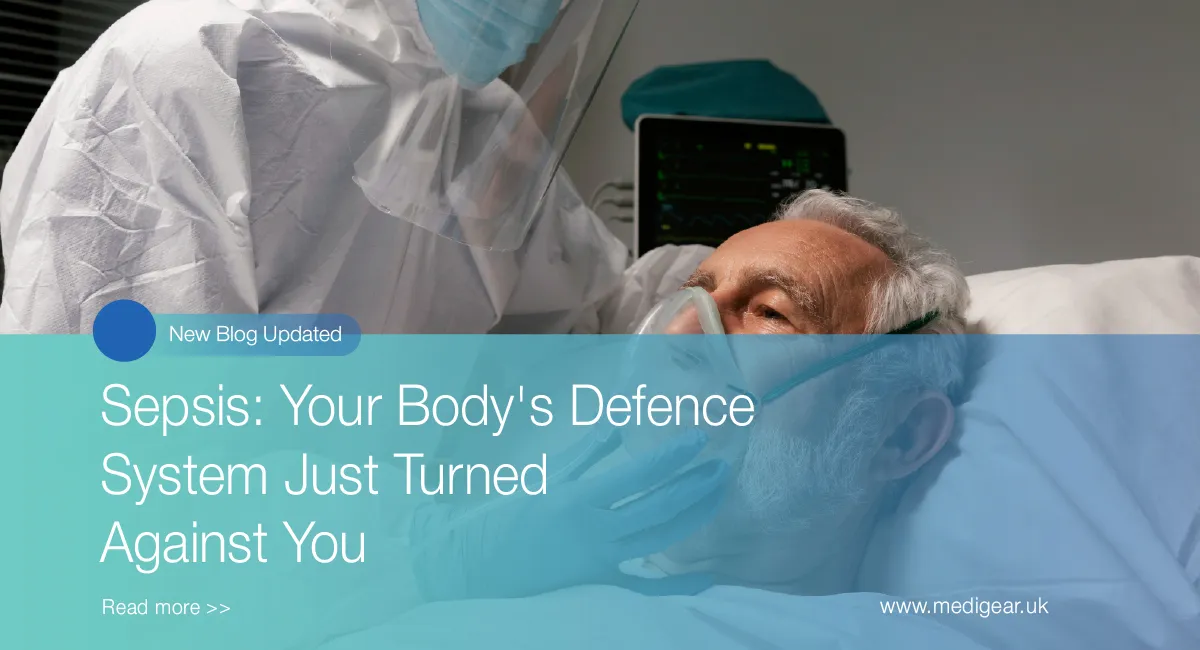
Sepsis: Your Body's Defence System Just Turned Against You
What if the thing fighting the infection was causing more damage than the infection itself? What if the immune system — built to protect the body — could not tell when to stop? What if the army sent to defend the city burned it down instead? That is sepsis. Not an infection. A response to one. A response so extreme that the organs meant to survive the fight are destroyed by it.
She came into A&E with a urinary infection. Fever. Shaking. Confused. Her blood pressure was low. Her heart rate was high. Her oxygen was dropping. The junior doctor started antibiotics and fluids — fast. By the time the registrar arrived, the lactate was four times normal. The kidneys had slowed. The liver was stressed. And the immune system that should have been clearing a bladder infection was shredding her blood vessels, flooding her tissues with fluid, and shutting down organs one by one. She had sepsis. She was sixty-three years old. And she was dying from her own defence system.
This guide explains sepsis with the urgency it demands — because sepsis does not wait for a diagnosis. It moves while doctors are still deciding. How the immune response breaks, what the signs look like, who is most at risk, how diagnosis works, and how the right clinical equipment gives hospitals the speed to catch sepsis before it crosses the line from treatable to fatal. Medigear supplies certified diagnostic and monitoring equipment to hospitals and clinics across the UK — because in sepsis, the clock starts before anyone knows it is running.
How Sepsis Starts
Sepsis begins with an infection — any infection. A chest infection. A urine infection. A skin wound. A tooth abscess. An infected surgical site. The body responds by releasing chemicals into the blood that trigger the immune system to fight. In a normal response, the fight is proportional — enough to kill the invader, not enough to hurt the host. In sepsis, the response overshoots. The chemicals flood the bloodstream. Blood vessels dilate and leak. Blood pressure drops. Organs that depend on steady blood flow — kidneys, liver, brain, lungs, heart — start to fail. Not because the infection reached them. Because the immune response did.
Septic Shock
Septic shock is what happens when the blood pressure falls so low that fluids and drugs cannot bring it back fast enough to keep the organs alive. The heart races to compensate. The blood vessels stay open. The tissues starve. Lactate rises as cells switch to anaerobic metabolism — a sign that oxygen delivery has failed. Septic shock carries a death rate above forty percent. Every hour of delay in treatment raises that number. Not by fractions. By percentage points that represent lives.
Who Gets Sepsis
Who gets sepsis? Anyone with an infection. But some carry far higher risk. The very young, whose immune systems are still developing. The very old, whose defences have weakened. Patients with chronic diseases — diabetes, kidney failure, liver disease, and cancer. Those on immunosuppressive drugs — chemotherapy, steroids, transplant medications. Surgical patients with open wounds or indwelling lines. And pregnant or recently pregnant women, whose immune shifts during pregnancy create a window that sepsis exploits.
Symptoms
Symptoms of sepsis are common enough to be missed and serious enough to kill. Fever or low temperature. Fast heart rate. Fast breathing. Confusion or altered behaviour. Mottled or discoloured skin. Reduced urine output. A patient who just does not look right — the nurse's gut feeling that something is wrong before the numbers confirm it. Sepsis does not present with a neon sign. It presents with pieces of a puzzle that only make a picture when someone puts them together fast enough.
NEWS2
NEWS2 — the National Early Warning Score — is the tool that catches the pattern. It combines heart rate, breathing rate, oxygen, temperature, blood pressure, and consciousness into a single number. A rising score triggers an escalation pathway. Score of five — call the doctor. Score of seven — urgent review. Score of nine — crash team. Automated NEWS2 on a multi parameter monitor removes the maths from the bedside and puts the alert where it belongs — in front of the team before the patient crashes. Our guide to vital signs monitor features covers the monitoring tools that make automated NEWS2 possible — the same tools that catch sepsis patterns while manual rounds are still an hour away.
Lactate
Lactate is the blood test that separates sick from dying. A normal lactate level means the cells are getting enough oxygen. Raised lactate means they are not. A level above two signals trouble. The above four signals indicate organ failure in progress. Point-of-care lactate testing — a result in minutes from a bedside device — gives the team a number they can act on while the full blood panel is still in the lab queue.
Blood Cultures
Blood cultures must be taken before antibiotics start — ideally two sets from different sites. They identify the organism causing the infection and guide targeted treatment. Starting antibiotics before cultures risks growing nothing in the lab — leaving the team guessing which bug they are fighting. But delaying antibiotics to wait for cultures is worse. Take the cultures. Start the drugs. Same moment. No waiting.
The Sepsis Six
The Sepsis Six — the bundle of actions that must happen within the first hour — drives the treatment response. Oxygen. Blood cultures. IV antibiotics. IV fluids. Lactate measurement. Urine output monitoring. All six within sixty minutes of suspicion. Not sixty minutes of confirmation. Sixty minutes of suspicion. The clock starts when someone thinks sepsis — not when someone proves it.
Fluids
Fluid resuscitation — large volumes of IV crystalloid pushed fast — restores the blood volume that leaking vessels have lost. Most sepsis patients need thirty millilitres per kilogram in the first three hours. Too little leaves the organs dry. Too much floods the lungs. Getting the balance right requires the kind of continuous monitoring that only a multi-parameter monitor with invasive pressure, urine output tracking, and lactate trending can provide. Our guide to portable vs stationary X-ray machines covers the chest imaging that checks for fluid overload during and after resuscitation — because the line between enough and too much shows up on the chest film first.
Vasopressors
Vasopressors — noradrenaline first-line — tighten the blood vessels that sepsis has forced open. They raise blood pressure by constricting blood vessels rather than increasing blood volume. Titration happens in real time — watching the arterial line trace beat by beat, adjusting the dose by micrograms per minute, and holding the pressure steady enough for the kidneys to keep working. Without continuous monitoring, vasopressor dosing is guesswork that risks both ends — too low and the organs starve, too high and the heart strains.
Source Control
Source control — finding and fixing the cause of the infection — is a treatment that antibiotics alone cannot replace. A drainable abscess needs draining. An infected line needs removing. A perforated bowel needs surgery. Antibiotics kill bacteria. Source control removes the factory that makes more. A sepsis patient on perfect antibiotics with an undrained abscess stays septic until someone fixes the source.
Children
Children with sepsis present differently from adults — and die faster. A child with cold hands, mottled skin, fast breathing, and a parent saying they have never been this sick should trigger the sepsis pathway before the blood results arrive. Paediatric sepsis moves in hours, not days. The treatment window is smaller. The margin is thinner. And the consequences of delay are measured in a life that had not started yet.
Post-Sepsis Syndrome
Post-sepsis syndrome affects survivors in ways the hospital discharge summary rarely captures. Fatigue that lasts months. Cognitive fog. Muscle weakness. Anxiety. Depression. Flashbacks to ICU. Repeat infections from an immune system left weakened by the battle it just fought. Sepsis does not end at discharge. It follows patients home, and the support they get after leaving the hospital shapes whether they recover or merely survive.
Audit Your Pathway
Can your emergency department start the Sepsis Six in under sixty minutes? If the answer is not a confident yes, then the gap between suspicion and treatment is where patients die. Audit the pathway. Take the steps. Fix the delays. A facility that knows its sepsis response time — and works to cut it — saves more patients than one that assumes the team will manage when the moment comes.
Public Awareness
Sepsis awareness among the public saves lives before the ambulance arrives. A parent who knows that a feverish child with mottled skin and fast breathing could have sepsis calls faster than one who waits for the morning surgery. A partner who knows that confusion in a patient with a recent infection is not just tiredness but a warning sign acts before the window closes. The word sepsis should be as well-known as a heart attack. It kills at similar rates. It deserves similar awareness.
Why Choose Medigear
Medigear supplies certified diagnostic and monitoring equipment — including vital signs monitors, point-of-care testing tools, multi-parameter monitors, and clinical accessories — to hospitals, emergency departments, and clinics across the UK. Whether you are building a sepsis response pathway, upgrading bedside monitoring for NEWS2 automation, or equipping a resuscitation bay, our team matches the right tools to your clinical need. Reach out to our team directly for guidance built around the patients whose defence system turned against them — and the clinicians racing to shut it down before the damage is done.