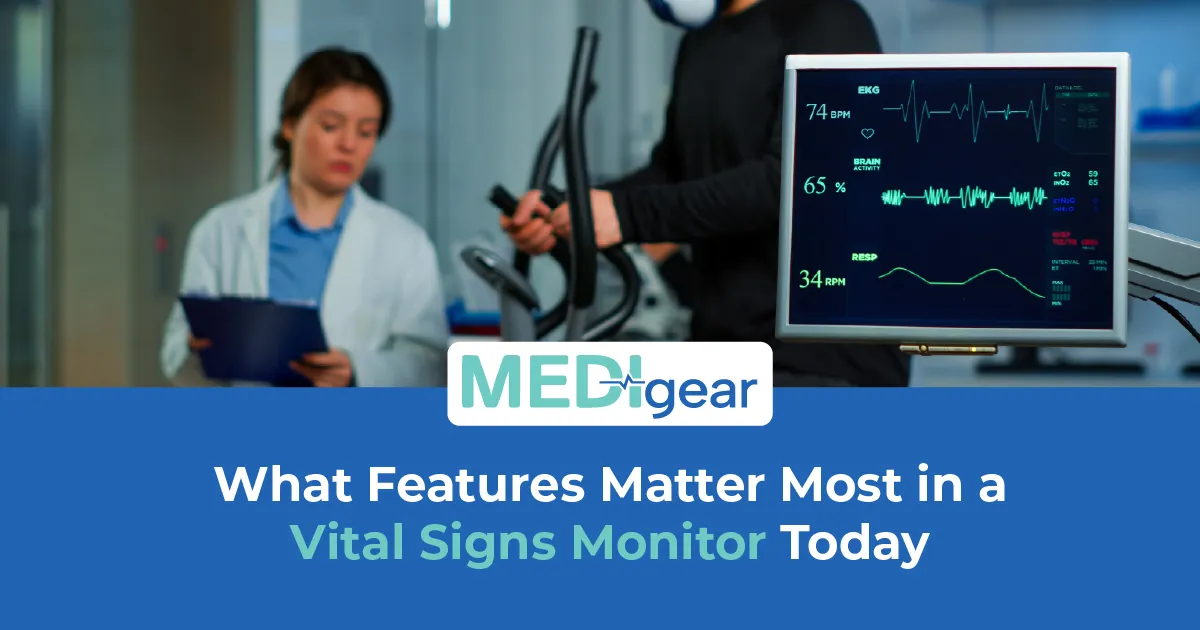
What Features Matter Most in a Vital Signs Monitor Today?
The nurse checked the screen at midnight. Everything looked fine. Heart rate seventy-four. Oxygen ninety-seven. Blood pressure steady. She moved to the next bay. Twenty minutes later, the same patient's respiratory rate had doubled from 14 to 28, but no one noticed because the monitor did not track breathing rate. It tracked heart and oxygen. Not breathing. The patient was in the early stages of sepsis, and the one number that would have caught it first was the one number the machine did not measure. By the time the next set of obs was taken by hand at two o'clock, the patient was on a fluid bolus, antibiotics were running, and a bed in intensive care was being cleared.
That is the gap a vital signs monitor either fills or fails to fill. The features it has — and the ones it does not — decide whether a clinical change is caught in real time or found two hours later during a manual round. In a hospital, that gap is measured in organ damage. In a GP surgery, in missed referrals. In a care home, in ambulance calls that arrive after the window has closed.
This guide covers the features that matter most in a vital signs monitor today — with the honest detail that ward managers, procurement leads, and biomedical engineers need. Medigear supplies certified vital signs monitors to hospitals and clinics across the UK — and every tip here comes from real ward conversations, not sales brochures.
Core Parameters
The core parameters are the foundation. A vital signs monitor without ECG, SpO2, NIBP, respiratory rate, and temperature is only half a tool. These five cover the basic picture. The value jumps when a vital signs monitor adds capnography — catching breathing failure before oxygen drops. It jumps again with non-stop tracking rather than spot checks. A device that takes one reading and waits misses the changes between checks. Those gaps are where patients get worse unseen.
Respiratory Rate
Respiratory rate is the most important and most missed vital sign. It shifts before heart rate, before oxygen, and before blood pressure in most patients going downhill. NEWS2 weights breathing rate as the strongest sign of decline. Yet many monitors skip it or guess it from the ECG signal, which is less accurate than direct measurement. A vital signs monitor that tracks breathing through capnography or a direct sensor fills the gap that hand counting and guesswork leave wide open.
Alarm Intelligence
Alarm intelligence separates useful monitors from noisy ones. A monitor that beeps at every minor dip creates alarm fatigue. Staff stop listening because nine out of ten alerts are false. Smart alarms filter noise, read context, and escalate only when a mix of changes says something is truly wrong. Adjustable limits, tiered levels, delay timers that block false spikes, and tones that tell the nurse whether to walk or run — these save more lives than any single number on the screen.
Connectivity
Connectivity determines whether data stays trapped on a screen or flows into the clinical picture. HL7 pushes readings to health records. Wireless sends alerts to phones. Central stations let one nurse watch twenty patients from a desk. Automated NEWS2 — scored by the vital signs monitor and sent to the record without pen or paper — kills the maths errors and delays that manual scoring brings. A vital signs monitor that collects but cannot share works at half power.
Portability
Portability shapes where the monitor works. Fixed suits a ward bay. Handheld suits GP rooms, district nursing, and home visits. Transport-grade suits ward-to-ward transfers. Battery, weight, screen, and drop strength all shape which setting the vital signs monitor fits. Ask how it works where you use it — not where the spec sheet was written.
Speed
Speed of measurement affects every list. A vital signs monitor that takes four minutes per set slows a ward round to a crawl. One that gets all five readings in under ninety seconds keeps the team moving. Taking all readings at once rather than one by one cuts time per patient and gets staff to the next bed faster.
Screen Clarity
Screen clarity matters more than size. A screen crammed with tiny numbers wastes data staff cannot read from two metres at 3 am. Big, bold numbers with colour bands — green, amber, red — make the screen useful from across the room. Good design turns raw numbers into instant calls.
Infection Control
Infection control covers every surface the monitor touches. Screens must be taken daily wipes. Cables must be smooth. Cuffs must be single-patient or cleaned between uses. SpO2 probes must be disposable or fully cleaned. A vital signs monitor that carries germs from bed to bed is not about health. It is spreading harm.
Linked Guides
For hospitals managing broader monitoring, our guide to the top 20 trusted medical equipment companies covers the global brands behind the vital signs monitors and clinical devices that lead the market. Our guide to sepsis explains how vital signs — especially respiratory rate and NEWS2 scoring — support the early recognition that saves sepsis patients before organ failure sets in.
Automated NEWS2
Automated early warning scoring is the feature that turns vital signs monitor from a measurement tool into a safety system. A vital signs monitor that scores NEWS2 on its own, shows it on screen, logs it, and fires an alert when the number crosses a line removes human error from the most important maths on any ward. Manual scoring is better than none. Automated is better than both.
Cuff Technology
Cuff technology affects accuracy, comfort, and speed. Dual-bladder cuffs read right on more arm sizes. Soft cuffs cut bruising on thin or fragile skin. Rapid deflation saves time. Paediatric, small, standard, large, and thigh cuffs must accompany any vital signs monitor used with a mixed group. One cuff size cannot read every arm right.
Trend Data
Data storage and trend display help spot patterns that single readings miss. Vital signs monitor that stores eight hours of readings and shows a trend graph catches slow changes — rising pulse, creeping oxygen dip, drifting pressure — that single numbers miss. Trends turn reactive care into proactive. They catch the patient getting slowly worse before they suddenly crash.
Escalation Integration
Integration with clinical escalation pathways makes the vital signs monitor part of the safety chain. A monitor that scores NEWS2, sends the result to the record, and triggers a protocol — call the doctor at five, the outreach team at seven, the crash team at nine — automates the response that manual systems depend on humans remembering under pressure. The monitor does the maths. The protocol does the thinking. The nurse does the acting.
Paediatric Monitoring
Paediatric vital signs monitoring needs different ranges, cuffs, alarm limits, and displays. Adult defaults on a child give wrong readings and risky alerts. Any vital signs monitor used on children must have paediatric settings that staff can switch to without calling engineering. A child is not a small adult. The monitor must know the gap.
Cost Per Obs Set
Cost per obs set is the honest way to compare. Add the monitor, cuffs, probes, software, training, and service. Divide by the number of obs sets over its life. That gives the true cost per reading — the number that lets procurement compare fairly, rather than grabbing the cheapest box and paying the gap in slow rounds and missed decline.
Durability
Durability under daily use separates clinical vital signs monitors from consumer devices dressed for the ward. A device used eight times an hour, twelve hours a day, wears out in a month what a home device wears out in a year. Cuff connectors loosen. Screens scratch. Batteries fade. The vital signs monitor that still reads right after three years of daily hammering is the one built for clinical-grade use.
Night Shift
Night shift is where a vital signs monitor earns its place. Fewer staff. Longer gaps. More fatigue. A monitor with automated scoring, clear alerts, and trend tracking fills the silence between rounds, which no human team can sustain after midnight. The vital signs monitor is not replacing the nurse. It covers the minutes the nurse cannot be in two places at once.
Wireless vs Wired
Wireless versus wired affects workflow and infection control. Wireless cuffs and probes cut cable mess, speed up reads, and make cleaning easier. Wired costs less and avoids battery failures. For busy wards, wireless is worth it. For low-volume clinics, wired still works.
Certification
Medigear supplies certified vital signs monitors, accessories, and clinical tools to hospitals, clinics, GP surgeries, and care homes across the UK — with clear pricing, honest guidance, and support built for daily use. Whether you are upgrading from manual obs, adding NEWS2, or equipping a new ward, our team matches the right monitor to your needs. Reach out to our team directly for guidance built around the patients on your ward and the numbers that keep them safe.
Conclusion
A vital signs monitor is not a screen that shows numbers. It is the system that catches the respiratory rate nobody counted, the NEWS2 score nobody calculated, and the deterioration nobody saw between the midnight check and the two o'clock round. The features it has decide whether a patient is caught in time or found too late. Respiratory rate. Smart alarms. Automated scoring. Connectivity. Trend data. Speed. These are not luxury extras. They are the line between watching a patient and actually seeing them. Medigear stands alongside wards and clinics with certified monitoring equipment and the honest support that vital signs care demands. Speak to our team today — because the number that saves a life is the one the monitor was built to measure.
⚠️ This post is for general information only. We do not sell medications or provide prescriptions — Medigear.uk is a medical equipment supplier only.