Best Electrosurgical Units for Safe and Precise Operations
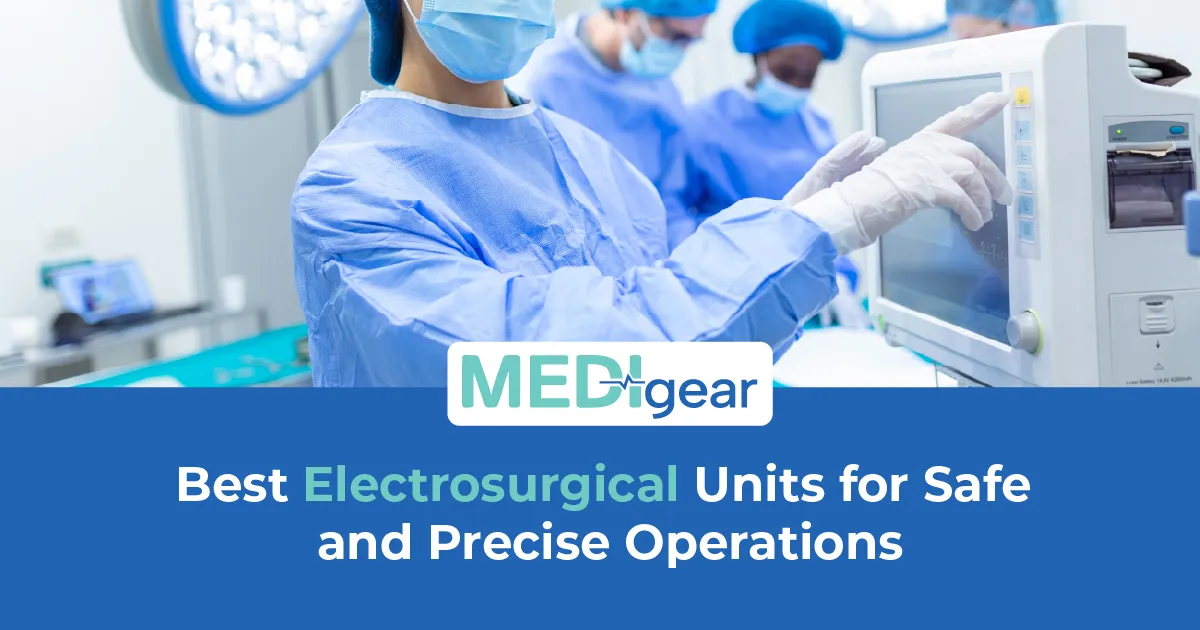
What happens when the blade slips? The surgeon adjusts. What happens when the bleeding will not stop? The surgeon cauterises. What happens when the tissue between cutting and keeping is one millimetre wide? The surgeon reaches for an electrosurgical unit — the device that converts electrical current into controlled heat at the tip of a tool precise enough to cut tissue, seal vessels, and stop bleeding without touching what lies a centimetre away. An electrosurgical unit does not replace the hands. It extends them where a scalpel alone falls short.
Every operating theatre in the UK has one. Most surgeons use one daily. Yet the buying choice — which electrosurgical unit, which modes, which power — often falls to teams who have never held the handpiece.
This guide covers how to choose the best electrosurgical unit for safe and precise surgery with the honest detail that surgeons, theatre managers, and procurement leads need. Medigear supplies certified electrosurgical units to hospitals and clinics across the UK — and every point here comes from real surgical demand, not spec sheets.
How It Works
An electrosurgical unit passes current through tissue. High frequency. Controlled. The current heats the cells at the point of contact. Low settings seal. High settings cut — like a hot wire through wax. Mode. Power. Electrode. These give the surgeon a tool that can cut, seal, blend, or dry on demand.
Cut Mode
Cutting mode delivers a continuous waveform that heats tissue fast enough to vaporise it — making a clean cut with minimal heat spread. Precise cut. Neat edges. Less heat damage than any other powered method. For skin cuts, fascial openings, and fine dissection, a pure cut gives scalpel control at theatre speed.
Coag Mode
Coagulation mode delivers an intermittent waveform that heats tissue more slowly — drying and sealing rather than cutting. It stops bleeding by denaturing vessel wall proteins and forming a plug. Broader and less precise than cut mode. For bleeding surfaces and oozing beds, coag does what pressure alone cannot.
Blend Mode
Blend mode combines cutting and coagulation in a single waveform — giving the surgeon a cut that seals as it goes. The cut-to-coag ratio adjusts on most units. Higher blend — more sealing, rougher cut. Lower blend — cleaner cut, less sealing. For general surgery needing both in one pass, blend saves time and mode-switching.
Bipolar Mode
Bipolar mode passes current between the two tips of a forceps — heating only the tissue gripped between them. No current through the body. No return pad needed. The effect is local, precise, and safe near nerves, bowel, and vessels that monopolar could damage from a distance. For neurosurgery, microsurgery, and eye work, bipolar is not optional. It is what makes the operation safe.
Monopolar Mode
Monopolar mode passes current from the active electrode through the patient's body to a return pad on the skin. Current heats at the tip and returns through the pad without harm elsewhere. Monopolar gives more power than bipolar — but carries risks. A bad pad. A broken circuit. A cable fault. Any of these can burn the pad site — unseen until the dressing comes off.
Return Electrode Monitoring
Return electrode monitoring — REM or CQM — is the safety feature that prevents pad-site burns. The system checks contact non-stop. If contact drops — pad peeling, drying, or shifting — the electrosurgical unit shuts off before a burn forms. Any electrosurgical unit without this feature is missing the safety spec that matters most.
Linked Guides
For theatres managing broader surgical equipment alongside electrosurgery, our guide to the central sterile services department covers the sterilisation workflow that processes electrosurgical instruments between cases — because a handpiece not properly cleaned between patients is a cross-infection risk no skill can offset. Our guide to the top 20 trusted medical equipment companies covers the global brands behind the electrosurgical units that lead the surgical market.
Power Output
Power output must match the procedures the unit serves. A general surgery electrosurgical unit typically needs up to 300 watts for cut and around 80 watts for coag. A unit for minor work may need far less. Too much power in a small room wastes money. Too little in a major theatre leaves the surgeon short. Dense tissue and heavy bleeding demand full output. Match power to the surgery. Not the other way round.
Smoke Evacuation
Smoke evacuation is the issue every theatre knows about, but too few address. Electrosurgical cutting produces a plume of smoke containing dead cells, chemicals, and viral particles that staff inhale daily. Long-term breathing carries health risks that are now being studied. An electrosurgical unit with built-in smoke evacuation — or a port for an external one — protects both staff and the patient. Buying without thinking about smoke is buying a problem that staff carry home.
Vessel Sealing
Vessel sealing technology — on advanced electrosurgical units — uses pressure and energy to fuse vessels up to seven millimetres wide. This replaces stitches and clips in many cases — cutting time, blood loss, and the risk of a tie coming loose. For keyhole, thyroid, and bowel work, vessel sealing changes what the surgeon can do — not just how.
Argon Plasma Coagulation
Argon plasma coagulation — APC — is a non-contact mode using argon gas to carry current to the tissue without touching it. It treats surface bleeding over wide areas — stomach, bowel, liver bed — without the deep damage contact coag causes. Not every electrosurgical unit offers APC. But for endoscopic or open work needing surface haemostasis, it is worth having.
Paediatric Use
Paediatric and neonatal settings need lower power, smaller electrodes, and safety features for smaller bodies. An adult electrosurgical unit on a newborn without power adjustment risks burns that young tissue cannot take. Paediatric presets or a dedicated low-power electrosurgical unit are a must for any theatre treating children.
Electrodes
Electrode quality and compatibility affect every cut. Cheap electrodes lose edge, conduct badly, and stick to tissue — tearing instead of cutting. Electrodes matched to the electrosurgical unit give consistent cuts. Third-party ones may fit the plug but not the current — and the tissue shows the gap.
Sound
Can you hear the difference between cut and coag? Experienced theatre nurses can. The tone changes with the mode and tissue response. A buzzing cut through clean tissue sounds different from a struggling cut through scar. Training the ear matters as much as the eye — because the sound tells the team what the electrode is doing before the smoke clears.
Maintenance
Maintenance and calibration keep the electrosurgical unit safe between lists. Power output drifts. Cables fray. Footswitches stick. An annual check confirms that the output matches the display. A screen showing forty watts while the tip delivers sixty burns tissue, the surgeon thought was safe. Service by the book. Calibrate according to the schedule. No shortcuts in theatre.
Footswitch vs Hand
Footswitch versus hand activation changes how the surgeon controls the electrosurgical unit. A footswitch frees both hands. A button on the handpiece keeps control at the fingertip but uses a digit. Some units offer both. The right choice depends on procedure, habit, and whether the floor has room for another pedal.
Cost Per Case
Cost per case is the honest way to compare. Add the price, electrodes, pads, cables, smoke filters, service, and calibration. Divide by the cases over the lifespan. That gives the true cost per operation — the number that splits a cheap buy from a smart one.
Training
Training on electrosurgical safety should cover every theatre team member — not just the surgeon. Scrub nurses set the power. Circulating nurses place the pad. Anaesthetists manage the airway near ignition-risk gases. A fire, a burn, or an unplanned injury in theatre is rarely one person's fault. It is a chain of small errors that training breaks before they connect.
Pacemakers
Electrosurgical units and pacemakers do not mix well. Monopolar current can interfere with implanted cardiac devices, reprogramming or inhibiting them, or triggering inappropriate pacing. Every patient with a pacemaker needs a plan before the electrosurgical unit switches on — bipolar where possible, lowest safe power, and a cardiac team on standby. The unit is unaware that the patient has a device. The team must.
Certification
Always confirm CE marking, IEC 60601 and IEC 80601 standards, and full MHRA compliance before buying any electrosurgical unit. Ask about service, calibration, software, and electrode compatibility. An electrosurgical unit runs in the most critical room in the hospital — the theatre. The supplier relationship must match that level of demand.
Why Choose Medigear
Medigear supplies certified electrosurgical units, electrodes, return pads, and accessories to hospitals, surgical centres, and clinics across the UK — with clear pricing, honest guidance, and after-sales support built for daily theatre use. Whether you are equipping a new theatre, upgrading an ageing unit, or adding vessel sealing, our team matches the right system to your surgery. Reach out to our team directly for guidance built around the operations on your list — and the unit that makes each one safer.
Conclusion
What happens when the tissue between cutting and keeping is one millimetre wide? The answer depends on the electrosurgical unit in the room. The mode it offers. The safety it carries. The power it delivers. And the team that knows how to use it without burning what it was bought to protect. Every theatre list depends on a device most patients never see and most procurement teams never test under pressure. Medigear stands alongside surgical teams with certified electrosurgical equipment and the honest support that theatre demands. Speak to our team today — because the one millimetre between cutting and keeping is the one millimetre that matters most.
⚠️ This post is for general information only. We do not sell medications or provide prescriptions — Medigear.uk is a medical equipment supplier only.