What happens when the hospital sends a COPD patient home — but the lungs do not get better? What if the breathlessness follows them through the front door and sits in the armchair beside them? The letter says nebuliser. Home oxygen. The patient stares at a box of kit they have never seen. Instructions they cannot read through tears of exhaustion. That is COPD at home. Not cured. Managed. Only as well as the respiratory therapy devices in the room — and the person trained to use them.
He was sixty-eight. COPD for eleven years. Three hospital admissions in the last twelve months. Each time — same advice. Inhaler. Tablets. Call if it gets worse. It always got worse. The fourth time, the respiratory team changed the plan. They sent him home with a nebuliser. A pulse oximeter. A home oxygen concentrator. A plan that told him what to do when his numbers dropped. Twelve months. Zero admissions. Not because his lungs healed. Because the respiratory therapy devices in his living room caught the drop before the ambulance did.
This guide covers how respiratory therapy devices help manage COPD at home — with the honest detail that respiratory teams, GPs, patients, and families need. Medigear supplies certified respiratory therapy devices to hospitals, clinics, and home users across the UK — and every point here comes from real patient need, not product pages.
What Is COPD
COPD — chronic obstructive pulmonary disease — is a group of lung conditions, including emphysema and chronic bronchitis, that cause irreversible airflow limitation. Airways narrow. Air sacs lose stretch. Mucus builds. The lungs slowly lose the power to move air in and out. Patients live with breathlessness, cough, and the constant knowledge that the next cold could send them back. The right respiratory therapy devices at home do not reverse the damage. They keep the patient on the right side of the line between managed and admitted.
Nebulisers
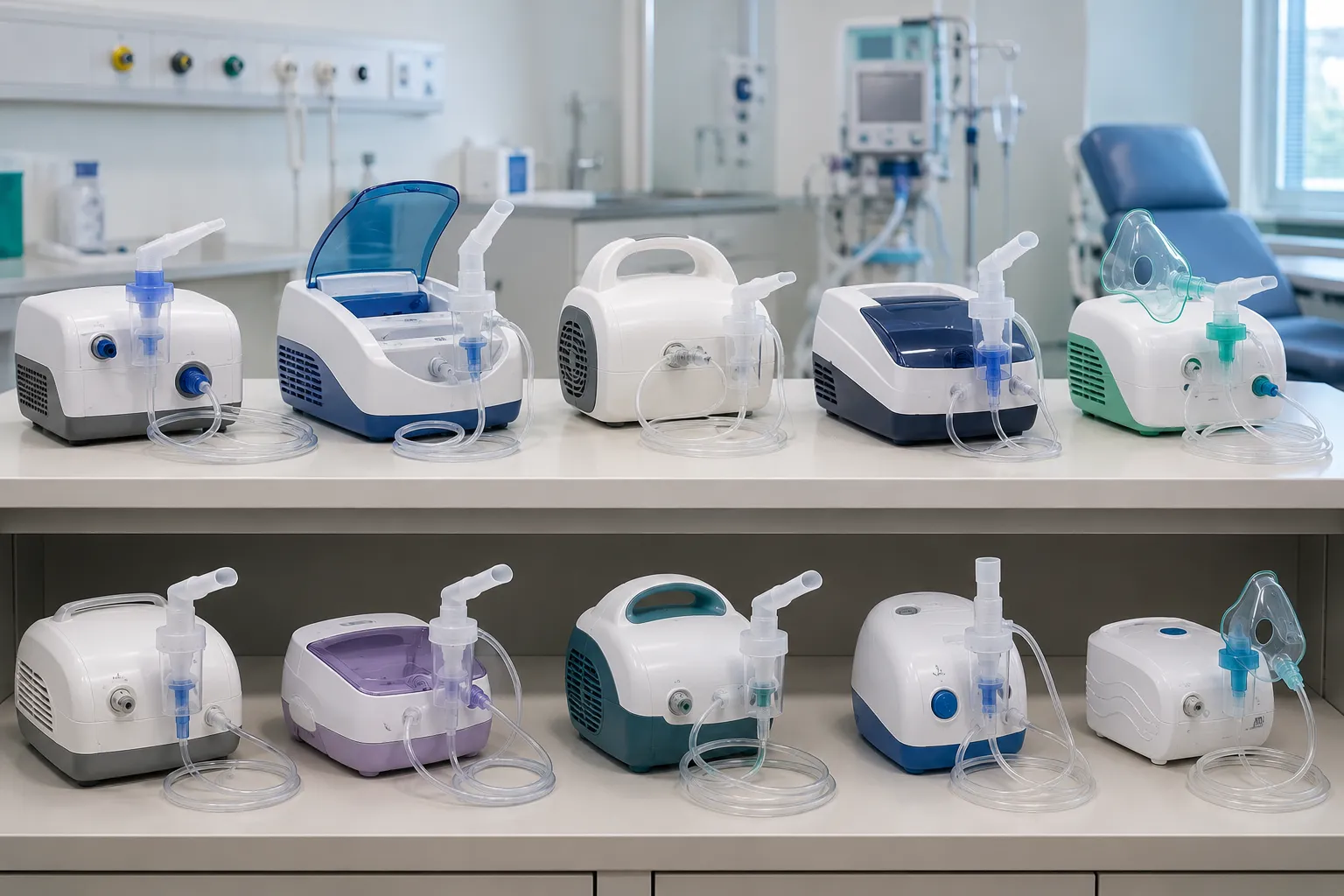
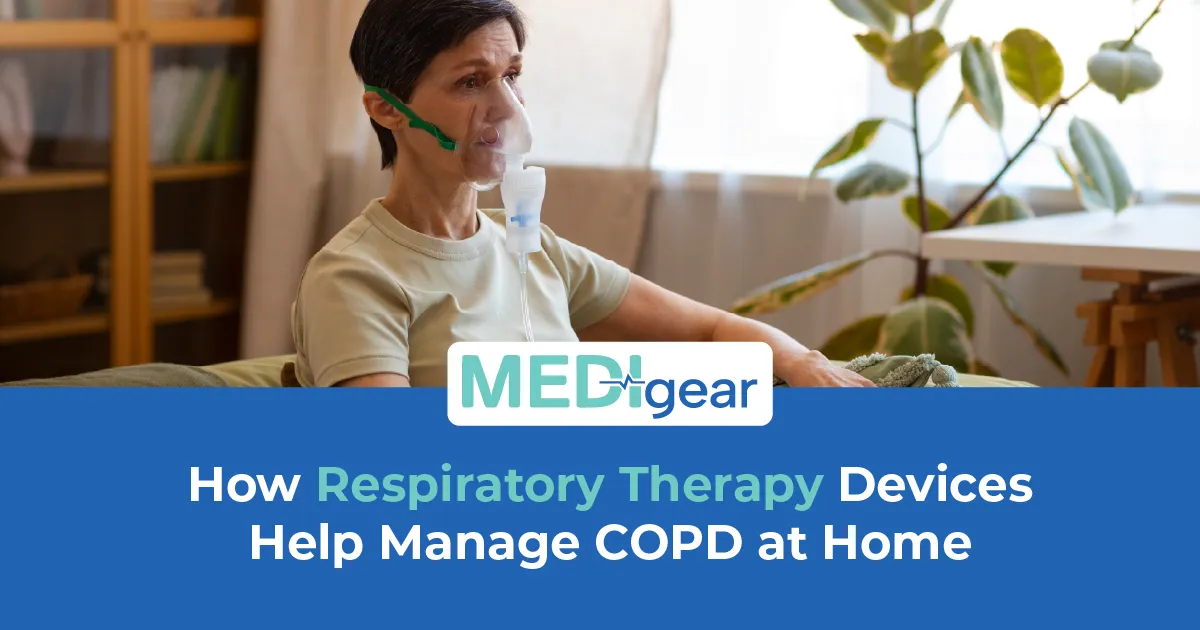
Nebulisers deliver bronchodilators and steroids as a fine mist breathed directly into the airways. For patients whose inhaler technique is poor, whose breathlessness blocks a coordinated puff, or whose flare needs higher doses — a nebuliser keeps airways open between GP visits. Salbutamol for rescue. Ipratropium for maintenance. Budesonide for inflammation. The right respiratory therapy device matches the right drug to the right airway. Each reaches the lungs faster through mist than through a puff, the patient is too breathless to take.
Pulse Oximeters
Pulse oximeters are the simplest and most valuable respiratory therapy device a COPD patient can own. A clip on the finger. Oxygen and heart rate in seconds. The simplest respiratory therapy device — and the one that changes behaviour most. A trained patient knows when oxygen drops below their baseline — and knows whether to nebulise, start the rescue pack, or call for help. Without one, they guess. With one, they act. The gap between guessing and acting is the gap between home and hospital.
Home Oxygen
Home oxygen therapy is prescribed for COPD patients whose resting oxygen saturation falls below a defined threshold — usually eighty-eight percent or below. Long-term oxygen therapy — used for at least fifteen hours a day — improves survival in patients with chronic hypoxaemia. A concentrator — the respiratory therapy device most COPD patients know by sight — draws room air, strips nitrogen, and delivers oxygen through a nasal cannula. Portable units let the patient leave — shopping, visiting, sitting in the garden — without a tether. The right respiratory therapy device gives oxygen and freedom. The wrong one gives oxygen and a prison.
Linked Guides
For homes managing COPD alongside broader health needs, our guide to vital signs monitor features covers the monitoring that overlaps with home respiratory care — because heart rate, oxygen, and respiratory rate tracking at home uses the same clinical logic that hospitals apply at the bedside. Our guide to portable vs stationary X-ray machines covers the imaging that supports COPD management when chest infections complicate an already fragile set of lungs.
Peak Flow
Peak flow meters and spirometers give the patient and the clinician a number that tracks lung function over time. A falling peak flow over three days — logged in a diary or app — shows a trend one clinic visit would miss. For patients on self-management, peak flow is the early warning that triggers the rescue pack before the flare reaches the ambulance.
Airway Clearance
Airway clearance devices help COPD patients shift the thick, sticky mucus that clogs their airways and feeds infection. Devices like the Flutter and Acapella vibrate the airway walls during breath out — loosening mucus and making it easier to cough up. For the elderly, the frail, the exhausted — these respiratory therapy devices replace the chest physio a hospital gives but a home does not.
Humidifiers
Humidifiers add moisture to inspired air — reducing the dryness that irritates COPD airways, thickens mucus, and triggers coughing fits. Home oxygen patients are hit hardest — the flow strips moisture from the nose. A humidifier on the concentrator or a room unit keeps the airway wet, open, and clear.
Non-Invasive Ventilation
Non-invasive ventilation — NIV — at home is prescribed for COPD patients with chronic hypercapnic respiratory failure. A BiPAP delivers two pressures — higher on the breath in, lower on the breath out — to support weak muscles and improve gas exchange overnight. Patients report better sleep. Less headache. Fewer admissions. Better life. Not easy to tolerate at first. Mask fit, pressure, and humidity all need tuning. But for those who persist, it changes the course of the disease.
Self-Management Plans
Self-management plans turn respiratory therapy devices from passive equipment into an active defence system. A written plan that says — when your SpO2 drops below ninety-two, start the nebuliser; when the peak flow falls below your yellow zone, start the rescue pack; when symptoms do not improve in forty-eight hours, call the GP — gives the patient authority to act before the crisis arrives. A plan without devices is advice without tools. Devices without a plan are tools without direction. Both together keep the patient home.
Training
Training is the bridge between owning a respiratory therapy device and using it properly. An incorrectly built nebuliser delivers half a dose. An oximeter in the wrong light gives a false number. A concentrator set too high risks CO2 buildup in a patient whose breathing drive is driven by low oxygen. Every respiratory therapy device needs hands-on teaching. Not a leaflet in the box. And every patient needs a follow-up to confirm they are using it correctly. Not just own it.
Maintenance
Maintenance at home follows the same logic as maintenance in a hospital — just without the team. Nebuliser chambers are cleaned after every use. Oximeter wiped. Concentrator filters changed on time. Clearance devices were taken apart and dried. A respiratory therapy device not maintained breeds the infections it should prevent.
First Week Follow-Up
Can your respiratory team follow up every COPD patient discharged with a respiratory therapy device within the first week? The first week at home is when mistakes happen — wrong assembly, wrong settings, wrong timing. A phone call or a home visit in those first seven days catches the errors that turn a safe discharge into a readmission. Follow-up is not a luxury. It is the step that ensures the respiratory therapy device works as the hospital intended.
Night Cover
Does your patient know what to do at 3 am when their oxygen drops and the GP surgery is closed? A written plan on the fridge, an oximeter on the bedside table, and a nebuliser within reach are the respiratory therapy devices that cover the hours when no clinic is open. Night is when most COPD flares escalate. The patient who has the tools and the training manages. The one who does not call the ambulance.
Backup Device
Does your patient have a spare respiratory therapy device for the day the main one breaks? A nebuliser that fails during a flare. An oximeter that gives no reading. A concentrator that stops humming at midnight. One backup device in the cupboard covers the gap between failure and replacement. A patient without a spare is a patient one breakdown away from a call they should not need to make.
System Impact
Emergency departments see the cost of poor home management every winter. A COPD patient who arrives by ambulance with a respiratory therapy device they never learned to use — or never received at all — fills a bed that better home support would have kept empty. Investing in home respiratory therapy devices is not just about patient care. It is system care. Every admission prevented is a bed freed, a crew released, and a patient who stays where they belong — at home, breathing, with the tools that keep them there.
Carers
Carers and family members need training alongside the patient. A husband who knows how to set up the nebuliser when his wife is too breathless to speak. A daughter who knows what the oximeter number means when her father calls at midnight. A carer who knows when the respiratory therapy device is working and when it is not. The patient does not manage COPD alone. The people around them manage it too — and they need the same teaching.
Why Choose Medigear
Medigear supplies certified respiratory therapy devices — including nebulisers, pulse oximeters, oxygen concentrators, airway clearance tools, and clinical accessories — to hospitals, clinics, and home users across the UK. Whether you are equipping a respiratory ward, supporting a discharge pathway, or setting up a patient at home for the first time, our team matches the right devices to the lungs that need them. Reach out to our team directly for guidance built around the patients who left the hospital but not the disease — and the devices that keep them breathing at home.
Conclusion
What happens when the hospital sends a COPD patient home? The lungs do not improve. The breathlessness does not leave. The disease follows them through the front door and sits beside them in the armchair. But a nebuliser on the table, an oximeter on the finger, a concentrator in the corner, and a plan on the fridge change the story. Twelve months. Zero admissions. Not because the lungs healed — because the respiratory therapy devices in the living room caught the drop before the ambulance did. Medigear stands alongside respiratory teams and families with certified devices and the honest support that home COPD care demands. Speak to our team today — because the patient who left the hospital did not leave the disease. The devices that keep them breathing at home are the ones that keep them home.
⚠️ This post is for general information only. We do not sell medications or provide prescriptions — Medigear.uk is a medical equipment supplier only.