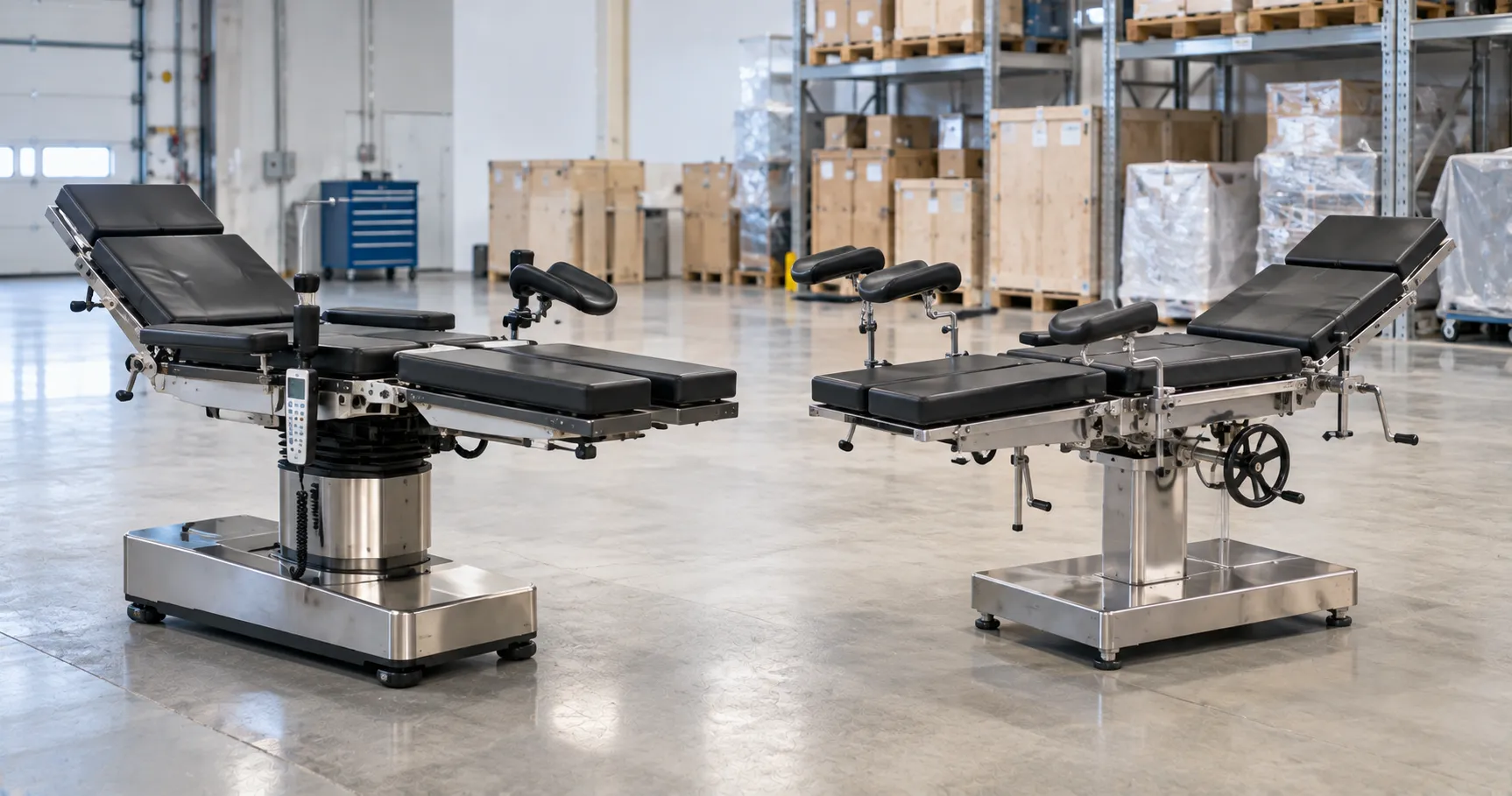

Medical equipment risk assessment helps hospital buyers look beyond price, product appearance, and delivery time. A device may meet a department’s immediate need but still carry hidden procurement risks if supplier documentation is incomplete, spare parts are difficult to source, warranty terms are weak, maintenance routes are unclear, or installation requirements have not been verified.
For healthcare buyers, medical equipment risk assessment should be part of every structured buying decision. ISO 14971:2019 specifies terminology, principles, and a process for medical device risk management, including hazard identification, risk evaluation, risk control, and monitoring risk controls through the device lifecycle. This guide explains how hospital buyers can e, reassess procurement supplier maintenance, documentation, warranty, and sourcing risk before approving equipment.
How Risk Assessment Supports Clinical Equipment Decisions
Clinical Use and Risk Level — Risk assessment should begin with the device’s intended clinical use. Equipment used in ICU, surgery, emergency care, anaesthesia, diagnostics, sterilisation, laboratory testing, or patient monitoring may need closer review than lower-risk accessories or general facility items.
Hazard Awareness Before Purchase — Buyers should consider what could go wrong during delivery, installation, use, maintenance, cleaning, storage, software operation, or replacement. A risk review helps teams identify hazards before equipment reaches the clinical area, rather than after users report problems.
Department Readiness Check — A device may be suitable in one department and unsuitable in another. In practice, buyers often discover risk only after delivery, such as missing power compatibility, poor service access, unclear user training, weak accessory supply, or limited spare parts.
Lifecycle Risk Control — Risk assessment should not stop at purchase approval. It should continue through delivery inspection, commissioning, training, maintenance, warranty claims, repair history, software updates, relocation, replacement, and decommissioning.
Where Equipment Risk Assessment Matters Across Healthcare Settings
Large Teaching Hospitals — These facilities manage complex equipment across the ICU, operating rooms, imaging, laboratories, CSSD, emergency departments, outpatient areas, wards, and rehabilitation spaces. Facilities that purchase equipment at scale tend to reduce procurement gaps when risk assessment is linked to asset records, service history, and supplier documentation.
District and Regional Hospitals — These hospitals often have fewer backup devices and rely heavily on dependable supplier support. A delayed repair, a missing spare part, or an unclear warranty process can increase operational risk when replacement options are limited.
Facilities sourcing through regulated and certified equipment suppliers worldwide should request technical specifications, conformity records, warranty documentation, service manuals, spare parts lists, installation requirements, and supplier support details before final approval.
Community Health Centres — Smaller healthcare facilities may use simpler procurement systems, but risk assessment still matters. One aspect that surprises first-time buyers is how often small accessories, such as probes, cuffs, filters, cables, batteries, lamps, and chargers, determine whether equipment remains usable.
Mobile and Point-of-Care Services — Mobile healthcare teams need risk assessment for battery life, transport damage, cleaning routines, field setup, data connectivity, storage, charging, and accessory control. Equipment used outside fixed rooms experiences greater movement, handling variability, and power fluctuations.
Risk Details That Change Procurement Outcomes
Supplier Documentation Risk — Buyers should verify that the supplier provides compliant dice-specific documentation. Technical specifications support the procurement and acquisition of medical devices, and the WHO highlights its role in equipment planning and decision-making. Missing documents can delay installation, audit review, warranty claims, and maintenance planning.
Maintenance and Downtime Risk — WHO explains that a maintenance strategy includes inspection, preventive maintenance, and corrective maintenance, with preventive maintenance intended to extend equipment life and reduce failure rates. Buyers should review maintenance intervals, service skills, parts availability, calibration where required, and repair routes before purchase.
Warranty and Service Risk — Warranty terms can create risk when coverage is unclear. Buyers should review the coverage period, exclusions, labour terms, freight responsibility, claim process, supplier response, and whether the warranty begins on invoice, delivery, installation, or commissioning.
Connected Equipment and Cybersecurity Risk — Connected devices may require review of software versions, data exchange, network access, cybersecurity controls, and interoperability. The FDA describes medical device interoperability as the ability to safely, securely, and effectively exchange and use information among devices, products, technologies, or systems. Buyers should include IT and biomedical teams when assessing connected equipment.
Procurement Evaluation Guidance for Risk Assessment
Total Cost of Ownership Risk — Buyers should compare the purchase price with installation, training, consumables, spare parts, preventive maintenance, corrective repairs, downtime, warranty use, software support, and replacement timing. A low purchase price can become expensive if parts, service, or support are weak.
Supplier Evidence and Risk Scoring — Buyers can score suppliers by document quality, response time, warranty clarity, service reach, spare parts availability, previous performance, delivery reliability, and communication quality. Suppliers and manufacturers advertising to global healthcare buyers should expect procurement teams to request evidence that reduces purchase and lifecycle risk.
Compliance Variation by Destination Market — Requirements differ considerably across healthcare systems. Buyers should confirm applicable local regulatory standards, such as CE, FDA, or their regional equivalents, where relevant to the device category, risk level, import route, intended use, and service support.
Training and User Risk — Equipment risk increases when users are not trained. Buyers should confirm the supplier's training scope, manuals, quick-start guidance, cleaning instructions, alarm handling (where relevant), fault reporting, and refresher support before the equipment enters routine use.
Healthcare networks that manage repeat purchases can reduce risk variation through structured distribution and reseller partnership arrangements. Buyers with risk assessment questions, supplier documentation needs, or international sourcing requirements can contact the Medigear.uk team for supply support before confirming procurement decisions.
Maintenance, Service Life, and Risk Control Records
Asset Register and Traceability — Risk assessments should be linked to the asset register. Model numbers, serial numbers, supplier details, warranty dates, service schedules, and current equipment status help buyers track risk after delivery.
Preventive Maintenance Planning — Preventive maintenance reduces avoidable downtime when it is planned from the start. Buyers should check whether the supplier provides maintenance schedules, service manuals, engineer support, and spare parts information before final approval.
Repair and Replacement Triggers — Risk control should define when equipment should be repaired, removed from service, replaced, or decommissioned. Repeated faults, unavailable parts, poor software support, high repair costs, and clinical workflow disruption are common triggers for review.
Global Demand and International Risk Assessment
Different Facility Priorities — Large hospitals may prioritise formal risk scoring, digital asset records, supplier review panels, and lifecycle cost reports. Clinics, district hospitals, community health centres, and mobile healthcare services may focus more on durable equipment, easy servicing, clear training and ffast access to parts
International Sourcing Risk — International buyers should review freight terms, import documents, conformity records, warranty validity, supplier communication, spare parts lead time, and service routes before shipment. The FDA notes that medical devices offered for import may be checked against applicable requirements, which makes document readiness important for cross-border sourcing.
New and Refurbished Equipment Risk — New equipment may offer clearer warranty, current software, and stronger manufacturer support. Refurbished equipment can still be suitable when the ton condition, service history, calibration evidence (where applicable), warranty limits, accessories, and remaining service life are clearly reviewed.
Final Thoughts
Medical equipment risk assessment helps hospital buyers make procurement decisions with clearer evidence and fewer hidden gaps. Strong risk review checks the equipment, supplier, documents, warranty, installation, training, maintenance, spare parts, connectivity, and service-life expectations before approval.
Procurement teams should involve biomedical engineers, clinicians, compliance staff, IT teams, finance leaders, facility managers, logistics coordinators, and suppliers where relevant. Clear risk assessment records, supplier verification, maintenance planning, warranty review, and lifecycle controls help healthcare facilities reduce avoidable downtime and manage equipment with greater confidence.
Disclaimer
Medigear.uk is a global medical equipment supplier, exporter, and distributor. The content published on this site is intended for educational and product awareness purposes only. Nothing on this page constitutes medical advice, clinical guidance, or treatment recommendations. All healthcare procurement and clinical decisions should be made by qualified medical professionals and compliant procurement teams operating within the regulatory frameworks of their respective countries.