Size a washer disinfector to your CSSD reprocessing throughput first, confirm it reaches the A0 value your loads require, and check it slots into the validated decontamination cycle your sterile services department must document; match those and the machine will earn its place, whatever the demo shows. A washer disinfector is the automated workhorse of a central sterile services department, cleaning and thermally disinfecting surgical instruments after use and before inspection and sterilisation, and it is the stage that makes the whole reprocessing cycle traceable and repeatable. This is instrument reprocessing, wholly different from cleaning room air, so keep the scope clear. Get capacity, A0 and validation right and the specification follows.
This guide is written for CSSD managers, estates and procurement teams choosing a washer disinfector, and it names the standards a compliant machine and its validation must meet.
Chamber capacity and throughput in DIN trays
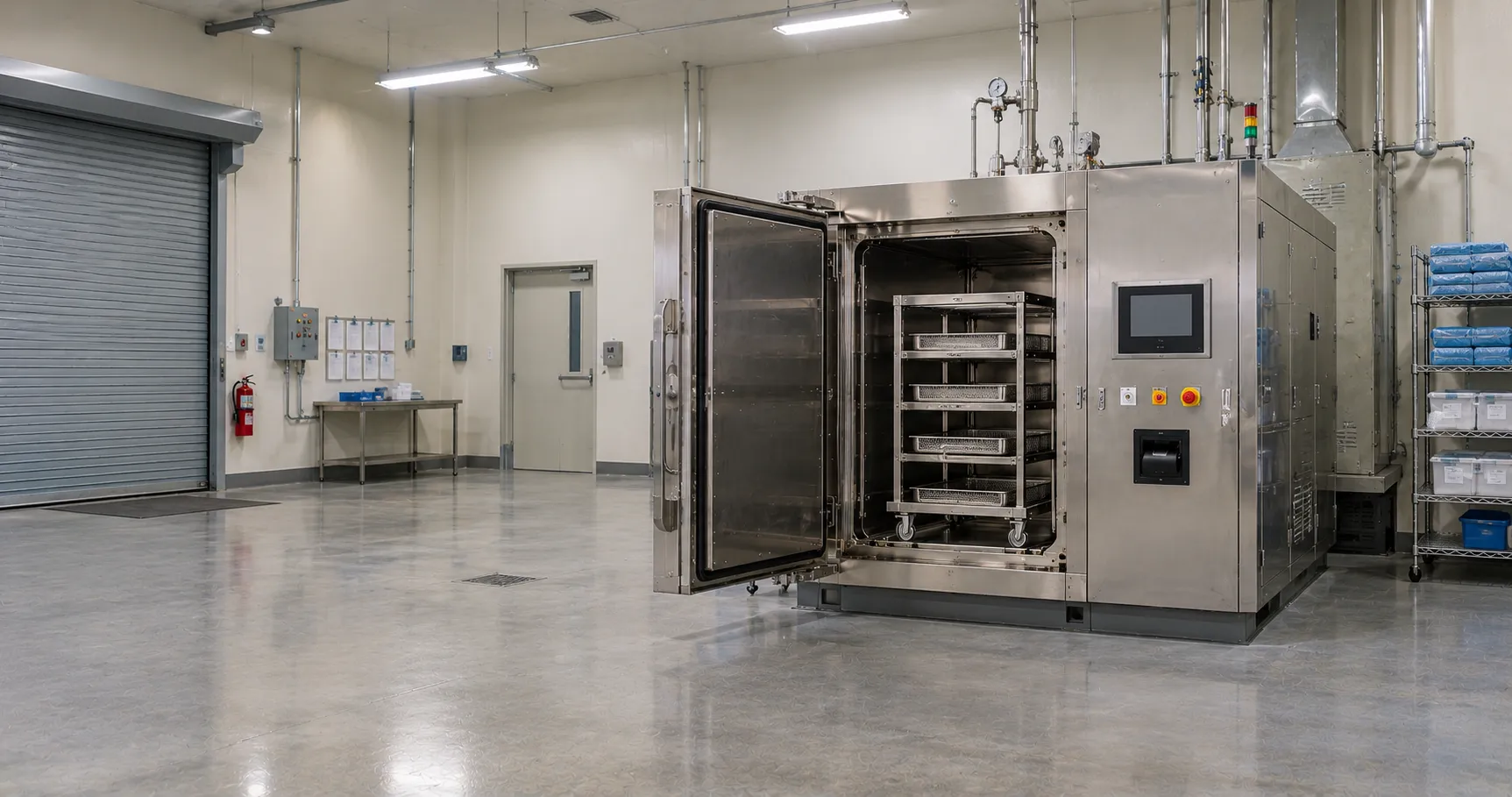
Capacity drives everything downstream in a sterile services department. Washer-disinfector capacity is usually expressed in DIN 1/1 trays, the standardised basket size CSSD works in, and the right chamber size depends on your instrument volume, your surgical schedule and how many cycles you can run in a working day. Undersizing creates a bottleneck that backs up the whole department and tempts staff to overload baskets, which ruins cleaning results. Oversizing wastes utilities on part-loads. Map your daily tray throughput against realistic cycle times, and consider whether double-door pass-through machines, which load from the dirty side and unload on the clean side, suit your workflow and your clean-dirty separation.
Cycle types and the A0 disinfection value
The heart of a washer disinfector is its cycle programming, and the A0 value is how thermal disinfection is quantified. A0 expresses the lethality delivered to micro-organisms as a function of time and temperature; a cycle reaching A0 of 600, for example, is commonly specified for instruments that will be sterilised afterwards, while higher A0 values are used where greater assurance is required. The machine should offer validated programmes for different load types, such as general instruments, hollow and lumened items via connected irrigation, and delicate or heat-sensitive devices. Confirm the machine records the cycle parameters for every run, because that record is the evidence your department relies on. Ask suppliers to state the achievable A0 values and how each cycle is validated rather than accepting a generic claim.
Load carriers, spray arms and lumen irrigation
Cleaning performance lives in the load carrier detail. The trolley, or load carrier, positions instruments so water and detergent reach every surface, and different carriers suit general trays, container systems, minimal-access surgery instruments and dental or ophthalmic sets. Rotating spray arms must have unobstructed coverage, and lumened instruments need dedicated irrigation connections that flush their internal channels, since a rinse over the outside does nothing for a blocked lumen. Check that spray-arm rotation is monitored and that the machine can verify irrigation flow, because unverified lumen cleaning is a real infection risk. Match the available load carriers to the actual instrument sets your theatres use rather than assuming a general carrier covers everything.
Water quality, detergents and drying
Results depend on inputs the buyer must plan for. Final rinse water quality matters, and many departments use purified or reverse-osmosis water for the final rinse to avoid mineral staining and residue on instruments, so factor in the water treatment the machine needs. Detergent dosing should be automatic and monitored, with dosing suited to your chosen chemistry. Effective drying at the end of the cycle prevents damp instruments from corroding or recontaminating before packing, so assess the drying stage rather than treating it as an afterthought. These utilities, water treatment, chemistry and drying, are part of the true cost and performance of the machine, not optional extras.
Standards, validation and compliance
A washer disinfector for CSSD sits within a strict framework. The machines and their performance are defined by BS EN ISO 15883, the standard series for washer-disinfectors, which covers general requirements and specific requirements for thermal disinfection and load types. UK decontamination practice is governed by HTM 01-01, the Health Technical Memorandum for the management and decontamination of surgical instruments, which sets out validation, periodic testing and quality management for the whole process. Guidance on decontamination is published through UK government sources, and the machine is a medical device under the framework overseen by the MHRA. This guide is compiled from those published standards and manufacturer documentation; MediGear, a UK medical-equipment distributor, helps facilities compare verified suppliers rather than favour one make. Require installation, operational and performance qualification, and a validation and periodic-test schedule, in writing.
Traceability, batch records and IT integration
Traceability is a defining reason to invest in a modern washer disinfector, because a CSSD must be able to show what happened to every instrument set. Look for automatic cycle documentation that records temperatures, times, chemistry dosing and the calculated A0 for each run, ideally printed and stored electronically against a batch or load number. Integration with track-and-trace software lets a set be followed from washing through inspection, packing, sterilisation and back to the patient, which supports both incident investigation and routine quality management. Barcode or operator-login features tie each cycle to a person and a load, strengthening accountability. When comparing machines, check how the cycle data is exported, whether it links to your existing tracking system, and how long records are retained, because a machine that disinfects well but cannot evidence it leaves your department exposed under scrutiny.
Comparing washer disinfector configurations
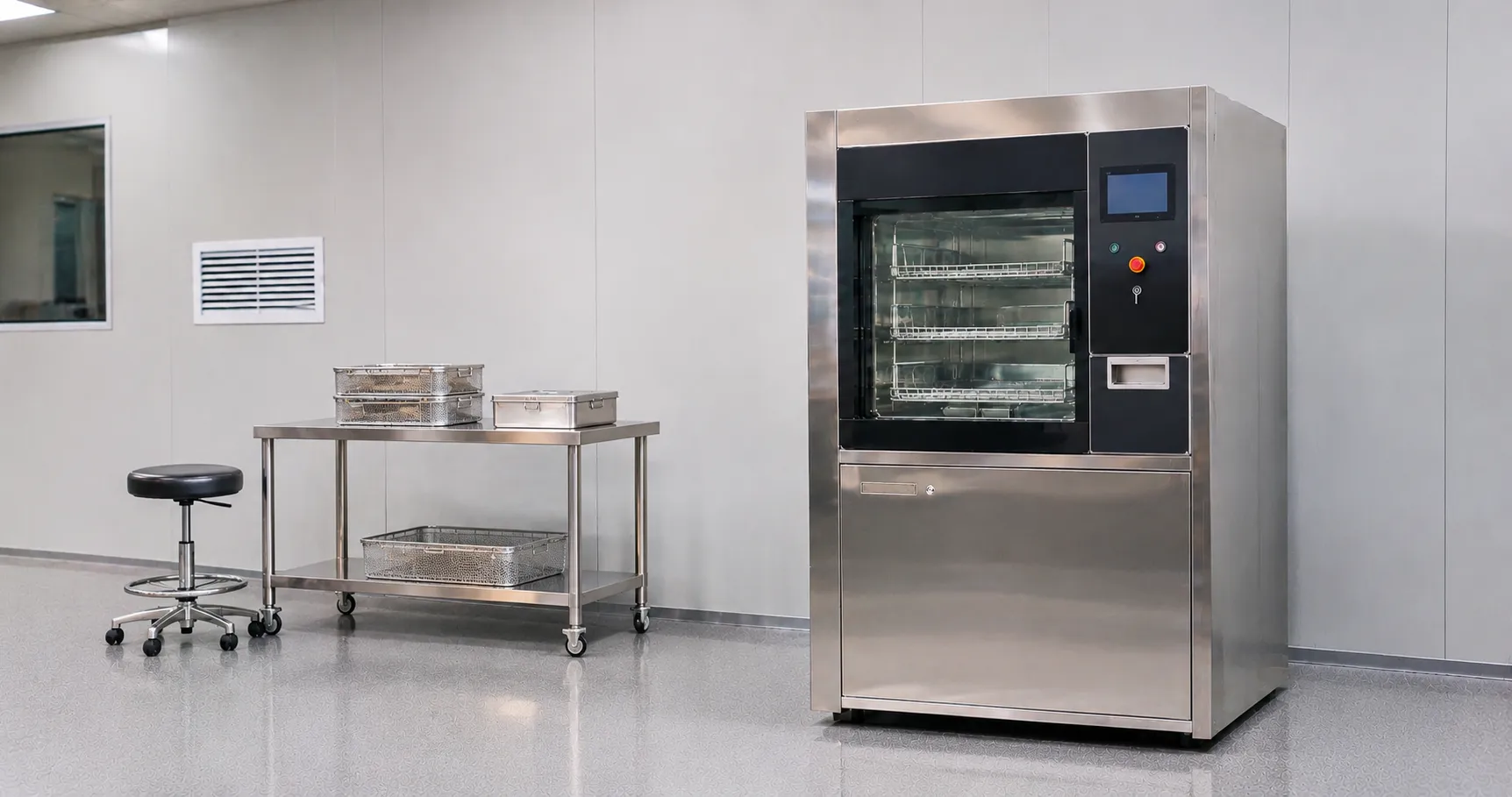
Place your department among the options. A single-door undercounter or freestanding washer disinfector suits smaller clinics, endoscopy units or dental practices with modest throughput. A large single-chamber machine handles a busy theatre suite's instrument load. A double-door pass-through machine, feeding a clean-dirty barrier, suits a full CSSD where workflow separation is essential. Specialist machines exist for endoscopes and for cart or container washing. Buying a small single-door unit for a high-volume CSSD guarantees a bottleneck; buying a pass-through machine for a small clinic over-invests. Match chamber size and door configuration to throughput and to your department's clean-dirty layout.
Loading ergonomics and staff safety
A washer disinfector is loaded and unloaded many times a day, so the ergonomics affect both productivity and staff injury rates. Loading height matters: a machine set at a comfortable height, or served by a matching loading trolley and transfer shelf, spares staff repeated bending with heavy instrument trays. Trolleys that dock and roll straight into the chamber reduce manual lifting of wet, heavy loads, which is a genuine musculoskeletal risk in a busy department. On the clean side, unloading onto a dedicated surface keeps disinfected sets off the floor and speeds inspection. Consider the noise and heat the machine adds to the room, since a CSSD packs several machines into one space, and confirm the doors, whether hinged or vertical-rise, suit the room layout and clearances. Designing the loading workflow around the machine, not squeezing the machine into an awkward corner, protects both throughput and the team.
Before you commission a washer disinfector
Confirm these points with each supplier before purchase:
-
Chamber capacity in DIN trays and realistic cycle times against your daily throughput.
-
Single or double-door configuration suited to your clean-dirty workflow separation.
-
Validated cycle programmes and the achievable A0 values for your load types.
-
Load carriers for every instrument set, including verified lumen irrigation connections.
-
Spray-arm and irrigation monitoring, and full cycle-parameter recording for traceability.
-
Final-rinse water quality requirements and any water-treatment plant needed.
-
Compliance with BS EN ISO 15883 and validation under HTM 01-01 with a test schedule.
-
UK servicing, spares, detergent supply and validation support arrangements.
Pitfalls in washer disinfector procurement
The classic mistake is sizing the machine to today's list and finding it a bottleneck within a year, which pushes staff to overload baskets and undermines cleaning. Another is ignoring lumen irrigation, so cannulated instruments pass through without their channels being cleaned or verified. Buyers sometimes overlook the water-treatment and drying requirements, then face staining, corrosion or extra capital after installation. And treating validation as a formality, rather than budgeting for qualification and periodic testing under HTM 01-01, stores up compliance trouble. Scoping capacity, lumen cleaning, utilities and validation up front avoids all of them.
Reprocessing you can stand behind
A washer disinfector serves a CSSD well when its capacity, A0 performance and validation are matched to throughput and documented under HTM 01-01 and BS EN ISO 15883. Size the chamber to real demand, insist on verified lumen cleaning and cycle recording, plan the utilities, and require full validation. To compare washer-disinfector options or verified suppliers for a sterile services project, contact the MediGear team through the contact page.
Disclaimer
This article is for informational purposes only. It is published by MediGear (medigear.uk) for general information and procurement guidance, and is not clinical, diagnostic, treatment, technical, engineering, legal or regulatory advice, nor a product endorsement, guarantee or substitute for professional assessment. MediGear does not provide medical consultations. Buyers should consult their clinical, biomedical, estates and regulatory contacts, and the manufacturer's documentation, and independently verify all specifications, certifications, compatibility and suitability before purchase. Specifications, certifications and availability are correct at the time of publication and may change without notice. MediGear is a medical-equipment distributor and does not sell medicines or pharmaceutical products.