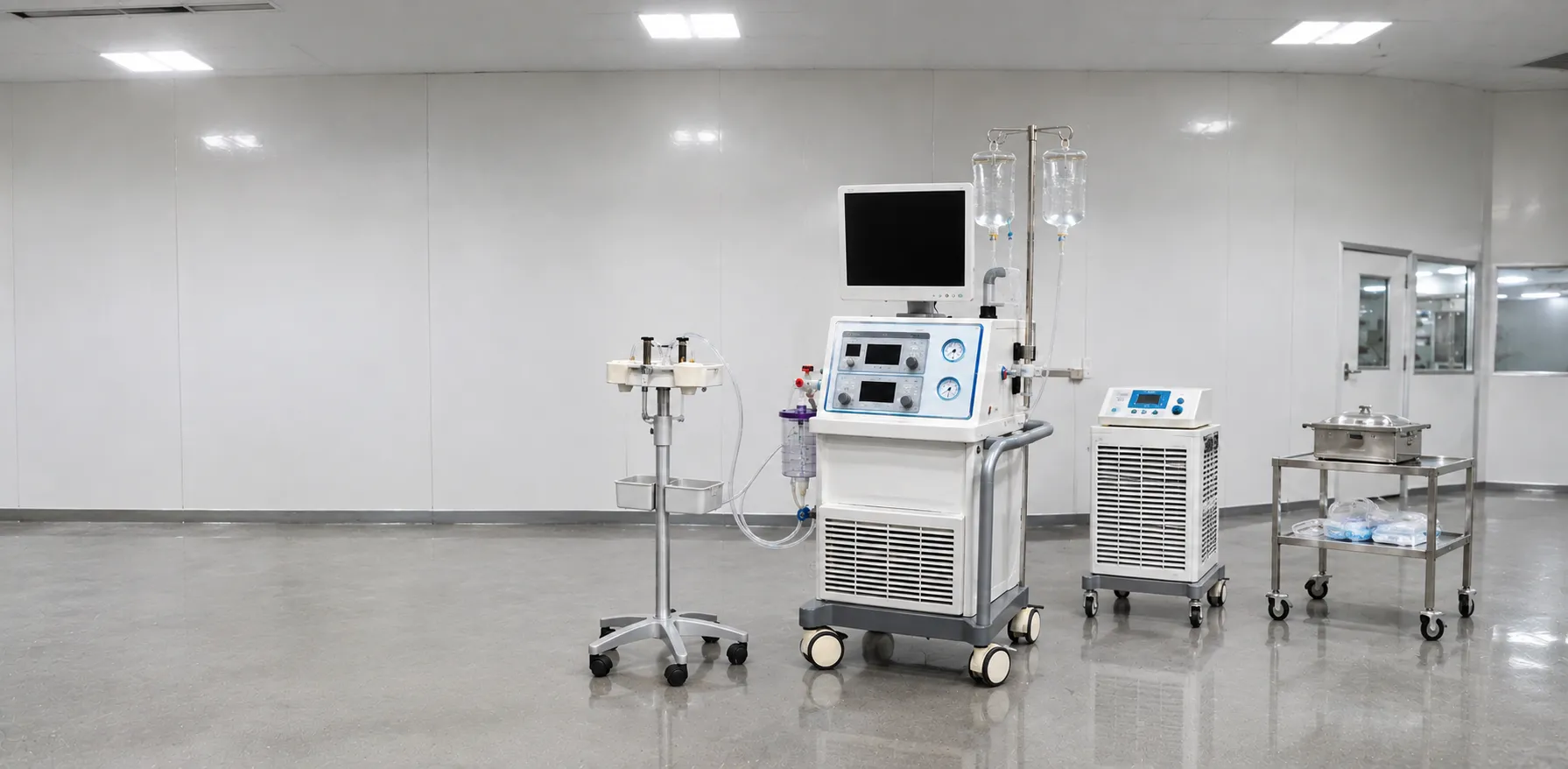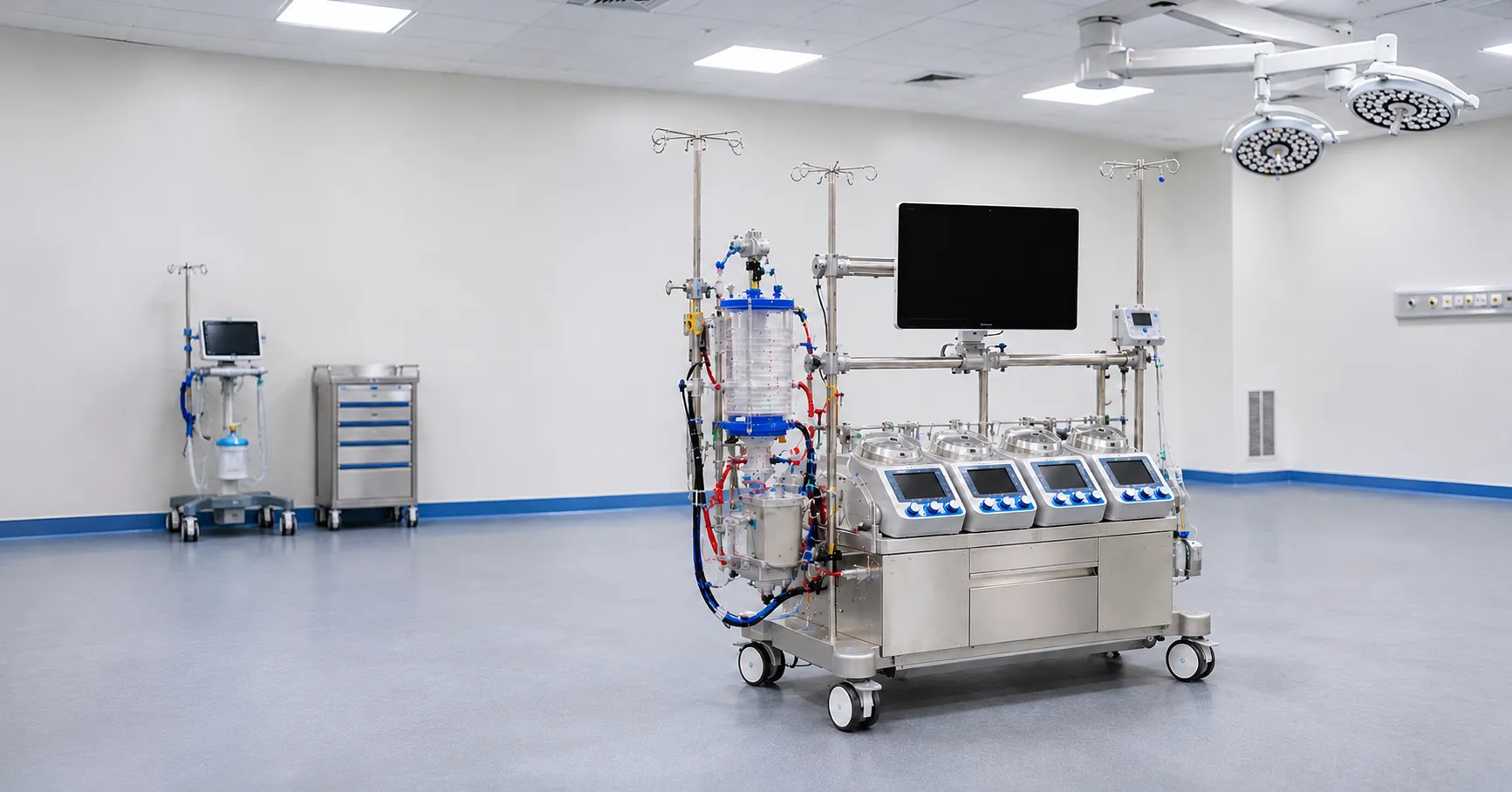
Cardiac resynchronisation devices are implanted rhythm devices that pace both lower chambers of the heart at almost the same instant, restoring coordinated contraction in people whose heart failure is worsened by an electrical delay between the ventricles. They do not pump blood themselves; they correct the timing of the heart's own beat so a weakened left ventricle empties more efficiently. For a cardiology or biomedical procurement lead, that distinction matters, because a resynchronisation system is a pacing implant, not a mechanical support pump, and it is bought, stocked and serviced quite differently.
Choosing a resynchronisation system is a shared job: the cardiology team fixes the clinical indication and whether a heart-failure patient needs pacing alone or added defibrillation, while procurement secures the leads, programmer and follow-up cover that deliver it. The notes that follow lean on manufacturer implant manuals and current MHRA and ISO material, and stay firmly on what a buyer must weigh when stocking biventricular pacing hardware, with individual patient selection left to the implanting clinicians.
Biventricular pacing versus a standard pacemaker
A conventional pacemaker paces one or two chambers to treat a slow rhythm. Cardiac resynchronisation devices add a third pacing point on the left ventricle, delivered through a lead placed in a branch of the coronary sinus on the heart's outer surface. By stimulating the right and left ventricles together, the device narrows the QRS complex and improves the mechanical coordination lost in conditions such as left bundle branch block. The clinical aim is a stronger, better-timed contraction, not a faster one, and that is why the therapy is described as resynchronisation rather than simple pacing.
Because the therapy targets electrical dyssynchrony, patient selection typically rests on a reduced ejection fraction, a broad QRS duration and specific conduction patterns. The National Institute for Health and Care Excellence sets out where resynchronisation is recommended in heart failure; buyers can review the relevant technology appraisals through NICE to gauge the demand their cardiology service is likely to see and size their annual contract accordingly.
CRT-P or CRT-D: matching the device to the patient
Resynchronisation implants come in two broad forms, and procurement needs to plan for both. A CRT-P is a pacing-only generator that provides resynchronisation therapy. A CRT-D combines the same biventricular pacing with an implantable cardioverter-defibrillator, adding the ability to treat life-threatening ventricular arrhythmias with a shock. CRT-D units are physically larger, carry a higher price and draw more current, which shortens battery life. The choice between them is a clinical decision, but the catalogue implications are real: different generator sizes, different lead sets, different price bands and a heavier follow-up load for the defibrillator variant.
Some patients are later upgraded from a simple pacemaker or defibrillator to a full resynchronisation system, so lead compatibility and connector standards across a manufacturer's range are worth checking before you commit to a single supplier. An upgrade that reuses sound existing leads is far cheaper and less invasive than a complete new implant.
Leads, the coronary sinus and the pulse generator
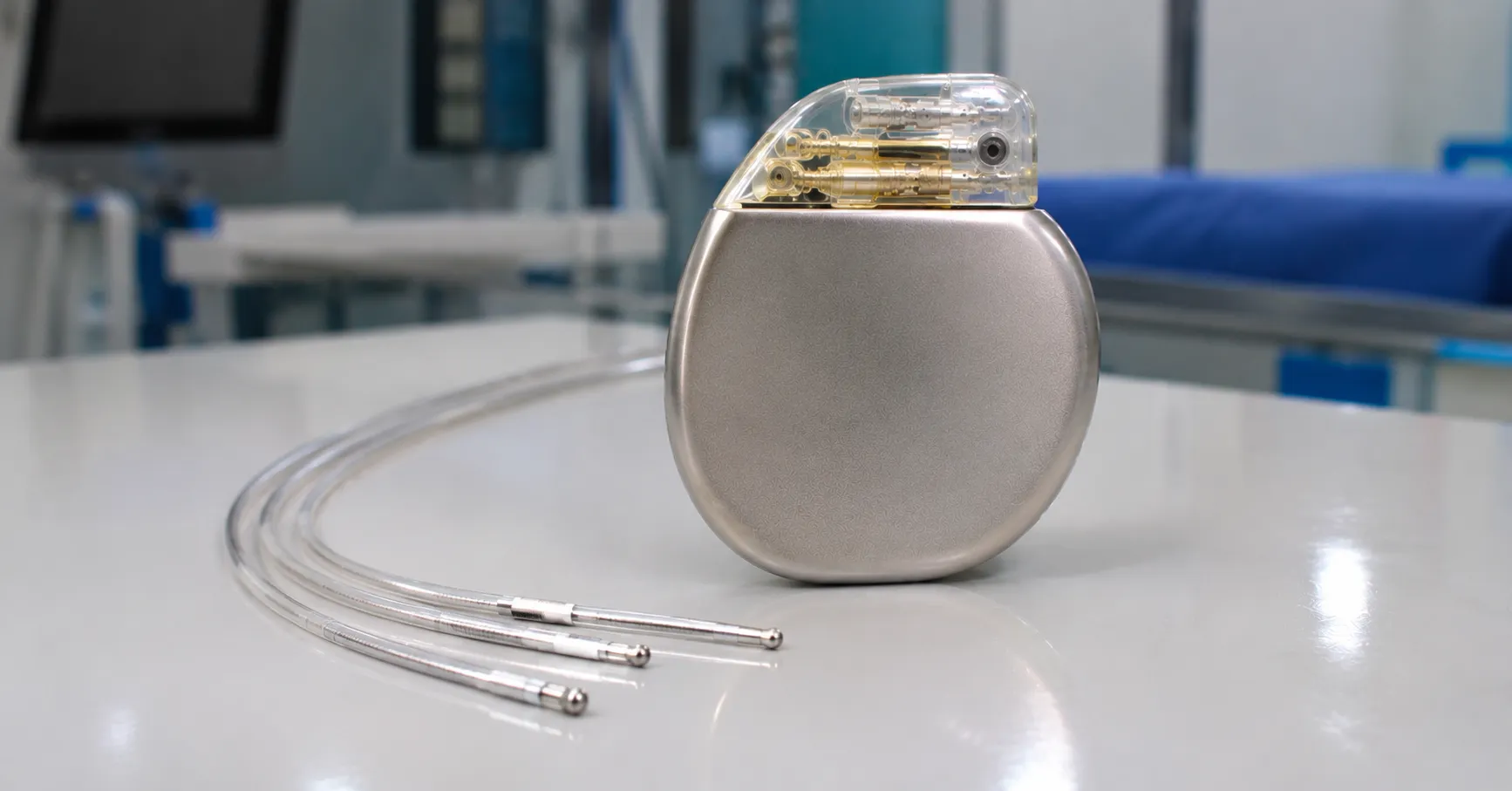
A typical resynchronisation system uses three leads: one in the right atrium, one in the right ventricle and a left-ventricular lead threaded into a coronary sinus tributary. The left-ventricular lead is the technically demanding part, and manufacturers offer several curves, fixation styles and multipolar electrode arrangements so the implanting team can pace from the optimal site and avoid stimulating the phrenic nerve. The pulse generator itself is a hermetically sealed titanium can holding the battery and circuitry, connected to the leads by standardised IS-1 and DF-4 connectors.
Multipolar left-ventricular leads and programmable pacing vectors have become a common expectation, because they let clinicians reprogramme around a poor pacing site non-invasively rather than returning a patient to theatre. When comparing systems, the breadth of the left-ventricular lead range is often more decisive than any headline generator feature, since a lead that will not sit well is a lead that will not deliver therapy.
Standards and MHRA oversight for cardiac resynchronisation devices
Cardiac resynchronisation devices are active implantable medical devices, and in Great Britain they are regulated under the Medical Devices Regulations 2002 (UK MDR 2002), enforced by the Medicines and Healthcare products Regulatory Agency. Placing devices on the market requires appropriate conformity marking, currently UKCA or CE depending on the transition arrangements in force. Buyers should confirm the current position directly with the MHRA rather than relying on a supplier's summary sheet.
On the technical side, the active implantable standard ISO 14708-1 covers general requirements for implantable devices, ISO 14708-2 addresses cardiac pacemakers, and ISO 14708-6 covers implantable defibrillators — the relevant part for a CRT-D. Any external programmer or home-monitoring transmitter should meet the general medical electrical safety standard IEC 60601-1. Ask suppliers to state precisely which parts of these standards their declared conformity covers, and to supply the accompanying documentation for your device library.
Battery longevity, MRI conditions and remote monitoring
Generator longevity depends on how much pacing and, for a CRT-D, how much defibrillation capacity the battery must support; several years of service is normal, after which the generator is replaced while the existing leads are usually retained. Elective replacement indicators and battery telemetry let a follow-up clinic plan changes in advance rather than reacting to depletion, which smooths theatre scheduling and stock ordering.
Most current systems are MRI-conditional, meaning a scan is permitted only under defined field strengths and programming conditions — a growing procurement consideration as more patients need imaging over the life of the implant. Remote monitoring is now routine: the device transmits lead integrity, arrhythmia episodes and battery status to a clinic portal, reducing in-person checks. Confirm that any remote platform integrates with your existing cardiology systems and meets NHS information-governance expectations, which you can cross-reference against patient-facing guidance on NHS services.
Where resynchronisation implants sit across the service
Implantation happens in a cardiac catheter lab or theatre with imaging support, but the device then lives within a wider network. Follow-up is frequently devolved to district clinics and, increasingly, to remote review, so a device family that pairs one programmer platform with broad remote coverage reduces the training and equipment burden across sites. Generators and leads arrive sterile and single-use, supplied against implant lists, which makes reliable consignment stock and short lead times more valuable than a marginally lower unit price. A supplier that cannot keep the shelf full on the day of a list is a false economy.
Beyond the purchase price of a resynchronisation system
The generator is only part of the lifetime cost. Add the left-ventricular and endocardial leads, any delivery tools, the programmer capital and its updates, remote-monitoring subscriptions, and the clinical time absorbed by follow-up and eventual generator change. A CRT-D carries a higher acquisition and replacement cost than a CRT-P, and its shorter battery life brings the next procedure forward. Weighing these lifetime figures, rather than the sticker price alone, is what separates a sound cardiology contract from an expensive one.
Specifying cardiac resynchronisation devices before you order
-
Confirm whether the requirement is for CRT-P, CRT-D or a mix, and match generator sizes to your implanters' preferences.
-
Check left-ventricular lead options — curves, multipolar electrodes and fixation — for the anatomy you routinely encounter.
-
Verify connector standards (IS-1, DF-4) and upgrade compatibility with your existing implanted leads.
-
Ask for the declared conformity marking and the specific ISO 14708 parts each device meets.
-
Confirm MRI-conditional labelling and the exact scanning conditions permitted.
-
Establish that the remote-monitoring platform integrates with your clinic software and governance rules.
-
Clarify generator longevity data, elective replacement indicators and warranty terms.
-
Agree supply continuity, consignment stock and technical support cover for implant lists.
Running an open comparison of vendors on these points protects both budget and clinical flexibility; MediGear helps facilities line up verified suppliers so you can weigh registered device suppliers against one another on like-for-like terms, and buyer teams can register their requirements through the MediGear buyer channel.
Choosing well for your cardiology service
The value of cardiac resynchronisation devices lies in getting the whole package right — the correct generator type, a lead set that suits your patients' anatomy, current regulatory conformity and a monitoring pathway your clinic can actually run. Treat the implant as a long-term relationship with a supplier rather than a one-off purchase, and specify the follow-up, upgrade and servicing terms as carefully as the hardware. Do that, and a resynchronisation programme delivers dependable therapy your cardiology team can stand behind.
Disclaimer
This article is for informational purposes only. It is published by MediGear (medigear.uk) for general information and procurement guidance, and is not clinical, diagnostic, treatment, technical, engineering, legal or regulatory advice, nor a product endorsement, guarantee or substitute for professional assessment. MediGear does not provide medical consultations. Buyers should consult their clinical, biomedical, estates and regulatory contacts, and the manufacturer's documentation, and independently verify all specifications, certifications, compatibility and suitability before purchase. Specifications, certifications and availability are correct at the time of publication and may change without notice. MediGear is a medical-equipment distributor and does not sell medicines or pharmaceutical products.