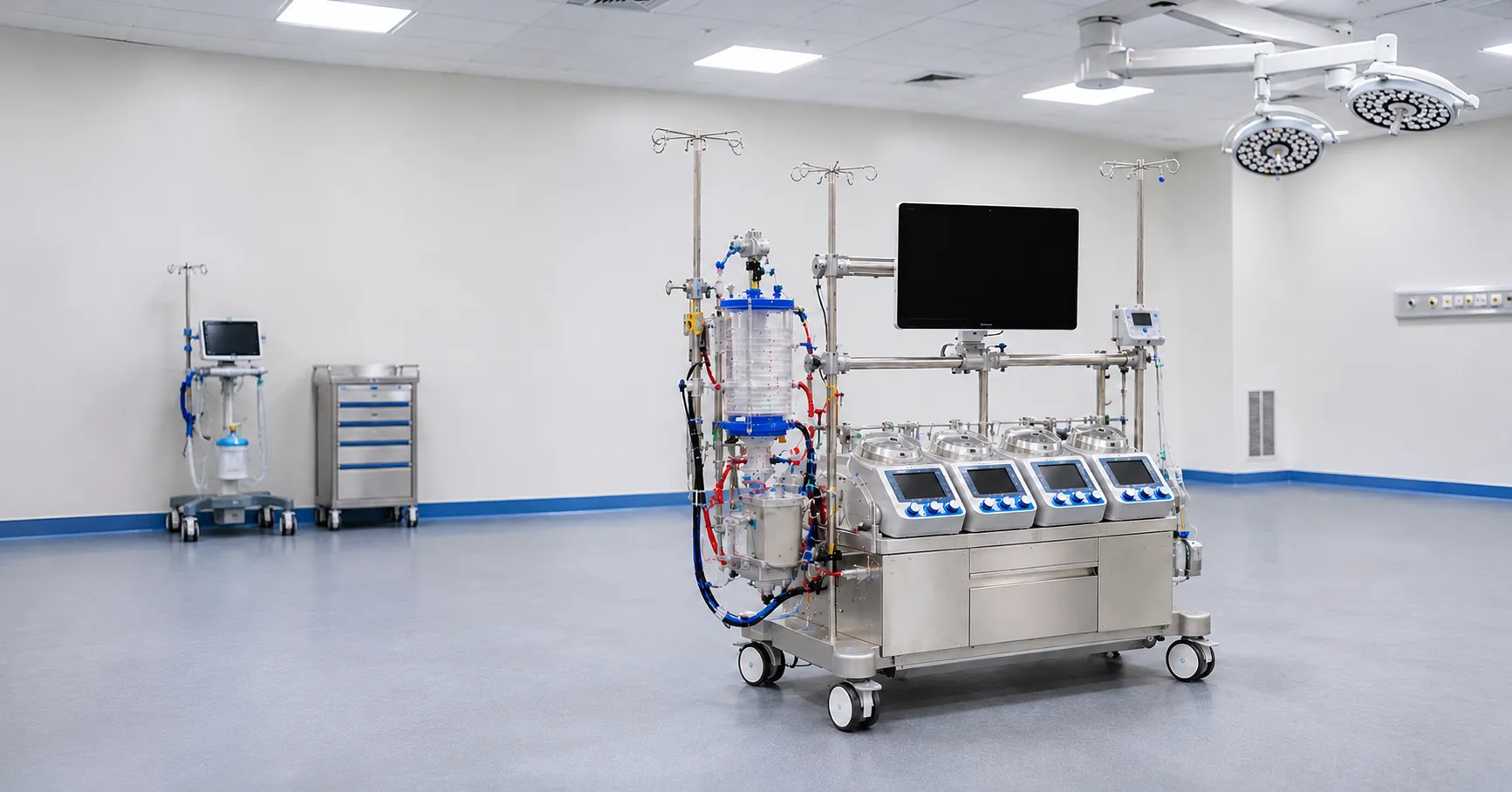

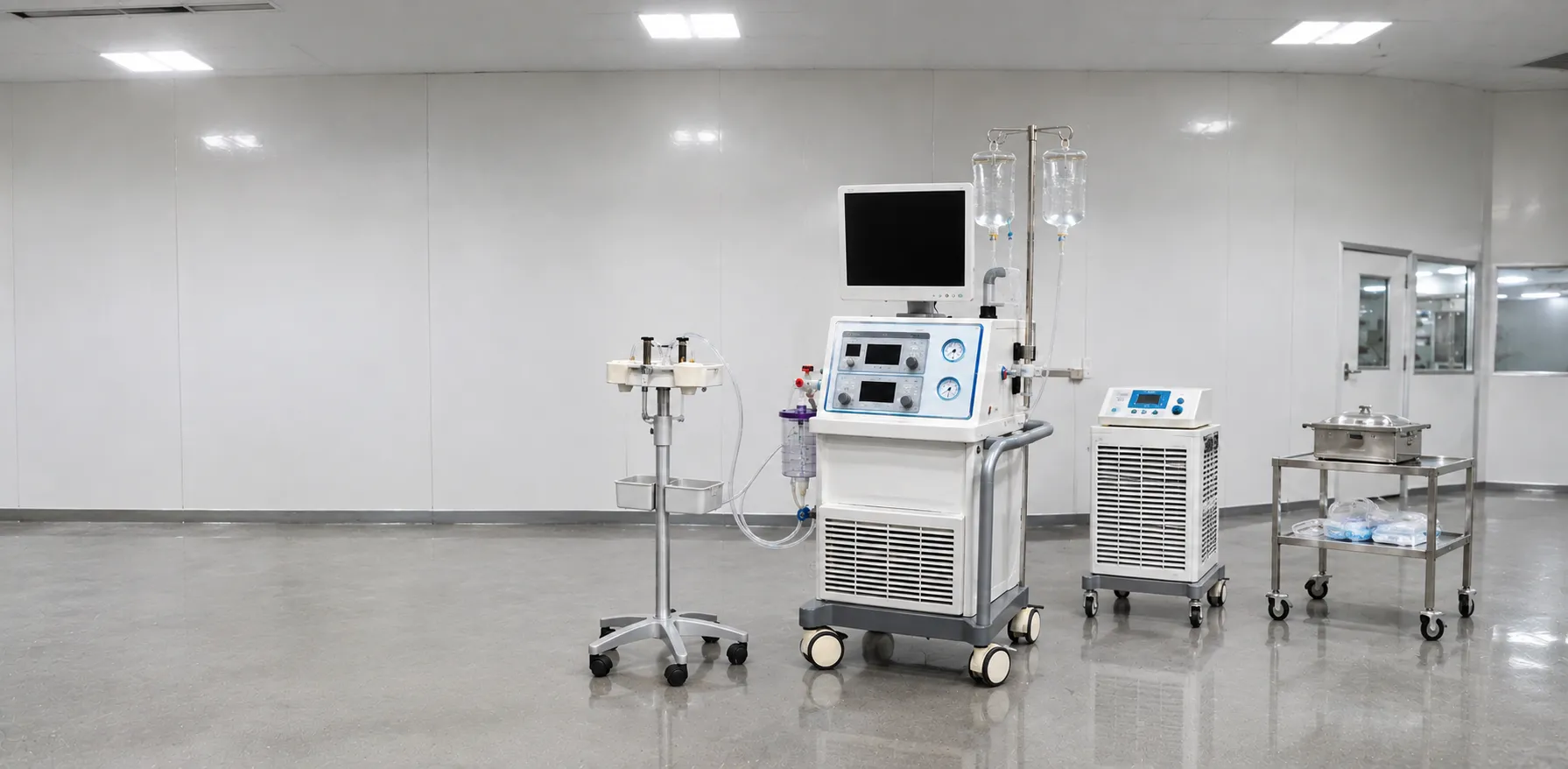
A myocardial protection system delivers cardioplegia, the specially formulated solution that deliberately stops the heart and keeps it still and protected while a surgeon operates on it. Once the aorta is clamped during heart surgery, the myocardial protection system arrests the heart and shields the muscle from injury during the period it has no blood supply of its own, then allows it to recover cleanly when the clamp comes off. Its whole purpose is arrest and protection; it is a distinct discipline from the bypass circuit that supports the rest of the body.
For a buyer, this is a focused, well-defined purchase: a delivery set, a pump channel, a heat exchanger and the monitoring that governs how cardioplegia reaches the heart. Getting that delivery right is what protects the muscle, so the detail matters.
How cold stops the heart: cardioplegia chemistry
Cardiac arrest for surgery is chemical and thermal. Cardioplegia solutions are rich in potassium, which depolarises the heart's cells and holds them in a relaxed, arrested state so the heart stops beating almost at once. Cooling the muscle at the same time drops its metabolic rate, so it needs far less oxygen and can safely tolerate the clamp period. Cold and chemistry work together: the potassium stops the electrical activity, and the low temperature preserves the still muscle. This is the sense in which cold stops the heart, and delivering that arrest evenly across the whole muscle is the system's core task.
Blood versus crystalloid, cold versus warm
Two main families of cardioplegia exist, and the delivery system must suit whichever a unit uses. Blood cardioplegia mixes the patient's own oxygenated blood with the arresting solution, usually in a set ratio, so the muscle receives oxygen and buffering during arrest; it is the common choice in UK cardiac surgery. Crystalloid cardioplegia uses a solution alone. Temperature strategy varies too, from cold cardioplegia given at a few degrees to warm induction and reperfusion techniques. A flexible myocardial protection system supports the mixing ratio, temperature and repeat dosing a surgical team's protocol calls for.
The delivery set and heat exchanger
The delivery set is the single-use circuit that carries cardioplegia from the pump to the heart. In a blood-based system, it includes a mixing section that combines blood and solution at the chosen ratio, a heat exchanger that brings the mixture to the target temperature, bubble handling and pressure and temperature ports. The heat exchanger is fed by the same category of heater-cooler unit used elsewhere in cardiac theatre, which carries a specific infection-control history: contamination with Mycobacterium chimaera led to MHRA guidance on heater-cooler devices and strict water-management and cleaning regimes that must be in place wherever the unit runs.
Pressure and temperature monitoring
Delivering cardioplegia is not simply pushing fluid; it is controlled infusion under watch. Delivery pressure is monitored because too high a pressure can damage the coronary vessels and the graft, while too low a pressure may fail to arrest or protect the whole muscle. The team measures temperature at the delivery line and often in the muscle itself to confirm the heart is cold enough. A good myocardial protection system puts pressure, temperature, and delivered volume in front of the perfusionist in real time, because those readings determine whether the arrest is safe.
Antegrade and retrograde delivery routes
Cardioplegia can be given by more than one route, and the system must support the surgeon's approach. Antegrade delivery sends the solution forward into the aortic root or directly into the coronary arteries, following the normal pblood flow path Retrograde delivery sends it backwards through the coronary sinus, which is useful when disease blocks the antegrade route or during valve surgery. Many procedures combine both to protect every region of muscle. The delivery set and its cannulae must match whichever routes a unit uses, so route flexibility belongs on the specification.
Single-dose and repeated cardioplegia
How often cardioplegia is redosed shapes the delivery system. Traditional blood cardioplegia is given at induction and then topped up at intervals through the arrest to keep the heart cold and quiet, so the system must support easy, monitored repeat dosing. Newer single-dose solutions, such as del Nido cardioplegia, are formulated to protect the heart for a longer interval from one delivery, reducing interruptions during the operation. A myocardial protection system should suit whichever strategy a unit follows, from frequent top-ups to a long single dose, and the delivery set and pump must make redosing straightforward when it is needed.
How a myocardial protection system reaches the whole muscle
Protection only works if the whole muscle receives cardioplegia, and even distribution is not guaranteed. Coronary disease can block the antegrade route to a region of heathe rt, which is why retrograde delivery through the coronary sinus is used to reach muscle beyond a blockage. The perfusionist controls flow and pressure to fill the coronary bed without over-pressurising it, and confirms the effect by watching for heart arrest and a drop in muscle temperature. A system that gives fine, responsive control over delivery flow and pressure, with clear feedback, is what lets the team achieve that even protection reliably.
Reperfusion and recovering the heart
Protection does not end when the repair is finished. As the surgery completes, a controlled reperfusion, sometimes a warm dose of cardioplegia before the clamp is released, helps the muscle recover and reduces injury as blood returns. The delivery system therefore has tomustrt warm as welanddelivery and a, withoth transition between them. Once the cross-clamp comes off, the heart is rewarmed and allowed to resume beating, often with a brief period of support before it takes over fully. Planning the delivery set around this whole arc, arrest through to recovery, is part of specifying the system well.
Standards, regulation and infection control
The delivery set is a sterile single-use device and the pump and heat-exchanger hardware are medical electrical equipment, all regulated under the UK Medical Devices Regulations 2002 with MHRA oversight. Electrical hardware conforms to IEC 60601-1, and blood-contacting materials must meet biocompatibility requirements under the ISO 10993 family. The heater-cooler infection-control regime described above is a live requirement, not a formality. Confirm UKCA or CE marking, the validated decontamination protocol for the heater-cooler and the delivery set's shelf life and traceability. This guide is compiled from manufacturer documentation and UK regulatory guidance for procurement teams; clinical decisions remain with the surgical and perfusion staff.
Specifying a myocardial protection system
A cardioplegia delivery purchase turns on delivery accuracy, flexibility and infection control:
-
Support for your unit's cardioplegia type, blood or crystalloid, and mixing ratios.
-
Temperature range covering cold delivery and any warm induction or reperfusion.
-
Antegrade and retrograde delivery capability with matching cannulae.
-
Real-time delivery-pressure and temperature monitoring with clear alarms.
-
Heat-exchanger performance and the heater-cooler decontamination protocol.
-
Delivery-set sterility assurance, shelf life and lot traceability.
-
Compatibility of the pump channel with your existing perfusion console.
-
UKCA or CE marking, IEC 60601-1 hardware conformity and ISO 10993 biocompatibility.
Cost per case and consumables
The pump channel and heat-exchanger hardware are largely part of the perfusion console, so the recurring cost of a myocardial protection system is the single-use delivery set for every case, multiplied by caseload. Add the heater-cooler's water-treatment and cleaning consumables, which the infection-control regime makes unavoidable. Compare delivery-set pricing and heater-cooler running costs together, not isolation, and weigh options from verified suppliers through MediGear on a like-for-like basis.
The verdict for buyers
A myocardial protection system is a narrow but critical purchase: it stops the heart and keeps the muscle safe during the most vulnerable minutes of cardiac surgery. Judge it on delivery accuracy, route flexibility, monitoring and a sound heater-cooler infection-control regime, not on the pump alone. MediGear is a UK medical-equipment distributor that helps facilities compare compliant delivery systems and consumables; reach the team through the MediGear enquiry desk when you are specifying cardioplegia provision.
Disclaimer
This article is for informational purposes only. It is published by MediGear (medigear.uk) for general information and procurement guidance, a. It ist clinical, diagnostic, treatment, technical, engineering, legal or regulatory advice, nor a product endorsement, guarantee or substitute for professional assessment. MediGear does not provide medical consultations. Buyers should consult their clinical, biomedical, estates, and regulatory contacts and the manufacturer's documentation, and independently verify all specifications, certifications, compatibility, and suitability before purchase. Specifications, certifications and availability are correct at the time of publication and may change without notice. MediGear is a medical-equipment distributor and does not sell medicines or pharmaceutical products.