A heart-lung machine is the capital console a perfusionist operates during open-heart surgery: a powered chassis of pumps, drives, monitors, and controls that circulates and oxygenates a patient's blood while the heart is stopped. Where the disposable circuit is renewed for every case, the heart-lung machine itself is a long-life piece of theatre equipment bought once and kept in service for many years, so the buying decision is about hardware, safety systems and lifecycle rather than consumables. This article stays with the machine.
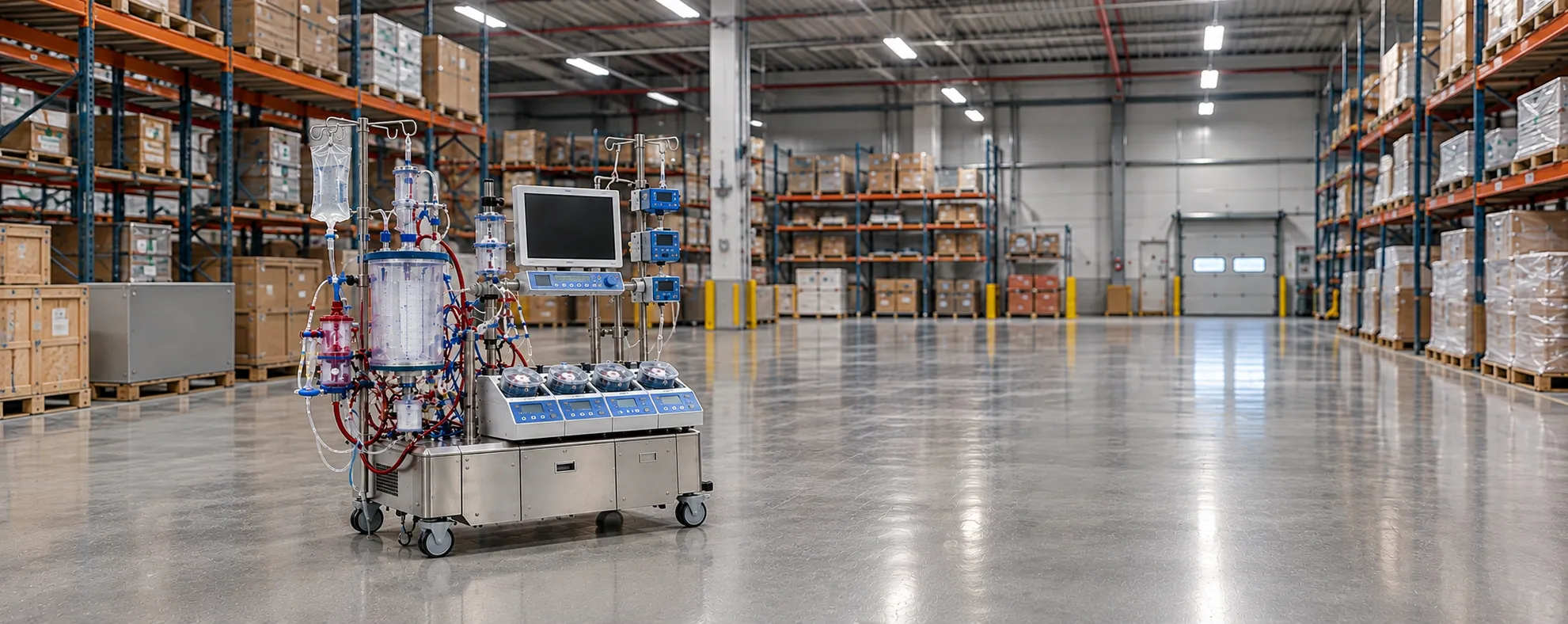
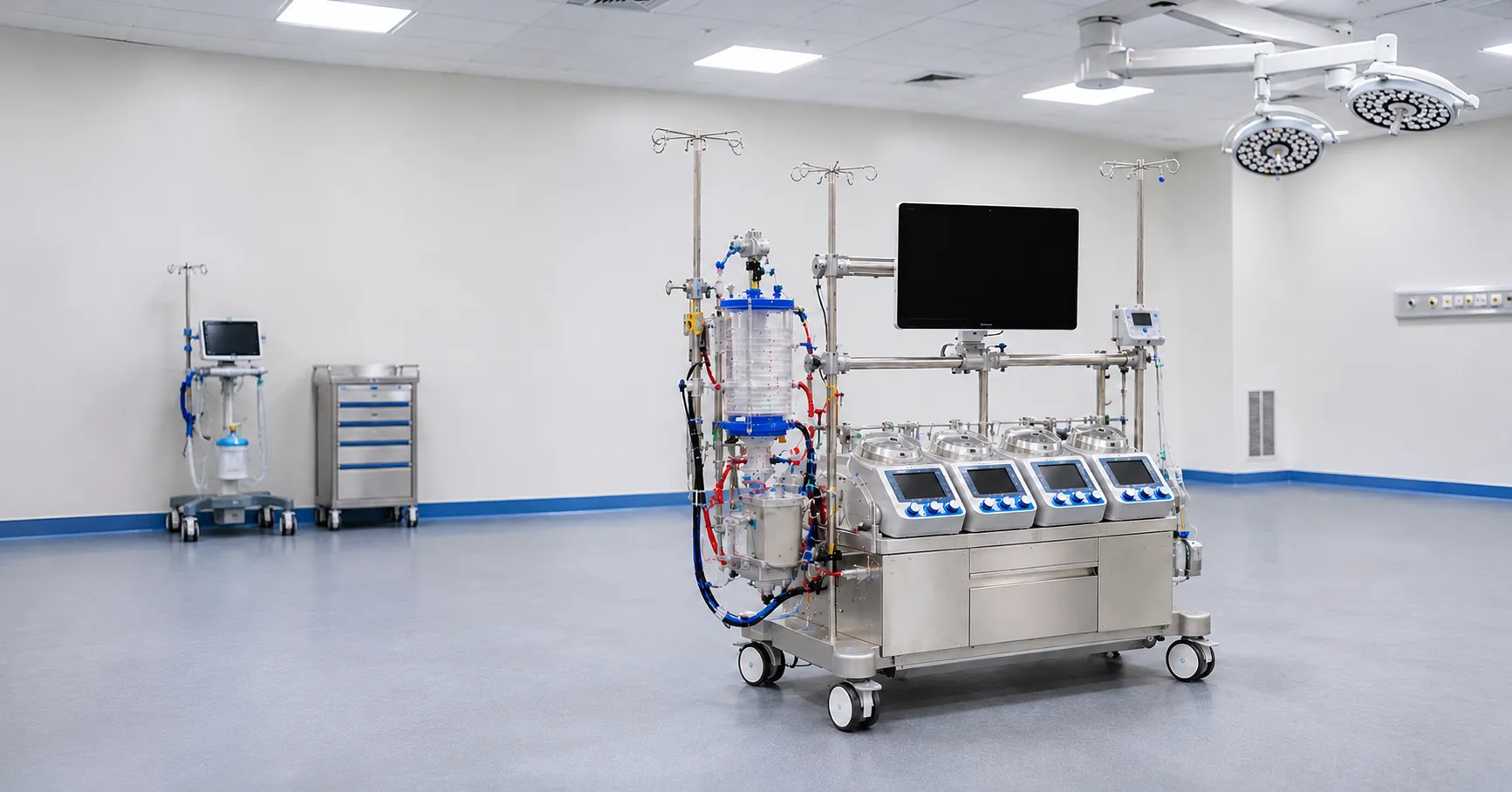
Physically, it is a wheeled console carrying multiple pump modules, a mounting frame for the oxygenator and reservoir, integrated monitors, a gas line and backup power. Everything a perfusionist reaches for during a case is arranged around that frame, which is why layout and ergonomics matter as much as raw performance.
Roller pumps versus centrifugal pump heads
The pumps define any heart-lung machine. Traditional roller pumps occlude a length of tubing against a curved raceway and rotate to push blood forward; they are precise, deliver flow independent of downstream resistance and are still widely used, especially for cardioplegia and suction lines. Centrifugal pump heads instead spin a cone or impeller to generate flow, are less traumatic to blood over longer runs and will not pump massive air, but their output varies with pressure and needs a flow probe. Most modern consoles carry several pump modules so a department can configure roller and centrifugal heads to its own protocol.
Safety monitors and alarms built into the console
What separates a modern heart-lung machine from a bare pump is its integrated safety chain. A venous reservoir level sensor stops the arterial pump if the level falls too low, preventing the reservoir from being pumped dry and air from reaching the patient. A bubble detector on the arterial line halts flow if it senses air. Line-pressure monitors protect against over-pressurisation and occlusion, and temperature inputs track the patient and the water circuit. These interlocks are the heart of the console's value, so their behaviour, override logic and alarm clarity deserve scrutiny when comparing machines.
Gas and temperature control from the console
The perfusionist manages the patient's blood gases and temperature from the machine. An air-oxygen blender, often mounted on the console, feeds the oxygenator with a controlled gas mixture and a vapour port for a anaesthetic agent. A separate heater-cooler unit controls temperature by circulating water through the oxygenator's heat exchanger, with the console displaying arterial, venous, and water temperatures. Good integration means these readings sit alongside flow and pressure on one screen rather than scattered across standalone boxes, cutting the perfusionist's cognitive load during a busy case.
Data management and the electronic perfusion record
Modern heart-lung machines log the run. On-board data systems capture pump flows, pressures, temperatures and gas settings second by second, producing an electronic perfusion record that supports audit, handover and governance. The useful question for a buyer is whether that data exports to the hospital's clinical systems or stays locked in a proprietary console, and whether the record meets your information-governance requirements. A machine that produces a clean, exportable case record adds real value beyond the pumping itself.
Configuring pump channels for a case
A heart-lung machine is bought partly by the number and arrangement of its pump channels, because each job in a case needs its own. A typical configuration dedicates one channel as the main arterial pump, another to cardioplegia delivery, and further roller pumps to the suckers and the vent that recover blood from the field. Units doing complex or high-volume work may want a spare arterial channel for redundancy, or the ability to switch a centrifugal head into the arterial position. When you specify a console, map your surgeons' typical case onto the channels and confirm the machine carries enough of them, in the right mix, with room to reconfigure.
Redundancy and single-fault safety
Because a heart-lung machine is life support, it is designed so that no single failure leaves the patient without flow. Dual power paths, a battery that carries the pumps through a mains interruption and the manual hand-crank together mean the perfusionist can always maintain circulation. Some departments keep a backup arterial pump ready to take over, and critical monitors have independent power. When comparing consoles, ask how the machine behaves under a component or power fault and how quickly the perfusionist can fall back to manual control, because that resilience is the real measure of a safety-critical device.
Installation, footprint and theatre integration
A console has to fit the theatre it works in. Its footprint, cable and gas routing, and the sightlines between the perfusionist, the surgical field and the anaesthetic team all affect how safely a case runs. Estates and clinical-engineering colleagues should be involved early, because power provision, the position of the heater-cooler and the flow of the sterile field around the machine are planning decisions, not afterthoughts. A machine that performs well on paper but crowds the theatre or blocks sightlines will frustrate the team every day.
Training and familiarisation
A new heart-lung machine changes the perfusionist's working environment, so training is part of the purchase, not an add-on. Manufacturers should provide structured familiarisation on the console's controls, alarms, and safety interlocks, and some offer simulation so a team can safely rehearse emergencies such as reservoir-low or air-detection events. Confirm what training is included, whether it covers every user on the rota and how updates are handled when software changes, because a safety interlock only protects the patient if the operator knows exactly how it behaves.
Standards, backup power and electrical safety
A heart-lung machine is medical electrical equipment regulated under the UK Medical Devices Regulations 2002, with oversight and adverse-incident reporting through the UK medical devices regulator, the MHRA. It is built to the general safety standard IEC 60601-1. Because it is a life-support device, it requires uninterrupted battery backup and, critically, a manual hand-crank for each main pump so that flow can continue during a total power failure. Confirm UKCA or CE marking, battery endurance, and the availability of hand-crank operation before purchase. This overview draws on manufacturer documentation and UK regulatory guidance and is written for procurement and biomedical-engineering teams.
Servicing, spares and the lifecycle of a heart-lung machine
Because the console stays in service for many years, planned maintenance and spares support decide its true value. Pump calibration, sensor checks and preventive servicing must be scheduled, and the availability of spare pump modules, sensors and a service contract from the manufacturer matters as much as the day-one specification. Ask about expected service life, software update policy and how quickly a failed module can be replaced, because a machine out of action stops a cardiac list.
Before you buy a heart-lung machine
Judge the console on hardware, safety systems and support rather than headline flow figures:
-
Number and type of pump modules, and the mix of roller and centrifugal heads.
-
The full safety chain: level sensor, bubble detector, and pressure-monitoring behaviour.
-
Battery endurance and a manual hand-crank on every main pump for power failure.
-
Integration of flow, pressure, temperature and gas data on a single display.
-
Electronic perfusion record and whether it exports to hospital systems.
-
Console ergonomics, footprint and mounting for oxygenator and reservoir.
-
Service contract, spare-module availability and expected service life.
-
UKCA or CE marking and conformity to IEC 60601-1.
Beyond the purchase price
The console is a capital purchase, but the lifetime cost includes servicing, calibration, spare modules and eventual software support, spread over a decade or more of use. A machine with strong local service backing and available spares can be far cheaper to own than a lower-priced unit that is slow to support. Weigh the service contract and spares availability alongside the quoted price, and compare consoles and their support packages from the suppliers on MediGear before committing.
Choosing well for your cardiac theatre
A heart-lung machine is one of the longest-lived and most safety-critical purchases a cardiac unit makes, so buy it for its pumps, its interlocks, its data record and the service behind it, not for a single flow number. MediGear is a UK medical-equipment distributor that helps facilities compare compliant consoles and their servicing; talk to us through the MediGear enquiry desk when you are planning to replace or expand a machine fleet.
Disclaimer
This article is for informational purposes only. It is published by MediGear (medigear.uk) for general information and procurement guidance. It is not clinical, diagnostic, treatment, technical, engineering, legal or regulatory advice, nor a product endorsement, guarantee or substitute for professional assessment. MediGear does not provide medical consultations. Buyers should consult their clinical, biomedical, estate, and regulatory contacts and the manufacturer's documentation, and independently verify all specifications, certifications, compatibility, and suitability before purchase. Specifications, certifications and availability are correct at the time of publication and may change without notice. MediGear is a medical-equipment distributor and does not sell medicines or pharmaceutical products.