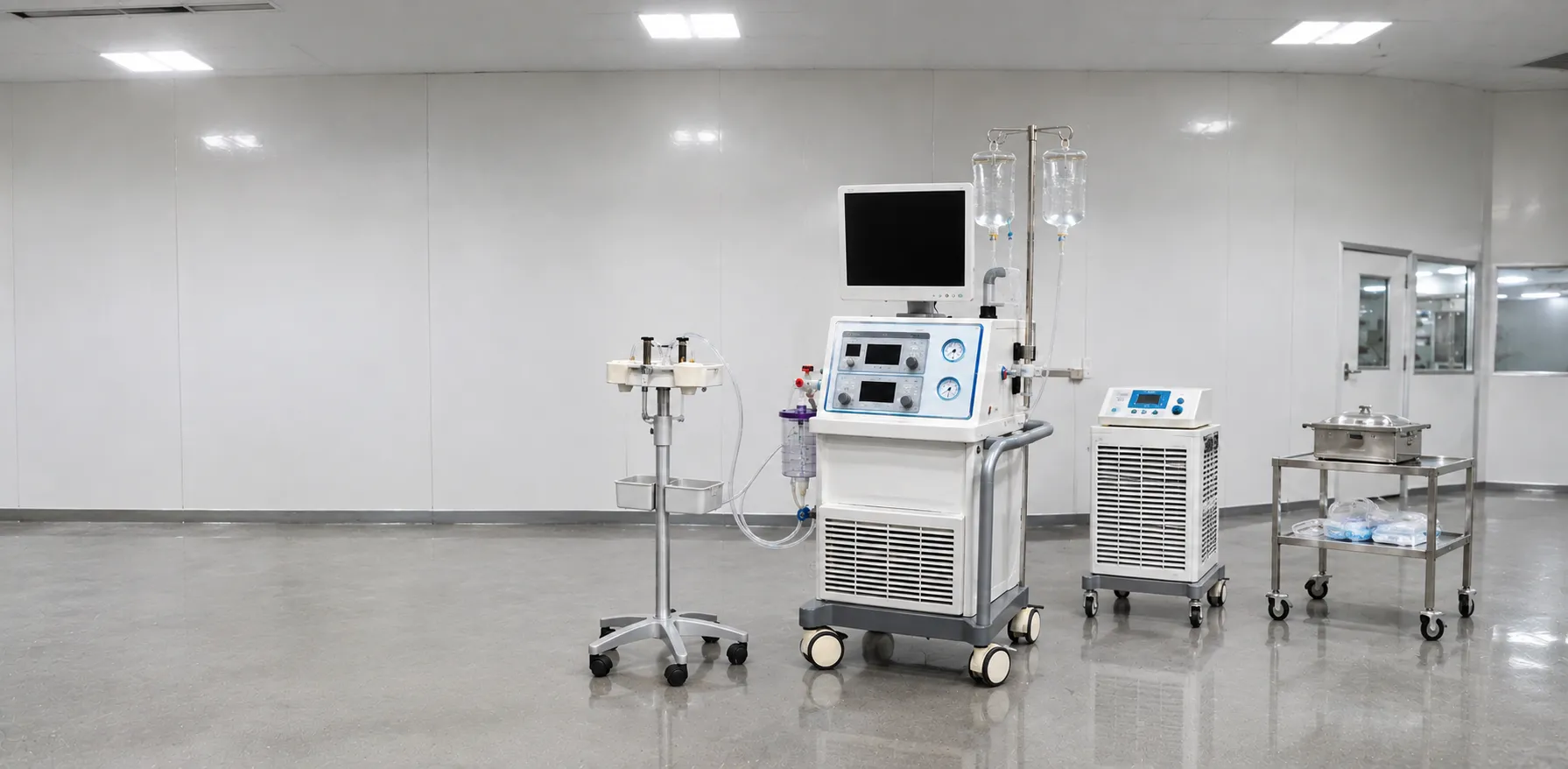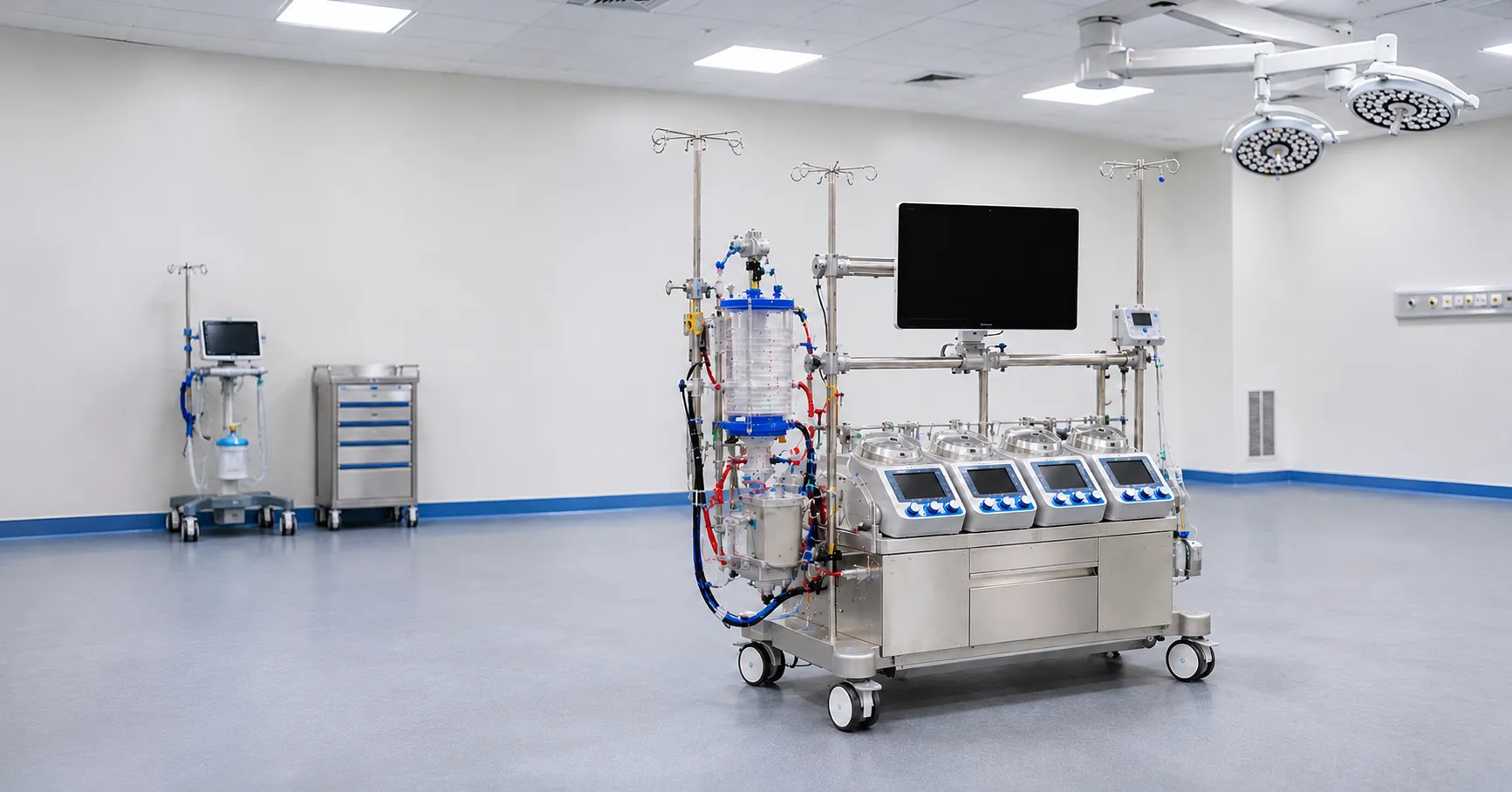


Cardiopulmonary bypass is the technique that keeps a patient alive while the heart is deliberately stopped for surgery, diverting blood away from the heart and lungs so the surgeon can work on a still, bloodless field. During cardiopulmonary bypass a perfusionist takes over the patient's circulation and gas exchange, maintaining blood flow, oxygenation and temperature by machine while the natural organs are at rest. It is a process and a discipline as much as a piece of equipment, and understanding the sequence is what lets a buyer support the service properly.
This piece stays with the technique: what happens physiologically, the stages of a bypass run and the decisions the perfusionist makes, rather than a catalogue of hardware. The console and the circuit each have their own place; here the focus is the method that ties them together.
Going on bypass: the sequence of events
A bypass run follows a defined choreography. After the chest is opened and the patient is fully anticoagulated, the surgeon places cannulae so that venous blood drains away before it reaches the heart and oxygenated blood is returned to the aorta. The perfusionist then gradually transfers the circulation to the machine, watching venous drainage, arterial pressure and flow as the heart empties. Once the patient is fully supported, the aorta can be clamped and the heart stopped, which is where myocardial protection takes over as a separate discipline. The whole transfer onto cardiopulmonary bypass is done in controlled steps, never all at once.
Anticoagulation and the activated clotting time
Blood clots the moment it meets the foreign surfaces of an extracorporeal circuit, so full anticoagulation is non-negotiable before cardiopulmonary bypass begins. Heparin is given and its effect is verified by measuring the activated clotting time (ACT), which must reach a high target before cannulation and is rechecked throughout the run. At the end, protamine reverses the heparin so the patient can clot normally again once off bypass. Managing this anticoagulation window, enough to keep the circuit clot-free, reversed cleanly at the finish, is one of the defining safety tasks of the whole technique.
Managing flow, pressure and temperature during the run
While the patient is supported, the perfusionist runs the physiology by hand. Pump flow is set to deliver an adequate cardiac output for the patient's size, arterial pressure is managed within a safe range, and blood gases are tuned through the oxygenator's gas supply. Temperature is an active tool: many procedures use controlled hypothermia to lower the body's oxygen demand, cooling the patient during the repair and rewarming before separation. Haematocrit, potassium, glucose and acid-base balance are watched and corrected. Acid-base itself is handled by a chosen strategy, alpha-stat or pH-stat, that decides how blood gases are interpreted at low temperature, and the choice can influence cerebral blood flow during cooling. This continuous management, rather than any single setting, is what good cardiopulmonary bypass practice looks like, and it is why the perfusionist's judgement carries as much weight as the equipment.
Where myocardial protection fits
Stopping and protecting the heart during bypass is a distinct discipline with its own delivery system, so it is only touched on here. In short, once the aorta is clamped the heart is arrested and kept protected while the surgeon operates, then allowed to recover as the clamp comes off. The point for understanding the technique is simply that cardiopulmonary bypass provides the supported circulation within which that arrest safely happens; the two work together but are specified and run separately.
Weaning off cardiopulmonary bypass
Separation reverses the on-bypass sequence. The patient is rewarmed, the heart is allowed to fill and start ejecting, and the perfusionist gradually hands the circulation back by reducing pump flow while the surgical and anaesthetic team assess how the heart is coping. If the heart is not yet ready, flow can be increased again and support resumed. Once stable off cardiopulmonary bypass, the cannulae are removed and heparin is reversed with protamine. A controlled, unhurried wean is central to a good outcome and is a skill the perfusion team drills for.
Priming, haemodilution and blood management
Before the patient goes on, the circuit is filled with priming fluid, and that prime mixes with the patient's blood the moment bypass starts. The resulting haemodilution lowers the haematocrit, so the perfusionist manages it carefully through the run, using ultrafiltration to remove excess fluid and, where needed, transfusion to keep oxygen-carrying capacity adequate. Blood conservation is a genuine part of the technique, because minimising donor blood improves outcomes and cost. The perfusionist balances flow, haematocrit and fluid status continuously, which is one reason cardiopulmonary bypass is skilled real-time work rather than a fixed protocol.
Guarding against air, emboli and the inflammatory response
The technique carries specific risks the perfusion team is trained to prevent. Air must never reach the arterial line, so meticulous de-airing, a level-sensing reservoir and an arterial filter all guard against embolism. Contact between blood and the circuit's foreign surfaces triggers a systemic inflammatory response, which biocompatible coatings and shorter circuits aim to blunt. Particulate and gaseous microemboli are minimised by filtration and careful suction management. Understanding these hazards explains why so much of cardiopulmonary bypass practice is about prevention and vigilance rather than the pumping itself.
Deep hypothermic circulatory arrest
Some complex operations, such as surgery on the aortic arch, need a period with no circulation at all. For these the patient is cooled profoundly and the pump is briefly stopped, a technique called deep hypothermic circulatory arrest. The deep cooling protects the brain and organs during the arrest window, and cerebral perfusion techniques may be added to extend the safe time. It is an advanced extension of the same principles, controlled temperature and controlled flow, that govern every bypass run, and it shows how far the technique can be adapted to the operation.
Monitoring the patient throughout
Cardiopulmonary bypass is run against a stream of numbers. Arterial and venous pressures, pump flow, blood gases, mixed venous oxygen saturation, temperature and the activated clotting time are all watched continuously, and increasingly cerebral oximetry tracks brain oxygenation as well. The perfusionist adjusts flow, gas and drugs in response to these readings, keeping the patient within safe limits minute by minute. This dense monitoring is why point-of-care testing in theatre and clear data display are essential to supporting the technique safely.
The perfusionist and clinical governance
Cardiopulmonary bypass is delivered by a clinical perfusionist working in close communication with the surgeon and anaesthetist, and the safety of the technique rests as much on protocol, checklists and training as on the equipment. UK cardiac surgery operates within recognised clinical standards, and the wider pathway is shaped by the surgical-safety and service-quality guidance published by NICE. This overview is compiled from perfusion practice references and UK regulatory guidance and is written for procurement and clinical-engineering teams; the conduct of any bypass run stays with the qualified perfusionist.
Supporting a cardiopulmonary bypass service
A procurement or governance lead supporting this technique should confirm the process is properly resourced:
-
ACT and blood-gas point-of-care testing available and maintained in theatre.
-
Consumable circuits compatible with the pumps and monitoring the service runs.
-
Agreed anticoagulation and protamine-reversal protocols with the anaesthetic team.
-
Temperature-management capability for controlled cooling and rewarming.
-
Perfusionist staffing, competency records and cover for emergency cases.
-
Documented checklists for going on and coming off bypass.
-
Incident-reporting routes to the MHRA device-safety reporting service for any device-related event.
The bottom line for buyers
Cardiopulmonary bypass is best understood as a controlled sequence, on, support, arrest, wean, off, rather than a machine, and supporting it well means resourcing the whole process: monitoring, consumables, protocols and above all trained people. When you procure for a cardiac service, buy for the technique, not just the box. MediGear is a UK medical-equipment distributor that helps facilities source compliant equipment and consumables for cardiac theatres; the buyer resources at MediGear are a practical starting point when you are planning that provision.
Disclaimer
This article is for informational purposes only. It is published by MediGear (medigear.uk) for general information and procurement guidance, and is not clinical, diagnostic, treatment, technical, engineering, legal or regulatory advice, nor a product endorsement, guarantee or substitute for professional assessment. MediGear does not provide medical consultations. Buyers should consult their clinical, biomedical, estates and regulatory contacts, and the manufacturer's documentation, and independently verify all specifications, certifications, compatibility and suitability before purchase. Specifications, certifications and availability are correct at the time of publication and may change without notice. MediGear is a medical-equipment distributor and does not sell medicines or pharmaceutical products.