What a plinth is and how physiotherapy tables differ
A plinth is a treatment table used in physiotherapy and rehabilitation: a firm, padded platform, usually height-adjustable, on which a patient lies, sits or is treated. The word plinth is the physiotherapy trade's term for the treatment table, and it differs from a general examination couch in being sturdier, wider and firmer, built for hands-on treatment and for a therapist to work with force and body weight rather than for a quick examination.
For a rehab buyer, the distinction matters because a couch and a plinth are not interchangeable. This guide foregrounds what makes a plinth different and what to check before you buy.
Plinth versus examination couch: the real differences
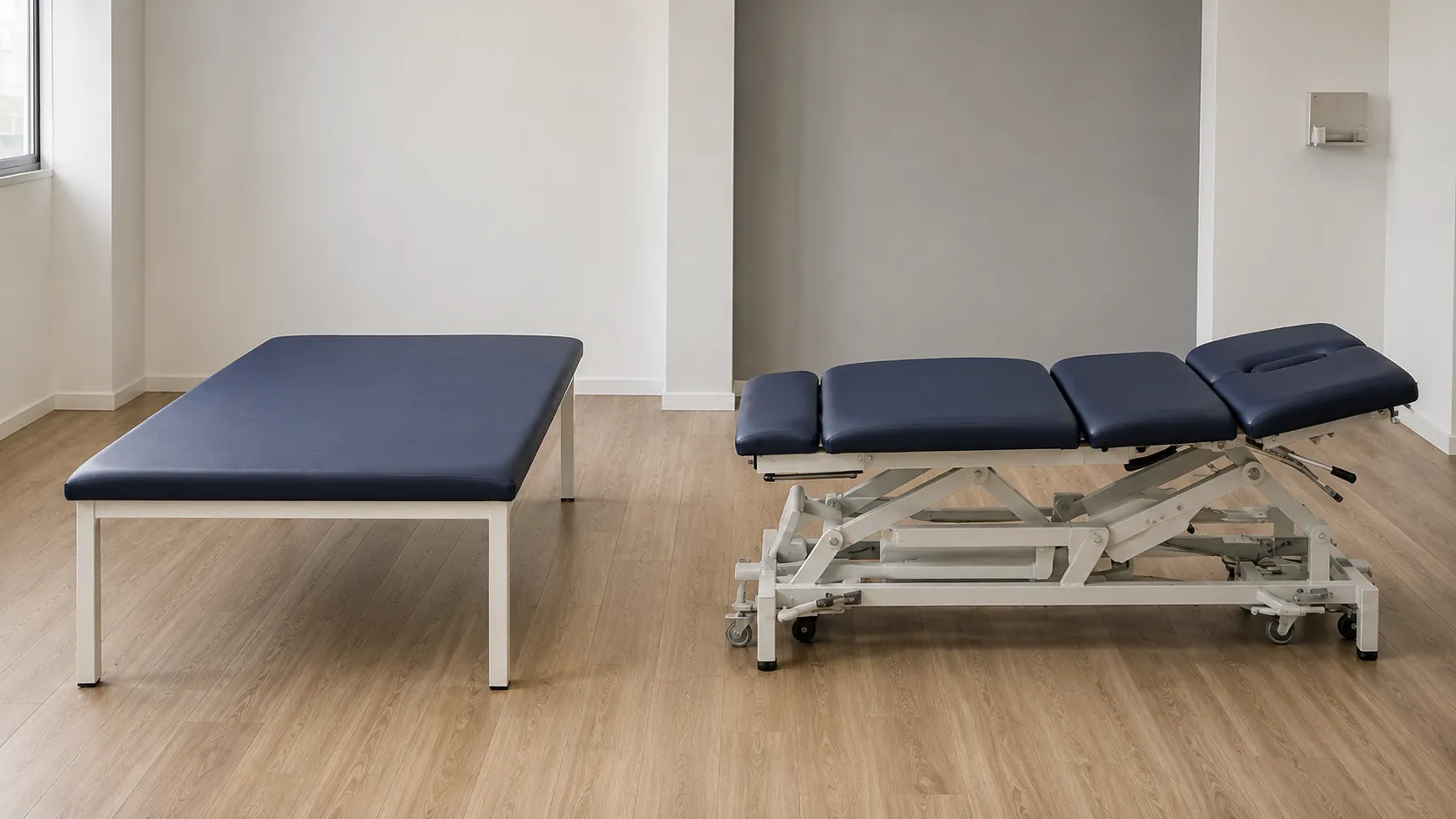
The two look similar but are built for different work. An examination couch is designed for a patient to lie on briefly while a clinician examines them; it can be relatively light and narrow. A physiotherapy plinth is a working surface a therapist leans, presses, and mobilises on, often climbing partly onto it for manual therapy, so it is built to be stiffer and to a higher stability and load rating. A plinth top is firmer because a soft couch top absorbs the force a therapist applies during mobilisation, making techniques less effective. Plinths are also typically wider to let a patient lie in different positions and to give the therapist room to work. In short, a couch is for looking; a plinth is for treating.
Height adjustment: hydraulic, electric and fixed
Why variable height matters
Variable height is central to a plinth. The therapist lowers it so the patient can sit or transfer safely, then raises it to protect their own back while applying manual therapy, and adjusts it throughout the session for different techniques. This protects therapists from the cumulative back strain caused by hands-on work, a workplace concern under the HSE manual-handling framework.
The options
A hydraulic foot pump, an electric actuator with a foot bar or hand control, or a fixed-height frame set height. Electric plinths offer effortless, hands-free adjustment mid-technique and suit busy clinics; hydraulic plinths are simpler and mains-free but require pumping; fixed-height plinths are the cheapest and most stable but force the therapist to work at one height. Electric and hydraulic variable-height plinths are the norm in clinical physiotherapy.
Sections, tops and the mat platform
Plinths come in several configurations. A flat-top plinth is a single firm surface for general treatment. A two- or three-section plinth adds an adjustable backrest and sometimes a breathing hole or a drop-away section for prone work and cervical treatment. A tilt or bariatric mat platform is a wide, low, high-capacity plinth used for floor-level and neurological rehabilitation where a patient needs a large stable surface to move on. Some plinths add gas-assisted backrests, adjustable head sections and side rails. Match the section layout to the techniques your service delivers, rather than defaulting to the most adjustable option.
Load rating, stability and firmness
Because a therapist adds their own weight and force, the working load on a plinth exceeds the patient's weight alone; confirm a safe working load that comfortably exceeds patient weight plus applied force; many clinical plinths rate around 200 kg or more, with bariatric mat platforms higher, and you should confirm the figure per model. Stability under off-centre and dynamic loading matters as much as the static number, so ask about the frame design and any tip-test data the manufacturer holds. Firm, supportive padding, typically high-density foam over a solid deck, gives the resistance manual therapy needs while staying comfortable. A cushion that is too soft feels comfortable to lie on but lets the patient sink, so the applied force compresses the foam instead of reaching the joint, and the technique loses its effect. Ask the supplier about the foam density and deck construction, not just the cover material, because the feel under load is what distinguishes a treatment plinth from a padded examination couch.
Regulation, upholstery and hygiene
A powered physiotherapy plinth used in clinical care is generally a medical device. An electric plinth should meet BS EN 60601-1 for medical electrical safety, be UKCA or CE marked under the UK Medical Devices Regulations, and include a declaration of conformity and instructions. Upholstery should be welded-seam, fluid-resistant and validated for your disinfectant, as plinths see heavy daily skin contact and must be wiped between patients and take couch roll. This overview is drawn from physiotherapy equipment manufacturers' specifications and MHRA device guidance in the UK. It is written for rehabilitation and procurement leads who are choosing treatment tables, rather than for patients. For how physiotherapy sits within UK care, the NHS provides the service context.
Plinths across rehab settings
The right plinth depends on the service. An outpatient musculoskeletal physiotherapy clinic wants a two-section electric plinth at a good working height for manual therapy. A neurological rehabilitation unit needs a low, wide mat platform for floor-based work and transfers. A sports clinic may want a robust flat-top plinth for soft-tissue work, and a domiciliary physiotherapist uses a portable folding plinth that trades adjustability for transport. Hydrotherapy and gym areas add their own requirements. Define the caseload and the space before choosing the plinth type. A structured buyer comparison holds competing quotes to a like-for-like specification.
Accessories that extend a plinth
Much of a plinth's versatility comes from its accessories. A breathing hole with a plug lets a patient lie comfortably prone for spinal and cervical work; adjustable head and arm sections support positioning; side support rails and a safety strap help with unstable or neurological patients; and a paper roll holder keeps hygiene simple. Some plinths accept a handset for a gas-assisted backrest, stirrups for specific techniques, or an extended width for larger patients. When comparing models, list the techniques your therapists actually use and check that each plinth supports them, rather than paying for adjustability the service will never use, worse, finding a plinth that cannot be configured for a routine technique.
Footprint, castors and moving the plinth
How a plinth moves and sits in the room affects daily work. Retractable castors let staff wheel a plinth for cleaning or to reconfigure a gym, then lower it onto stable feet for treatment; a plinth without them is fixed in place once lowered. Check the footprint against the room, allowing clearance for the therapist to work on both sides and for the backrest or leg sections to move through their range. A wide mat platform in particular needs floor space around it for transfers. Plan the plinth and the room together so the therapist is never boxed in against a wall on the side they need to treat from.
Servicing, spares and lifecycle cost
For electric plinths, the actuator, control and any gas strut are the wear parts and the main cost after upholstery. Ask about the actuator duty cycle, the ease of replacing a failed actuator, gas strut or control, and whether they are standard supported parts. Upholstery is a long-term consumable given the heavy use plinths take, so replaceable covers avoid scrapping a sound frame. Weigh servicing, cover replacement, gas-strut replacement and warranty into the whole-life cost rather than the purchase price alone.
Buying a physiotherapy plinth: what to verify
- Confirm the top is firm enough to transmit manual-therapy force, not a soft couch top.
- Choose the height mechanism: electric, hydraulic or fixed, for your workflow.
- Match the section layout and any mat platform to your techniques.
- Confirm the safe working load exceeds the patient's weight plus the applied therapist force.
- Check stability under off-centre and dynamic loading, not just the static rating.
- Specify welded-seam, fluid-resistant upholstery validated for your disinfectant.
- Confirm that any electric plinth is UKCA- or CE-marked, with its declaration of conformity.
- Review actuator and gas-strut spares, replaceable covers and warranty.
Getting the plinth choice right
The difference between a couch and a plinth is the difference between examining and treating: a plinth is firmer, sturdier, wider and rated for a therapist's force as well as the patient's weight. Prioritise a firm, supportive top, the right-height mechanism and section layout, a load rating that covers the applied force, and cleanable upholstery. Buyers comparing physiotherapy plinths across manufacturers can use Medigear.uk to review specifications and reach verified suppliers, or contact the team through the contact page for sourcing support.
Disclaimer
This article is for informational purposes only. It is published by MediGear (medigear.uk) for general information and procurement guidance. It is not clinical, diagnostic, treatment, technical, engineering, legal, or regulatory advice, nor a product endorsement, guarantee, or substitute for professional assessment. MediGear does not provide medical consultations. Buyers should consult their clinical, biomedical, estates and regulatory contacts, and the manufacturer's documentation, and independently verify all specifications, certifications, compatibility and suitability before purchase. Specifications, certifications and availability are correct at the time of publication and may change without notice. MediGear is a medical-equipment distributor and does not sell medicines or pharmaceutical products.