Gynaecological examination couches explained for clinics.
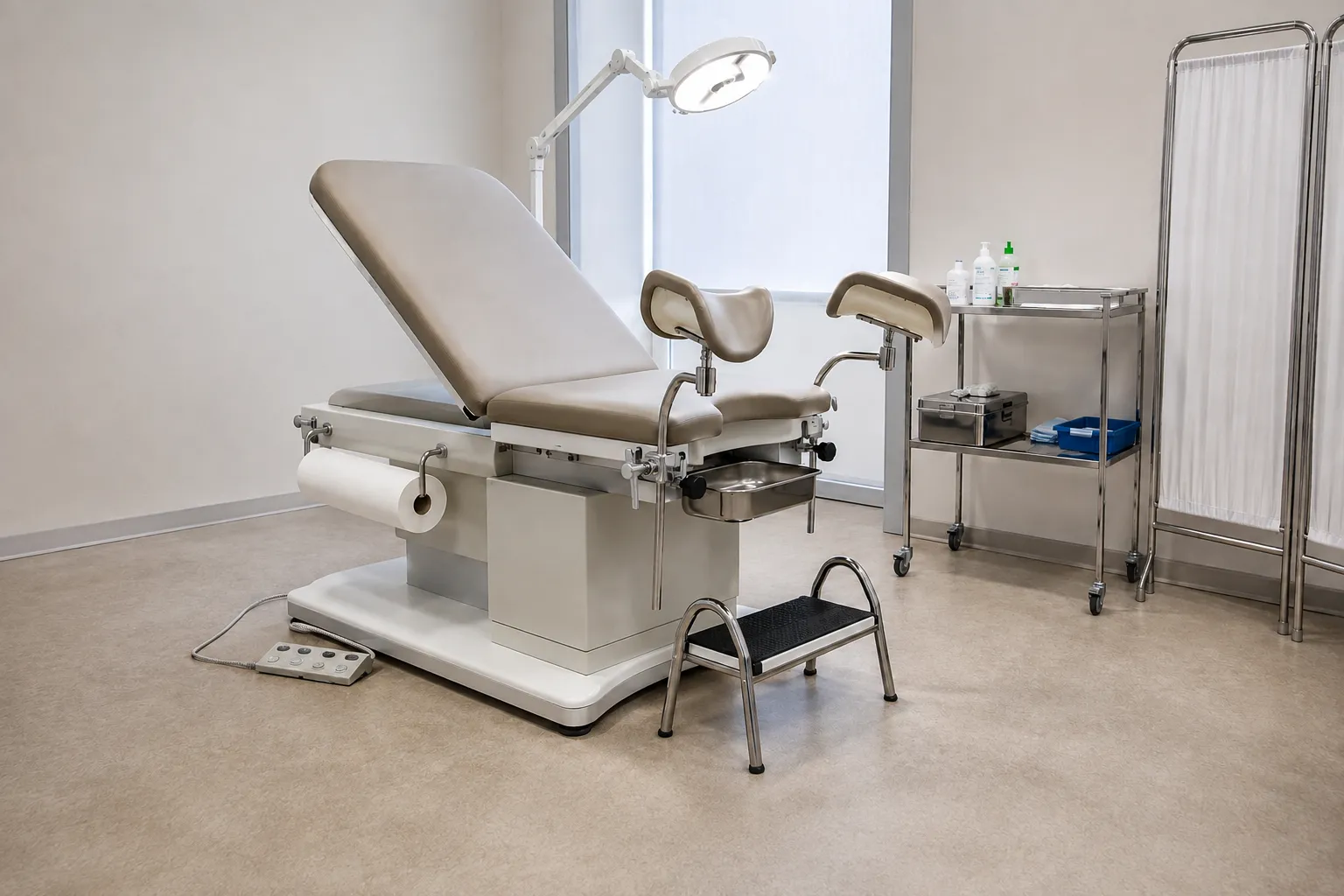
A gynaecological examination couch is a clinical couch designed to hold a patient in the lithotomy position, with the hips flexed and the legs supported apart, so that a clinician has clear access for pelvic and cervical examinations, colposcopy, coil fitting, and minor gynaecological procedures. It combines a height-adjustable couch with removable leg supports or stirrups, a drop or removable seat end for drainage, and a section that reclines to seat the patient upright or lay them back.
For a clinic buyer, the couch is what makes safe, dignified gynaecological examination possible. This guide focuses on the features that set it apart from a general examination couch: the leg supports, the positioning, drainage, and access.
Lithotomy positioning and why it matters
The couch is designed to achieve and maintain lithotomy positioning cleanly. The backrest raises the patient to a semi-seated angle for speculum insertion and lowers for other steps; the leg sections drop away, or a seat cut-out opens, so the clinician can sit or stand directly at the perineum. Good couches let the position be set quickly with minimal patient handling, because a patient held awkwardly or repositioned repeatedly is both uncomfortable and harder to examine. Powered height and backrest controls allow one clinician to set the position without an assistant.
Leg supports: stirrups, troughs and knee crutches
Types of support
Leg supports come in several forms. Simple heel stirrups hold the foot; padded knee crutches or Yellofin-style boot supports cradle the calf and knee for longer procedures and colposcopy; and gutter or trough supports hold the whole lower leg. The support type affects patient comfort, how long a procedure the couch can accommodate, and how far the legs can be abducted for access.
Fitting and adjustment
Check that the supports are quick to fit and remove, adjust for height, angle and width without tools, and store or swing clear when not needed so the couch doubles as a general examination couch. Removable, wipeable padding on the supports matters for both comfort and cleaning.
Drainage, seat end and access
Gynaecological examinations and procedures involve fluids, so a drop-down or fully removable seat end, often with a drainage channel and a bowl or tray beneath, keeps the working area clean and provides the clinician with unobstructed access. Confirm the couch offers a proper cut-out or removable section rather than only a flat top, that a collection bowl or tray fits, and that the surface guides fluid away rather than pooling. Clear access at the correct height, set by the powered couch, lets the clinician work comfortably seated. Where castors are fitted, braked castors let the couch be repositioned for cleaning yet hold firm during examination, and a mobile couch is easier to clean around than one boxed against a wall. Check too that the seat end, once removed or dropped, stows safely rather than becoming a trip or handling hazard beside a busy couch.
Height, transfer and dignity
Powered height adjustment does two jobs: it brings the patient down to a low, safe height for getting on and off, reducing falls and manual-handling risk, and it raises them to the clinician's working height for examination. A low minimum height and, on some couches, a swing-out or step aids transfer for less mobile patients. Because these examinations are intimate, features that protect dignity, such as a couch that positions quickly so the patient is exposed for the shortest time and room for a modesty sheet, are practical considerations for the clinic. The HSE manual-handling framework applies to safe patient transfer on and off the couch.
Upholstery, infection control and cleaning
High patient throughput and contact with fluids make cleanability essential. Specify welded-seam, fluid-resistant upholstery that will not trap fluids, validated for the disinfectant your clinic uses, and confirm the leg-support pads and any seat cut-out clean easily. Compatibility with disposable couch roll and, where used, single-use covers reduces cross-contamination between patients. This overview is compiled from examination couch manufacturer specifications and infection control and device guidance from MHRA and NHS sources, written for clinicians and procurement leads equipping gynaecology, colposcopy, and sexual health clinics rather than for patients.
Regulation, load rating and standards
A powered gynaecological couch is generally a medical device. Powered couches should conform to the medical electrical safety standard BS EN 60601-1, be UKCA- or CE-marked under the UK Medical Devices Regulations, and ship with a declaration of conformity. Confirm the safe working load, commonly around 200 kg on modern couches with bariatric options above that, and confirm the figure per model, remembering the load rating must hold with the patient positioned towards the end of the couch, not just centred.
Where these couches are used
Specification shifts with the service. A GP practice or community clinic wants a versatile couch whose leg supports stow so it serves as a general examination couch between gynaecology sessions. A dedicated colposcopy or gynaecology outpatient clinic values comfortable boot-style supports for longer procedures, reliable drainage, and full-powered positioning. Asexual health or family planning service prioritises quick coil-fitting positioning and fast cleaning to achieve high throughput. Define the caseload and the mix of examinations before choosing supports and drainage. A structured buyer comparison keeps competing quotes to the same specification.
Accessories: lighting, colposcope and trolley
A gynaecology couch works as part of a set. An examination lamp or a colposcope needs a clear line to the perineum at the couch's working height; an instrument trolley, a specimen and swab station and a sharps bin must sit within reach; and where colposcopy or coil fitting is done, the couch height must align the patient with the colposcope or the seated clinician. When specifying the couch, plan these together: confirm that the base allows a trolley and a lamp or colposcope stand to come close, that there is knee room for a seated clinician at the seat cut-out, and that the couch height range matches any fixed instrument. Buying the couch in isolation often forces awkward workarounds once the room is in use.
Comfort, dignity and chaperone space
These examinations are intimate and often anxiety-provoking, so practical dignity features earn their place. A couch that reaches the position quickly limits how long the patient is exposed; comfortable, well-angled leg supports reduce strain during longer procedures such as colposcopy; and adequate room around the couch allows a chaperone to stand appropriately and the clinician to bring equipment without crowding the patient. Consider access from both sides where the clinic layout allows, and a low transfer height for less mobile or older patients. These are procurement considerations about the couch and the room, not clinical technique, but they shape how safely and comfortably a clinic runs.
Servicing, spares and lifecycle cost
The wear items are the actuators and hand- or foot-control on powered couches, the leg-support mechanisms, and the upholstery. Ask about actuator duty cycle and replacement, whether leg supports and pads are stocked as spares, and how covers are replaced when they wear. Leg-support pads and disposable covers are ongoing consumables. Weigh servicing, spares availability, cover replacement and warranty into the whole-life cost rather than the purchase price alone.
Specifying a gynaecological couch: buyer checklist
- Confirm the leg supports suit your procedures and stow for general use.
- Check for a drop-down or removable seat end with drainage and a bowl.
- Verify powered height with a low transfer height and clinician working height.
- Confirm safe working load holds with the patient positioned at the end.
- Specify welded-seam, fluid-resistant upholstery validated for your disinfectant.
- Check leg-support pads and cut-out clean easily and take couch roll.
- Ensure a powered couch is UKC-A orCE-markedd with conformity documentation.
- Review spares for supports and pads, cover replacement and warranty.
Choosing the right couch for your clinic
A gynaecological examination couch is defined by how well it holds lithotomy positioning cleanly, safely and with dignity. Prioritise the leg-support type your procedures need, proper drainage and access, powered height for safe transfer and comfortable working, and welded-seam upholstery you can clean fast. Buyers comparing gynaecology couches across manufacturers can use Medigear.uk to review specifications and reach verified suppliers, or contact the team through the contact page for sourcing support.
Disclaimer
This article is for informational purposes only. It is published by MediGear (medigear.uk) for general information and procurement guidance. It is not clinical, diagnostic, treatment, technical, engineering, legal, or regulatory advice, nor a product endorsement, guarantee, or substitute for professional assessment. MediGear does not provide medical consultations. Buyers should consult their clinical, biomedical, estates and regulatory contacts, and the manufacturer's documentation, and independently verify all specifications, certifications, compatibility and suitability before purchase. Specifications, certifications and availability are correct at the time of publication and may change without notice. MediGear is a medical-equipment distributor and does not sell medicines or pharmaceutical products.