What an ophthalmic refraction chair is and how eyes are tested
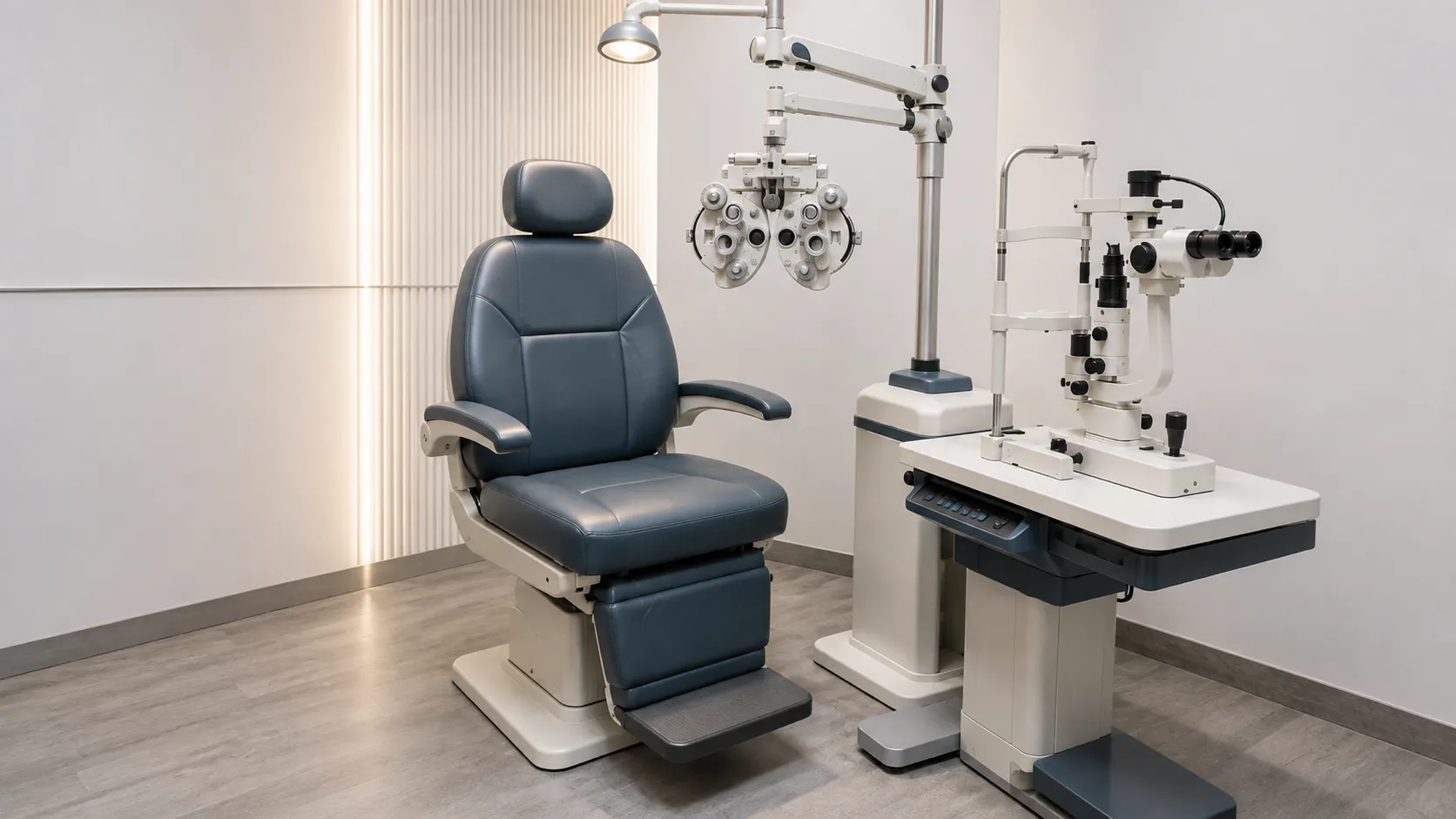
An ophthalmic refraction chair is the patient chair at the heart of an eye-testing lane. It seats the patient upright and still at a set height while the optometrist measures their vision, and it is designed to pair with a refraction unit that includes the chart projector, the phoropter arm, and the instrument tables. The chair and unit together form the refraction lane where prescriptions are determined.
For a practice fitting out a test room, the chair is bought as part of that lane rather than in isolation. This guide explains how the chair works within the sight-test set-up and what a buyer should check.
How a sight test uses the chair
Refraction is the process of finding the lens power that gives the clearest vision. The patient sits in the chair and looks at a letter chart, usually projected to an effective distance of six metres via a mirror or a digital chart. The optometrist swings a phoropter, a bank of switchable trial lenses, in front of the eyes, or uses a trial frame, and asks the patient to compare lens choices. Because the measurement depends on the eye being at a fixed distance and height from the chart and instruments, the chair's job is to hold the patient steady and correctly positioned throughout the procedure.
Combined chair-and-stand or separate units
Refraction furniture comes in two arrangements. A combined chair-and-stand unit mounts the seat, the phoropter arm, and the instrument table on a single base with a shared powered column and a single control, keeping the lane compact and tidy for a small high-street room and speeding up installation and alignment. Separate items — a stand-alone powered chair with an independent refraction stand alongside it — give more freedom to position the seat and let a clinic replace or upgrade the chair and instruments on their own timelines. A combi-unit is quicker to commission; separates are more flexible and easier to service on a piece-by-piece basis. Decide which arrangement suits your room size, your instrument plans and how you expect to maintain the lane before you shortlist models.
Positioning, swivel and compact footprint
Height and recline
The chair adjusts in height, usually powered by a footswitch or hand control, so the optometrist keeps both hands free for the phoropter and slit lamp. Most refraction chairs remain largely upright, with a modest recline and a headrest for comfort, rather than the fully flat position of an examination couch, because sight testing is done seated and level.
Swivel and armrests
A refraction chair typically swivels so the patient can be turned towards a slit lamp or other instrument and back to the chart, and it lifts or drops an armrest to let the patient in and out and to bring the instrument close. A compact base is deliberate: test rooms are small, and the chair must leave the phoropter arm and the clinician clear space to work.
What a buyer must check on the chair itself
Judge the chair on its own essentials too. Confirm the powered height range aligns the patient with the instruments for both tall and short patients, that the swivel locks securely, and that the armrest movement is smooth and out of the phoropter's path. Check the safe working load, commonly around 120 to 135 kg with heavier-duty options available, and confirm the figure per model. A comfortable, stable seat matters because a fidgety or poorly supported patient slows refraction and makes it less repeatable.
Electrical safety and conformity for a powered chair
A powered ophthalmic chair and the refraction unit it pairs with are electrical products used in patient care and are generally handled as medical devices in the lane. Powered chairs should meet the medical electrical safety standard BS EN 60601-1, carry UKCA or CE marking under the UK Medical Devices Regulations, and come with a declaration of conformity. This overview draws on documentation from ophthalmic furniture manufacturers and UK medical device guidance from the MHRA. It is written for optometry and hospital eye service users, specifying a refraction lane, not as clinical instruction. For the wider eye-care service context in the UK, the NHS sets out how sight testing fits into care.
Fitting the lane to your service
The lane is specified differently by service. A high-street optometry practice usually wants a compact, well-finished chair-and-unit combination that fits a small room and photographs well for patients. A hospital eye service or ophthalmology outpatient clinic may handle higher patient volumes and prioritise durability, ease of cleaning, and quick height adjustment between patients. A domiciliary optometrist testing housebound patients uses portable trial frames and hand instruments instead of a fixed chair and unit, so the lane furniture is not relevant to that setting. Match the chair and unit to the room, volume, and instruments you already own.
Cleaning, upholstery and patient turnover
Refraction chairs see many patients a day with close face contact at the phoropter and headrest, so wipeable upholstery and a cleanable headrest support turnover and hygiene. Specify smooth, welded-seam, fluid-resistant upholstery validated for your disinfectant, and check that the headrest and armrests wipe down quickly between patients. Smooth powered height adjustment and a reliable swivel keep the lane moving during a busy clinic. A structured comparison through a buyer channel helps hold suppliers to a like-for-like lane specification.
Instrument reach and cable management
The refraction unit has to carry more than the phoropter. It commonly mounts a chart projector or accepts a digital chart, provides a rotating or lift table for a slit lamp and keratometer, and sometimes an autorefractor, all within the optometrist's reach from a single working position. When specifying the lane, confirm the arm reaches the seated patient across the height range, and that the instrument table is rated for the weight of the slit lamp you intend to mount. That power and data cabling is routed and managed rather than trailing across the floor. A neat, well-earthed lane is safer and quicker to clean, and it avoids the retrofitting that follows when a chair and unit are bought without checking the instruments they must carry.
Comfort, accessibility and the test experience
Because the patient sits still and concentrates during refraction, seat comfort affects the result: a supportive seat and headrest reduce fidgeting and help the optometrist take a repeatable reading. Consider accessibility too. Some lanes allow the chair to swing or move aside so a wheelchair user can be tested at the instruments, which matters for an inclusive service; confirm whether the chair supports this or requires a separate arrangement. Quiet operation and a clean, uncluttered finish also shape patients' experience of the test, which carries weight in private optometry, where the room is part of the offering.
Supporting the lane over its life
Because the chair is part of an integrated lane, servicing spans the chair actuator, the unit's arm and projector, and the shared control. Ask how the chair and unit are supported, whether they come from one supplier with a single warranty, and how a failed actuator or projector lamp is replaced. Consider whether the unit accepts the phoropter, chart, and slit lamp you intend to use, since a lane locked to a single instrument brand limits future upgrades. Weigh installation, calibration, alignment, chart distance, servicing, and consumables such as projector lamps into the whole-life cost.
Buying an ophthalmic refraction chair: a lane checklist
-
Confirm the chair pairs with your chosen refraction unit and phoropter arm.
-
Check that the powered height range aligns the eyes with instruments for all patients.
-
Verify a secure swivel and a smooth armrest clear of the phoropter path.
-
Confirm safe working load and any heavier-duty option needed.
-
Check the combined chair-and-unit footprint fits your test room.
-
Specify smooth, welded-seam, wipeable upholstery and a cleanable headrest.
-
Confirm powered items carry UKCA or CE and a declaration of conformity.
-
Review single-supplier warranty, servicing, and projector lamp supply.
Getting the lane right
An ophthalmic refraction chair is only as good as the lane it belongs to. Choose it for a powered height and swivel range that positions every patient to the phoropter, a compact footprint that still leaves the clinician room to work, a weight capacity that fits your patients, and cleanable upholstery that survives a busy list. Buyers comparing refraction lanes across manufacturers can use Medigear.uk to review specifications and reach verified suppliers, or contact the team via the contact page for help specifying a test room.
Disclaimer
This article is for informational purposes only. It is published by MediGear (medigear.uk) for general information and procurement guidance. It is not clinical, diagnostic, treatment, technical, engineering, legal or regulatory advice, nor a product endorsement, guarantee, or substitute for professional assessment. MediGear does not provide medical consultations. Buyers should consult their clinical, biomedical, estates and regulatory contacts, and the manufacturer's documentation, and independently verify all specifications, certifications, compatibility and suitability before purchase. Specifications, certifications and availability are correct at the time of publication and may change without notice. MediGear is a medical-equipment distributor and does not sell medicines or pharmaceutical products.