Traction tables explained for spinal decompression therapy.
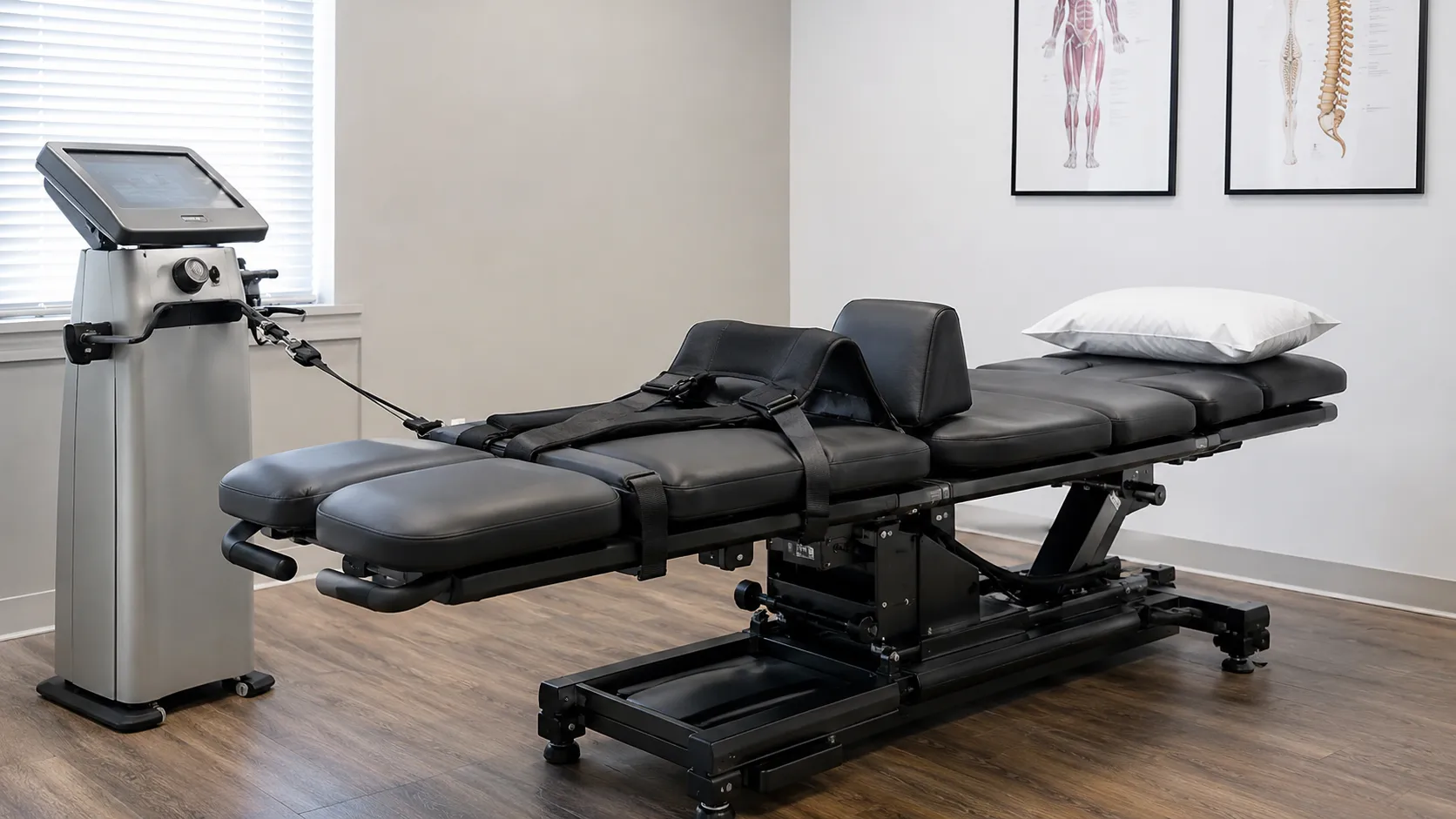
A traction table is a treatment table with a mechanised system that applies a controlled pulling force along the spine to create spinal traction, also called decompression. The patient is secured with a chest and pelvic harness, and a motorised traction unit applies a set force, angle, and timing pattern to gently separate the vertebrae. A split tabletop, which slides apart under the pull, reduces friction so the force reaches the spine rather than being lost to the surface.
For a clinic buyer, the traction table is a powered therapy device, not just furniture. This guide focuses on what makes it distinct: the traction unit, the split table, the force control, and the lumbar and cervical modes.
How mechanised traction works
Traction works by applying a sustained or intermittent longitudinal force to stretch the spine. The patient is anchored at the chest or thorax while the traction unit pulls on a pelvic harness for lumbar work, or the reverse for cervical work. A motorised unit lets the clinician program the pull precisely: the peak force, whether the pull is held (static) or cycled up and down (intermittent), the hold and rest times, and a progressive ramp so the force builds and releases gradually rather than jerking. This programmability is what separates a mechanical traction table from simple manual or weight-and-pulley traction.
The split table and why it matters
The defining mechanical feature is the split, or floating, table section. Under a pulling force, an ordinary flat table would resist the pull through friction between the patient's body and the surface, dissipating much of the force. A split table has a section that releases and glides on bearings as the traction unit pulls, so the pelvis moves with the force and the load transmits to the lumbar spine rather than being absorbed by friction. Look for a smooth, low-friction split mechanism with a secure lock for positioning and transfer, since the split must be held firm while the patient gets on and released only during treatment.
Traction force, control and safety cut-offs
Force range and modes
The traction unit sets the pulling force, typically adjustable across a wide range for cervical (lighter) and lumbar (heavier) treatment, along with the mode. Confirm the unit offers both static and intermittent modes, adjustable hold and rest times, and a progressive ramp. The force, times and patterns are clinician-set parameters, and this article describes the mechanism rather than prescribing any treatment.
Patient safety controls
Because the device applies force to a patient, a patient-held emergency stop or release is important, letting the patient halt the pull immediately if uncomfortable. Check for an emergency cut-off, a controlled release rather than a sudden drop of tension, and secure, comfortable harnesses that spread the load. As a powered patient-applied device, control reliability is central.
Lumbar and cervical configurations
Traction tables are configured for the region treated. A lumbar traction table anchors the thorax and pulls the pelvis, using the split lumbar section. Cervical traction uses a head halter or a padded occipital cradle and a lighter force, sometimes on the same table with an accessory or on a dedicated unit. Some tables add adjustable angle so traction is applied with the spine flexed or in a chosen position, and combine traction with a flexion-distraction facility. Decide which regions and techniques your service delivers before choosing between a lumbar-only table and a combined lumbar-and-cervical unit.
Regulation and electrical safety
A motorised traction table is an active medical device that applies force to a patient, so its regulatory and safety status matters. Powered models should meet the medical electrical safety standard BS EN 60601-1, carry UKCA or CE marking under the UK Medical Devices Regulations, and include a declaration of conformity, an instruction manual, and documented safety features. This overview is compiled from traction-equipment manufacturer documentation and UK medical-device guidance from the MHRA. It is written for physiotherapy, chiropractic and rehabilitation buyers evaluating traction equipment rather than as clinical guidance on when or how to apply traction. BNICE publishes broader clinical guidance on managing back pain in the UK
Where traction tables are used
Traction tables are used in musculoskeletal physiotherapy, chiropractic, and some rehabilitation and pain services. A busy clinic offering a programmed decompression service wants a full motorised table with a split section, both traction modes and a patient stop; a general physiotherapy clinic using occasional traction may prefer a table with a detachable traction unit that stores away. Manual therapy and chiropractic practices may combine traction with flexion-distraction on a single table. Match the table to how often and for which regions you will use traction, and to the room, since these tables have a larger footprint than a plain plinth. Comparing options through a buyer channel keeps quotes to a like-for-like specification.
Load rating, upholstery and hygiene
Confirm a safe working load appropriate to your patients, commonly around 200 kg with heavier-duty options, and confirm the figure per model, remembering the harness and split mechanism transmit force as well as bearing weight. Specify welded-seam, fluid-resistant upholstery validated for your disinfectant, and ensure that harnesses and any head halter are cleanable or have replaceable, launderable components, since they come into contact with many patients.
Harnesses, halters and accessories
The harnesses are where the force meets the patient, so they deserve close attention. A lumbar set-up uses a thoracic harness to anchor the upper body and a pelvic harness to take the pull; both must grip securely without pinching and spread the load across a wide area. Cervical traction uses a head halter or a padded occipital cradle sized for the patient. Check that harnesses come in more than one size, that the fabric and padding are cleanable or have launderable, replaceable liners, and that fitting is quick, since slow or fiddly harnessing eats into appointment time. Confirm which accessories are included and which are extra; ease harnesses, halters, and a flexion accessory can materially increase the delivered cost.
Room, power and installing a traction table
A traction table is a larger, heavier item than a plain plinth and requires planning. Confirm the footprint including the travel of the split section, the clearance a therapist needs to fit harnesses on both sides, and the power supply the traction unit requires. Some units are bench-mounted on the table; others are separate and store away when traction is not in use, which suits a clinic that offers it occasionally. Check delivery and installation: whether the supplier assembles and commissions the table, verifies the initial force output, and trains staff on the safety features and emergency stop before first use. Sorting installation and commissioning up front avoids a powered device sitting unused while support is arranged.
Servicing, spares and lifecycle cost
The wear items are the traction unit motor and control, the split-table bearings and lock, and the harnesses. Ask about calibration or verification of the applied force, how the motor and control are serviced, the availability of replacement harnesses and bearings, and the warranty on the powered unit. Harnesses and head halters are consumables that need periodic replacement. Weigh force verification, servicing, harness replacement and warranty into the whole-life cost rather than the purchase price alone, and confirm how often the delivered force should be checked against the setting.
Buying a traction table: verification checklist
-
Confirm a motorised traction unit with static and intermittent modes and a ramp.
-
Check the split-table section glides smoothly and locks securely for transfer.
-
Verify a patient-held emergency stop and controlled tension release.
-
Confirm lumbar and, if needed, cervical configurations and harnesses.
-
Check the safe working load and ensure it accounts for the applied traction force.
-
Specify cleanable upholstery and replaceable, launderable harness parts.
-
Confirm the powered unit carries UKCA or CE and a declaration of conformity.
-
Ask about force verification, servicing, harness spares and warranty.
Making the right traction table choice
A traction table is judged on the parts that make it work: a programmable motorised traction unit, a genuinely low-friction split table, reliable force control with a patient stop, and the lumbar or cervical configuration your service needs. Match those to your caseload, room and load requirements, and treat the force verification and harness consumables as part of the running cost. Buyers comparing traction tables across manufacturers can use Medigear.uk to review specifications and reach verified suppliers, or contact the team through the contact page for sourcing support.
Disclaimer
This article is for informational purposes only. It is published by MediGear (medigear.uk) for general information and procurement guidance. It is not clinical, diagnostic, treatment, technical, engineering, legal or regulatory advice, nor a product endorsement, guarantee or substitute for professional assessment. MediGear does not provide medical consultations. Buyers should consult their clinical, biomedical, estates and regulatory contacts, and the manufacturer's documentation, and independently verify all specifications, certifications, compatibility and suitability before purchase. Specifications, certifications and availability are correct at the time of publication and may change without notice. MediGear is a medical-equipment distributor and does not sell medicines or pharmaceutical products.