What a Bobath table is and why neuro-rehab units invest in one
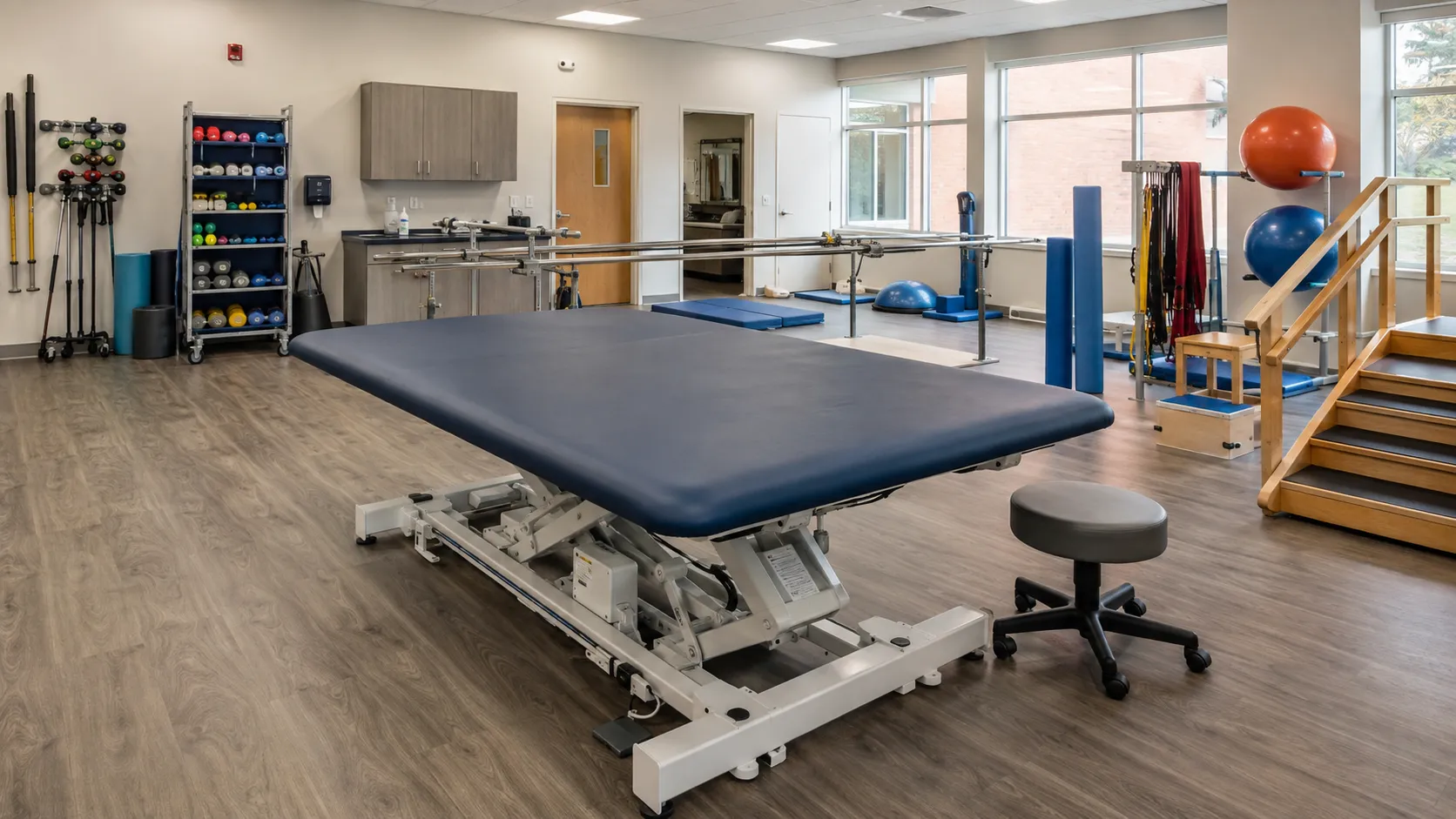
A Bobath table is a large, low, wide treatment platform used in neurological rehabilitation, where a physiotherapist works alongside – and frequently on – the surface to facilitate movement in patients recovering from stroke, acquired brain injury or other neurological conditions. Unlike a narrow examination plinth, it gives enough width for a patient to lie, roll, sit over the edge or transfer while the therapist supports the affected side with both hands. Powered height adjustment lets the team move between floor-level work, sitting balance and preparation for standing without manually lifting.
The name comes from the Bobath concept of neuro-developmental treatment. For a procurement lead, the practical takeaway is simpler: this is a wide, height-adjustable working platform built for hands-on facilitation, not a couch for passive observation. Getting the width, the minimum height and the lifting mechanism right is what separates a table therapists reach for daily from one that sits unused in a corner. The
Bobath table, treatment plinth, and tilt table are not interchangeable.
Buyers sometimes lump rehabilitation tables together, which leads to costly mismatches. A Bobath table is defined by generous width and a low minimum height, so a clinician can half-kneel on the surface and work in supine, side-lying or long-sitting positions. A standard treatment plinth is narrower and intended for examination or single-side treatment. A tilt table rotates a strapped patient toward vertical to challenge orthostatic tolerance – an entirely separate function. Specifying a plinth where a Bobath platform is needed leaves therapists with a surface too narrow for hemiplegia work; specifying it too high defeats floor-level facilitation. Confirm the intended clinical use before you compare any two models.
Width, length and the height range that actually matter
The single most important dimension is width. Neuro-rehab platforms are typically 12- 140 cm wide, considerably broader than a 60–70 cm treatment couch, so both the patient and the working therapist can fit. Length is typically around 200 cm to accommodate a fully extended adult. The height range is the other decisive figure: a low minimum – often in the region of 30–40 cm from the floor – supports work close to the ground and safer transfers, while a maximum of around 80–90 cm brings the surface up to a comfortable working level for standing preparation. Ask each supplier for the exact minimum and maximum deck heights, because a couple of centimetres at the low end changes what a therapist can do.
Fixed-top versus sectioned and split-leg platforms
Bobath tables come in several configurations, and the choice affects both flexibility and cost.
Single fixed platform
A flat, one-piece top gives the largest uninterrupted working area and the simplest cleaning profile. It suits units focused on mat-based facilitation, rolling and sitting balance where an adjustable backrest is not required.
Backrest and multi-section models
Some platforms add an adjustable backrest or a split section so a patient can be positioned in graded sitting. This helps with early trunk control work but introduces hinges and a gap that must be factored into cleaning and pressure-care checks.
Mobile versus static
Castored platforms with a central braking system can be repositioned within a gym; fully static installations are more stable but fixed in place. If the table will move between bays, confirm the castors are lockable and rated for the loaded weight.
The lifting mechanism, actuators and safe working load
Most modern Bobath tables use an electric column or a twin-actuator lift operated by a foot control or a hand switch, leaving the therapist's hands free. Check the safe working load (SWL): a genuine rehabilitation platform should carry a substantial dynamic load, because the therapist's weight and movement are added to the patient's when they kneel or lean on the surface. A static examination couch SWL is not the same as a dynamic rehabilitation SWL, so ask the manufacturer to specify both. Because the lift is a powered medical electrical device, it falls under BS EN 60601-1 for basic safety, and the mains-powered version should include appropriate protective earthing and an IP-rated foot control for a gym floor that gets wet-cleaned.
Upholstery, hygiene and decontamination
The surface is subject to constant skin contact and regular wipe-down, so the upholstery specification is a real procurement decision. Look for welded-seam or seam-free covers made of an antimicrobial, fluid-resistant material that withstand the disinfectants your infection-prevention team uses. Foam density matters for both comfort and durability under repeated point loading from knees and elbows. A cover that cracks or delaminates after a year of chlorine wiping is a false economy. Ask for the material specification, the cleaning-agent compatibility list and whether replacement covers are stocked as spares.
UKCA marking, the MHRA and where the standards sit
A powered rehabilitation table placed on the GB market is a medical device and should carry UKCA (or, during recognised transition, CE) marking, with the manufacturer registered with the MHRA. The powered lift is assessed against BS EN 60601-1; manual-handling and transfer risks around the table fall under general workplace duties overseen by the HSE. This guidance is compiled from manufacturer platform specifications and current UK device rules, and is written for NHS and private neuro-rehab buyers; MediGear's role is to help facilities compare verified suppliers on the specifications that matter rather than on headline price alone. For clinical service standards, your MDT and commissioning guidance remain the authority.
Where a Bobath table earns its place
These platforms belong in stroke units, acute and community neuro-rehabilitation gyms, spinal and brain-injury services, and paediatric neuro-disability settings where floor-level and mat work is routine. In a mixed physiotherapy department, one wide hi-lo platform can serve neuro caseloads while narrower plinths handle musculoskeletal clinics. If your service is expanding neuro provision, the width and low deck height are the features to protect in the specification; everything else can flex.
Hoist clearance and floor loading
How a patient reaches the platform is easy to overlook until the table is installed. Many neuro patients arrive by mobile hoist, so check the clearance beneath the frame: a base a hoist can slide under, combined with a low deck height, lets staff lower a patient onto the surface without an awkward lateral drag. An underframe that blocks the hoist legs forces the manual transfer everyone is trying to avoid. Ask the manufacturer for the clearance beneath the frame and whether the design is stated as hoist-compatible.
Weight is the other siting question. A wide, powered platform with a steel frame and dense upholstery is a substantial load, and in an upper-floor gym the point loading through its castors or feet has to be acceptable to your estates team. Confirm the total mass and footprint so floor loading can be checked before delivery, and ensure lift and doorway dimensions allow the assembled or flat-packed unit to pass through.
Specifying a Bobath table for your unit
- Confirm the working width (aim for a genuine 120–140 cm) and full length for your patient population.
- Get the exact minimum and maximum deck heights in writing, not just a nominal range.
- Ask for both static and dynamic safe working loads, allowing for therapist weight on the surface.
- Verify UKCA/CE marking, MHRA registration and BS EN 60601-1 assessment for the powered lift.
- Check the actuator type, the foot-control IP rating and the noise level in a busy gym.
- Review the upholstery material, seam construction, and disinfectant compatibility, and confirm that spare covers are available.
- If mobile, confirm lockable castors rated for the loaded weight and a stable braked footprint.
- Clarify warranty length, actuator/motor cover and typical service intervals.
Beyond the purchase price
The headline cost of a Bobath table is only part of the picture. Electric actuators and control units are the components most likely to require attention over a ten-year life. Hence, a serviceable design with readily available spare motors and hand controls helps maintain uptime. Upholstery is a consumable in all but name; budget for periodic cover replacement. Factor in delivery and siting for a heavy, wide item, and confirm whether installation and a first service are included. A slightly higher initial spend on a robust lift and a durable cover usually costs less across the equipment's life than repeated repairs on a lighter-built alternative. If you are equipping a full gym, our team can help you compare rehabilitation platforms from verified suppliers or put you in touch through the enquiries desk.
Choosing a platform your therapists will actually use
A Bobath table is a long-term clinical asset, and the models that succeed are the ones sized and built around how neuro-physiotherapists really work – wide enough to share, low enough for floor-level facilitation, and durable enough to survive daily cleaning. Fix those priorities first, then weigh mechanism, upholstery and servicing. Browse comparable rehabilitation equipment and connect with vetted UK suppliers through MediGear's buyer network to make a confident, well-specified purchase.
Disclaimer
This article is for informational purposes only. It is published by MediGear (medigear.uk) for general information and procurement guidance. It is not clinical, diagnostic, treatment, technical, engineering, legal or regulatory advice, nor a product endorsement, guarantee or substitute for professional assessment. MediGear does not provide medical consultations. Buyers should consult their clinical, biomedical, estates and regulatory contacts, and the manufacturer's documentation, and independently verify all specifications, certifications, compatibility and suitability before purchase. Specifications, certifications and availability are correct at the time of publication and may change without notice. MediGear is a medical-equipment distributor and does not sell medicines or pharmaceutical products.