Foetal monitoring equipment is used continuously, handled constantly and cleaned between every woman. Transducers take the wear, cables take the strain, and the archive takes the record. A specification that covers the monitor but neglects those three areas tends to disappoint within a year.
The ten device types below cover antenatal, intrapartum and central review provision. Each entry explains its role and what to confirm before purchase.
Transducers, mobility and the record
Transducer quality determines how reliably a trace can be obtained and how much repositioning staff need to perform. Wireless and water-resistant options support mobility during labour, which matters when women are encouraged to move or use a pool.
The record matters just as much. Establish how traces are stored, how they are linked to the woman's record, how long they are retained and how they are retrieved later. Archiving arrangements are a clinical governance issue rather than an optional feature.
The ten device types
1. Standard cardiotocography monitors
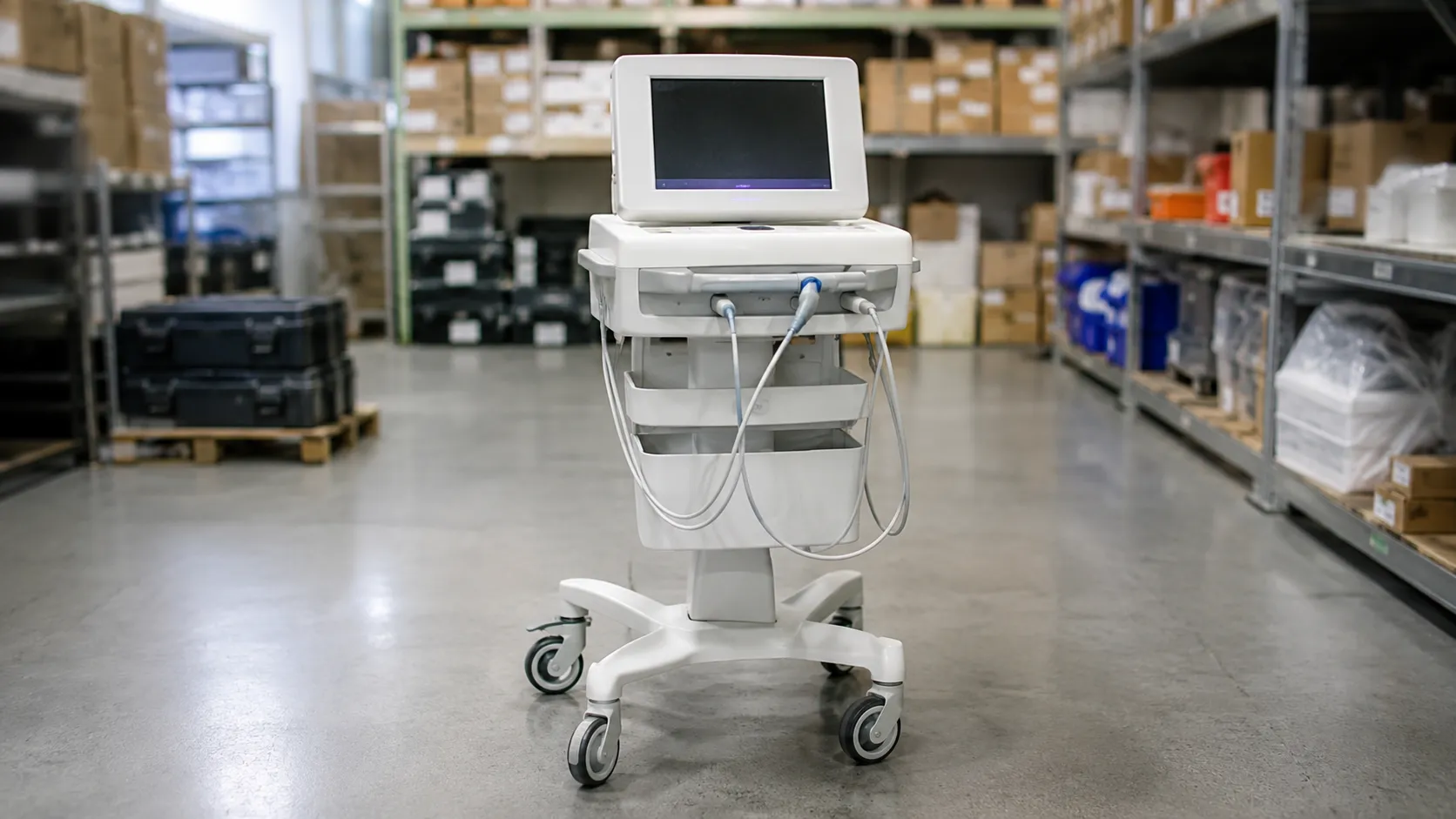
Bedside units recording foetal heart rate and uterine activity with printed or electronic output. The labour ward standard.
2. Twin monitoring units
Record two foetal heart rates simultaneously with separation features that help distinguish the traces. Confirm transducer provision for twin work.
3. Monitors with maternal parameter measurement
Add maternal pulse, blood pressure and oxygen saturation alongside foetal parameters, reducing the number of devices at the bedside.
4. Wireless transducer systems
Free the woman from cables during labour. Battery endurance, coverage area and charging arrangements are the practical questions.
5. Water-resistant transducer systems
Designed for monitoring during pool use. Confirm the protection rating and the approved cleaning method for immersed components.
6. Handheld foetal dopplers
Portable devices for intermittent auscultation in antenatal clinics, community settings and low-risk labour under local protocol.
7. Antenatal monitoring units
Configured for day assessment and antenatal clinics, where sessions are shorter, and throughput matters more than continuous use.
8. Central monitoring stations
Display traces from multiple rooms in one place to support review and handover. Confirm bed capacity and licence arrangements.
9. Systems with electronic archiving
Store traces digitally with links to the maternity record. Confirm retention period, retrieval method and who maintains the system.
10. Monitors with integrated interpretation prompts
Provide alerts or classification support alongside the trace. These assist the clinician rather than replace review, and local policy should state that clearly.
Room use, cleaning and consumables
Labour rooms are busy, wet and frequently reconfigured, so equipment needs to tolerate that. Wall mounting or a stable trolley keeps the monitor off the floor and out of the way, and cable routing should avoid trailing across the staff's workspace. Cleaning between women is constant, so confirm the approved agents for the monitor housing, transducers, belts, and cables, since materials differ across these parts. Belts are daily consumables that run out unnoticed, and printer paper while printing continues, so agree stock levels per room rather than per department.
What to confirm before ordering
-
Transducer range. Confirm options for single, twin, wireless and water-resistant use.
-
Cable durability. Ask about reinforcement and replacement supply, since cables fail first.
-
Archiving. Establish storage, retention, retrieval and record linkage arrangements.
-
Central station. Confirm bed capacity, network requirements and licensing.
-
Cleaning. Verify approved agents for each component type.
-
Consumables. Confirm belts, gel and paper supply arrangements.
Training, governance and servicing
Training should cover transducer placement, obtaining and maintaining a trace, distinguishing maternal from foetal heart rate, archiving steps and what to do when the system is unavailable. Include the downtime procedure, since electronic archiving creates a dependency that needs a documented fallback.
Governance arrangements should state how traces are reviewed, stored, and retrieved, and how any interpretation-support features are used within local policy.
For servicing, agree on planned maintenance intervals, transducer performance checks, cable replacement, electrical safety testing, software support terms, and spare parts availability. Ensure the department receives published device safety alerts so field safety notices reach maternity and engineering teams.
Transducer and cable replacement supply should be agreed at purchase, not after the first failure. Maternity services planning a refresh can discuss provision with the Medigear.uk team.
Final thoughts
Specify transducers, cables and archiving with the same care as the monitor. Most labour wards need dependable bedside units with twin capability, wireless or water-resistant options that support mobility, a central station for review, and an archive arrangement agreed with clinical governance before installation.
This article provides general procurement guidance for healthcare organisations. It is not clinical or maternity care advice, and it does not replace manufacturer instructions, training or local guidelines.