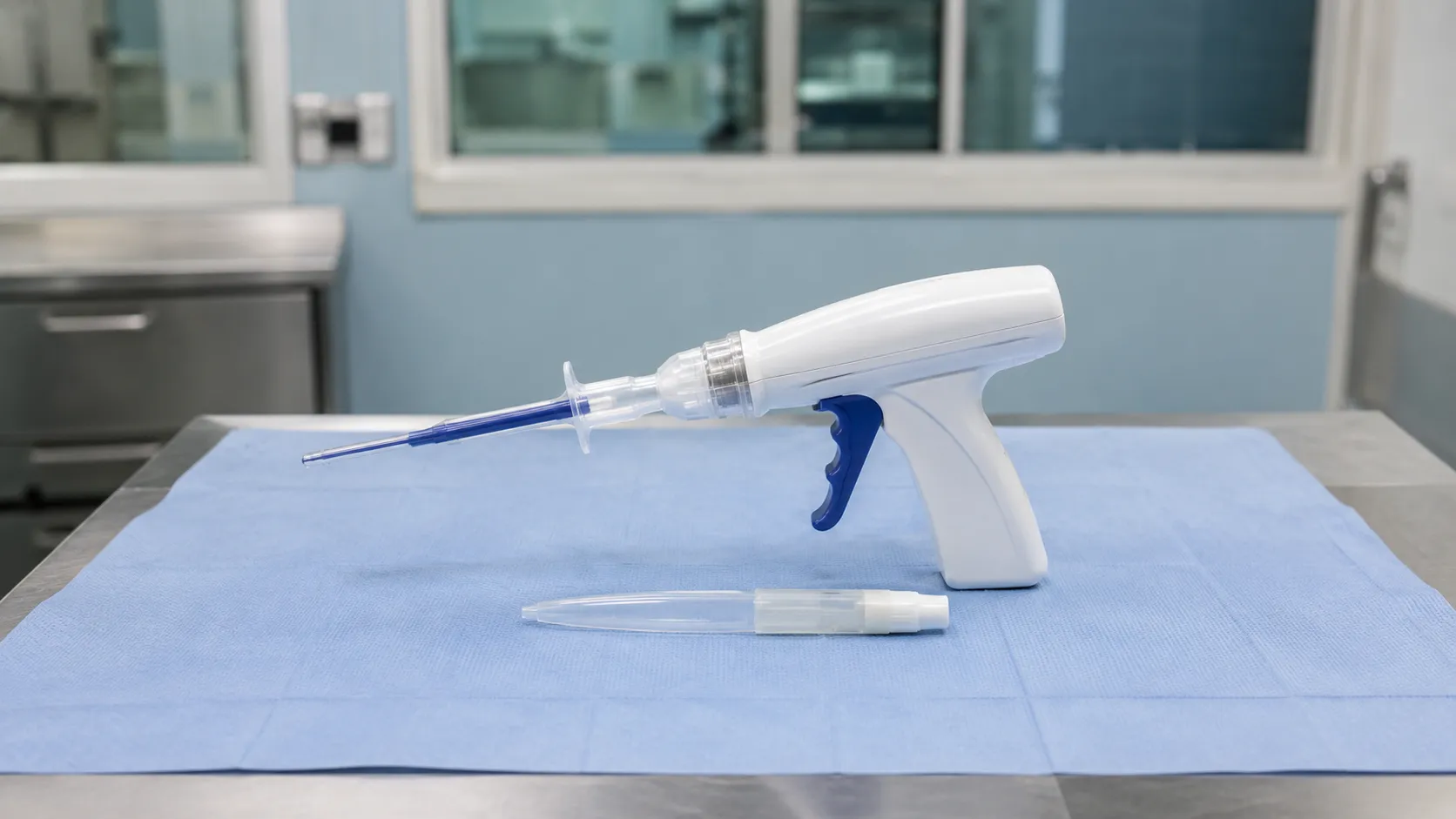
Surgical sealants and adhesives are materials applied to tissue to bond edges together, seal leaks or reinforce a suture line without relying solely on stitches or staples. Some glue skin or tissue directly; others form a flexible film that stops air and prevents other fluid from escaping from a repair. They are used alongside conventional closure, or occasionally instead of it, to reduce leakage or to seal tissue that is hard to suture.
For a theatre or procurement lead, this is a consumable category where chemistry, stin which and cost per appli, cation matter as much as clinical preference. This guide sets out the main types, how they differ, and the specifications and compliance points to check before you standardise a product across your lists.
What sealants and adhesives actually do
The terms overlap but describe slightly different jobs. A tissue adhesive bonds two surfaces, for example approximating the edges of a clean skin laceration in place of fine sutures. A sealant forms a barrier layer over a repair to prevent leakage of blood, air, cerebrospinal fluid, bile or bowel contents. A haemostatic agent promotes clotting to control bleeding. Many products blur these categories, so buyers should classify by the clinical task rather than the marketing label. The common thread is that all of them are applied wet and set in place, forming an adhesive or occlusive layer that supports the primary closure.
The main chemistries and how they compare
Fibrin sealants
Fibrin sealants recreate the final step of the clotting cascade. Two components, concentrated fibrinogen and thrombin, are mixed at the tissue surface and form a fibrin clot that seals and adheres. They are biological, absorbable and well tolerated, and are widely used to reduce oozing and seal suture lines in vascular, hepatic and general surgery. They are supplied frozen or freeze-dried and usually need reconstitution and a delivery applicator, so preparation time and cold-chain storage are part of the picture.
Cyanoacrylate tissue adhesives
Cyanoacrylate glues polymerise on contact with moisture to form a strong, rigid film. Medical-grade formulations such as octyl and butyl cyanoacrylate are used to close clean, low-tension skin wounds, giving a waterproof cover that sloughs off as the wound heals. They are quick, need no removal and leave no suture marks, but they are for external skin use, not deep tissue, and tension across the wound must be low.
Synthetic PEG-based sealants
Polyethene glycol (PEG) is applied as a liquid that cross-links into a soft, absorbable gel over the repair. They are used to reinforce dural, lung, and vascular suture lines where an airtight or fluid-airtight seal is required. They set;ther; their required components avoid blood-derived components, though some swell slightly as they hydrate, which is a consideration near confined structures.
Albumin-glutaraldehyde and collagen-based agents
Albumin cross-linked with glutaraldehyde produces a strong, rigid bond used in some cardiovascular repairs. Collagen and gelatin matrices, often combined with thrombin, provide a haemostatic seal on raw, bleeding surfaces. Each has a defined niche, and the buying decision usually comes down to the surgical service and the tissue involved.
Key specifications a buyer must check
Start with the intended tissue and indication, because a product cleared for skin closure is not interchangeable with one indicated for dural or vascular sealing. Check the set time and whether the surgeon needs seconds or a longer working window. Review the delivery system: many sealants require a dual-syringe applicator, spray tip, or gas-assisted sprayer, and those applitheses are a recurring cost. Confirm storage requirements, since frozen and refrigerated products need reliable cold chain and add complexity in theatres and stores. Look at volume per unit and coverage area so you can pack size for typical use and limit waste. For biological products, confirm the source material, any viral inactivation, and the specified instructions for use.
Regulation, safety and documentation
Sealants and adhesives are medical devices, and some blood-derived products sit at the border of the medicines framework, so their regulatory status varies. In the UK, they must carry a valid UKCA or CE marking with instructions for use, and human-derived components bring additional traceability duties. The MHRA is the UK regulator for medical devices and can issue safety notices. Guidance is available on GOV.uk. UK. Clinical bodies such as NICE publish procedural guidance in which these products are featured. Where a featured: record batch numb producters for traceability, and follow the instructions for use exactly for mixing, application, and drying. Never treat as a substitute for deep-tissue sealing, and follow the storage temperature, shelf life and single-use handling.g
These are sterile single-use consumables, and most carry meaningful storage constraints. Frozen fibrin sealants must remain in the cold chain until controlled thawing, and freeze-dried versions require proper rehydration. Refrigerated products occupy fridge space and require temperature monitoring. Cyanoacrylate ampoules and single-dose applicators are simpler to store at room temperature but still expire. Because opened or reconstituted product cannot be kept, plan pack sizes around real usage. Every unit should show batch and expiry, and dating discipline matters: short-dated biological stock that is not used is pure waste.
Use across surgical settings.
The right product depends heavily on the setting. An emergency department and minor-injuries unit lean on skin adhesives for clean, low-tension lacerations, valuing speed and no follow-up for removal. A cardiothoracic or vascular theatre needs sealants that hold on suture lines under pressure and may stock albumin-glutaraldehyde or PEG hydrogels. Neurosurgery uses dural sealants to prevent cerebrospinal-fluid leaks. General and hepatobiliary surgery use fibrin sealants and haemostatic matrices to manage oozing raw surfaces. GP and community minor-surgery services and veterinary practices use tissue adhesives or straightforward skin closure. Matching the chemistry to the service prevents both clinical mismatch and over-spending on capability a list never uses.
Consumables, applicators and total cost of ownership
Unit price is only part of the cost. Many sealants require a proprietary applicator, spray tip or mixing device sold separately, and some need a gas source for spray delivery, so the true cost per application includes these. Cold-chain storage, monitored fridges or freezers, and wastage of short-dated biological stock all add to the total. Set realistic par levels by service, avoid over-ordering short-dated product, and standardise applicators where possible to simplify training and stock. Reliable supply and clear lead times matter because a missing applicator cacan leaven otherwise stocked seshelf strandedOur team can help you map products to your case mix and control recurring costs — register as a buyer or contact us to review options.
Procurement checklist
-
Match each product to its cleared indication and tissue — skin, dural, vascular or haemostatic.
-
Confirm set time and the working window your surgeons need.
-
Check the delivery system and cost of applicators, spray tips or gas-assisted devices.
-
Verify storage: room temperature, refrigerated or frozen, and available cold-chain capacity.
-
Match pack size and coverage to typical usage to limit short-dated waste.
-
Confirm UKCA or CE marking, instructions for use and batch traceability, especially for human-derived products.
-
Standardise applicators and set par levels by surgical service for reliable supply.
Conclusion
Surgical sealants and adhesives cover a spread-out range of chemistries, each doing distinct jobs, from glueing a wound to sealing a dural or vascular repair. Buying well means classifying by the clinical, checking the indication, set time, delivery system, and storage, and accounting for applicators and cold-chain costs. Confirm the regulatory documentation and batch traceability, then set pack sizes and par levels that match your real case mix. MediGear can supply wound-closure sealants and adhesives suited to your services so your thea, tres get the right without creating waste
Disclaimer
This article is for informational purposes only. It is published by MediGear (medigear.uk) for general information and procurement guidance. It is not diagnostic, treatment, technical, engineering, legal, or regulatory advice, nor a product endorsement, guarantee, or substitute for professional assessment. MediGear does not provide medical consultations. Buyers should consult their clinical, biomedical, estates and regulatory contacts, and the manufacturer's documentation, and independently verify all specifications, certifications, compatibility and suitability before purchase. Specifications, certifications and availability are correct at the time of publication and may change without notice. MediGear is a medical-equipment distributor and does not sell medicines or pharmaceutical products.