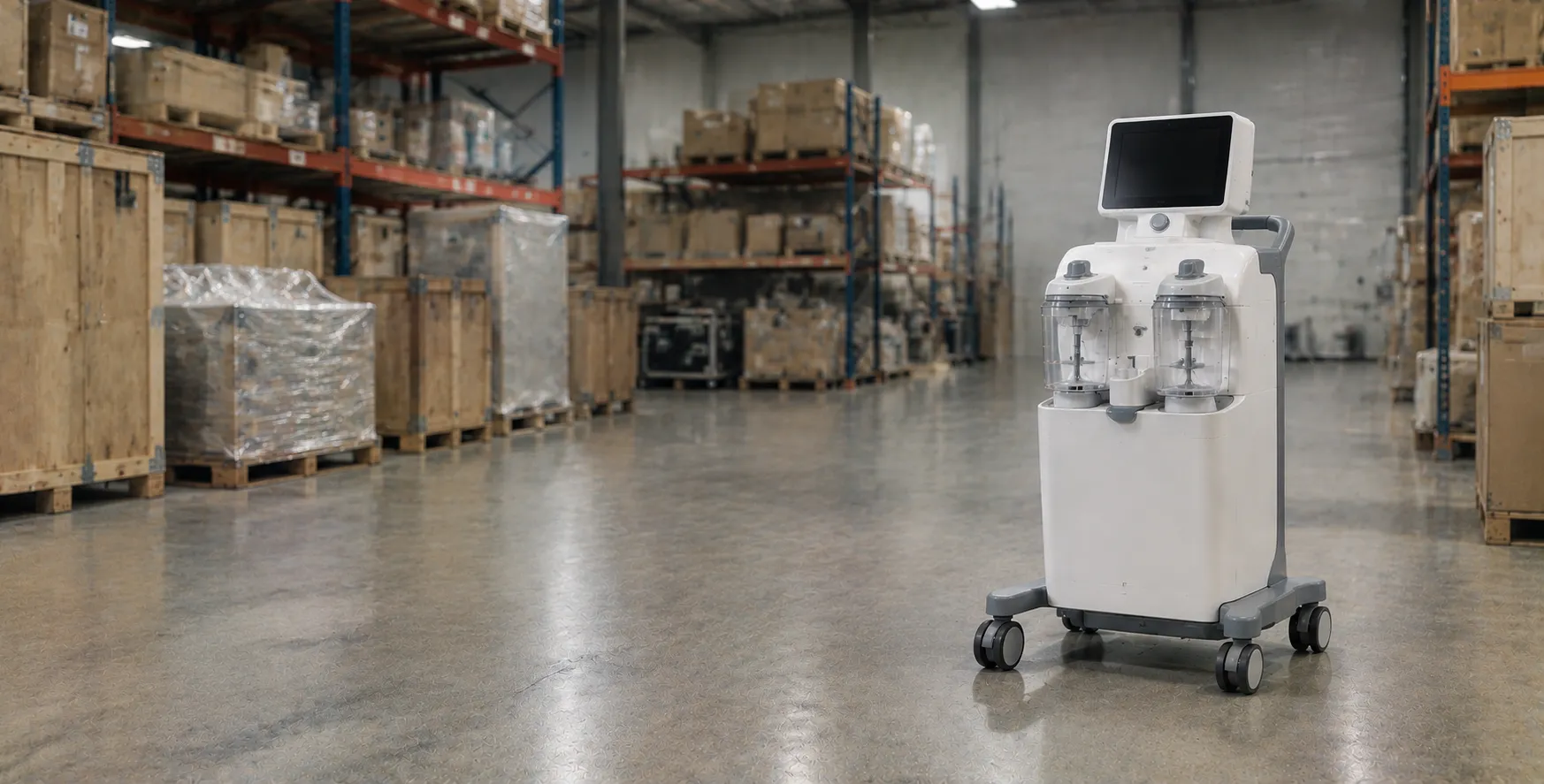
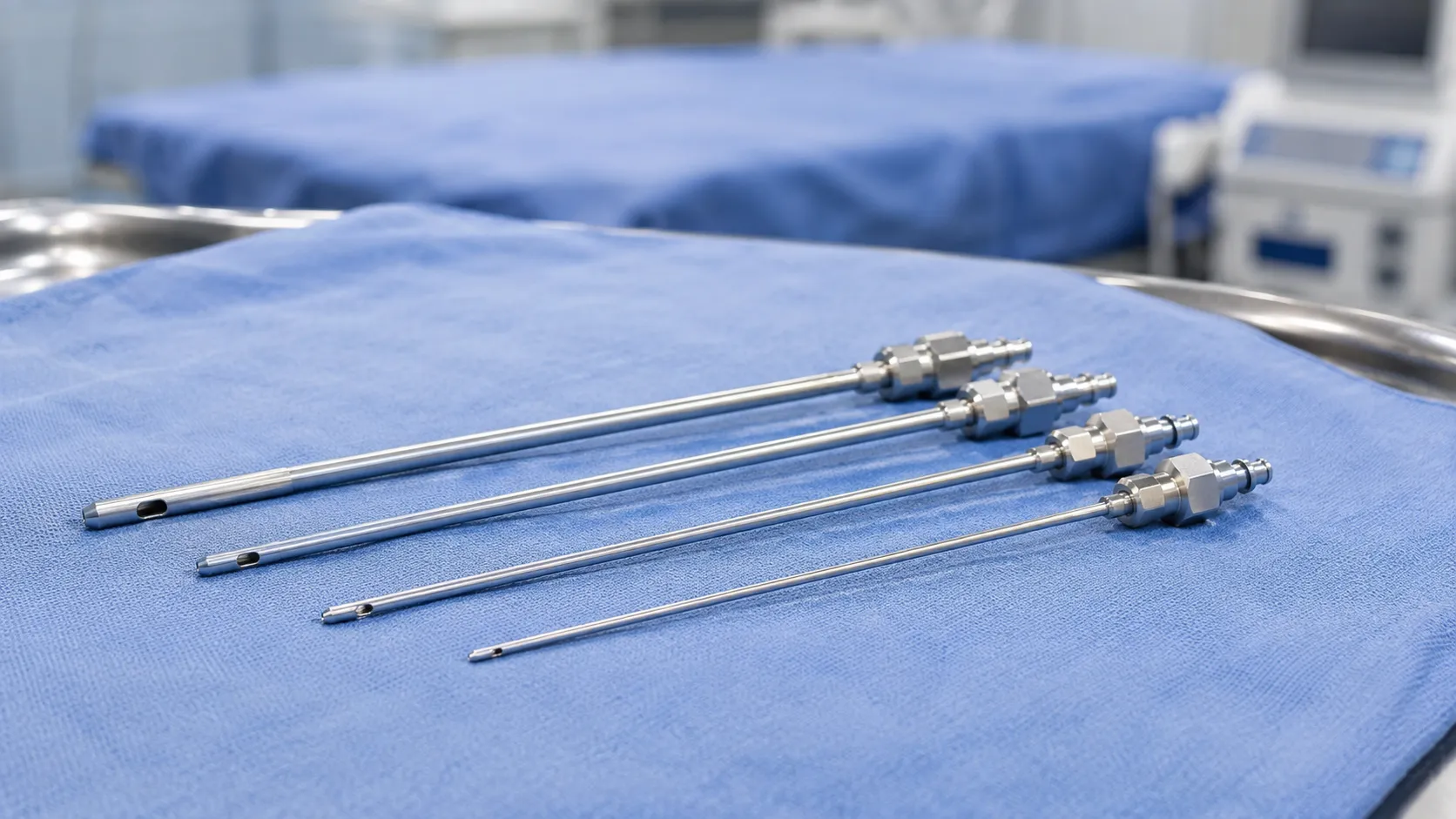
A surgical aspiration cannula for liposuction is a slim, hollow stainless-steel tube with a blunt tip and one or more side openings near the end, connected to a source that draws fluidised fat out through a handle. The surgeon moves the cannula back and forth through the fatty layer; the side apertures loosen and take up, capturing cells, which are then aspirated along the tube into a collection canister. The blunt tip is deliberate — it pushes past nerves and vessels rather than cutting them, so tissue trauma stays limited while fat is removed.
For a clinic buyer, cannulas are a consumable-heavy category defined by diameter, tip and aperture design, and handle compatibility with the aspirator or power-assisted handpiece. Choosing well means matching the range to the procedures performed and deciding clearly between reusable and single-use stock.
How aspiration and the tumescent field work together
Modern liposuction is almost always performed after the target area is infiltrated with tumescent fluid — a large volume of dilute solution that swells the fat, firms the field and constricts small vessels. The amount of infiltrated fluid relative to the fat removed defines the technique, ranging from the older dry and wet approaches to the superwet and tumescent methods used today, and the choice influences which cannula and vacuum settings are appropriate for the case. The appropriate cannula then works within this prepared plane. Suction is supplied either by a dedicated aspirator pump or, in syringe technique, by a locked syringe that holds a vacuum. The aperture pattern on the cannula governs how efficiently fat enters the lumen: openings that are too large can grab unevenly, while a well-distributed set of smaller ports gives smoother removal. The relationship between cannula gauge, aperture layout, and the vacuum level is what determines the result, so these parameters are chosen together rather than in isolation.
Main types of liposuction cannula
Standard manual cannulas
Straight rigid tubes in a range of diameters, moved by hand, remain the core instrument. Larger diameters remove volume faster in robust areas; finer ones are used where control matters.
Microcannulas
Small-diameter cannulas are used for refinement, superficial work and delicate areas such as the face and neck, where a fine tube gives more even contouring and smaller access incisions.
Power-assisted (PAL) cannulas
Power-assisted liposuction drives the cannula with a rapid reciprocating motion from a motorised handpiece, so the tissue-cannula vibrates. This eases the physical effort of passing through fibrous fat and can speed removal. These cannulas are matched to a specific handpiece rather than a plain handle.
Tip patterns
Beyond diameter, cannulas differ in tip form — bullet, spatula, cobra and other shapes — and in how the side ports are arranged, single-hole, three-hole or multi-hole. Each pattern behaves differently in tissue, and a clinic typically stocks a small, deliberate selection rather than every variant.
Key specifications a buyer must check
Confirm the outer diameter range and length options, and check the handle or hub fitting, because it must lock securely to your aspirator tubing or to the specific power-assisted handpiece in use. Establish the tip shape and aperture pattern for the areas your surgeons treat, and confirm the material and finish — surgical stainless steel with a smooth, burr-free surface. Handle ergonomics also matter, since the surgeon makes many repetitive passes and a grip that reduces fatigue supports control over a long list. For reusable cannulas, verify the lumen can be cleaned and inspected end-to-end, since end-to-end tissue inside a narrow tube is a decontaminating risk. For power-assisted work, confirm the cannula is validated for the reciprocating handpiece, as mismatched fittings loosen under motion.
Reusable versus single-use and decontamination
Cannulas are supplied both as instruments and as single-use sterile items, and the choice shapes the whole work. Reusable stainless steel cannulas must be cleaned through their full lumen, inspected for retained debris and damage, and sterilised using the manufacturer's validated method, usually a steam autoclave; the narrow bore. These brushing and drying are critical, and sterile-services teams should confirm they have the correct lumen brushes and a way to verify cleanliness. Single-use cannulas remove that burden and guarantee a sharp-edged, unblemished port set for every case, at the cost of a recurring per-procedure spend. Aspiration tubing and collection canisters are generally single-use regardless. The infection-control lead should sign off the chosen route before a service standardises on it.
Regulation and quality marks to confirm
Liposuction cannulas and their handpieces are medical devices. They must bear a CE marking, with instructions for use covering the intended purpose, sterilisation limits for reusable items, and single-use status where applicable. Ask the applicable manufacturer for the declaration of conformity and confirm that the manufacturer is registered for the Great Britain market with the MHRA, which also handles reporting of any device-related incident. Cosmetic surgeryshoCosmetic surgery should be standard and standards set out on GukGOV.uk for the GGOV.uk for which such procedures are provided, which focuses on the environment rather than being ing re settings and where cannulas are used
Aspiration cannulas for liposuction are used in private cosmetic-surgery clinics, plastic and reconstructive surgery units and, in reconstructive contexts, in NHS theatres. The same aspiration principle appears in fat-grafting workflows, where harvested fat is processed and reinjected, so a clinic may specify harvesting cannulas alongside standard ones. Because the procedures are operator-dependent and the instrument range is broad, buyers benefit from a supplier who can advise on a coherent starter set rather than an unfocused catalogue order.
Total cost of ownership
The running cost is driven by the reusable-versus-single-use decision and by case volume. A reusable set carries a higher up-front price but a low per-case cost, offset by decontamination labour, lumen brushes, sterilisation capacity and eventual replacement as tips dull or tubes bend. A single-use programme has a low entry cost but a steady per-procedure spend that rises directly with activity, plus the aspiration tubing and canisters that are single-use either way. Model both against your annual case numbers, and remember to include the power-assisted handpiece and its servicing if PAL is used. MediGear can help a clinic assemble a proportionate range of cannulas and catheters, and navigate the economics of gle-ussingle-usens — register or use the contact page.
Procurement checklist
-
Counter the diameter. Consider length options for the areas d.
-
Check the handle or hub locks to your aspirator tubing or PAL handpiece.
-
Match tip shape and aperture pattern to the procedures performed.
-
For reusable cannulas, confirm that the lumen can be cleaned and inspected; for full power-assisted work, verify validation with the reciprocating handpiece.
-
Request UKCA or CE documentation and MHRA registration.
-
Agree the infection-control route for reusable versus single-use stock.
-
Model annual cost of both options against your case volume.
Conclusion
A liposuction aspiration cannula is a blunt-tipped, ported tube that removes fluidised fat under vacuum, and its behaviour is determined by the diameter-determined tip, form, aperture, and piece it connects to. Buying well means matching the range to the procedures, deciding between reusables and single-use with infection control, confirming compatibility withh any power-assisted system, and checking the UKCA or CE paperwork. MediGear can help cosmetic and reconstructive services build a sensible cannula inventory and weigh the true cost of each route.
Disclaimer
This article is for informational purposes only. It is published by MediGear (medigear.uk) for general information and procurement guidance. is not medical diagnostic, treatment, technical, engineering, legal or regulatory advice, nor a product endorsement, guarantee or substitute for professional assessment. MediGear does not provide medical consultations. Buyers should consult their clinical, biomedical, estates and regulatory contacts, and the manufacturer's documentation, and independently verify all specifications, certifications, compatibility and suitability before purchase. Specifications, certifications and availability are correct at the time of publication and may change without notice. MediGear is a medical-equipment distributor and does not sell medicines or pharmaceutical products.