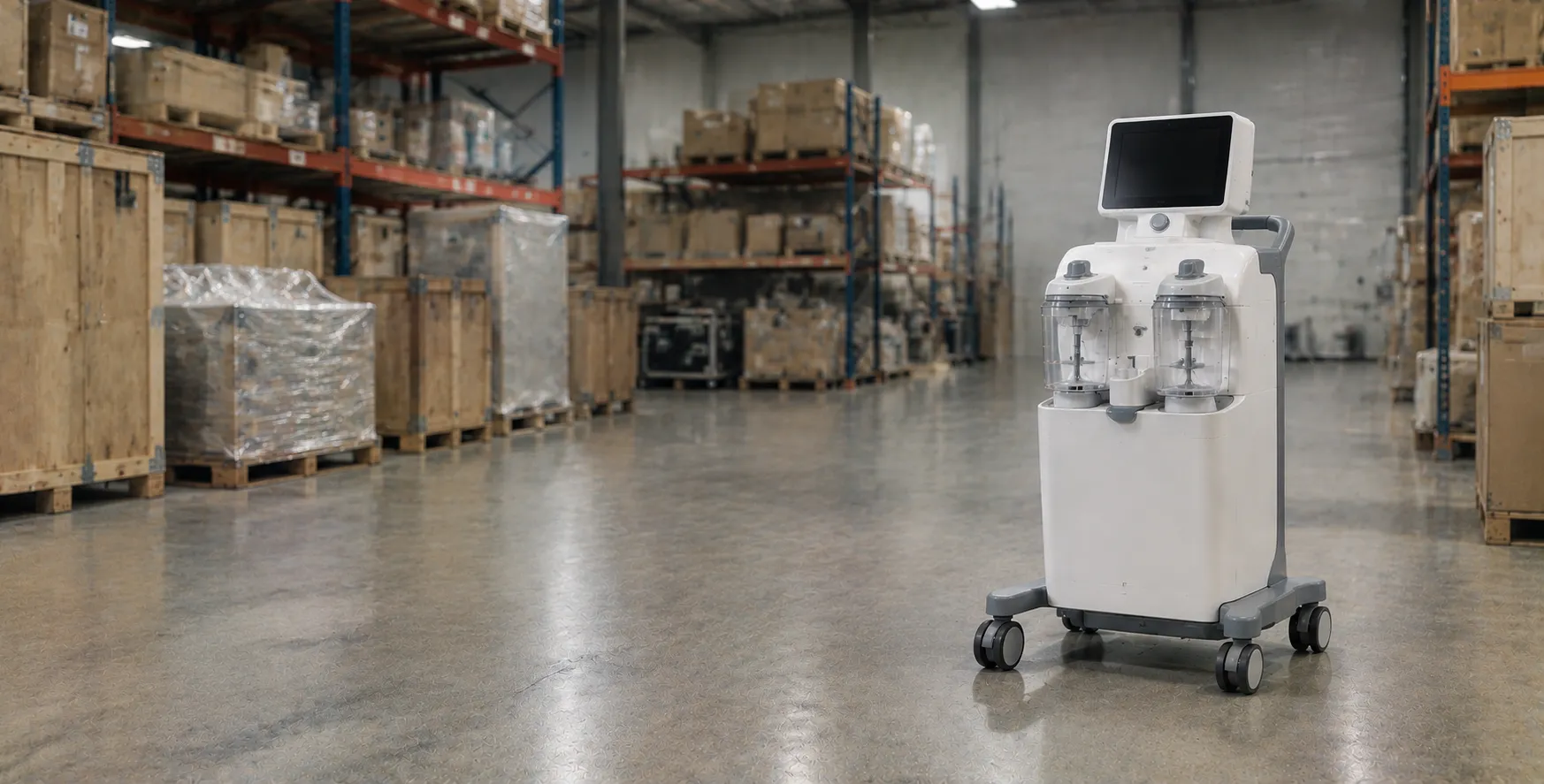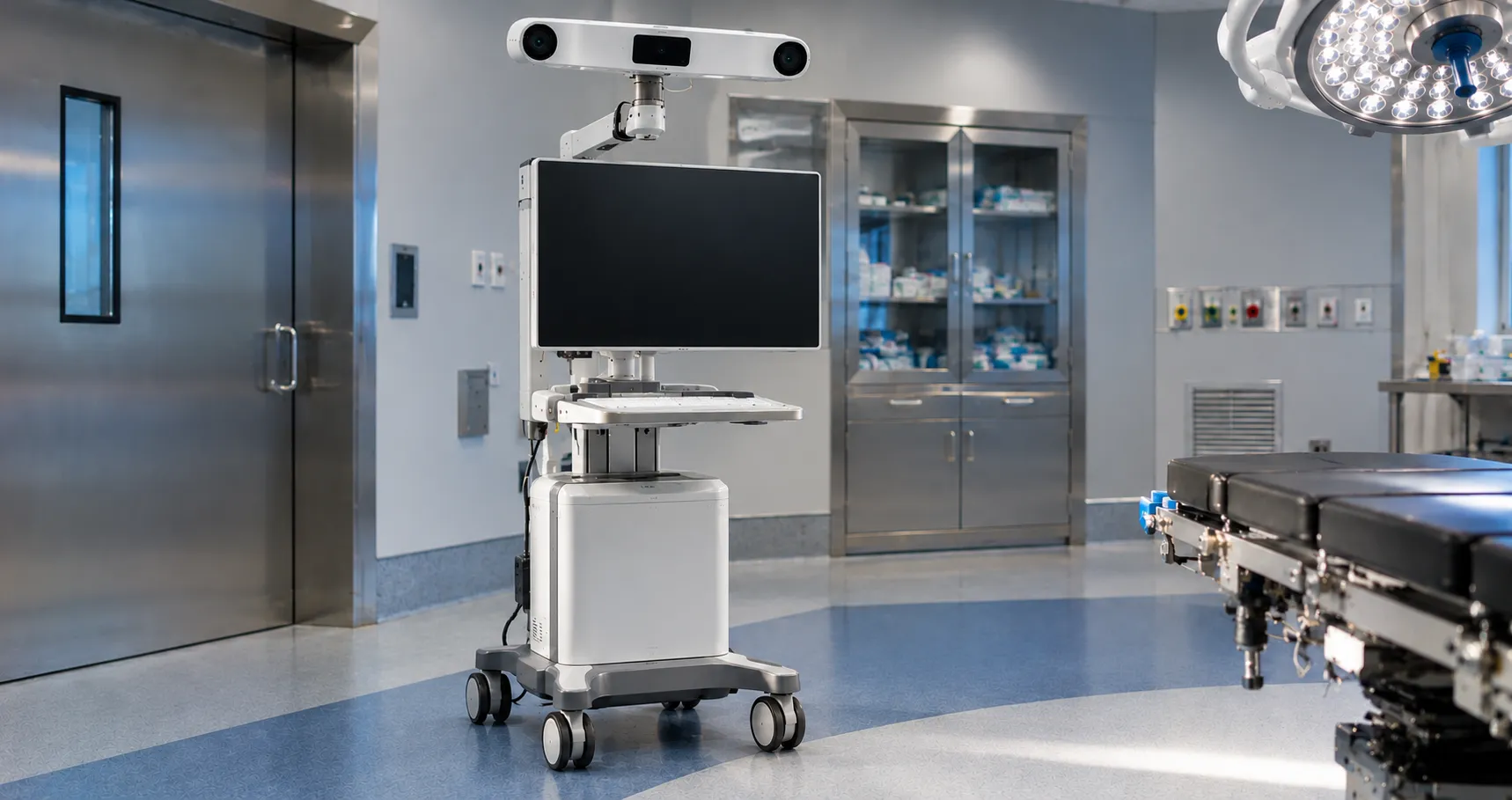
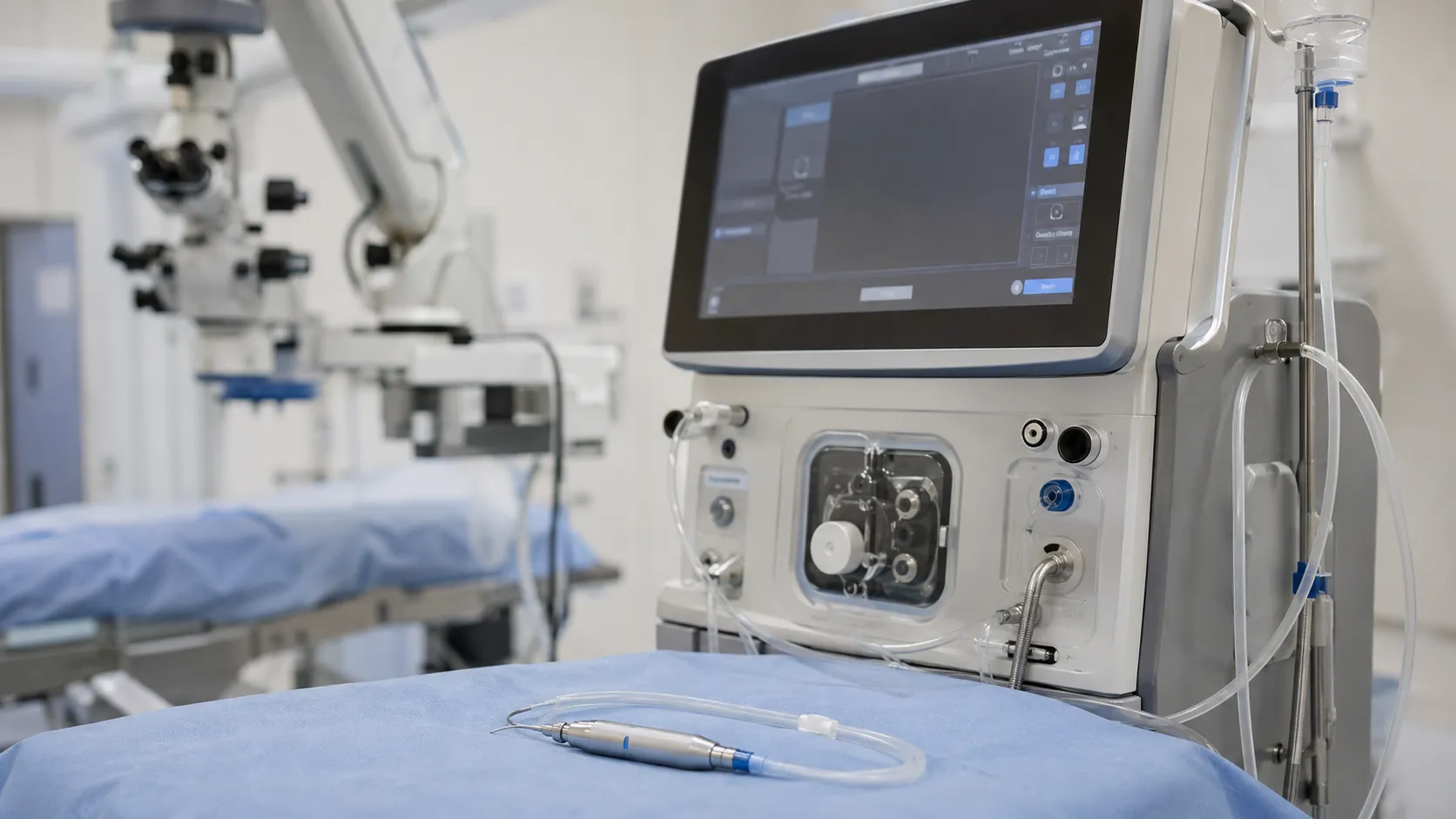
Phacoemulsification is the standard technique for removing a cataract: an ultrasonic handpiece breaks the cloudy natural lens into tiny fragments and simultaneously aspirates them out through a very small incision, after which an artificial intraocular lens is put in the emptied capsule. A cataract is the clouding of that natural lens, and it does not dissolve or fade on its own — phacoemulsification physically emulsifies and removes it, restoring a clear path for light to reach the retina. The clarity returns because the opaque lens has been removed and replaced, not because anything has been chemically treated.
For an ophthalmic buyer, the equipment behind this is the phaco system: a console, an ultrasonic handpiece, an irrigation and aspiration line, a foot pedal and a per-case consumable pack. Specifying it well means understanding the fluidics that maintain the eye's stability while the lens is removed.
How the ultrasonic handpiece removes the lens
The phaco handpiece contains a piezoelectric transducer that vibrates a hollow titanium needle tens of thousands of times a second. Held against the lens, that ultrasonic motion breaks the hard material into fragments — a combination of mechanical impact and the microscopic implosions of cavitation at the needle tip. The needle can be driven in two ways: longitudinal ultrasound moves the tip forward and back along its axis. In contrast, torsional ultrasound oscillates it side to side, thereby shearing the lens with less fragment repulsion and less heat generated at the incision. Many consoles now combine both drives, and a buyer comparing platforms should ask which modes are offered because they affect efficiency on a dense nucleus and the risk of wound burn. Surgeons split the nucleus using recognised techniques such as divide-and-conquer or phaco chop before emulsifying the pieces, and the console must support the ultrasound and fluidics behaviour that each approach relies on. At the same time, fluid is irrigated into the eye via a sleeve around the needle to maintain anterior chamber volume, and the emulsified lens material is aspirated back through the hollow needle. Removing the lens and maintaining chamber volume must stay in balance: take fluid out faster than it goes in and the chamber shallows, risking damage to surrounding structures. The whole procedure is therefore as much about fluidics as it is about ultrasound.
Fluidics: peristaltic and venturi pumps
The pump that generates aspiration is the defining characteristic of a phaco console. A peristaltic 'spump's rollers move fluid along the tubing and create a vacuum when the needle tip is occluded by lens material, giving the surgeon flow-based control. A venturi pump generates a vacuum directly, responds faster, and holds fragments without requiring occlusion. Many modern consoles offer both or a hybrid, letting the surgeon pick a mode to suit the case. For a buyer, the key point is that pump type shapes chamber stability and surgeon feel, so it should be matched to the operating team's preferences rather than chosen on price alone.
The parts of a phaco system
Console and fluidics
The durable capital item houses the ultrasonic driver, the pump, the fluidics management and the user interface, and it stores surgeon presets. It is the platform every other part connects to.
Handpieces
The phaco handpiece delivers ultrasound; a separate irrigation-and-aspiration handpiece removes soft cortical remnants after the nucleus is removed. Some are reusable and autoclavable for a defined life; others are part of single-use packs.
Foot pedal and consumable pack
A multi-position foot pedal lets the surgeon control irrigation, aspiration and ultrasound power without their hands. The per-case pack typically includes the tubing cassette, needle, sleeve, and viscoelastic-related items, and is where most of the running costs are incurred.
Key specifications a buyer must check
Confirm the pump type(s)s the console offers and whether the ultrasound can be delivered in continuous, pulsed,d and burst modes, since these affect how efficiently and gently a dense cataract can be removed. Check the range of surgeon presets the console stores, the interface's clarity and responsiveness, and the foot-pedal configuration. Establish which handpieces are reusable versus single-use, and confirm their validated life; confirm the consumable packs are readily available and compatible only with that console. If the department also does posterior-segment work, ask whether the platform can be combined with a vitrectomy module, as some consoles support both anterior and posterior functions.
Standards, regulation and safety
A phacoemulsification system is an active medical device that must hold a valid UKCA or CE marking, and its design falls under the general medical electrical safety standard IEC 60601- 1 together with the electromagnetic compatibility requirements for theatre equipment. The instructions for use will set out the validated reprocessing route for any reusable handpiece and the single-use status of the fluidics and needles, which must be respected because a reprocessed single-use tip cannot be assured. Request the declaration of conformity, confirm Great Britain registration with the MHRA, and note that cataract surgery pathways and thresholds in the health service are informed by guidance from NICE, which is useful context when a service plans capacity rather than a property of the machine.
Decontamination and single-use considerations
Reusable phaco and irrigation-aspiration handpieces are delicate and are cleaned and sterilised strictly to the manufacturer's validated method, with fine lumens that must be flushed and dried carefully to prevent blockage or residue that could enter the eye. There is particular vigilance regarding toxic anterior segment syndrome, an inflammatory reaction linked to contaminants or residues from inadequately reprocessed instruments and fluids, so sterile services and theatre teams follow the decontamination guidance closely. The tubing cassette, needle and sleeve are single-use and discarded after each patient. These infection-control realities should be confirmed with the manufacturer's documentation before a platform is adopted.
Care settings and total cost of ownership
Phacoemulsification is concentrated in ophthalmic theatres and dedicated day-surgery cataract units, both in the NHS and the independent sector, because cataract surgery is among the highest-volume operations performed. That volume makes the consumable pack the dominant cost: the console is a one-off, but every case uses a single-use pack, so annual spend is case volume multiplied by pack price. Model that against the clinical benefits of a particular platform, and add service contracts, software updates, handpiece replacement at end of life, and the viscoelastic and intraocular lens costs associated with the procedure. Standardising on one console across a high-volume unit simplifies training and stocking. Our team can compare phaco platforms against a unit's case mix and consumable budget — register as a buyer or reach us via the contact page.
Procurement checklist
-
Confirm the pump type(s) and match them to the surgeon's preference.
-
Check the ultrasound modes offered for dense cataract removal.
-
Review the number of surgeon presets and the interface responsiveness.
-
Map which handpieces are reusable versus single-use and their life.
-
Confirm consumable pack availability and console compatibility.
-
Ask whether the platform supports a combined vitrectomy module.
-
Request UKCA or CE documentation and IEC 60601-1 compliance.
-
Model the annual pack cost based on case volume against the platform benefits.
Conclusion
Phacoemulsification removes a cataract by emulsifying the cloudy lens with ultrasound and aspirating it out through a tiny incision, then replacing it with an intraocular lens — the clouding goes because the lens is physically gone. Buying well means choosing the pump and fluidics that suit your surgeons, checking the ultrasound modes and reusable-versus-single-use split, respecting the decontamination guidance, and confirming the UKCA or CE paperwork and IEC 60601-1 compliance. MediGear can help ophthalmic units compare phaco platforms so a high-volume cataract service invests in the right console and consumable stream.
Disclaimer
This article is for informational purposes only. It is published by MediGear (medigear.uk) for general information and procurement guidance. It is not clinical, diagnostic, treatment, technical, engineering, legal or regulatory advice, nor a product endorsement, guarantee or substitute for professional assessment. MediGear does not provide medical consultations. Buyers should consult their clinical, biomedical, estates and regulatory contacts, and the manufacturer's documentation, and independently verify all specifications, certifications, compatibility and suitability before purchase. Specifications, certifications and availability are correct at the time of publication and may change without notice. MediGear is a medical-equipment distributor and does not sell medicines or pharmaceutical products.