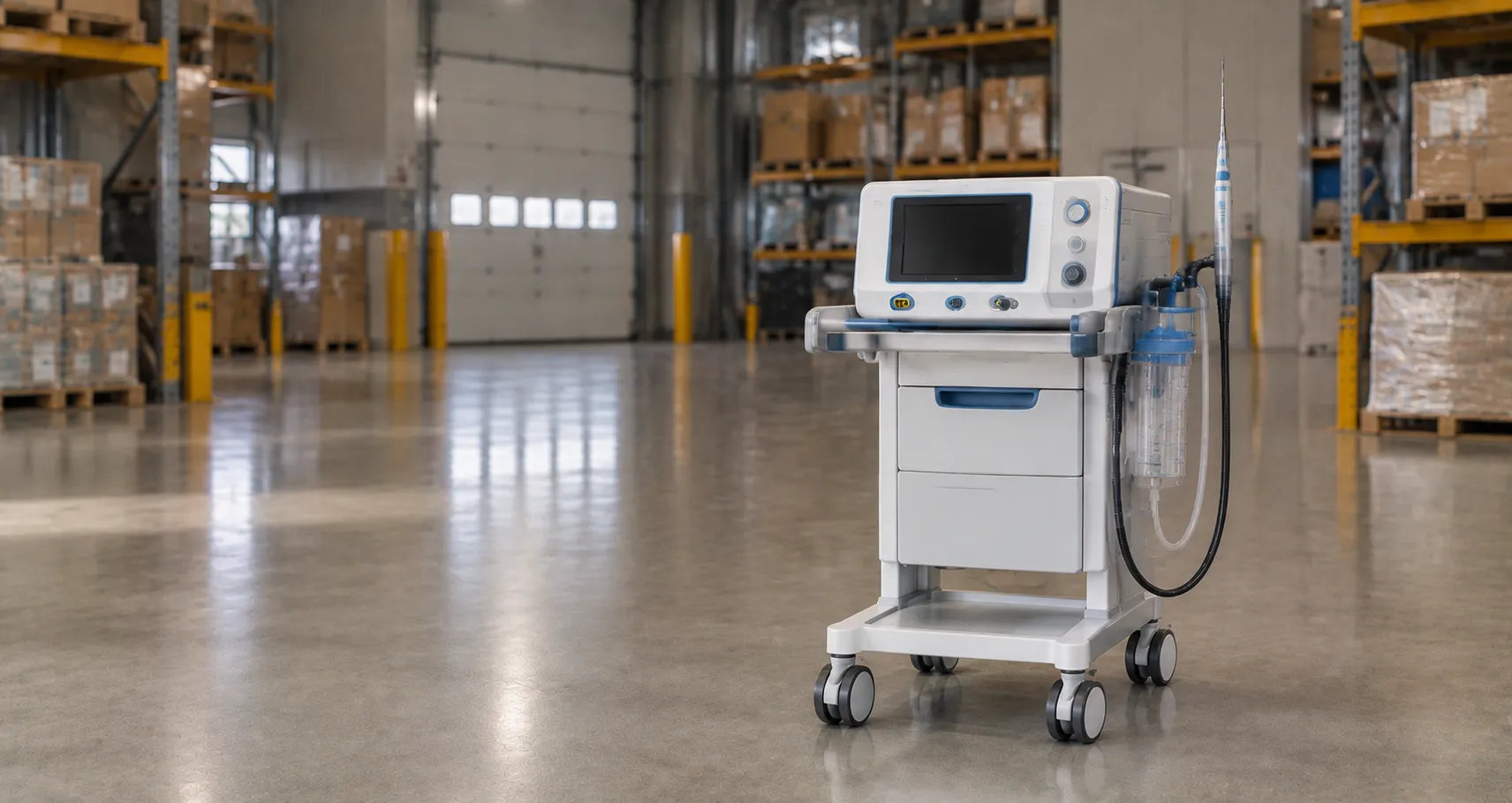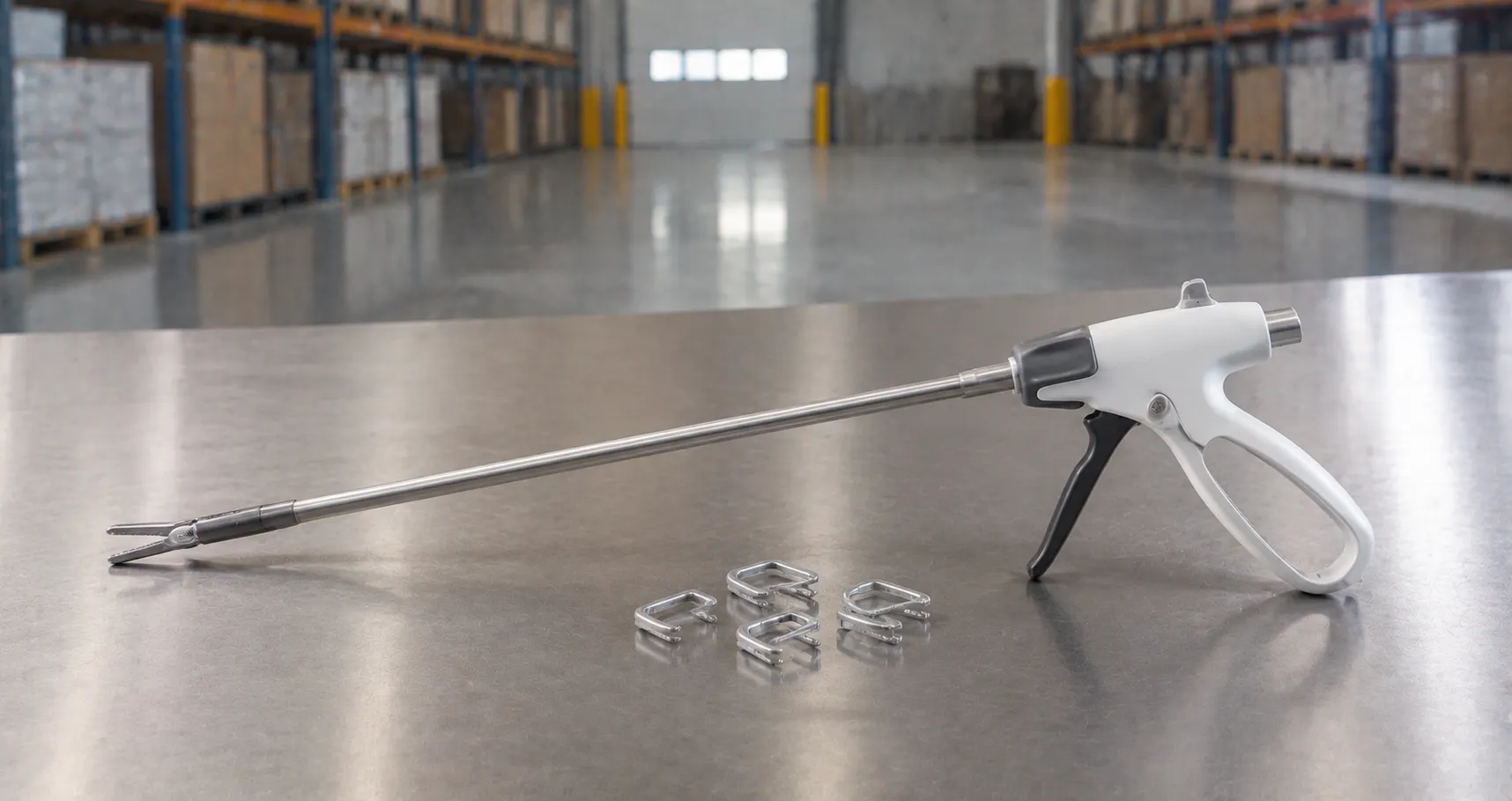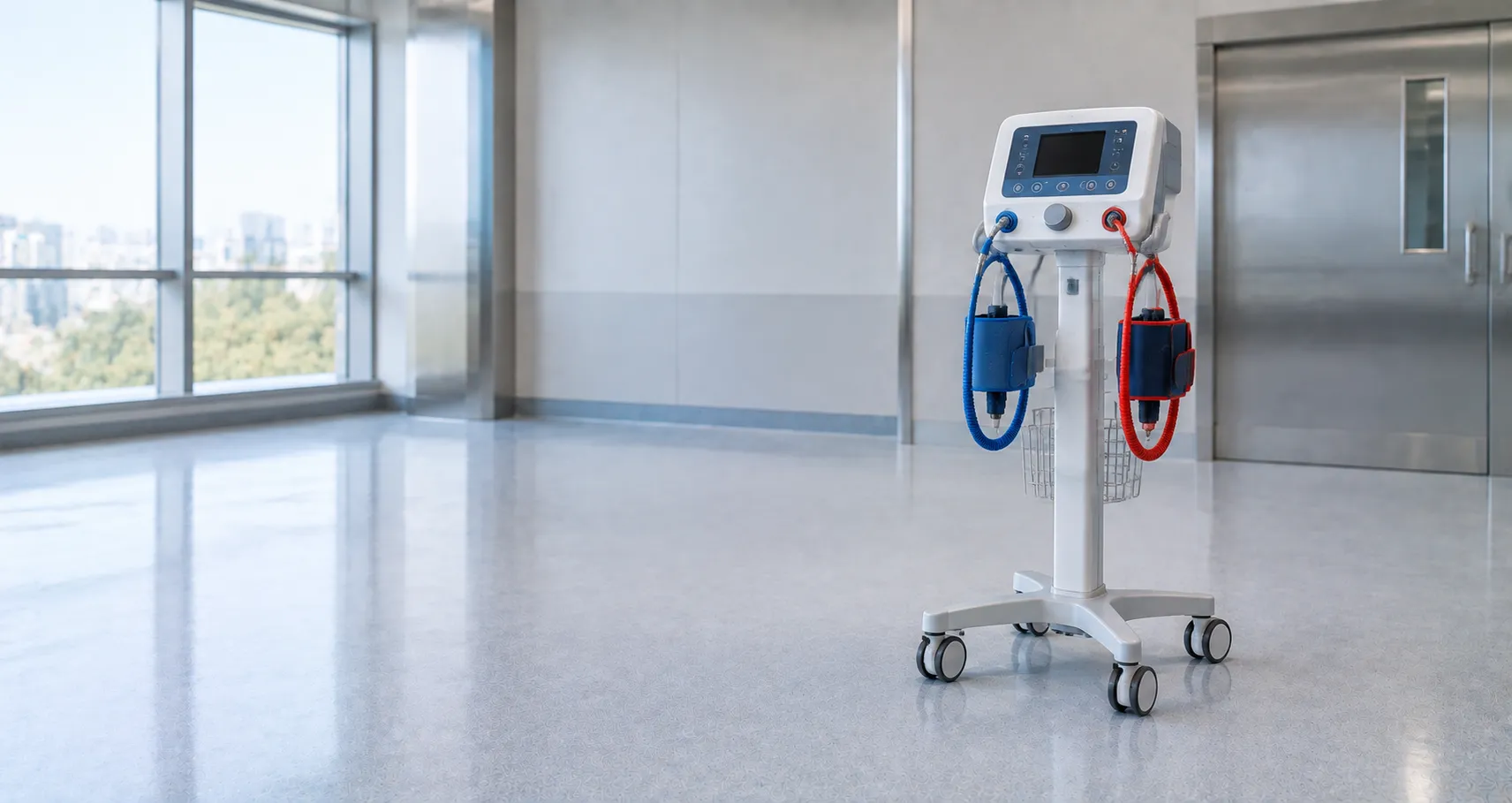
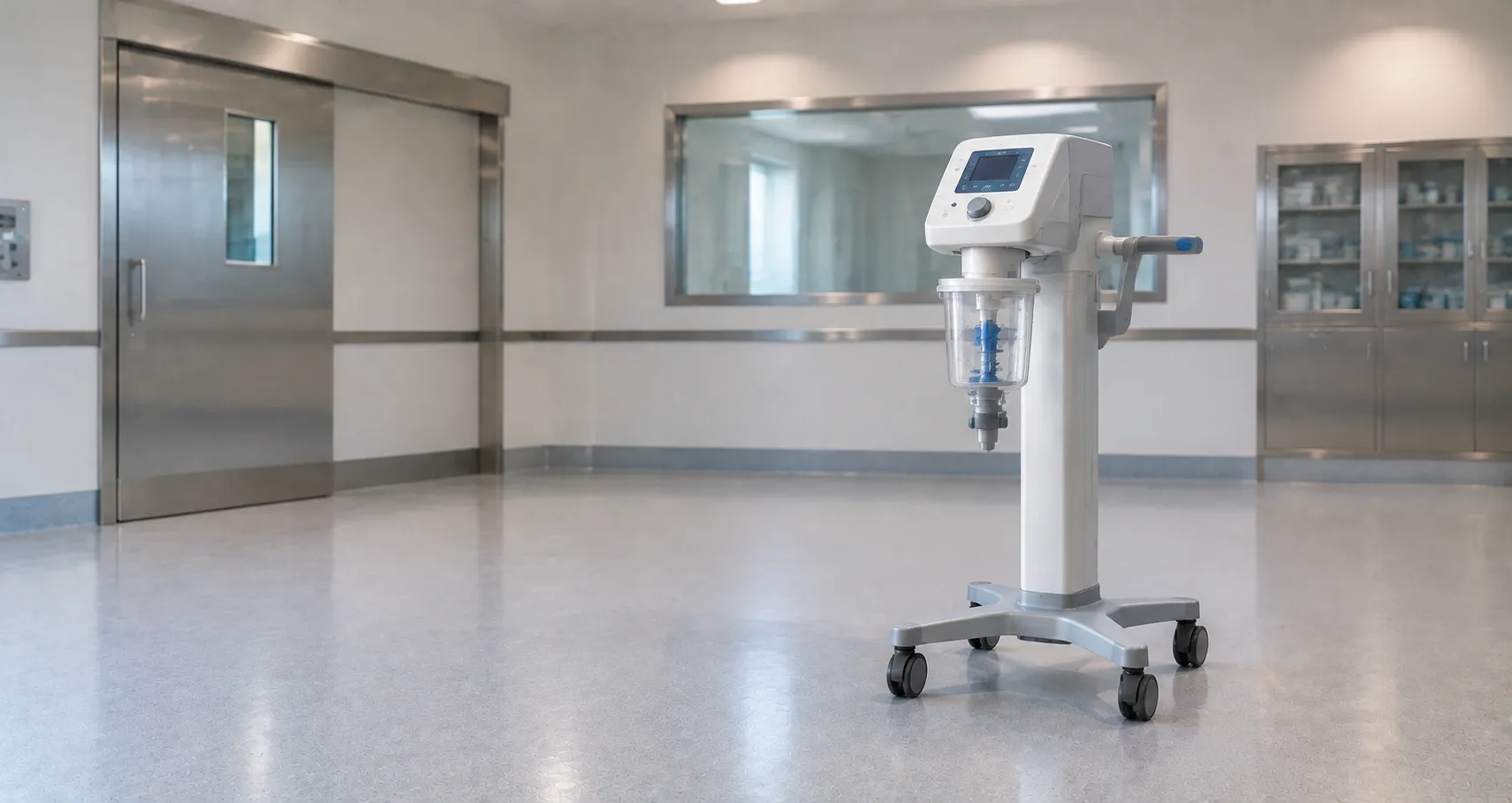
A bone cement mixing system prepares polymethyl methacrylate (PMMA) cement under vacuum so it can fix a joint prosthesis to bone. It blends a powdered polymer with a liquid monomer, draws out the air that mixing introduces, and delivers the dough through a nozzle or gun into the prepared bone bed. For a theatre or orthopaedic procurement lead, the choice rests on how well the system lowers porosity and monomer fume, how it fits the cements and delivery guns already in use, and the true cost per case once cartridges and consumables are counted.
Mixing method matters because voids left in cured cement weaken the mantle around an implant. Vacuum mixing produces a denser, stronger cement mantle and cuts the vapour that theatre staff would otherwise breathe, which is why closed vacuum systems have largely replaced open bowl-and-spatula mixing for load-bearing hip and knee arthroplasty.
How PMMA cement and vacuum mixing work
Acrylic bone cement is supplied as two parts: a powder of pre-polymerised PMMA beads with an initiator, and a liquid methyl methacrylate monomer with an activator. When the two are combined, the monomer polymerises in an exothermic reaction, passing through a wet dough phase, a workable phase and a hardening phase before it sets solid. The surgeon must apply and pressurise the cement during the workable window, so timing is central to the process. Hand-mixing in an open bowl whips air into the mix, leaving pores that act as crack-initiation sites under cyclic load. A vacuum mixing system mixes the same components inside a sealed cartridge while a pump holds a partial vacuum, so entrained air is drawn off,f and the cured cement is denser and more fatigue-resistant. The sealed cartridge then doubles as the delivery reservoir, reducing handling and the surface area from which monomer can evaporate.
Main types of mixing system
Open bowl mixing uses a bowl and spatula and is now reserved for low-demand uses; it offers no vacuum and the highest fume exposure. Closed vacuum cartridge systems are the mainstream choice for arthroplasty: the powder and monomer are combined inside a disposable cartridge attached to a vacuum pump, mixed by a plunger or spinning blade, and the same cartridge loads straight into a delivery gun. Some kits are pre-packed with a fixed cement volume, while others let the team load bulk cement to the volume a case needs. Motorised and battery-driven mixers automate the stir and reduce operator variability, whereas manual vacuum systems rely on hand cranking. Match the format to your case mix, because a revision hip may need two or three units of cement in one sitting while a unicompartmental knee needs far less.
Cement viscosity and the working window
Cements are grouped as low, medium, um or high viscosity, and the grade changes how the system is used. Low-viscosity cement stays runny longer and suits injection into cancellous bone or through a narrow nozzle, but it demands careful timing to pressurise before it thickens. High-viscosity cement reaches a doughy, non-sticky state quickly and is favoured by surgeons who prefer early handling. The mixing system must cope with the chosen grade and deliver it cleanly through the gun without the plunger stalling. Working and setting times shift with theatre temperature, so a warm room shortens the window and pre-chilling components can lengthen it; the manufacturer states the expected times at a reference temperature. Buyers should confirm the system is validated with the specific cement brands their surgeons use rather than assuming universal compatibility, and that the cartridge volume matches the largest case the platform will be used for.
Fume extraction and staff safety
Methyl methacrylate monomer is volatile and has a distinct sharp odour; exposure is controlled under COSHH, and theatres manage it as an occupational hazard. A closed vacuum system is itself a safety control because it keeps the monomer sealed during mixing, and many pumps route the extracted air through a charcoal filter. Some systems add a dedicated fume-evacuation canister. When comparing devices, ask how the exhaust is handled, whether the filter is a recurring consumable, and how spent cartridges and uncured residue are disposed of. Guidance on workplace exposure and control of hazardous substances is published by the HSE, and estates and occupational-health teams should sign off the arrangement before a new system enters routine use.
Standards and regulation
The mixing device is a medical device and must carry UKCA or CE marking with a declaration of conformity; the cement itself is governed by ISO 5833, which sets requirements for acrylic resin cements including mechanical properties and setting behaviour. Great Britain device registration and vigilance sit with the MHRA, and broader device guidance is published on GOV.UK. Antibiotic-loaded cements used for infection prophylaxis are regulated as medicinal-device combinations, so verify the exact product licence and indication rather than assuming any cement can be mixed with any additive. Ask suppliers for documentation that the mixing system is validated with the cement it will be paired with.
Compatibility, delivery and antibiotic-loaded cement
A mixing cartridge is only useful if it mates with the delivery gun and nozzles your theatre stocks, so check the cartridge-to-gun interface, nozzle range and whether narrow cannulae are available for injection techniques. Where surgeons use pre-mixed antibiotic-loaded cement, confirm the powder blends cleanly under vacuum without clumping. Consider whether the same platform covers both hip and knee volumes, and whether a pressuriser or gun accessory is needed for femoral canal cementing. Standardising on one gun and cartridge family across the orthopaedic list simplifies training, stock control and instrument reprocessing.
Consumables, decontamination and total cost of ownership
Most of the cost is recurring. Each case consumes a single-use cartridge, mixing element, nozzle and often a filter, all discarded to clinical waste after use; the vacuum pump and reusable gun are the durable parts. Reusable guns are cleaned and sterilised between cases to the manufacturer's instructions and the decontamination policy, so factor tray space and sterile-services capacity into the plan. Model the genuine cost per case at your annual arthroplasty volume, including cartridges, filters, cement and any pressuriser accessories, because a low headline price on the pump can hide expensive proprietary consumables. Ask each supplier about warranty, servicing of the pump, loan-unit cover and consumable lead times. The MediGear buyers team can compare cartridge systems and delivery guns, or contact us for availability and support.
Procurement checklist
-
Confirm vacuum mixing with documented porosity reduction for load-bearing joints.
-
Check the system is validated with the specific cement brands and viscosities your surgeons use.
-
Verify cartridge-to-gun compatibility, nozzle range and pressuriser accessories.
-
Ask how monomer fume is extracted and whether the filter is a recurring consumable.
-
Confirm UKCA or CE marking, ISO 5833 cement compliance and MHRA registration.
-
Check licence and indication for any antibiotic-loaded cement used.
-
Model the true cost per case across cartridges, filters, cement and accessories.
-
Confirm reusable-gun reprocessing fits your sterile-services capacity.
Conclusion
A bone cement mixing system shapes both implant longevity and staff safety, so the specification deserves more attention than a simple price comparison. Prioritise proven vacuum performance, validated compatibility with your cements and delivery guns, and sound fume control, then budget honestly for the single-use consumables that drive the real cost per case. Comparing verified options through MediGear helps your theatre buy a cement mixing system that supports a dense, dependable mantle in joint surgery.
Disclaimer
This article is for informational purposes only. It is published by MediGear (medigear.uk) for general information and procurement guidance, and is not clinical, diagnostic, treatment, technical, engineering, legal or regulatory advice, nor a product endorsement, guarantee or substitute for professional assessment. MediGear does not provide medical consultations. Buyers should consult their clinical, biomedical, estates and regulatory contacts, and the manufacturer's documentation, and independently verify all specifications, certifications, compatibility and suitability before purchase. Specifications, certifications and availability are correct at the time of publication and may change without notice. MediGear is a medical-equipment distributor and does not sell medicines or pharmaceutical products.