Negative pressure wound devices are the pumps and consumable kits that deliver suction-based wound care at the bedside, in clinic or at home. The therapy is the same across products, but the hardware varies widely: from a mains-powered console with a large canister on a ward to a pocket-sized single-use pump that a patient wears under their clothes. Choosing the right device is a procurement question about setting, duration, canister capacity, alarms and cost, not about the biology of healing.
This guide focuses on the equipment. It walks through the device families, the consumables that go with them, the alarms that keep therapy safe and the rent-versus-buy decision that shapes how a service pays for it.
Stationary, portable and single-use devices
Stationary and rental pumps
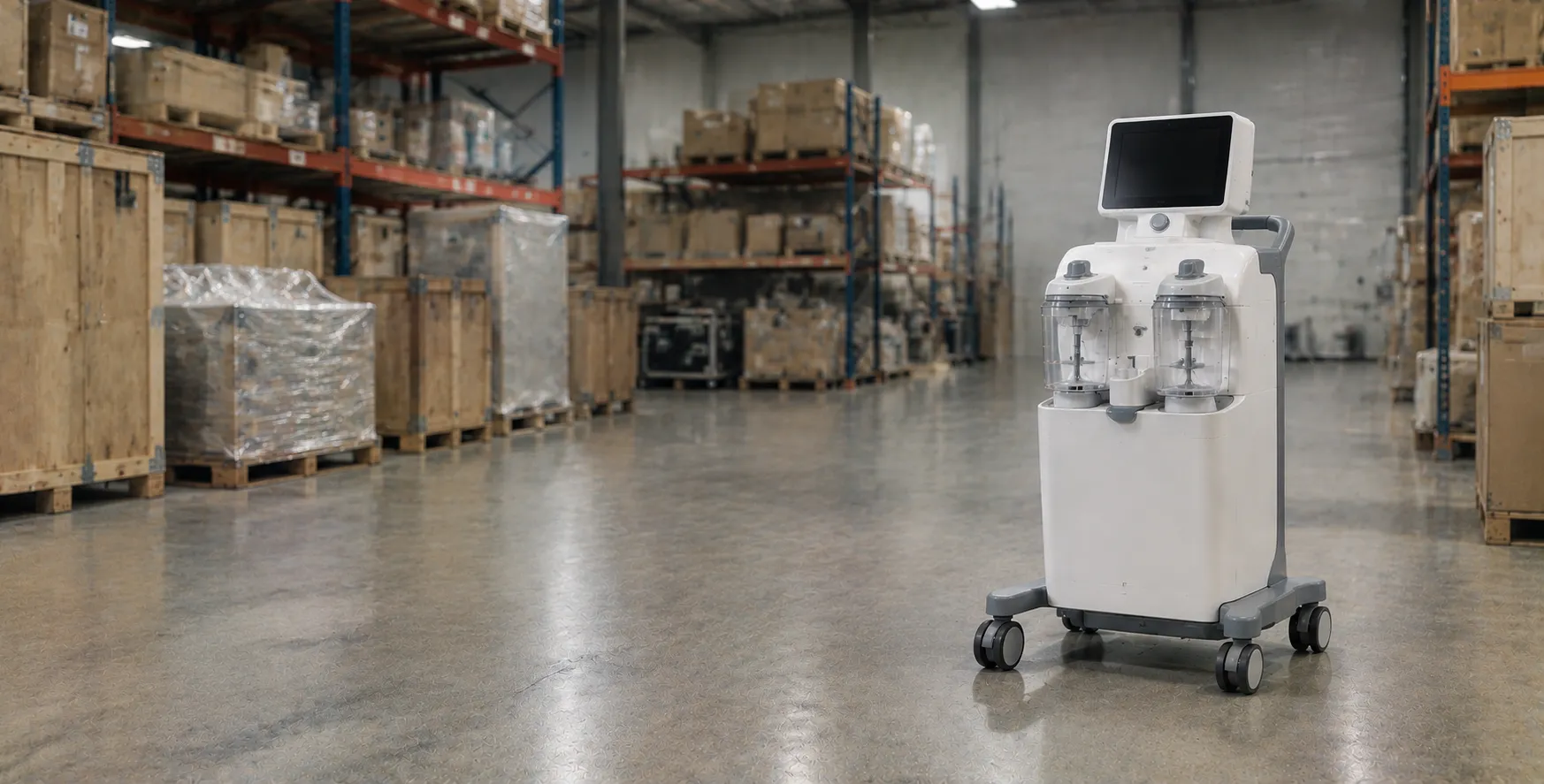
Ward and theatre recovery use often relies on a mains- or battery-powered console mounted on a pole or hung from a bed. These handle high exudate volumes, offer the full range of pressure levels and modes, and are frequently supplied on a rental or managed-service basis so a facility pays per day of use rather than owning a fleet.
Portable rechargeable pumps
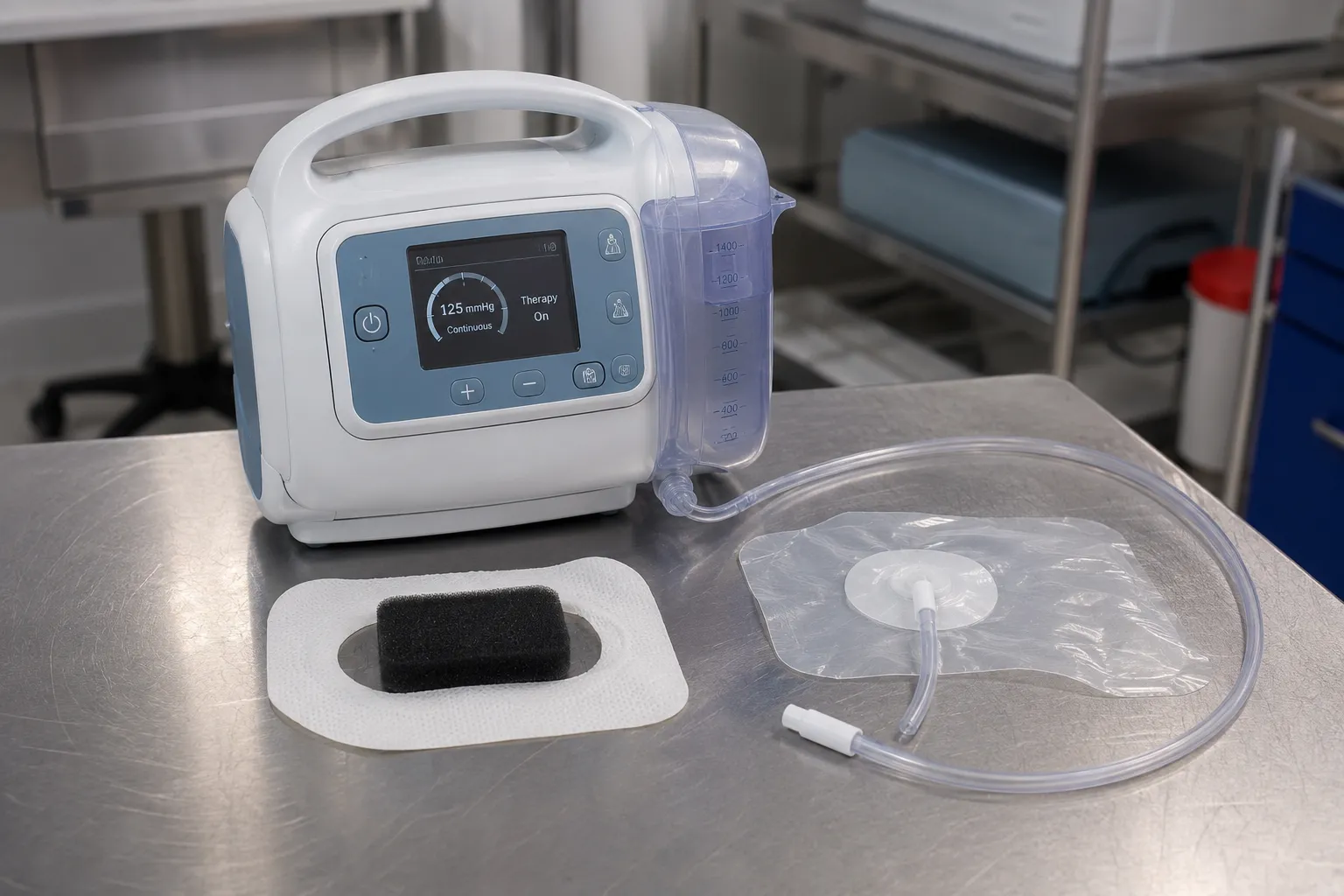
Lightweight rechargeable units let a patient move around or go home while therapy continues. They carry a smaller canister, run for many hours on a charge and are the workhorse for step-down and community care. Battery life and the ease of swapping a canister on the move are the practical differentiators.
Single-use disposable systems
Canister-free or small-canister disposable pumps run for a fixed number of days on lower-exudate wounds and are then discarded with the dressing. They remove cleaning and servicing entirely and suit closed surgical incisions and smaller wounds, trading a higher per-unit price for zero reprocessing and easy discharge home.
Canister capacity and fluid management
Canister size is a defining spec. A high-output ward wound may fill a large canister quickly, so a bigger reservoir means fewer interruptions. In contrast, a small, discreet canister better serves a home patient with a low-output wound. Many canisters contain a gelling agent that solidifies exudate for safer handling and disposal, as well as a hydrophobic filter that prevents liquid from reaching the pump. Check the fill volume, whether the canister is single-use, how it locks on, and how the device signals that it is full, because a full canister that is missed stops effective therapy.
Dressing kits and consumables
Every device runs on a stream of consumables: sealing film, foam or gauze filler, suction port or pad, tubing, and canisters. These kits are usually specific to the device brand, so a pump commits to that manufacturer's dressings, which is a major driver of running costs. Confirm the range of available sizes and shapes, whether specialist kits exist for awkward sites, and the price and availability of each component. A cheap pump tied to expensive or scarce dressings is a poor buy.
Alarms, safety and battery life
Because therapy fails silently when a seal breaks or a battery dies, the alarm set is central to device safety. Expect clear alerts for a leak or loss of pressure, a full canister, a blockage in the tubing, low pressure and low battery, with both audible and visual indicFor portableortable units, bruntime and charging timeingtime determine how far a patient can travel awell thewell he device fit ainto home routine. For single-use pumps, an indicator that shows therapy is active and how many days remain matters, since there is no console to interrogate. Ask how each alarm behaves and whether the device logs therapy hours for audit.
Reprocessing reusable pumps
Reusable stationary and portable pumps must be cleaned and decontaminated between patients using the manufacturer's validated method, and the housing, controls, and any reusable tubing connectors must have surfaces that tolerate the cleaning agents a clinic uses. Single-use pumps sidestep this entirely, which is part of their appeal for community teams who cannot easily return equipment for reprocessing. Estates and infection-prevention teams should confirm the decontamination pathway for any reusable fleet before adoption, and factor the labour of cleaning into the true cost. Downtime matters too: a pump being cleaned or serviced is a pump not earning its keep, so a fleet needs enough spare units to cover turnaround, which is one reason single-use and rental models appeal to services that cannot absorb that overhead.
Community and domiciliary use
Away from the ward, the practicalities change. A district nursing team needs devices that are lightweight, easy to teach, robust enough to be carried in a bag, a nd safe for a patient to manage overnight. Single-use and small portable pumps suit this setting because they reduce cleaning, minimise the kit a patient must handle and lower the consequence of a device being lost or damaged at home. Consider how devices are delivered, retrieved and tracked across a community caseload, and how a patient or carer contacts the service if an alarm sounds. Weight, noise at night, the simplicity of the controls and how obvious the alarms are to a lay carer all matter more here than the breadth of clinical modes that a ward values. The right device for a hospital is often the wrong device for a front room, so many services run a small mixed fleet rather than standardising on one pump for every setting.
Standards, rental versus purchase and total cost
Any negative pressure device is a medical device that requires valid UKCA or CE marking, with its pump meeting the general medical electrical safety standard IEC 60601-1. The MHRA regulates them and publishes safety notices. The financial model is a genuine decision: an outright purchase suits predictable, high-volume use and puts a fleet on the asset register with servicing to manage, while a rental or managed service converts cost to a daily rate, includes maintenance, and flexes with demand. Single-use devices avoid capital and cleaning but cost more per episode. Model the mix against your caseload, and remember the dressing consumables usually outweigh the pump over time. To compare device families and supply models, register as a buyer with MediGear or contact us via the contact page. Broader NHS service information is available at NHS.uk.
Procurement checklist
-
Match the device family — stationary, portable or single-use — to the care setting and wound output.
-
Check canister capacity, gelling and filter, and how a full canister is signalled.
-
Confirm the alarm set: leak, full canister, blockage, low pressure and low battery.
-
Verify battery runtime and charging time for portable and community use.
-
Price the brand-specific dressing kits and confirm size range and availability.
-
Establish the validated cleaning route for any reusable pump fleet.
-
Decide between a rental or managed service and an outright purchase based on your volume.
-
Request UKCA or CE documentation and IEC 60601-1 compliance.
Conclusion
Negative pressure wound devices deliver the same therapy through very different hardware, and buying well is about fitting the device to the setting: canister capacity and modes for the ward, battery life and portability for step-down, and single-use simplicity for the community. Weigh the alarm set, the brand-locked dressing costs and the choice between renting and owning, and remember that consumables, not the pump, usually dominate the lifetime bill. Confirm UKCA or CE marking and IEC 60601-1 compliance before you commit. MediGear can help clinics and community teams compare device families and supply models so wound services run reliably and affordably.
Disclaimer
This article is for informational purposes only. It is published by MediGear (medigear.uk) for general information and procurement guidance. It is not clinical, diagnostic, treatment, technical, engineering, legal, or regulatory advice, nor a product endorsement, guarantee, or substitute for professional assessment. MediGear does not provide medical consultations. Buyers should consult their clinical, biomedical, estates and regulatory contacts, and the manufacturer's documentation, and independently verify all specifications, certifications, compatibility and suitability before purchase. Specifications, certifications and availability are correct at the time of publication and may change without notice. MediGear is a medical-equipment distributor and does not sell medicines or pharmaceutical products.