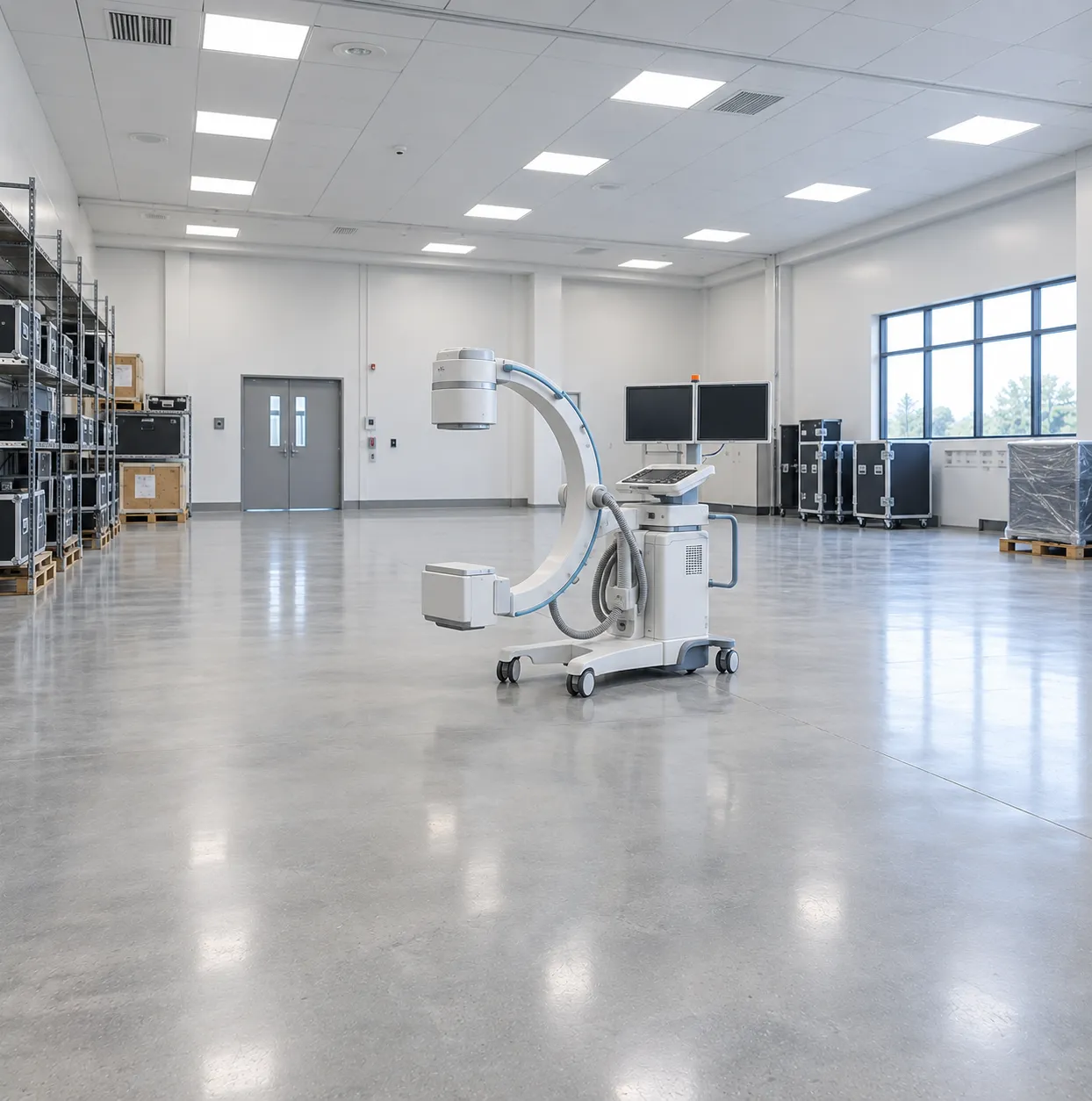
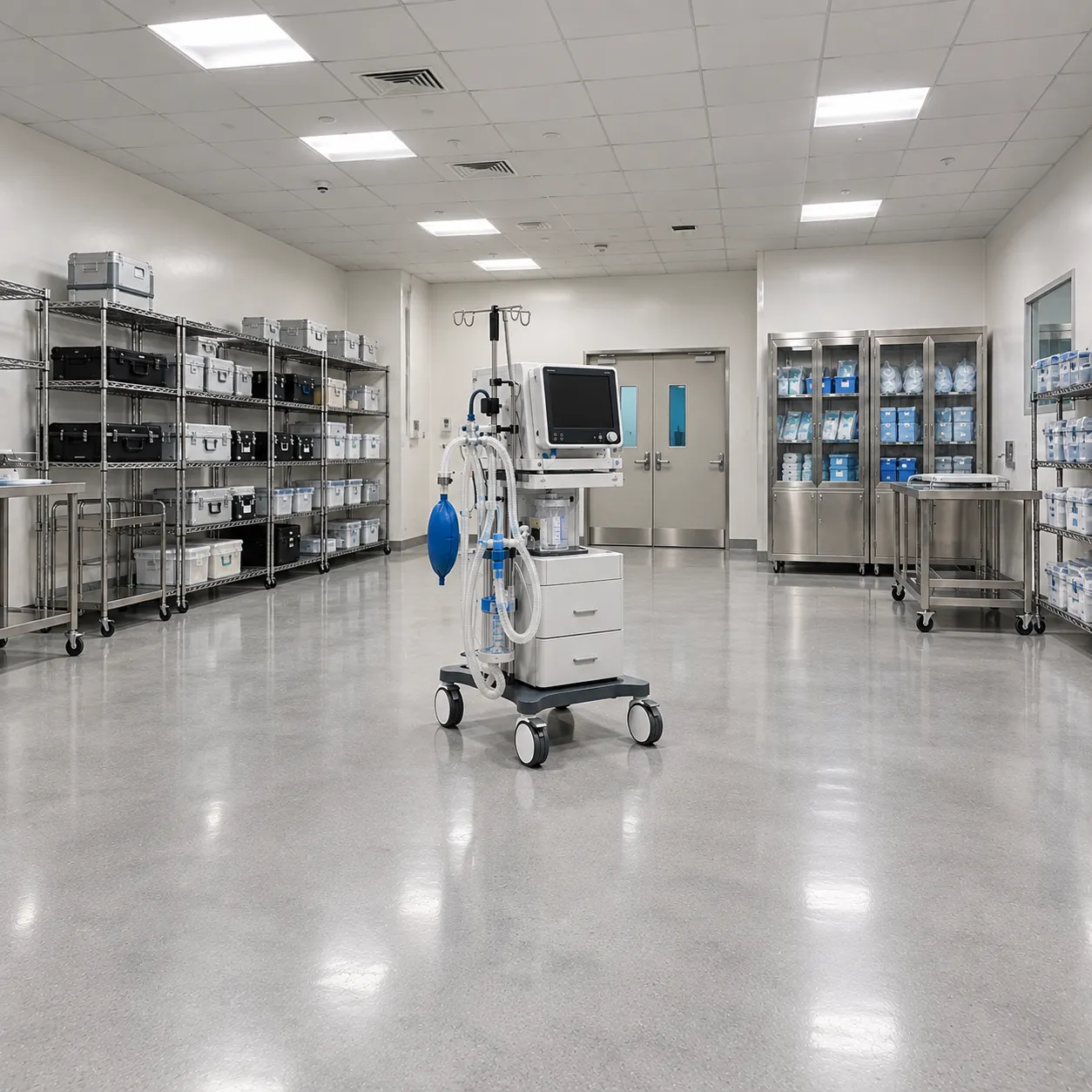
To store medical equipment properly between procedures you need a clean, dry, controlled space where each device is protected from damage, its decontamination status is never in doubt, and its battery is kept in good health. Storage sounds like the dull end of equipment management, yet poor storage is where working kit quietly turns into faulty kit.
Between uses, a device is exposed to dust, knocks, damp, flat batteries, and mix-ups, regardless of whether it is clean or dirty. Sort those out, and the equipment reaches the next patient ready to work and safe to use, which is the whole point of storing it well.
Get the storage environment right.
Start with the space. Equipment stores should be clean, dry and dust-controlled, with a stable temperature and humidity rather than a cold corridor or a hot plant room. Damp corrodes contacts and encourages mould on padded surfaces; heat degrades batteries and adhesives; direct sunlight ages plastics and rubber seals. Keep devices off the floor on shelving or trolleys, so they escape cleaning splashes and are easy to move. Sterile and single-use stock has its own rules — follow the manufacturer's stated storage conditions and keep packaging intact, because a compromised sterile barrier means the item is no longer sterile whatever the label says. Where storage conditions are specified in the instructions for use, treat them as a requirement, not a suggestion.
Keep the decontamination status crystal clear.
The single most important storage discipline is knowing, at a glance, whether a device is clean and ready or dirty and waiting. Physically separate the two. Never return a used device to the clean store, and never let a dirty item share a shelf with ready stock. Use a clear labelling scheme — a clean/ready tag applied only after decontamination — so no one has to guess before picking up a device for the next procedure. This matters most for reusable items handled between patients, where a moment of ambiguity becomes a genuine infection-control risk. Guidance on decontamination and safe handling is published at gov.uk, and your local infection-prevention policy will set the detail.
Charging and battery care between uses
Battery-powered devices need thought in storage, not just a plug. Many portable pumps, monitors and suction units are designed to sit on charge between uses so they are ready to grab; others prefer a partial charge for long-term storage. Follow the manufacturer's guidance, because both deep discharge and constant full charge in heat shorten lithium-ion life. Rotate devices so batteries are exercised rather than left flat for months, and flag any that no longer hold charge for battery replacement rather than leaving a device that will die mid-procedure. Label the expected runtime if it helps staff pick a device with enough charge for the case ahead.
Preventing physical damage in storage
Most storage damage is avoidable handling damage. Ultrasound probes and endoscopes are fragile and expensive — store probes in holders that support the head and protect the lens, never loose in a drawer where the cable strain-relief gets crushed. Coil leads loosely rather than kinking them, and support connectors so their pins are not bearing weight. Trolley-mounted devices should be secured so they do not slide or topple in transit. Fit covers on delicate optics and keep spare accessories with their parent device so nothing is forced or mismatched at the point of use. A dropped or crushed probe can cost as much to replace as a modest capital item, so protective storage pays for itself quickly. When an accessory does need replacing, being able to compare parts across suppliers keeps the correct like-for-like item quick to source.
Stock rotation and shelf-life control
Consumables and single-use accessories carry expiry dates, and storage is where they either get used in time or silently go out of date on a back shelf. Run first-in, first-out rotation so older stock is picked before newer, and keep near-date items to the front. Check expiry when restocking, not when reaching for an item mid-procedure. Sterile packs lose their sterility assurance once the expiry passes or the packaging is breached, so damp, crushed or opened packs come out of circulation regardless of date. A quick periodic sweep of the store for out-of-date and damaged stock prevents the nasty surprise of a needed item being unusable when the case is already under waunderwaydevices live: ward cupboard, central store or clean utility
Where you store between procedures shapes how well it goes. A ward-level cupboard puts kit close to the point of use and suits fast-turnaround items, but space is tight and environmental control is limited. A central equipment store gives better conditions and control for devices used across several areas, at the cost of a walk to fetch them. A dedicated clean utility keeps decontaminated and sterile stock separate from dirty processing, which is essential wherever clean and dirty flows would otherwise cross. Most services use all three, matching the storage location to how quickly the item turns over and how sensitive it is to environment and contamination.
Different devices, different storage needs
One store rarely suits everything, so match the method to the device. Flexible endoscopes have their own controlled drying and storage cabinets that maintain airflow through the channels and log storage time, because a scope has a defined safe storage period after reprocessing. Rigid instruments and trays keep their sterility only while the wrap or container is intact, so they need clean, dry shelving where packs are not crushed or handled repeatedly. Powered devices want a charging bay with ventilation and their leads supported. Mattresses and cushions should be stored clean, dry, or hanging as the maker specifies, since a folded pressure-relieving surface can be damaged permanently. Reading the storage section of each instruction is dull but decisive; the conditions written there are what keep the warranty valid, and the device fit for the next patient.
Racking, layout and traceability in the store
How the store is fitted out decides whether careful policy survives a busy department. Use adjustable racking and labelled bays so every device has a defined home and heavy items are never stacked on fragile ones. Shelve by device family, keep the heaviest kit low, and leave clear gangways so trolleys pass without knocking stock. Wall-mounted holders and trolley docks keep probes, leads and handsets supported rather than piled loose. Give each shelf or bay a location code and record where a device lives, so a specific pump or scope is found in seconds rather than hunted across three cupboards. Log serial numbers against location and decontamination status so the store is traceable: which item is where, when it was last cleaned, and when it is next due for service. A store you can audit at a glance is one where nothing quietly corrodes at the back or slips out of circulation unnoticed.
Storing kit between cases: a working checklist
-
Store in a clean, dry, temperature-controlled space, off the floor and out of direct sun.
-
Keep clean-ready and dirty-return stock physically separate, with clear decontamination-status labelling.
-
Follow the manufacturer's charging guidance and rotate batteries so none are left flat for long periods.
-
Support probes, leads and connectors in proper holders to prevent crush and strain damage.
-
Run first-in, first-out rotation and check consumable expiry dates when restocking.
-
Remove damaged, damp or out-of-date sterile packs from circulation regardless of the printed date.
-
Keep accessories with their parent device so nothing is mismatched at the point of use.
-
Sweep the store periodically for expired stock, flat batteries and devices needing service.
Storage habits that shorten equipment life
The damage from bad storage is cumulative and easy to miss. Cramming devices into a damp cupboard corrodes contacts and warps seals over months, not days. Leaving lithium batteries flat or baking on constant charge in a warm room halves their working life. Dumping probes loose in a drawer is how the most expensive accessory in the department ends up cracked. Returning used kit to the clean shelf, even once, undoes an infection-prevention system that everyone else is trusting. And ignoring stock rotation guarantees an expired sterile pack surfaces at the worst possible moment. None of these announce themselves — they show up later as a device that fails mid-procedure or an accessory that has to be replaced early.
Storing kit so it lasts
Good storage is unglamorous, and it is what keeps a fleet reliable. A device that is kept dry, charged, protected, and clearly labelled between procedures reaches the next patient ready to work, which protects both safety and budget. Build the environment, the labelling, and the rotation into routine, and storage stops being an afterthought. When worn accessories or ageing devices do need replacing, you can turn to MediGear to find accountable suppliers so what goes back on the shelf is fit for the next case.
Disclaimer
This article is for informational purposes only. It is published by MediGear (medigear.uk) for general information and procurement guidance, and is not clinical, diagnostic, treatment, technical, engineering, legal or regulatory advice, nor a product endorsement, guarantee or substitute for professional assessment. MediGear does not provide medical consultations. Buyers should consult their clinical, biomedical, estates and regulatory contacts, and the manufacturer's documentation, and independently verify all specifications, certifications, compatibility and suitability before purchase. Specifications, certifications and availability are correct at the time of publication and may change without notice. MediGear is a medical-equipment distributor and does not sell medicines or pharmaceutical products.