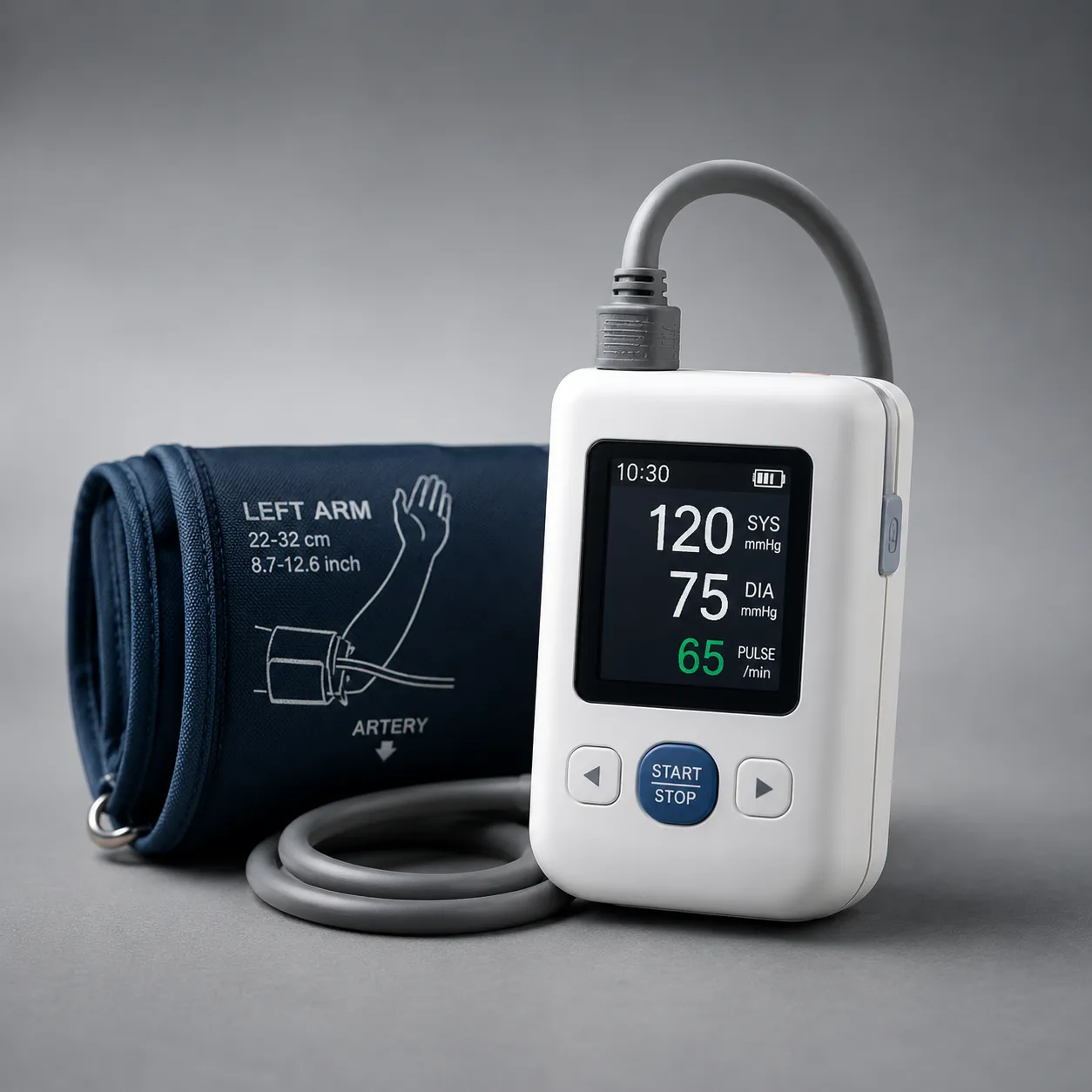
An ambulatory blood pressure monitor, usually shortened to ABPM, is a small battery-powered device worn for 24 hours that measures blood pressure automatically at set intervals while the patient goes about ordinary life. Instead of a single clinic reading, it produces dozens of measurements across day and night, giving a far truer picture of a patient's blood pressure. For a GP practice, hypertension clinic or community diagnostic service, ABPM is a workhorse device recommended for confirming a diagnosis of high blood pressure, and its accuracy, fit and turnaround directly affect how many patients can be assessed.
The device is simple to describe. A cuff on the upper arm connects to a recorder worn on a belt or pouch. The unit inflates the cuff at programmed intervals, records each reading, and stores the data for the wear period. Afterwards the software downloads the readings and produces day, night, and overall averages for the clinician to interpret.
How the Measurement Works
Almost all ambulatory monitors measure blood pressure by the oscillometric method. The cuff inflates to occlude the artery, then slowly deflates while a sensor detects the tiny pressure oscillations caused by blood pulsing through the vessel. The device analyses the amplitude of those oscillations to estimate systolic and diastolic pressure using the manufacturer's algorithm. Because the algorithm, not a listening clinician, produces the number, the quality of that algorithm and its independent validation are central to whether the readings can be trusted. The monitor typically takes readings every 20 to 30 minutes by day and less often at night to protect sleep.
Why 24-Hour Data Matters
A single clinic reading can be raised by anxiety, the well-known white-coat effect, or can miss high pressure that only shows at other times. Averaging many readings across a full day and night, including the overnight dip, removes much of that noise and is why ABPM is used to confirm hypertension before starting lifelong treatment.
ABPM Versus Home Monitoring
ABPM is not the same as a home blood pressure monitor. Home monitoring has the patient take their own readings at fixed times over several days on a self-inflating device, which is cheaper and useful for ongoing tracking. ABPM runs automatically over a full 24 hours, including sleep, and needs no patient action, so it captures nocturnal readings and removes user technique as a variable. The two are complementary; many services use home monitoring for routine follow-up and reserve ABPM for diagnosis and difficult cases. Knowing which role you are equipping for shapes how many ambulatory units you actually need.
Key Specifications to Check
Ambulatory monitors look alike, but the details decide accuracy, comfort and daily throughput. Weigh these before comparing quotes.
-
Independent clinical validation to a recognised protocol for accuracy you can defend.
-
Full range of cuff sizes, including small, large and extra-large, for a mixed population.
-
Recorder size, weight and noise, since a bulky or loud unit disturbs sleep and compliance.
-
Programmable measurement intervals for daytime and a quieter night schedule.
-
Battery type and life, and whether rechargeable cells fit your turnaround.
-
Reporting software that produces clear day, night and overall averages and dipping status.
-
Data export and integration with your clinical system or patient record.
-
Cleaning guidance for the recorder and a supply of reusable or single-patient cuffs.
Validation and Accuracy
The single most important buying criterion is independent validation. Because the oscillometric algorithm produces the reading, a monitor should have been tested against a reference standard under a recognised validation protocol and passed. Do not rely on a marketing claim of accuracy; ask for the published validation evidence for the exact model and cuff. Clinical guidance from bodies such as NICE underpins how ABPM is used to diagnose hypertension, which is why a defensible, validated device matters. An unvalidated monitor undermines every diagnosis made from it.
Cuffs, Consumables and Fit
A correctly sized cuff is essential; a cuff too small over-reads and one too large under-reads, so stocking a full range of sizes is not optional. Cuffs are the main consumable, whether reusable cuffs that are cleaned between patients or single-patient versions, and they wear out with repeated inflation, so budget for replacements. Fit and comfort also drive compliance: a cuff that pinches or a recorder that is heavy leads patients to remove it or sleep badly, thinning the data. Check cuff availability and price for the specific monitor before you buy, because proprietary cuffs can be expensive.
Decontamination, Standards and Regulation
An ABPM is worn against the skin by successive patients, so the recorder and reusable cuffs need cleaning between uses following your infection-control policy and the manufacturer's approved agents. As a medical device it must carry valid UKCA or CE marking, with obligations overseen by the MHRA. Electrical safety follows the IEC 60601-1 family, and non-invasive blood pressure devices are additionally covered by the IEC 80601-2-30 standard for automated non-invasive sphygmomanometers, which is closely tied to the validation question. Ask the supplier for the declaration of conformity and validation evidence together.
Use Across Different Care Settings and Fleet Size
ABPM appears across primary and secondary care. A GP practice may run one or two units continuously, so turnaround, ease of fitting and simple software matter most. A hospital hypertension or renal clinic handles higher volumes and complex cuffs and may want several matched devices and integrated reporting. Community diagnostic hubs and pharmacy services increasingly offer ABPM to relieve pressure on practices. Because each unit is tied up for a full 24 hours plus cleaning and download, fleet size sets how many patients you can assess a week, so map demand before deciding quantities. Our buyers hub can help size an order to your caseload.
Connectivity, Reporting and Data Handling
After the wear period t, the study only becomes useful once the data is downloaded and turned into a report. Some monitors connect by cable or dock, others transfer wirelessly, and the reporting software then generates the day, night and overall averages, dipping status and a clear summary the clinician signs off. Check how easily results export into your clinical system or patient record, whether the software is licensed per seat or per device, and that data handling meets information-governance rules. A smooth download and clear report cut the staff time each study consumes, which matters far more once a service is running dozens of studies a week rather than the occasional one.
Total Cost of Ownership, Warranty and Spares
The recorder price is only the start. Add cuffs across every size, replacement batteries, reporting software and any per-seat licence, staff time to fit and download each study, and eventual replacement. A cheaper monitor tied to costly proprietary cuffs or paid software can cost more over its life than a dearer validated system with affordable consumables. Check the warranty term and cover, repair turnaround, whether loan units exist during downtime, and how long the maker will supply cuffs and software support. To compare validated options and running costs, contact MediGear.
Conclusion
An ambulatory blood pressure monitor gives a far more reliable diagnosis than a single clinic reading, but buying well turns on independent validation, a full range of cuffs, comfortable fit and realistic fleet and consumables planning. Confirm the UKCA or CE and validation position, size the fleet to your demand, and to specify ABPM devices for your service, talk to our buyers team about our diagnostic equipment range.
Disclaimer
This article is for informational purposes only. It is published by MediGear (medigear.uk) for general information and procurement guidance, and is not clinical, diagnostic, treatment, technical, engineering, legal or regulatory advice, nor a product endorsement, guarantee or substitute for professional assessment. MediGear does not provide medical consultations. Buyers should consult their clinical, biomedical, estates and regulatory contacts, and the manufacturer's documentation, and independently verify all specifications, certifications, compatibility and suitability before purchase. Specifications, certifications and availability are correct at the time of publication and may change without notice. MediGear is a medical-equipment distributor and does not sell medicines or pharmaceutical products.