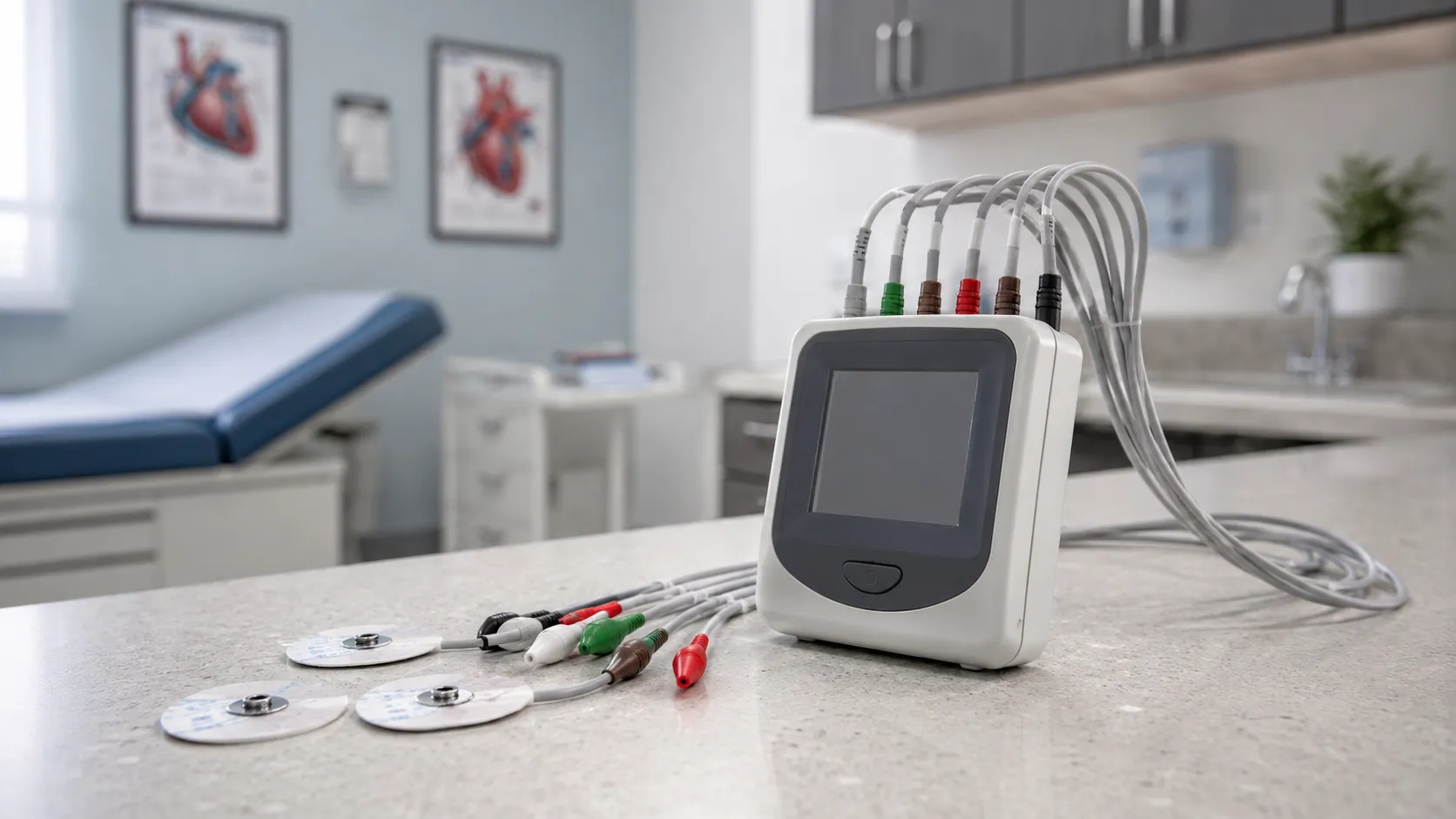
A Holter monitor is a small, portable electrocardiogram recorder that continuously captures the heart's electrical activity, usually over 24 to 48 hours or longer, while a patient goes about normal life. It records the rhythm as it happens, so intermittent events a brief clinic ECG would miss are caught on the device. For a practice manager or biomedical buyer, it is a compact instrument with a big role in outpatient cardiac assessment and a surprisingly detailed set of buying considerations.
How it works is straightforward. Electrodes on the chest connect by short leads to a lightweight recorder the patient wears. The device digitises and stores every heartbeat across the wear period. When the patient returns the unit, software downloads the recording and analyses it for rhythm disturbances, pauses and other abnormalities that a clinician then reviews and reports.
The Recording Principle in Detail
The heart's contraction is driven by an electrical signal, and skin electrodes pick up the tiny voltage changes it produces. A Holter amplifies and samples those signals many times a second and writes them to solid-state memory. Older monitors saved to cassette tape; modern units use memory cards and record several ECG channels at once, so more of the heart's electrical axis is captured. The patient keeps a symptom diary or presses an event button, letting the reviewer line up a palpitation or dizzy spell with the trace at that exact moment. Sampling rate and storage capacity set how faithfully and how long the device can record.
Leads and Channels
Common configurations record two or three channels through a set of chest electrodes. Some patch-style recorders use fewer contacts and a single adhesive unit, trading detail for comfort and simpler application. More channels give the reviewing clinician a fuller view and make artefact easier to tell from a genuine event, which is worth weighing against the extra electrodes and application time each channel adds.
Holter Versus Other Ambulatory Recorders
A standard Holter records continuously for a day or two. Event and loop recorders capture only when triggered and suit rarer symptoms over weeks. Patch monitors extend continuous recording to a week or more with a single adhesive device and no dangling leads. Implantable loop recorders sit under the skin for months to years for very infrequent events. Knowing which mix your clinicians need stops you buying the wrong tool for the referral pattern, and many services keep more than one type.
Key Specifications to Check
A Holter system is really two purchases: the recorders and the analysis software. Weigh both together using the points below.
-
Number of ECG channels and the maximum continuous recording duration.
-
Sampling rate and memory capacity, which set trace fidelity and recording length.
-
Recorder size, weight, and water resistance for patient comfort and compliance.
-
Battery type and whether recharging or replacing cells fits your turnaround.
-
Analysis software quality, since automated beat detection still needs skilled review.
-
How many recorders keep clinics flowing without waiting for returns.
-
Consumables such as electrodes and lead sets, and their ongoing cost.
-
Data export and integration with your cardiology reporting or patient record.
Software, Analysis and Integration
The recorder captures the data, but the analysis software determines the workload it creates. Automated algorithms detect and classify beats, flag pauses, count ectopics and estimate burden, yet a trained clinician still reviews and confirms every report, so software that presents the trace clearly and cuts false flags saves real time. Check how results export, whether they integrate with your cardiology reporting system or patient record, and how licences are priced per seat or per recorder. Confirm the network and information-governance position before installation. Our buyers hub can help match software to your reporting workflow.
Fitting and Patient Compliance
A recording is only as good as the electrode contact behind it. Poor skin preparation, loose electrodes or leads snagged during dressing create artefacts that obscure the very events you are trying to capture. Devices that are light, secure and reasonably water resistant let patients sleep, shower and move normally, protecting the trace. Clear patient instructions and a simple diary or event button raise the diagnostic yield. Weigh ease of application and wearer comfort alongside raw technical specification, because a device patients tolerate well produces cleaner data.
Diagnostic Yield and Report Turnaround
Two practical factors decide how much a Holter service actually delivers: how often a recording captures the event of interest, and how quickly a report reaches the referring clinician. Yield rises when the recording length matches the symptom frequency, so a service that only offers 24-hour studies will miss events that a longer patch recording would catch, which is one reason many teams keep several device types. Turnaround depends on the download and analysis workflow as much as the hardware; a system that downloads quickly, presents clean traces, and lets a reporter work efficiently clears studies faster than one that buries the reviewer in false flags. When comparing systems, ask to see the full path from patient return to signed report, not just the recorder, because that end-to-end flow is what sets your real weekly capacity and how long patients wait for answers.
Decontamination, Consumables and Fleet Size
Because each recording ties up a device for a day or more, throughput depends on how many recorders you own and how fast they are cleaned, downloaded and reissued. Reusable recorders need wiping down between patients following your infection-control policy and the maker's guidance, while electrodes and lead sets are single-patient consumables that add up across a year. A realistic fleet and consumables plan matters as much as the individual unit specification, so map monthly referral volume, wear time and turnaround before settling on quantities and stock levels.
Standards, Safety and Servicing
Holter recorders are medical devices requiring valid UKCA or CE marking, with manufacturer obligations overseen by the MHRA. They follow the IEC 60601 family for electrical safety, including the part covering ambulatory electrocardiographic systems, so include them in routine electrical safety testing and planned maintenance. Keep the analysis software updated and supported, and confirm how long the manufacturer will supply spares and software patches. For background on heart rhythm conditions written for a general audience, the NHS is a reliable reference.
Total Cost of Ownership, Warranty and Spares
The recorder price is a small part of the picture. Add software licences and updates, replacement batteries, the steady spend on electrodes and lead sets, staff time to fit, download and report, and eventual replacement of a fleet. A cheaper recorder tied to costly proprietary electrodes or per-study software fees can cost more over its life than a dearer, better-supported system. Check the warranty term and what it covers, repair turnaround, whether loan units exist during downtime, and how long the platform will be supported. Our supplier partners can help clarify servicing and licensing before you commit.
Conclusion
A Holter monitor earns its place by catching rhythm events that slip past a snapshot ECG, but buying well means thinking in fleets, consumables and software, not single units. Match channel count and recording length to your referrals, plan turnaround, and confirm the UKCA or CE and servicing position. To specify a Holter system sized to your clinic, speak to MediGear about our diagnostic equipment range.
Disclaimer
This article is for informational purposes only. It is published by MediGear (medigear.uk) for general information and procurement guidance, and is not clinical, diagnostic, treatment, technical, engineering, legal or regulatory advice, nor a product endorsement, guarantee or substitute for professional assessment. MediGear does not provide medical consultations. Buyers should consult their clinical, biomedical, estates and regulatory contacts, and the manufacturer's documentation, and independently verify all specifications, certifications, compatibility and suitability before purchase. Specifications, certifications and availability are correct at the time of publication and may change without notice. MediGear is a medical-equipment distributor and does not sell medicines or pharmaceutical products.