
Emergency departments use the convex face for FAST and eFAST views during resuscitation, then switch to the linear face for vascular access in the same bay. Cochrane evidence sets the working rule: a positive scan guides treatment, and a negative abdominal scanproceedsn to a reference test. Critical care and anaesthetic teams use the linear face for central and peripheral line insertion, where NICE TA49 names 2D ultrasound as the preferred method for elective internal jugular access in the UK, and for peripheral nerve blocks with the nerve preset and needle enhancement. On acute medical wards, the bladder measurement preset, lung views and checks for pleural effusion bring focused questions to the bedside. Paediatric departments use the same presets for children, and the acoustic output level stays on screen throughout scanning, which supports the ALARA principle. General practice and community clinics can run abdominal, renal, early pregnancy and musculoskeletal examinations within the scope their clinicians are trained for. Musculoskeletal and sports medicine services use the linear face for tendons, joints and guided injections, and the thyroid, breast and ocular presets cover small-parts work. Obstetric and gynaecological scanning is transabdominal only, because the probe carries no endocavity array. Outreach services and hospitals in remote regions can get a scanner that travels in a bag and pairs with a tablet or laptop they already have. Leltek's US clearance places ambulance and aeromedical use outside its scope. Public procurement routes, including NHS frameworks and equivalent tenders elsewhere, usually require a declaration of conformity, reprocessing instructions, and electrical safety evidence for the charger. The conformity documentation those procurement routes require is issued by the manufacturer and provided by the seller.
- Home
- Shop
- Medical Diagnostic Equipment
- Leltek LX192LC
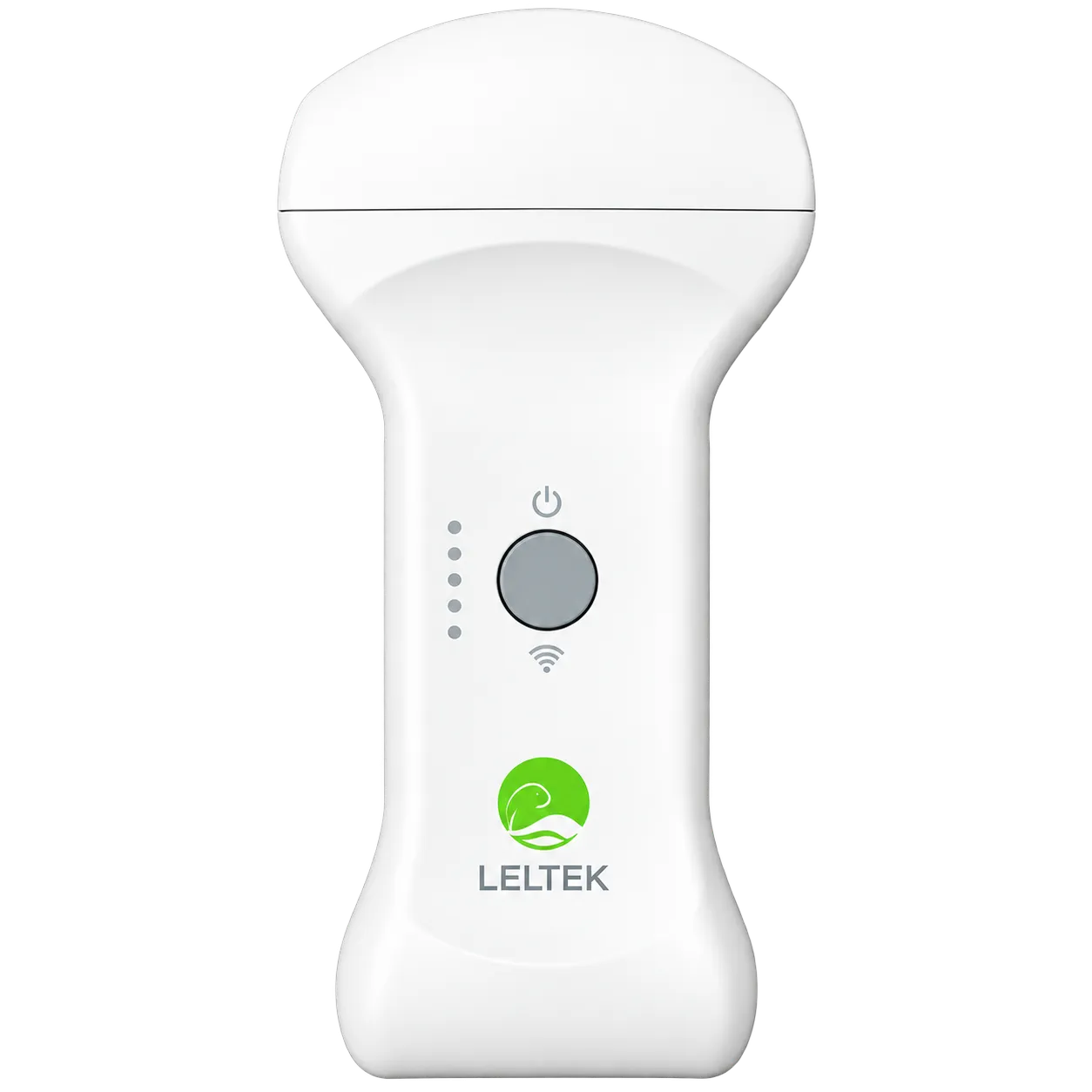
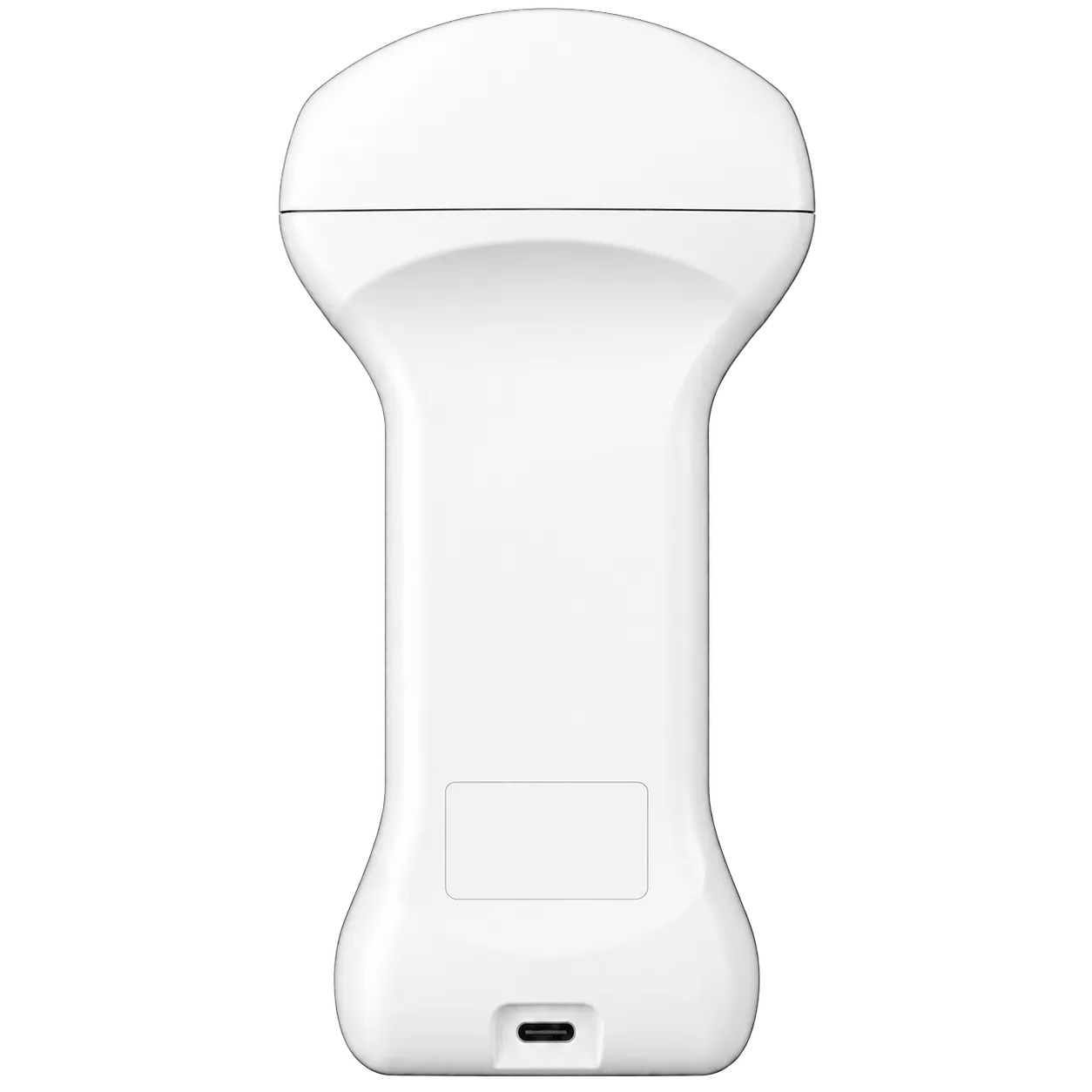
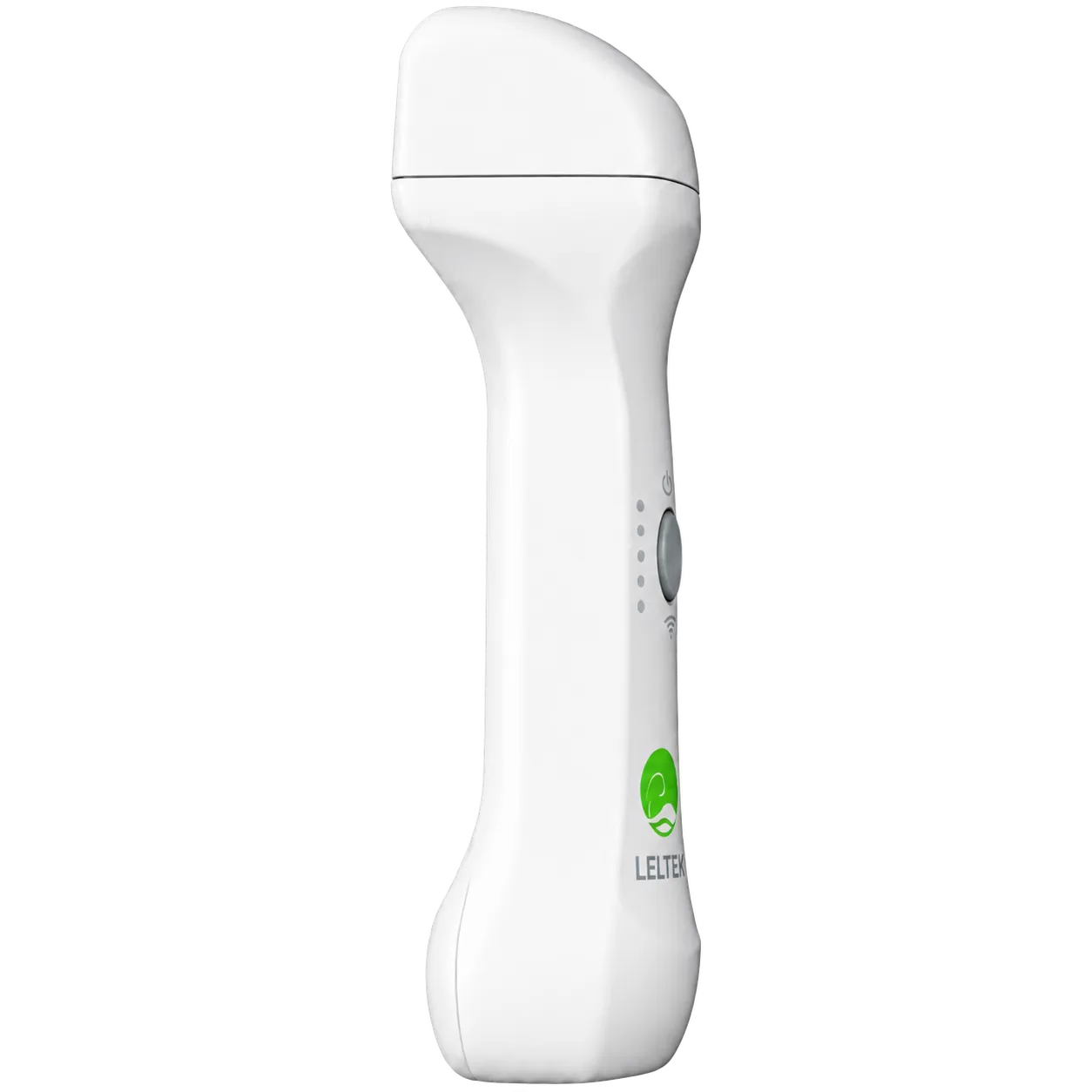
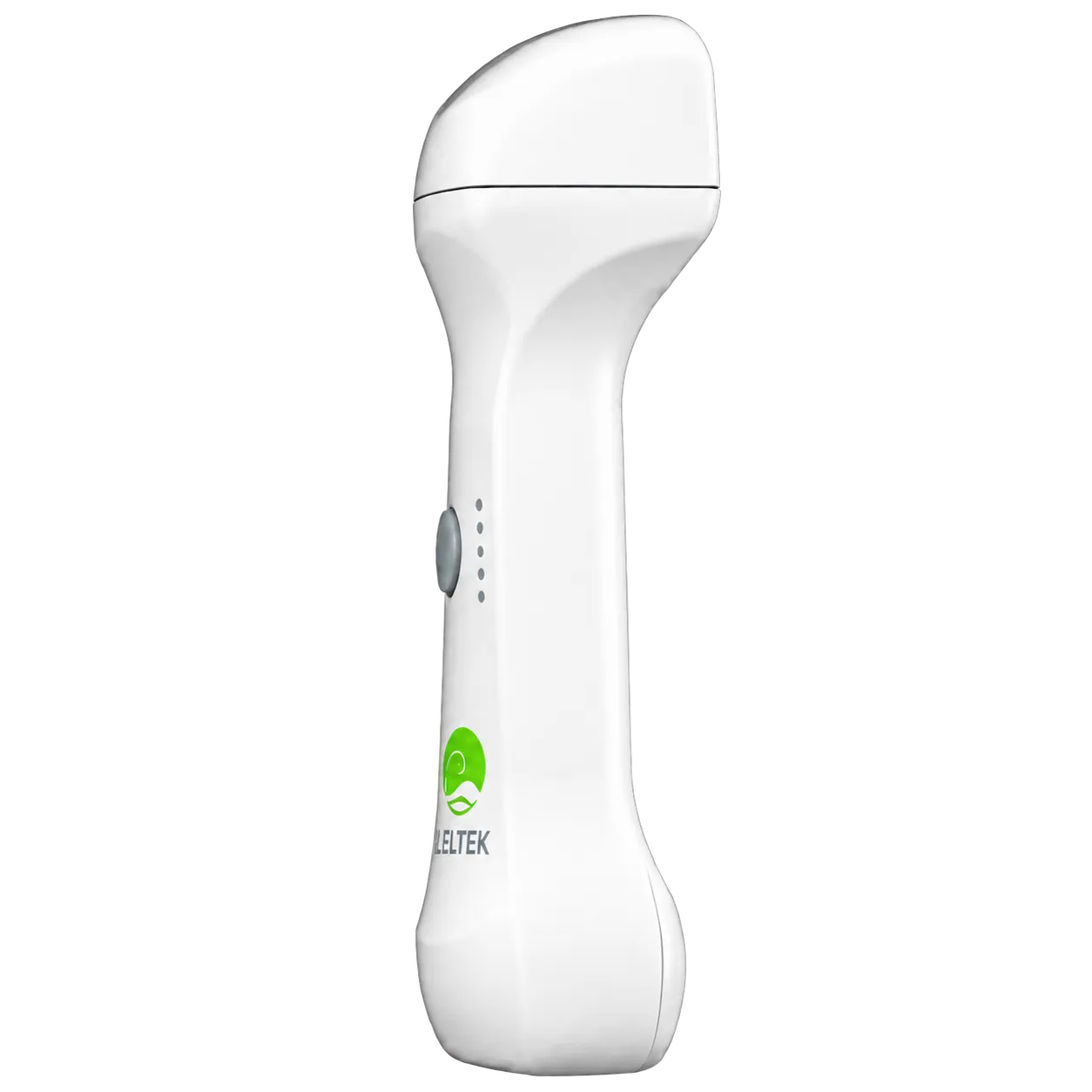
Leltek LX192LC
Convex at one end, linear at the other. Turn it over and keep scanning.
Go from a deep abdominal view to a vein just under the skin without reaching for another device. Convex and linear arrays of 192 elements each share one sealed, fanless body that streams to a phone, tablet or laptop.
Tell us what you need
A few quick details and you are done. Our projects team replies within one business day with availability, lead time and a quotation.
Leltek LX192LC
Product code: MDIE-MIEQ-3762
Leltek's LX192LC is a wireless handheld ultrasound probe designed around two 192-element arrays at opposite ends of a single housing. The convex face (C5-2) operates at 2.0 to 5.0 MHz across a 60° field to 30 cm, with a 0.326 mm pitch and an 8.0 cm elevation focus; its cardiac mode runs at 2.6 to 4.8 MHz over 80°. The linear face (L12-5) covers 4.2 to 12.5 MHz at a 0.2 mm pitch, with a 2.0 cm elevation focus and a published depth of 12.6 cm. B-mode and M-mode are standard, with colour, power and pulsed-wave Doppler as options. There is no phased array.
Putting both arrays on one body changes the choreography of a bedside scan. Turning the probe over moves the image from an abdominal window to superficial vessels and nerves, with nothing to fetch, pair or wipe in between. That counts during resuscitation, at line insertion and on ward rounds. It also concentrates risk: one battery, one link and one housing serve both faces, so one fault stops both.
The housing is rated IP68 under IEC 60529 and has no fan. It charges on a Qi wireless pad and lasts up to three hours per charge. The LeSONO app runs on iOS, Android and Windows over direct Wi-Fi, with abdominal, obstetric, FAST and cardiac presets on the convex face ,,and vascular, nerve and lung presets on the linear face.It includes tissuee harmonic imaging, needle enhancemen,t anda DICOM worklisd,with optionald DICOM exporl.
The probe measures 146 × 74 × 34 mm and weighs 278 g. Medigear.uk lists the LX192LC for business buyers worldwide. Request the declaration of conformity, Leltek's cleaning and disinfection instructions and a written list of included options from the seller before ordering.
Two arrays in one device
When the scan moves from abdomen to vein, the clinician turns the probe over. There is no second transducer to find, pair with the app or disinfect, which keeps the kit on a resuscitation trolley or in a ward bag down to one probe.
Deep and superficial range on one charge
The convex face reaches 30 cm at 2.0 to 5.0 MHz for abdominal and obstetric work, and the linear face runs to 12.5 MHz for vessels, nerves and small parts. Both draw on the same battery, so a session that mixes FAST, line insertion and a bladder check can run within one charge.
192 elements on each face
Leltek markets the 192 elements on each face for fine image detail, with a 0.2 mm pitch on the linear face and 0.326 mm on the convex face. Close element spacing supports near-field detail, although what a user sees depends on depth, target and technique as much as on element count.
Sealed, fanless housing
Leltek rates the housing IP68 and builds it without a fan, so there are no vents for gel or fluid to collect in. Leltek also states that water resistance declines with wear and excludes liquid damage from its warranty, so the published cleaning method still governs.
Runs on devices a department already owns
The LeSONO app runs on iOS, Android and Windows, so an existing tablet, phone or laptop can serve as the display. The cost moves into device management, because display devices need to meet Leltek's minimum specification and sit inside the organisation's device and data policies.
No app subscription
Leltek has said publicly that its app needs no additional subscription. The cost of ownership sits in the configuration bought on day one, including any Doppler and DICOM options, which makes the written quotation the document to hold against the budget.
Presets that match point-of-care protocols
FAST, bladder measurement, lung, nerves and peripheral vessels are built in as presets, and each preset can be customised in the app. A clinician trained in a focused protocol starts from a matching preset and adjusts from there.
Support for needle guidance
Needle enhancement with adjustable needle angle and gain sits among the image controls, and free-hand needle or catheter guidance is within Leltek's US indications for both faces. That supports ultrasound-guided line insertion and nerve blocks, where the evidence for 2D guidance is well established.
A documented regulatory trail
Leltek's documentation includes a US FDA 510(k) clearance (K243226), declared conformity with IEC 60601-1 and the ultrasound particular standard IEC 60601-2-37, and ISO 13485 among its listed standards. Procurement teams get a paper trail to review, and the GB conformity documents are issued by the manufacturer and provided by the seller.
Convex array, C5-2
The convex face operates from 2.0 to 5.0 MHz across a 60° field of view to a maximum depth of 30 cm. Its 0.326 mm pitch and 8.0 cm elevation focus suit abdominal, obstetric, gynaecological, renal and bladder work.
Cardiac mode on the convex face
In cardiac mode the convex face runs harmonic imaging at 2.6 to 4.8 MHz across an 80° sector, according to Leltek's datasheet. Leltek's US datasheet also lists tissue velocity imaging and tissue Doppler imaging for cardiac use, alongside cardiac measurements in B-mode and M-mode.
Linear array, L12-5
The linear face covers 4.2 to 12.5 MHz with a 0.2 mm pitch and a 2.0 cm elevation focus. Leltek publishes a maximum depth of 12.6 cm and the supplied specification sheet lists 18.8 cm, so the figure for the unit supplied is confirmed in writing at order.
192 elements per array
Each face carries 192 elements. The supplied sheet gives 64 transmit and 64 receive channels, while Leltek's US datasheet describes a platform supporting up to 128 transmit and 64 receive channels, and the configuration of the unit supplied is confirmed at order.
Imaging modes
Dual B-mode and M-mode are standard. Leltek lists colour Doppler, power Doppler and pulsed-wave Doppler as optional, with availability depending on region.
Image controls
Around 30 parameters can be adjusted, including frequency, tissue harmonic imaging, gain, TGC, multi-focus, dynamic range, persistence and the colour and pulsed-wave settings. The frame rate is adjustable up to 30 frames per second, with B-mode set to 15 by default.
Needle enhancement
Needle enhancement adjusts to the needle's angle and gain to help keep the shaft visible during in-plane procedures. Interventional guidance with a free-hand needle or catheter is listed in Leltek's US indications for both faces.
Preset library
The convex face carries presets for abdomen, difficult abdomen, renal, gynaecology, early and mid-to-late obstetrics, spleen, bladder measurement, FAST, transcranial Doppler and cardiac work. The linear face carries lung, peripheral vessel, thyroid, breast, superficial, MSK, carotid, ocular and nerve presets, and each one can be customised in the app.
Measurement package
Measurement tools cover distance, area, angle, volume and hip joint assessment, with obstetric formulas and reports based on LMP or EDD. Cardiac measurements run in B-mode and M-mode, and in pulsed-wave Doppler where that option is included.
Direct Wi-Fi connection
The probe links to its display device over direct Wi-Fi, using 802.11 a/b/g/n at 2.4 GHz and 5 GHz. The connection runs between the probe and the device, so scanning does not rely on a building network.
LeSONO app and display devices
Leltek's LeSONO app runs on iOS, Android and Windows. Leltek's user manual sets a minimum of 2 GB of memory and a 960 × 640 pixel display, and the supported-device list is issued with the quotation.
DICOM and image export
Images and clips export as JPG, PNG, BMP and MP4 files, and the app supports DICOM worklist and store. Leltek's US datasheet lists DICOM export as an option, and the supplied sheet states DICOM 3.0 support.
Battery and charging
Leltek's website quotes up to three hours of scanning, matching the supplied sheet, while its US datasheet gives 4.5 hours of working time and 72 hours on standby. Charging is wireless on a Qi pad, rated at 10 W on the supplied sheet and at 15 W with a 2.5-hour charge in the US datasheet.
IP68 housing
The housing is rated IP68 under IEC 60529 on Leltek's website and the supplied sheet, and Leltek's US datasheet records IP67 testing. Leltek excludes liquid damage from its warranty and advises against charging a wet probe.
Fanless build and controls
The probe has no fan and draws an average of 4.7 W while scanning in its default B-mode. Its hardware controls are a power key, a freeze key and status indicators.
Weight and dimensions
The probe weighs 278 g and measures 146 × 74 × 34 mm. That weight carries both arrays, the battery and the Wi-Fi electronics in one housing.
The LX192LC suits clinicians who move between deep and superficial scanning through the day and want both arrays in one wireless body. Its strengths are the range across two faces, support for needle guidance, a sealed fanless housing and a documented regulatory trail. Its limits are just as clear: cardiac views run on the convex face, the Doppler modes and DICOM export are listed as options, some figures differ between documents, and Leltek's US clearance excludes ambulance and aircraft use. Medigear.uk lists the LX192LC for business buyers worldwide and can arrange delivery, staff familiarisation and service cover. Request the declaration of conformity, Leltek's cleaning and disinfection instructions and a written list of the included options from the seller at quotation.
Frequently Asked Questions
Everything buyers need to know about sourcing medical equipment through MediGear.
Leltek describes the probe as convex, linear and cardiac in one device, but it carries two physical arrays, not three. The cardiac mode runs on the convex face, using harmonic imaging at 2.6 to 4.8 MHz across an 80° sector in Leltek's datasheet. Subcostal views suit a convex footprint, while parasternal and apical windows sit between the ribs, where a face that wide is harder to seat. The probe is a poor fit for a service whose main workload is full transthoracic echocardiography, and Medigear.uk can point buyers with that caseload to an alternative specification.
B-mode and M-mode are standard. Leltek's published specification marks colour Doppler, power Doppler and pulsed-wave Doppler as optional and notes that availability depends on region, and its US datasheet lists DICOM export as an option. Leltek has also described automated tools across its handheld range, including automatic gain, bladder volume, ejection fraction and IMT measurement. Establish which Doppler modes, the DICOM export and the automated tools are in the quoted configuration before order, since vascular and cardiac work leans on colour and spectral Doppler.
The probe connects over direct Wi-Fi, on 802.11 a/b/g/n at 2.4 GHz and 5 GHz, to iOS, Android and Windows devices running Leltek's LeSONO app. Leltek's user manual sets minimum requirements for the display device, including 2 GB of memory and a screen resolution of at least 960 × 640 pixels, and the supported-device list is issued with the quotation. The buyer supplies the display device. Leltek has said publicly that the app needs no additional subscription, so the running cost sits in the options chosen at purchase and in the devices used to view the images.
Leltek's website and the supplied specification sheet both give up to three hours of scanning per charge, while Leltek's US datasheet quotes 4.5 hours of working time and 72 hours on standby. Plan shifts around the lower figure. Charging is wireless on a Qi pad, which the supplied sheet rates at 10 W and the US datasheet at 15 W, with a full charge in about 2.5 hours. Leltek advises against charging a wet probe, so it should dry fully after cleaning before it goes back on the pad.
Leltek's website and the supplied sheet rate the housing IP68 under IEC 60529, and Leltek's US datasheet records IP67 testing. Leltek adds that water resistance is not permanent and can decline with normal wear, and it excludes liquid damage from its warranty, so the cleaning and drying method in the user guide governs. UK practice follows the Spaulding classification: scanning intact skin is non-critical, while contact with non-intact skin or use during needle procedures calls for a probe cover and a higher level of decontamination under local policy and the SCoR and BMUS Guidelines for Professional Ultrasound Practice. Establish which disinfectants and reprocessing systems Leltek validates for the probe before it joins a pathway that includes needle-guided procedures.
Leltek's website and its US datasheet give the linear face a maximum depth of 12.6 cm, while the supplied specification sheet lists 18.8 cm. The difference matters for deeper vessels and nerve blocks in larger patients, where the extra range decides whether the linear face reaches the target at all. The figure for the unit supplied is confirmed in writing at order. Until then, 12.6 cm is the safer planning figure.
A 2018 Cochrane review of 34 studies and 8,635 participants found that point-of-care ultrasound for blunt chest and abdominal trauma had a pooled sensitivity of 74% and a specificity of 96%. For abdominal injuries the sensitivity fell to 68%, and in children across all injury types it was 63%. The authors concluded that a positive scan helps guide treatment, but a negative abdominal scan does not rule out injury and needs confirmation with a reference test such as CT. A negative FAST result on this probe still calls for that confirmation.
A Cochrane review of internal jugular vein catheterisation found that two-dimensional ultrasound guidance cut total complications by 71% and inadvertent arterial puncture by 72%, and raised first-attempt success by 57%, when compared with anatomical landmarks. The benefit in that review came from two-dimensional imaging, which is standard on this probe. In the UK, NICE TA49 recommends 2D imaging ultrasound as the preferred method for elective insertion of central venous catheters into the internal jugular vein in adults and children, with training to competence for everyone who uses it. The linear face, its vessel presets and needle enhancement are built for this task.
Leltek's US clearance covers use by qualified physicians and healthcare professionals in environments where trained professionals provide care, and it excludes emergency medical service, ambulance and aircraft use. On those terms, wards, emergency departments, theatres, clinics and community settings sit within scope, and pre-hospital deployment sits outside it. The probe has no endocavity array, so transvaginal and transrectal scanning are outside what it can do. The intended purpose for the destination market is set out on the declaration of conformity.
Diagnostic ultrasound equipment is typically Class IIa under UK MDR 2002, or higher depending on use, and the class is confirmed against the declaration of conformity at order. Supply into Great Britain needs a UKCA mark or a CE mark accepted under current GB arrangements, a UK Responsible Person for a manufacturer based outside the UK, and registration with the MHRA. Leltek's documentation for this model shows US FDA 510(k) clearance (K243226) and Brazilian certification marks, and its declared standards include ISO 13485. Request the declaration of conformity and the supporting certificates from the seller at quotation.
In the UK, sonographer is not a protected title, so governance rests on the professional registration of the clinician scanning and a local competency framework. Frameworks from the Royal College of Emergency Medicine and the Intensive Care Society, together with the SCoR and BMUS guidelines, set expectations for training, supervision and image storage, and NICE TA49 asks for training to competence before ultrasound-guided central line insertion. Images held on a phone or tablet fall under the organisation's data protection policy, which is why DICOM export to PACS often decides how a department deploys handheld scanning. Medigear.uk can arrange staff familiarisation at delivery.
Warranty terms are set by the seller at quotation, and Leltek excludes liquid damage from its own warranty. Both arrays sit in one sealed body, so any repair takes the convex and linear faces out of service together. A department that scans every shift may want a second unit or a service agreement in place. Medigear.uk can arrange service cover and spares at quotation.