
Introduction
A sports medicine clinic helps active people prevent, treat and recover from injury. It aims to get them safely back to sport. The equipment spans assessment, diagnostics, treatment and rehabilitation. Setting one up means fitting out an assessment and treatment area, a rehab space, and recovery facilities. The goal is to move each person from injury back to performance.
This guide covers the full sports medicine clinic equipment list by area. It then walks through the infrastructure, the planning sequence, and the approval and compliance points. Use it for a new clinic, an expansion, or added capacity. It focuses on the equipment and space decisions. Where clinical, sports-science and safety input is essential, it says so.
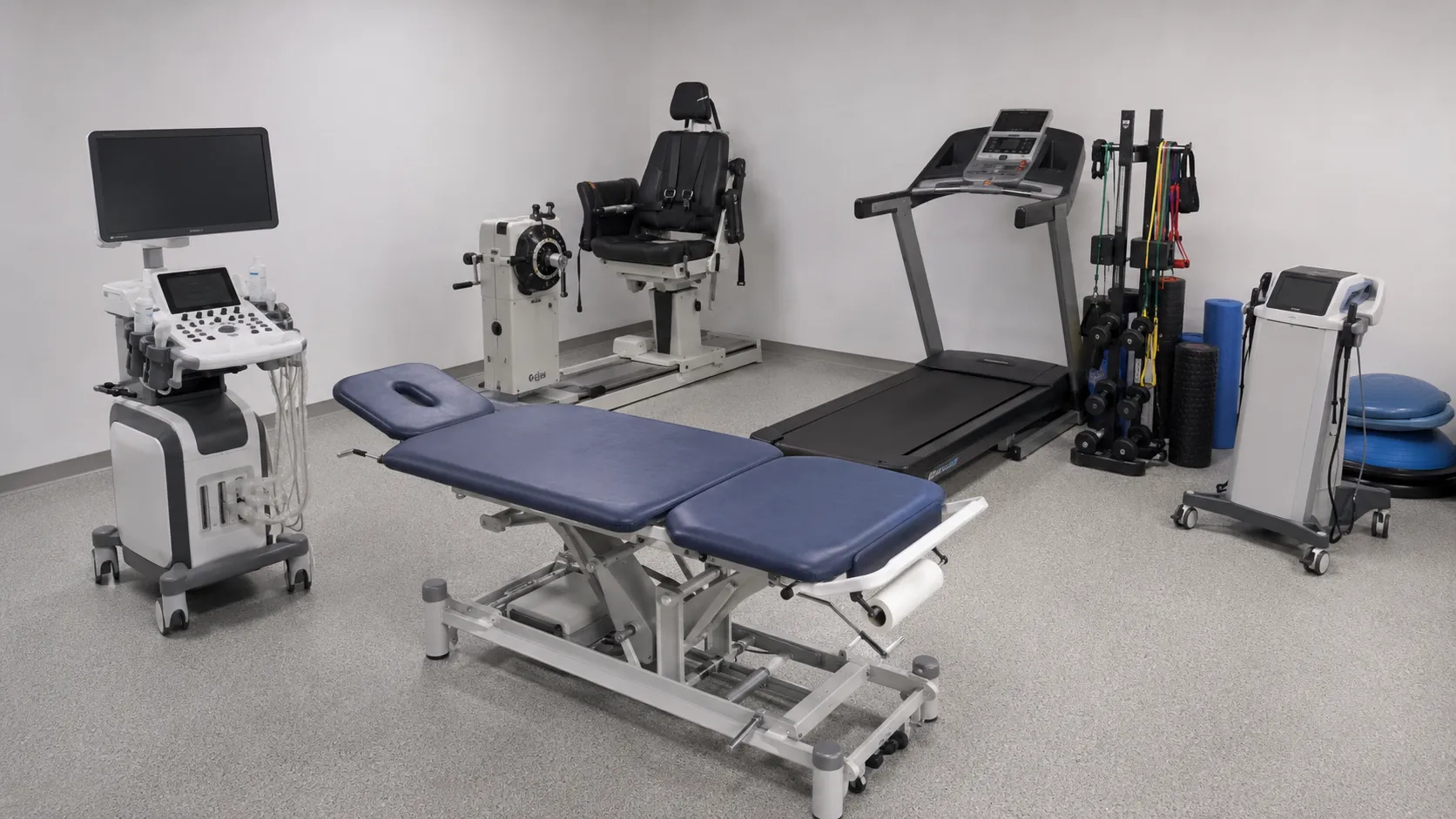
Sports medicine sits between the clinic and the gym. It treats injury, but it also measures performance and guides a safe return to sport. That gives it a particular mix of equipment. Diagnostics such as musculoskeletal ultrasound identify the problem. Treatment tools such as shockwave and electrotherapy support healing. A rehab gym rebuilds strength and movement. Recovery equipment helps the body bounce back. The clinic is planned around a clear journey, from assessment through treatment and rehab to return.
In practice, the decisions that matter most are about the clinic's focus and the space it needs. A clinic screening athletes needs strong diagnostics. One rehabilitating serious injuries needs a full gym and gait space. So match the equipment to what you actually do. Room to move matters safely, just as it does in rehabilitation. Standardise and choose durable equipment, because it is used hard. Plan assessment, treatment, rehab and recovery as one journey, and the clinic returns people to sport well.
The short version — what every sports medicine clinic is built around
Strip it back, and a sports medicine clinic needs three things. A way to assess and diagnose injury. Tools to treat it. And a rehab and recovery space to return people to sport.
-
Assessment & diagnostics — tools to examine, measure and diagnose injury, including ultrasound.
-
Treatment — electrotherapy, shockwave and manual-therapy equipment to support healing.
-
Rehab & recovery — a gym, gait and recovery equipment to rebuild strength and return to sport.
Sports medicine clinic equipment by area
-
Assessment & biomechanics. Examination couches, measurement tools and, where offered, biomechanical and movement analysis. These pinpoint the problem and track progress. Good baseline data guides the whole plan.
-
Diagnostics. Musculoskeletal ultrasound and screening tools such as ECG for pre-participation checks. They confirm the diagnosis and support safe activity. Ultrasound is quick and repeatable at the bedside.
-
Treatment. Electrotherapy, therapeutic ultrasound and shockwave, plus manual-therapy support. Each has clear indications, and each supports healing. Used well, they speed recovery.
-
Rehab gym. Resistance and cardiovascular equipment, free weights and mats. This rebuilds strength and conditioning after injury. Progress is measured, not guessed.
-
Gait, balance & movement. Treadmills, balance equipment and functional training kit. These retrain movement and prepare a safe return to sport. Return is judged on function, not just time.
-
Recovery. Cryotherapy, compression and heat and cold therapy, where offered. These help the body recover between sessions. Recovery is part of training, not an afterthought.
-
Consumables & supports. Tapes, braces, electrodes and supports are used in treatment and given to patients. They keep people moving between visits. Patients often continue their programme at home. Clear guidance keeps them on track.
-
Space & infrastructure. Accessible, non-slip flooring and room to move safely. Reliable power and easy cleaning keep a busy clinic running. Storage keeps equipment tidy and ready. A calm layout helps a busy list run.
Sports medicine clinic equipment checklist
|
Section |
Equipment |
Notes |
|
Assessment |
Couches; measurement; movement analysis |
Pinpoint the problem |
|
Diagnostics |
MSK ultrasound; screening ECG |
Confirm and screen |
|
Treatment |
Electrotherapy; shockwave; manual therapy |
Support healing |
|
Rehab gym |
Resistance; cardio; weights |
Rebuild strength |
|
Gait/movement |
Treadmill; balance; functional kit |
Return to sport |
|
Recovery |
Cryotherapy; compression; heat/cold |
Recover between sessions |
|
Consumables |
Tape; braces; supports |
Keep moving between visits |
|
Space |
Non-slip flooring; room to move |
Busy clinic |
Scale each area to your focus and caseload. A screening and injury clinic and a full rehabilitation-led practice differ widely in gym, gait and recovery equipment.
Planning a new clinic?
We'll help you equip it end-to-end. Tell us your focus, caseload, budget and market. We'll build the equipment list, balance new and refurbished items, and make sure everything is compliant and supported.
No pressure, no obligation. → Talk to the team
What else does setting up a sports medicine clinic involve
-
Match equipment to your focus. A screening clinic and a rehab-led clinic need different kit. So decide what you do first, then equip for it, rather than buying everything. Buying it all wastes money and space.
-
Space to move. Rehab and return-to-sport work need room and safe flooring. So the space shapes what the clinic can deliver, as much as the equipment does. Cramped clinics limit what you can offer.
-
Electrotherapy and shockwave safety. These treatments have contraindications and safety rules. So equipment choices should match staff training, and machines need regular electrical checks. Screen for contraindications first.
-
Records and outcomes. Assessment, treatment and progress are worth tracking. So plan practice software that captures outcomes and supports return-to-sport decisions. Good data shows what actually works.
-
Consumables, staffing and service. Tapes, supports and electrodes, trained clinicians, and service and safety contracts all shape the running model. Tape and electrodes run out fast. The purchase is only the start.
Setting up a sports medicine clinic, step by step
-
Define your focus and caseload. Decide whether you screen, treat, rehabilitate, or all three.
-
Confirm the space and infrastructure. That means treatment rooms, a rehab gym, flooring and access. Start work early.
-
Build the equipment list by area, sized to your caseload, with the diagnostics, treatment and rehab you need.
-
Decide new versus refurbished per item. Plan consumable and service contracts alongside.
-
Install and commission everything. Arrange electrical safety checks, and prepare the team before opening.
Space fit-out and safety checks take time. Build them into the schedule, so the clinic opens safely rather than only being equipped.
Budget and procurement
Sports medicine clinics mix durable equipment and everyday consumables. So the purchase price is only part of the story. Diagnostics, treatment and rehab kits all carry running and service costs. A common approach is to buy new for high-throughput core units and certified refurbished for ancillary equipment. Because these are regulated devices, check the device risk class and the certification for your market. Match diagnostics, treatment and rehab to your focus. A screening clinic and a rehabilitation-led one are then each equipped for the work they actually do.
Approval and accreditation by region
|
Region |
Regulator |
Device requirement |
|
United Kingdom |
UKCA mark (CE accepted to 2028–2030) |
|
|
European Union |
CE marking under the MDR |
|
|
United States |
FDA clearance or approval |
|
|
Gulf (GCC) |
SFDA & GCC bodies |
National registration / GCC conformity |
|
South Africa |
Medical device licensing |
Diagnostic and treatment devices are regulated, so confirm each is approved for your market. Ultrasound and electrotherapy also carry safety requirements, so account for these alongside device approval. For quality standards and clinical guidance, the World Health Organisation and NICE are useful references. If you're equipping a sports medicine clinic, our buyer hub sets out how to purchase with confidence.
More from Business
-
Buyers — source a full sports medicine clinic equipment package for your practice.
-
Suppliers — list your equipment and reach buyers worldwide.
-
Advertise — promote your products and services to a clinical audience.
-
Business overview — explore everything MediGear offers healthcare organisations.
Disclaimer
This article is for general information only. It is not clinical, medical, procurement, engineering or regulatory advice. Sports medicine clinic design, equipment, treatment safety and accessibility requirements vary by country, focus and facility, and change over time. The checklist is a planning aid, not a specification. Always work with qualified clinical, biomedical, facilities and procurement professionals. And confirm every device is approved for your market — for example, UKCA, CE, FDA, SFDA/GCC or SAHPRA. Requirements change, so check the current position before you buy. medigear.uk accepts no liability for actions taken on this content.
Frequently Asked Questions
A sports medicine clinic needs assessment couches and measurement tools, diagnostics such as musculoskeletal ultrasound, and treatment equipment such as electrotherapy and shockwave. It also needs a rehab gym, gait and movement equipment, and recovery tools such as cryotherapy or compression. The exact mix depends on whether the clinic screens, treats, rehabilitates, or all three.
The main areas are assessment and biomechanics, diagnostics, treatment, the rehab gym, gait and movement, recovery, consumables and supports, and the supporting accessible space. These are planned together as one journey, from assessment through treatment and rehab to a safe return to sport.
Costs depend on your focus, the diagnostics you install, and the size of the rehab space, so there is no single figure. Weigh the purchase price of durable items such as ultrasound and gym equipment against running and service costs over their life.
Yes, for many items. Gym, treadmill and some diagnostic equipment can often be certified refurbished, while some treatment devices are bought new. Every device must be approved for your market and fully supported with service, safety checks and consumables, whether new or refurbished.
It varies with the size and whether building works are needed, but planning, fitting out and equipping typically takes a few months. Space fit-out, accessible flooring and electrical safety checks are the parts most often underestimated, so build them into the schedule.
A sports medicine clinic needs treatment rooms, a rehab gym with room to move, accessible and non-slip flooring, reliable power for equipment, and easy cleaning. This space shapes what the clinic can deliver as much as the clinical equipment, because rehabilitation and return-to-sport work need room to move safely.
Equip your sports medicine clinic end-to-end.
From assessment and musculoskeletal ultrasound to shockwave, rehab and recovery equipment, we help clinics across the UK, Europe, the US, the Gulf and South Africa build sports medicine clinics — compliant, supported and on budget.