
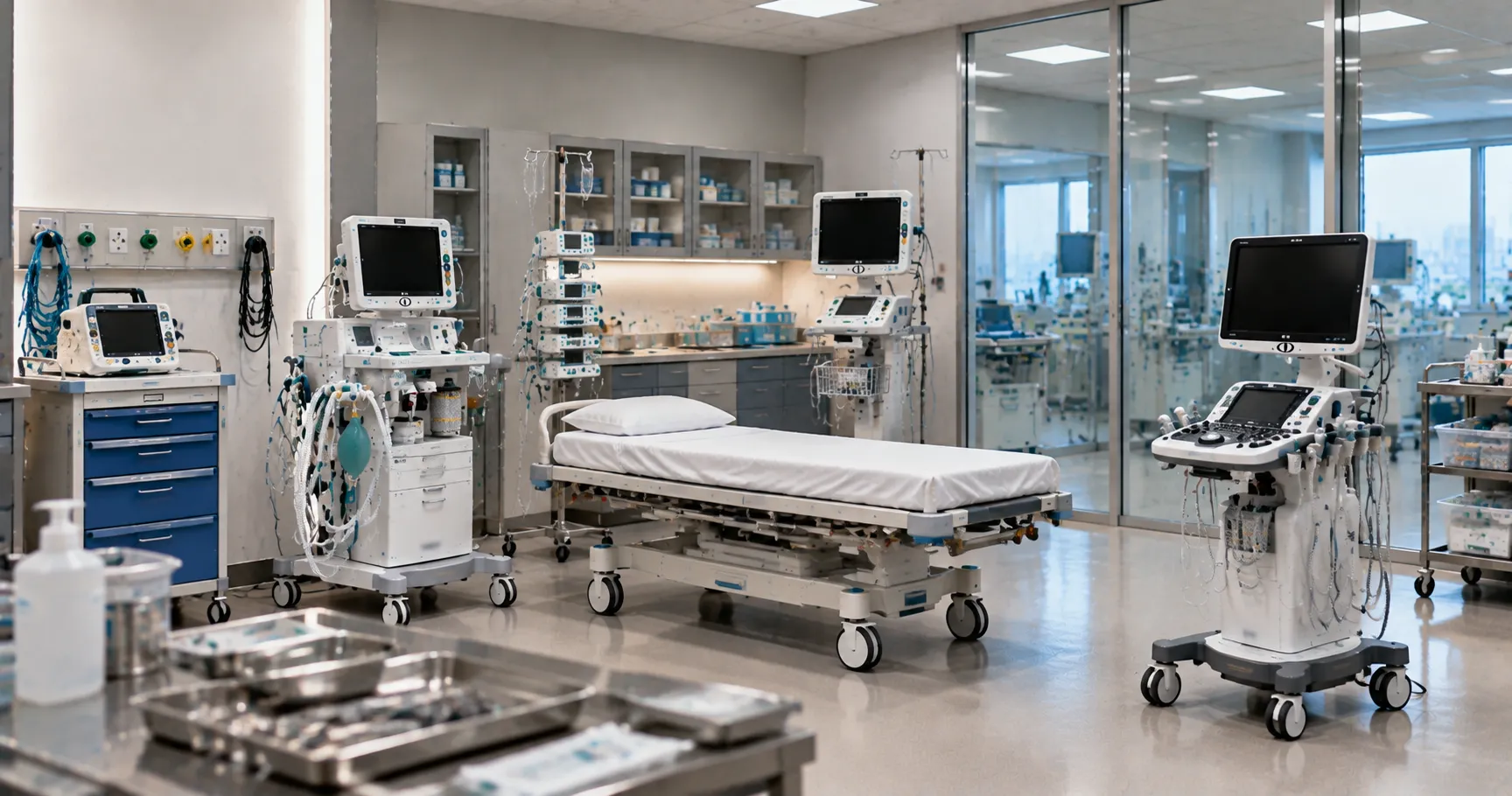
Introduction
A well-chosen device is not the same as a safe one. Equipment can be correctly specified and properly bought, then still put a patient at risk if it is commissioned badly, handled by staff who were never trained on it, or left uncalibrated until it drifts out of tolerance. The clinical work begins where the buying ends.
These clinical guides cover the second half of the story — getting a device ready for the ward, keeping it safe in daily use, and maintaining it throughout its working life, whatever the speciality. Use them when you commission a new service, bring in an unfamiliar device, or tighten up how an existing unit runs.
The short version — using medical equipment safely
Boil it down, and clinical safety rests on three habits, kept up every day rather than ticked off once: prove the device works, train the people who touch it, and keep it maintained.
-
Commission and check — acceptance-test the device and confirm it performs to specification before it ever reaches a patient.
-
Train and sign off — make sure every operator, on every shift, is competent on the equipment they use.
-
Maintain and watch — keep calibration, cleaning and servicing on schedule, and act on safety alerts as they land.
Clinical guidance by area
-
Installation & commissioning — safe siting, connection to power and gases, and acceptance testing before first clinical use.
-
Safe operation & daily checks — pre-use checks, alarm settings and the routine that catches a fault before a patient does.
-
Decontamination & infection control — cleaning, disinfection and single-use discipline between patients.
-
Calibration & performance — keeping readings accurate and confirming a device stays within tolerance.
-
Planned maintenance & servicing — scheduled service, parts replacement and the records that prove it happened.
-
Training & competency — structured familiarisation, named superusers and refreshers when staff turn over.
-
Safety alerts & incident reporting — acting on field safety notices and feeding problems back through the right channel.
-
Speciality-specific use — the particular demands of theatre, critical care, imaging, laboratory and other settings.
Clinical readiness checklist
|
Area |
Key check |
When |
|
Commissioning |
Acceptance testing passed and recorded |
Before first use |
|
Daily use |
Pre-use safety check completed |
Every use/shift |
|
Decontamination |
Cleaned and decontaminated to protocol |
Between patients |
|
Calibration |
Within calibration date and tolerance |
Per schedule |
|
Maintenance |
Planned service completed and logged |
Per schedule |
|
Training |
Operator competency signed off |
Per staff member |
|
Safety alerts |
Field safety notices checked and actioned |
Ongoing |
|
Records |
Logbook and service history maintained |
Ongoing |
A useful rule of thumb: no device enters clinical use until it has been commissioned, the people using it are signed off, and a cleaning and maintenance schedule is already running.
"Setting up a clinical service?"
We'll help you get it right from the start. Tell us the specialty and the equipment involved — we'll help you source verified, compliant devices and point you towards the guidance for setting them up and running them safely.
No pressure, no obligation. → Talk to the team
What else does clinical readiness involve
-
Governance and responsibility. A medical-device policy, named leads and clear accountability for every device in service.
-
Environment and utilities. Resilient power, medical gas, ventilation and space that let a device work safely, not just switch on.
-
Connectivity and data. Safe integration with monitoring, alarms and the electronic record, so information moves without error.
-
Consumables and spares. The right accessories, in date and in stock, so a device is ready the moment it is needed.
-
Decommissioning. Safe retirement at end of life, including data wiping and responsible disposal.
Getting a device ready for clinical use, step by step
-
Confirm the device is approved and intended for the clinical use you have in mind.
-
Acceptance-test it against the specification and record the results.
-
Set up cleaning, calibration and maintenance schedules before go-live.
-
Train and sign off every operator who will use it.
-
Register the device, check for outstanding safety alerts, and open its logbook.
Put training and maintenance in place before the first patient, not after — a device is only ever as safe as the system running around it.
Budget and procurement
Clinical suitability should lead the decision, not follow it. Choose devices that match the caseload and the skills of the team who will operate them, that carry the certification valid for your market, and that arrive with the training, servicing and spares to stay safe in everyday use. Where clinical need allows, weigh new against certified refurbished on lifespan, warranty and support rather than on first impressions. Getting these clinical and support factors right at the outset keeps a device safe and serviceable throughout its working life.
Approval and standards by region
|
Region |
Regulator |
Requirement |
|
United Kingdom |
UKCA marking (CE accepted to 2028–2030) |
|
|
European Union |
CE marking under EU MDR 2017/745 |
|
|
United States |
510(k) clearance or PMA approval |
|
|
Gulf (GCC) |
SFDA & GCC bodies |
National registration / GCC conformity |
|
South Africa |
Medical device licensing |
For clinical best practice and device safety, bodies such as NICE and the World Health Organisation publish valuable guidance, and national regulators issue field safety notices worth monitoring. If you are equipping a service, our buyer hub explains how to source compliant devices confidently.
More from Business
-
Buyers — source and import compliant, ready-to-use equipment for your clinic, hospital or care service.
-
Suppliers — list and export your medical equipment to healthcare providers worldwide.
-
Advertise — put your products and services in front of a clinical audience.
-
Business overview — see everything MediGear offers healthcare organisations.
Disclaimer
This article is for general information only and does not constitute clinical, medical, engineering or regulatory advice. Clinical use, setup, decontamination, maintenance, and standards vary by device, speciality, facility, and country, and change over time. This guidance is a general aid, not a substitute for a manufacturer's instructions for use — always follow the device manual, work with qualified clinical, biomedical-engineering and infection-control professionals, act on current safety alerts, and confirm that every device is approved for your market (for example, UKCA, CE under EU MDR, FDA, SFDA/GCC or SAHPRA). medigear.uk accepts no liability for actions based on this content.
Set up your service safely, from day one.
From commissioning and safe setup to calibration, maintenance and staff training, we help hospitals and clinics run medical equipment safely and confidently. Our team supports healthcare providers across the UK, Europe, the US, the Gulf and South Africa — verified, compliant and fully backed at every step.
Frequently Asked Questions (FAQ)
They are practical references for using medical equipment safely once it arrives — covering commissioning, daily checks, decontamination, calibration, maintenance and staff competency across specialities. They pick up where buying leaves off, so a device is set up and run safely rather than delivered.
Confirm it is approved and intended for your clinical use, acceptance-test it against the specification and record the results, then set up cleaning, calibration and maintenance schedules. Train and sign off every operator before first use, and open the device logbook so its history is tracked from day one.
It depends on the device and the manufacturer's instructions for use, so always follow the manual and your local policy. As a rule, keep calibration and planned maintenance on a documented schedule, run a pre-use safety check every time, and never let a device drift past its calibration date in clinical use.
Responsibility is shared, but it should be clearly assigned. A medical-device policy, named leads and biomedical-engineering support set the framework, while every operator remains accountable for the pre-use checks and safe handling of the device in front of them.
Monitor the field safety notices and alerts issued by your national regulator — in the UK, the MHRA — and make sure they reach the teams using the affected devices. Build a simple route for checking, actioning and recording alerts so nothing is missed.
MediGear is a medical equipment distributor and marketplace, not a clinical advisor. These guides are general information, not a substitute for the manufacturer's instructions or qualified clinical and biomedical-engineering input. We can, however, help you source verified, compliant devices and point you towards the right guidance.