
Introduction
A school health centre looks after the health of pupils during the school day. It handles minor illness and injury, screening, and everyday care of chronic conditions. So its equipment is child-appropriate, safe and reassuring. It centres on first aid, basic assessment, and a calm space to rest or recover. Setting one up means fitting out a welcoming clinical space that keeps children safe and supports their health and learning.
This guide covers the full school health centre equipment list by area. It then walks through the infrastructure, the planning sequence, and the approval and compliance points. Use it for a new centre, an upgrade, or added capacity. It focuses on the equipment and safeguarding decisions. Where clinical, school-nursing and safeguarding input is essential, it says so.
A school health centre is shaped by who it cares for. Its patients are children and young people, so everything is chosen for their age and their comfort. Most of its work is minor illness and injury, plus screening and health promotion. But it also supports pupils with chronic conditions such as asthma, allergies or diabetes. Those pupils rely on it daily. So it holds the right equipment and emergency provision for those needs. Safeguarding runs through everything, and the space is designed to feel safe and caring rather than clinical or frightening.
In practice, the decisions that matter most are about age-appropriate equipment, chronic-condition care and safeguarding. Choose equipment sized and suited for children, since adult kit does not always fit. Plan for the conditions your pupils actually have, so asthma, allergy and diabetes emergencies can be managed. Store medicines safely, and keep clear, confidential records. Make the space calm and reassuring. Plan first aid, chronic-condition care and a safe environment together, and the centre supports pupils' health and their day at school.
The short version — what every school health centre is built around
Strip it back, and a school health centre needs three things. First aid and basic assessment. Care for common chronic conditions. And a safe, calm, child-appropriate space.
-
First aid & assessment — equipment for minor illness and injury in children.
-
Chronic-condition care — provision for asthma, allergies, diabetes and emergencies.
-
Safe, caring space — a calm, safeguarding-aware environment for pupils.
School health centre equipment by area
-
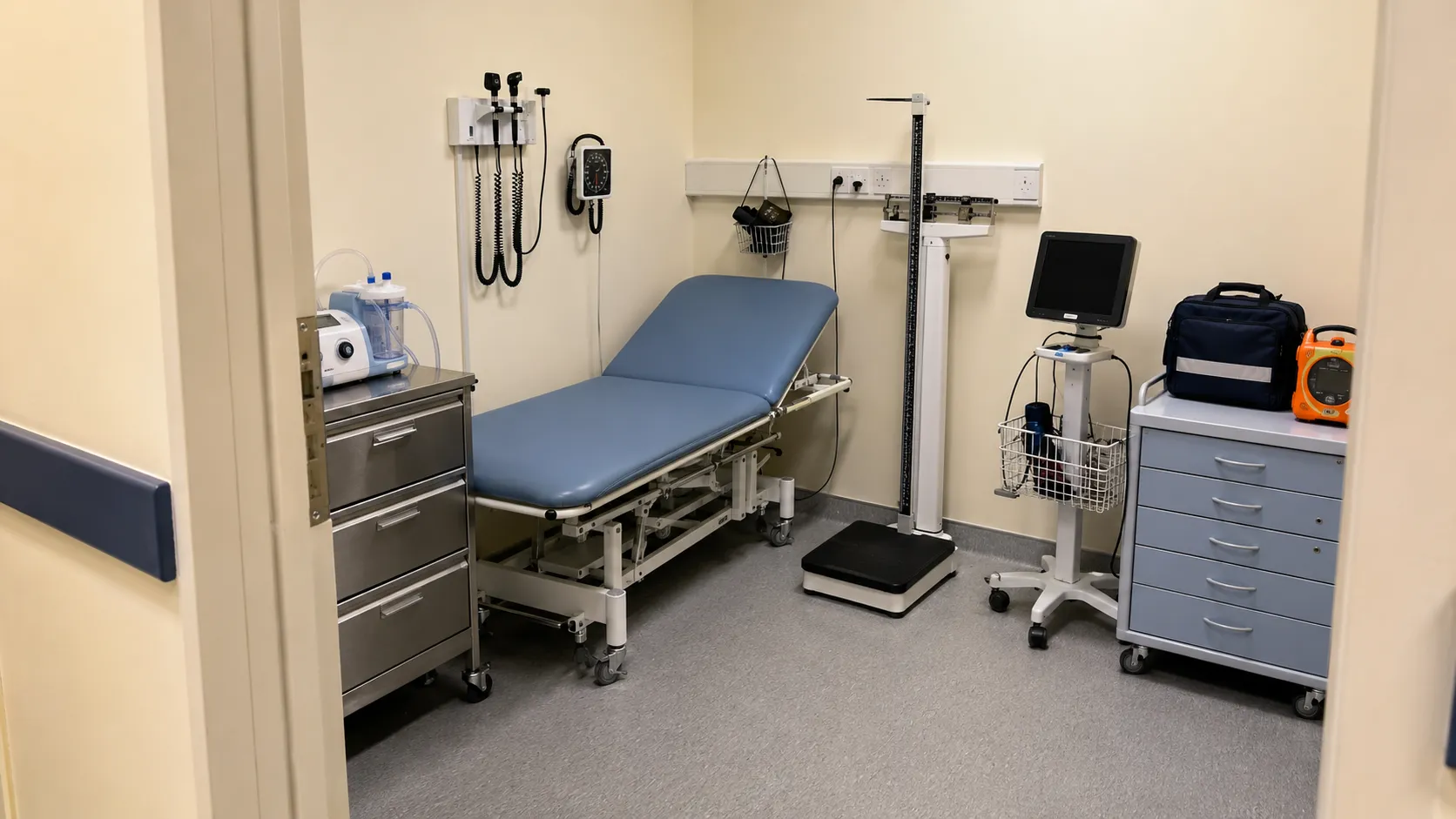
First aid & treatment. First-aid supplies, dressings, and basic treatment equipment for minor injuries. Bumps and scrapes are the daily work. Everything is child-appropriate and sized for children.
-
Basic assessment. Thermometers, blood-pressure monitors sized for children, and scales. These check a pupil quickly. Simple tools suit most needs. A quick check reassures.
-
Chronic-condition care. Provision for asthma, allergy and diabetes, including emergency care. Some pupils live with these conditions. The centre must be ready for a flare. An emergency kit is close at hand.
-
Emergency provision. A defibrillator and emergency equipment, with paediatric provision. Serious events are rare but possible. The centre responds first.
-
Rest & recovery. A calm rest area with a couch or bed for pupils who feel unwell. Some just need to lie down. A quiet space helps them recover.
-
Medicine storage. Safe, secure storage for pupils' medicines, including a small cold chain. Medicines are controlled and recorded. Safety comes first.
-
Records & safeguarding. Confidential records and safeguarding-aware systems. Children's care needs particular care. Records support both health and protection. Confidentiality is maintained.
-
Infrastructure. A welcoming, accessible, private space, reliable power, and hand hygiene throughout. The room should feel safe, not clinical.
School health centre equipment checklist
|
Section |
Equipment |
Notes |
|
First aid |
Supplies; dressings; treatment |
Child-appropriate |
|
Assessment |
Thermometers; child BP; scales |
Quick checks |
|
Chronic care |
Asthma; allergy; diabetes |
Ready for a flare |
|
Emergency |
Defibrillator; paediatric kit |
Respond first |
|
Rest |
Couch/bed; calm area |
Recover quietly |
|
Medicines |
Safe storage; cold chain |
Controlled, recorded |
|
Records |
Confidential; safeguarding |
Health and protection |
|
Infrastructure |
Welcoming; private; hygiene |
Safe and caring |
Scale each area to your pupils and their needs. A small primary school and a large secondary or boarding school differ widely in provision and chronic-condition care.
Planning a health centre?
We'll help you equip it end-to-end. Tell us your pupils, needs, budget and market. We'll build the child-appropriate equipment list, balance new and refurbished items, and make sure everything is compliant and supported.
No pressure, no obligation. → Talk to the team
What else does setting up a school health centre involve
-
Age-appropriate equipment. Adult equipment does not always fit children. So the centre is equipped with kit sized and suited for the ages it cares for.
-
Ready for chronic conditions. Some pupils live with asthma, allergies, or diabetes. So the centre plans for the conditions its pupils actually have, ready for an emergency. An asthma attack cannot wait.
-
Safeguarding runs through it. Caring for children needs particular care. So safeguarding shapes the records, the space and the way the centre works, not just one policy. It is woven through.
-
A calm, caring space. A frightened child recovers less well. So the space is designed to feel safe and reassuring, not clinical or intimidating. A calm child heals better, and reassurance matters.
-
Consumables, staffing and service. First-aid consumables, trained school-nursing staff, and safe medicine handling all shape the running model. Records must stay confidential. The purchase is only the start.
Setting up a school health centre, step by step
-
Define your pupils and their needs. Decide the first aid, chronic-condition and screening provision required.
-
Confirm the space and safeguarding. Plan a welcoming, private, safe environment and records. Start works early.
-
Build the equipment list by area, child-appropriate throughout, sized to your pupils.
-
Decide new versus refurbished per item. Plan safe medicine storage, consumables and service alongside.
-
Install and set up everything. Put records and safeguarding in place, and train staff before opening.
Safe medicine storage and records take time to set up. Build them into the schedule, so the centre is safe and ready from day one rather than only being equipped.
Budget and procurement
A school health centre is consumable-led rather than heavy on major equipment. So the purchase price is only part of the story. First-aid and treatment supplies carry ongoing costs. A common approach is to buy new for high-throughput core units and certified refurbished for ancillary equipment. Because these are regulated devices, check the device risk class and the certification for your market. Match provision to your pupils and their needs. A primary school and a large secondary or boarding school are then each equipped for the care they actually give.
Approval and accreditation by region
|
Region |
Regulator |
Device requirement |
|
United Kingdom |
UKCA mark (CE accepted to 2028–2030) |
|
|
European Union |
CE marking under the MDR |
|
|
United States |
FDA clearance or approval |
|
|
Gulf (GCC) |
SFDA & GCC bodies |
National registration / GCC conformity |
|
South Africa |
Medical device licensing |
Any medical devices used are regulated, so confirm each is approved for your market. School health is also shaped by child-safeguarding and safety rules that vary by country, so plan for these alongside device approval. For quality standards and clinical guidance, the World Health Organisation and NICE are useful references. If you're equipping a school health centre, our buyer hub sets out how to purchase with confidence.
More from Business
-
Buyers — source a full, child-appropriate health centre equipment package for your school.
-
Suppliers — list your equipment and reach buyers worldwide.
-
Advertise — promote your products and services to a clinical audience.
-
Business overview — explore everything MediGear offers healthcare organisations.
Disclaimer
This article is for general information only. It is not clinical, medical, procurement, engineering or regulatory advice. School health centre design, equipment, safeguarding and safety requirements vary by country, age group and school, and change over time. The checklist is a planning aid, not a specification. Always work with qualified clinical, biomedical, facilities and procurement professionals. And confirm every device is approved for your market — for example, UKCA, CE, FDA, SFDA/GCC or SAHPRA. Requirements change, so check the current position before you buy. medigear.uk accepts no liability for actions taken on this content.
Equip your school health centre end-to-end.
From first aid and basic assessment to chronic-condition and emergency provision, we help schools across the UK, Europe, the US, the Gulf and South Africa build health centres — compliant, supported and child-appropriate.
Frequently Asked Questions
A school health centre needs first-aid supplies and treatment equipment, basic assessment tools such as thermometers and child-sized blood-pressure monitors, and provision for chronic conditions such as asthma, allergy and diabetes. It also needs emergency equipment including a defibrillator, a calm rest area, safe medicine storage, and confidential, safeguarding-aware records. Everything is child-appropriate.
The main areas are first aid and treatment, basic assessment, chronic-condition care, emergency provision, rest and recovery, safe medicine storage, records and safeguarding, and the welcoming infrastructure. These are planned together, because a school health centre cares for children and safeguarding runs through everything.
Costs depend on the size of the school and its pupils' needs, so there is no single figure. A school health centre is consumable-led rather than heavy on major equipment. Weigh the purchase price against ongoing first-aid and treatment supplies over time.
Yes, for many items. Certified refurbished assessment and emergency equipment can be sensible where it is fully supported and child-appropriate. Every device must be approved for your market, whether new or refurbished, and safe medicine storage must meet the required standards.
It varies with the size and provision, but planning, equipping and setting up records and safeguarding typically takes a few months. Safe medicine storage, records and the safeguarding-aware setup are the parts most often underestimated, so build them into the schedule.
A school health centre needs a welcoming, accessible, private space, reliable power, hand hygiene, safe medicine storage, and confidential records. This safe, caring environment matters as much as the equipment, because a calm space and good safeguarding are central to caring for children well.