
Introduction
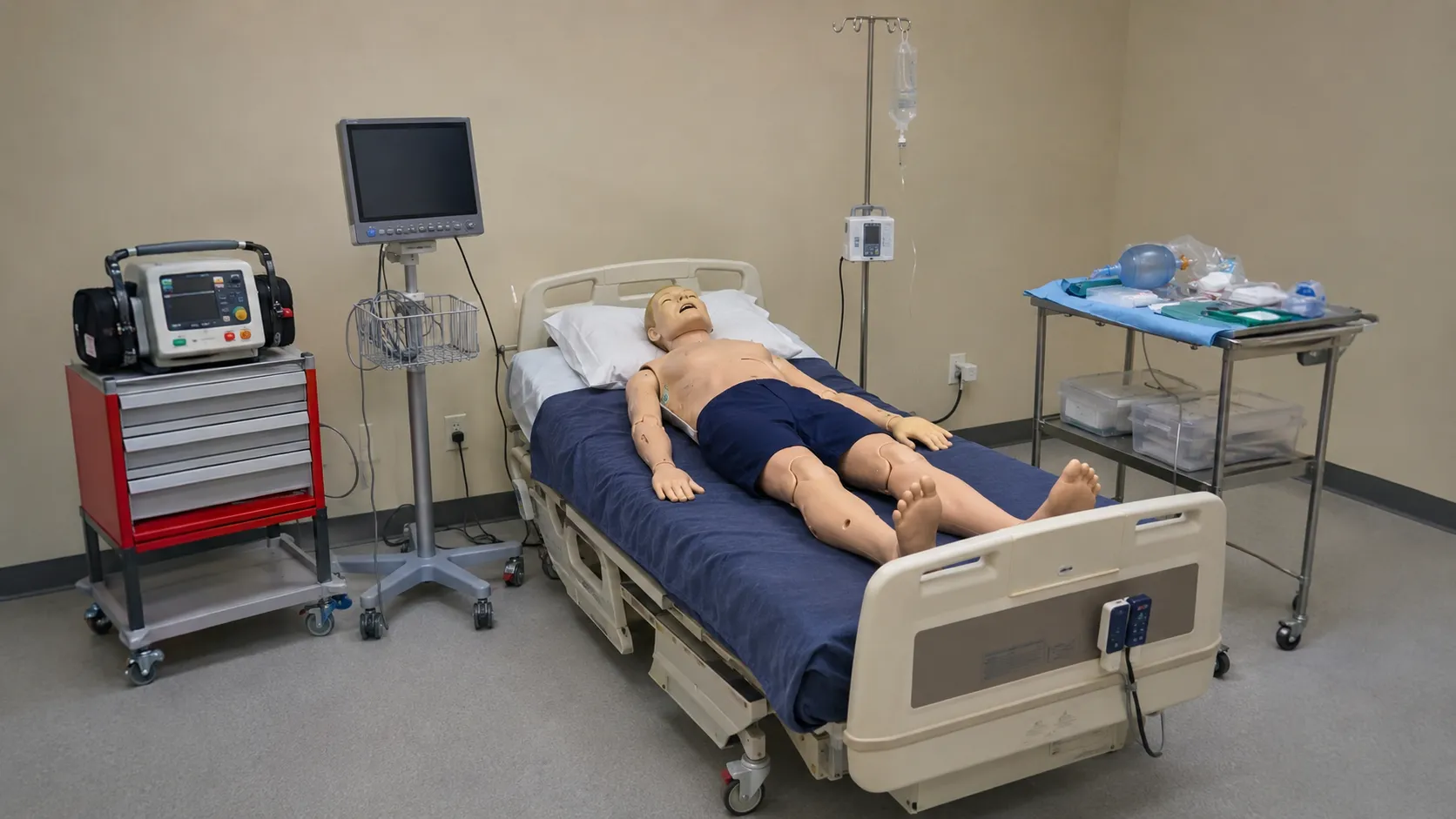
A simulation training lab lets clinical teams practise on lifelike models instead of real patients. That builds skills and confidence safely. Its equipment centres on patient simulators, real clinical kit, and the audio-visual tools that capture each session. Setting one up means recreating a clinical space, fitting it out for scenarios, and adding the recording and debrief that turn practice into learning.
This guide covers the full simulation lab equipment list by area. It then walks through the infrastructure, the planning sequence, and the approval and compliance points. Use it for a new lab, an upgrade, or added training capacity. It focuses on the equipment and environment decisions. Where clinical, education and IT input is essential, it says so.
What makes a simulation lab different is that its goal is learning, not treatment. The manikins matter, but the debrief is where most learning happens. So the lab is built around scenarios and reflection, not just devices. A realistic clinical space helps teams behave as they would for real. High-fidelity simulators reproduce breathing, pulses and responses. Cameras and microphones capture what happened. Then the debrief room lets the team review and learn. The equipment serves that cycle of practise, watch and improve.
In practice, the decisions that matter most are about realism, recording and how the lab is used. A simulator is only useful if staff are trained to run it and scenarios are prepared. So plan the software, the faculty time and the scenario library, not just the hardware. Recording and debrief drive the learning, so treat the AV system as core. Standardise the clinical kit with the real wards, so skills transfer directly. Plan the space, the simulators and the debrief together, and the lab genuinely improves practice.
The short version — what every simulation lab is built around
Strip it back, and a simulation lab needs three things. Simulators to practise on. A realistic clinical space. And recording and debrief to turn practice into learning.
-
Simulators — high-fidelity manikins and task trainers to practise on safely.
-
Clinical realism — real monitors, beds and kit so teams behave as they would for real.
-
Recording & debrief — audio-visual capture and a debrief space where learning happens.
Simulation lab equipment by area
-
Patient simulators. High-fidelity manikins that breathe, have a pulse and respond to treatment. Add adult, paediatric and birthing models to match the training. Some breathe, blink and speak.
-
Task trainers. Part-task trainers for specific skills, such as cannulation, airway or suturing. They let learners drill one skill at a time. Repetition builds real competence.
-
Real clinical equipment. Actual monitors, beds, trolleys, ventilators and infusion pumps. Using real kit means skills transfer straight to the ward. Nothing feels unfamiliar later.
-
AV recording. Cameras, microphones and recording across each room. Capturing the session is what makes an effective debrief possible. Several camera angles help.
-
Control room. A control area to run scenarios and drive the simulators, often behind one-way glass. Instructors control the case from here. They can change the scenario in real time.
-
Debrief space. A dedicated room to review recordings and discuss the case. Most of the learning happens in the debrief, not the scenario.
-
Scenario & control software. Software to program scenarios, control simulators, and manage recordings. It ties the whole session together. It also stores each recording for review. One system keeps everything in step.
-
Infrastructure. A realistic clinical layout, reliable power and network, and storage for equipment between sessions.
Simulation lab equipment checklist
|
Section |
Equipment |
Notes |
|
Simulators |
High-fidelity manikins |
Adult, paediatric, birthing |
|
Task trainers |
Part-task skill trainers |
Drill one skill |
|
Clinical kit |
Real monitors; beds; pumps |
Skills transfer to ward |
|
AV |
Cameras; microphones; recording |
Enables debrief |
|
Control room |
Scenario control station |
Run the case |
|
Debrief |
Debrief room |
Where learning happens |
|
Software |
Scenario + control software |
Ties it together |
|
Infrastructure |
Realistic layout; power; network |
Storage between sessions |
Scale each area to your training and learners. A single skills room and a full simulation centre with several scenario rooms differ widely in simulators, AV and space.
Planning a new sim lab?
We'll help you equip it end-to-end. Tell us your training, learner numbers, budget and market. We'll build the equipment list, balance new and refurbished items, and make sure everything is compliant and supported.
No pressure, no obligation. → Talk to the team
What else does setting up a simulation training lab involve
-
Debrief drives the learning. Most learning happens when the team reviews the session, not during it. So the AV and debrief space are core, not extras, and shape how the lab is built. Skip the debrief and the value drops.
-
Faculty and scenarios. A simulator does nothing on its own. Plan the software, the trained faculty and a scenario library, because they turn hardware into effective training. Budget for faculty time, not just the kit.
-
Realism that transfers. The closer the lab is to a real ward, the better skills transfer. So standardise the clinical kit with the equipment staff actually use.
-
Recording and privacy. Sessions are recorded for debrief, so plan how recordings are stored, used and protected. Clear rules keep learners comfortable and data safe.
-
Consumables, staffing and service. Simulator consumables and spares, trained faculty and technicians, and service contracts all shape the running model. Manikins need regular servicing. The purchase is only the start.
Setting up a simulation training lab, step by step
-
Define your training and learners. Decide which scenarios, skills and professions the lab must serve.
-
Confirm the space and infrastructure. That means a realistic layout, a control room, a debrief room, power and network. Start work early.
-
Build the equipment list by area, sized to your training, with the simulators, clinical kit and AV you need.
-
Decide new versus refurbished per item. Plan the scenario software, consumables and service alongside.
-
Install, commission and test everything. Set up recording and debrief, and train the faculty before go-live.
AV, software and faculty setup take time. Build them into the schedule, so the lab can teach from day one rather than only being equipped.
Budget and procurement
Simulation is equipment- and faculty-intensive. So the purchase price is only part of the story. Simulators, AV and consumables all carry running and service costs. A common approach is to buy new for high-throughput core units and certified refurbished for ancillary equipment. Because these are regulated devices, check the device risk class and the certification for your market. Match simulators and AV to your training and learners. A basic skills room and a full simulation centre are then each equipped for what they actually teach.
Approval and accreditation by region
|
Region |
Regulator |
Device requirement |
|
United Kingdom |
UKCA mark (CE accepted to 2028–2030) |
|
|
European Union |
CE marking under the MDR |
|
|
United States |
FDA clearance or approval |
|
|
Gulf (GCC) |
SFDA & GCC bodies |
National registration / GCC conformity |
|
South Africa |
Medical device licensing |
Simulators and clinical devices are regulated, so confirm each is approved for your market. Recording learners also brings data-protection duties that vary by country, so plan for these alongside device approval. For quality standards and clinical guidance, the World Health Organisation and NICE are useful references. If you're equipping a simulation training lab, our buyer hub sets out how to purchase with confidence.
More from Business
-
Buyers — source a full simulation training lab equipment package for your hospital.
-
Suppliers — list your equipment and reach buyers worldwide.
-
Advertise — promote your products and services to a clinical audience.
-
Business overview — explore everything MediGear offers healthcare organisations.
Disclaimer
This article is for general information only. It is not clinical, medical, procurement, engineering or regulatory advice. Simulation lab design, equipment, AV, recording and safety requirements vary by country, programme and facility, and change over time. The checklist is a planning aid, not a specification. Always work with qualified clinical, biomedical, facilities and procurement professionals. And confirm every device is approved for your market — for example, UKCA, CE, FDA, SFDA/GCC or SAHPRA. Requirements change, so check the current position before you buy. medigear.uk accepts no liability for actions taken on this content.
Equip your simulation lab end-to-end.
From high-fidelity manikins and task trainers to real clinical kit, AV and debrief, we help hospitals across the UK, Europe, the US, the Gulf and South Africa build simulation training labs — compliant, supported and on budget.
Frequently Asked Questions
A simulation lab needs high-fidelity patient simulators and part-task trainers, real clinical equipment such as monitors, beds and pumps, and audio-visual recording across each room. It also needs a control room, a debrief space, and scenario and control software. The debrief is where most learning happens, so the AV and debrief space are as important as the manikins.
The main areas are patient simulators, task trainers, real clinical equipment, AV recording, the control room, the debrief space, scenario and control software, and the supporting realistic layout and infrastructure. These are planned together, because the lab exists to run a cycle of practise, watch and improve.
Costs depend on the training, the fidelity of the simulators, and the AV and space involved, so there is no single figure. Simulation is equipment- and faculty-intensive. Weigh the purchase price against running, consumable and faculty costs over the life of the lab.
Yes, for many items. The real clinical kit and some AV can often be certified refurbished, which suits a training setting well. Simulators are frequently bought new for the latest features. Every device must be approved for your market and fully supported, whether new or refurbished.
It varies with the scale and the AV involved, but planning, fitting out, installing and testing typically takes several months. The AV system, scenario software and faculty training are the parts most often underestimated, so build them into the schedule from the start.
A simulation lab needs a realistic clinical layout, a control room and a debrief room, reliable power and network for the AV and simulators, and storage between sessions. This environment is as important as the simulators, because realism and a good debrief are what make the training work.