
Introduction
A neurology department diagnoses and treats disorders of the brain, spine and nerves. Its work leans heavily on specialist testing. So its equipment centres on neurophysiology, imaging and stroke care. It combines diagnostic tests such as EEG and nerve studies with access to CT and MRI, and provision for stroke. Setting one up means fitting out neurophysiology and clinic space, and linking closely to imaging and acute stroke care.
This guide covers the full neurology department equipment list by area. It then walks through the infrastructure, the planning sequence, and the approval and compliance points. Use it for a new department, an expansion, or added capacity. It focuses on the equipment and diagnostic decisions. Where clinical, neurophysiology and estates input is essential, it says so.
Neurology is a diagnostic speciality as much as a treating one. Much of its work is measuring how the nervous system behaves. So neurophysiology is central. EEG records the brain's electrical activity, and nerve conduction and EMG studies test nerves and muscles. Imaging is essential too, so the department leans on CT and MRI to see the brain and spine. Stroke adds an acute, time-critical dimension, where fast imaging and treatment change outcomes. The department combines careful diagnostics with clinics and a close link to acute stroke care. Testing sits at its heart.
In practice, the decisions that matter most are about neurophysiology, imaging access and stroke pathways. Equip neurophysiology to the tests you offer, since EEG, nerve studies and evoked potentials each need their own kit. Secure reliable access to CT and MRI, because neurology depends on imaging to diagnose. Plan the stroke pathway with imaging and acute care, as time is brain in stroke. Standardise where you can, so training and service stay simple. Plan diagnostics, imaging and stroke together, and the department serves complex neurological need well.
The short version — what every neurology department is built around
Strip it back, and a neurology department needs three things. Neurophysiology testing. Reliable imaging access. And a stroke pathway with acute care.
-
Neurophysiology — EEG, nerve conduction and EMG to test the nervous system.
-
Imaging access — reliable CT and MRI to see the brain and spine.
-
Stroke & acute care — a fast pathway for time-critical stroke.
Neurology department equipment by area
-
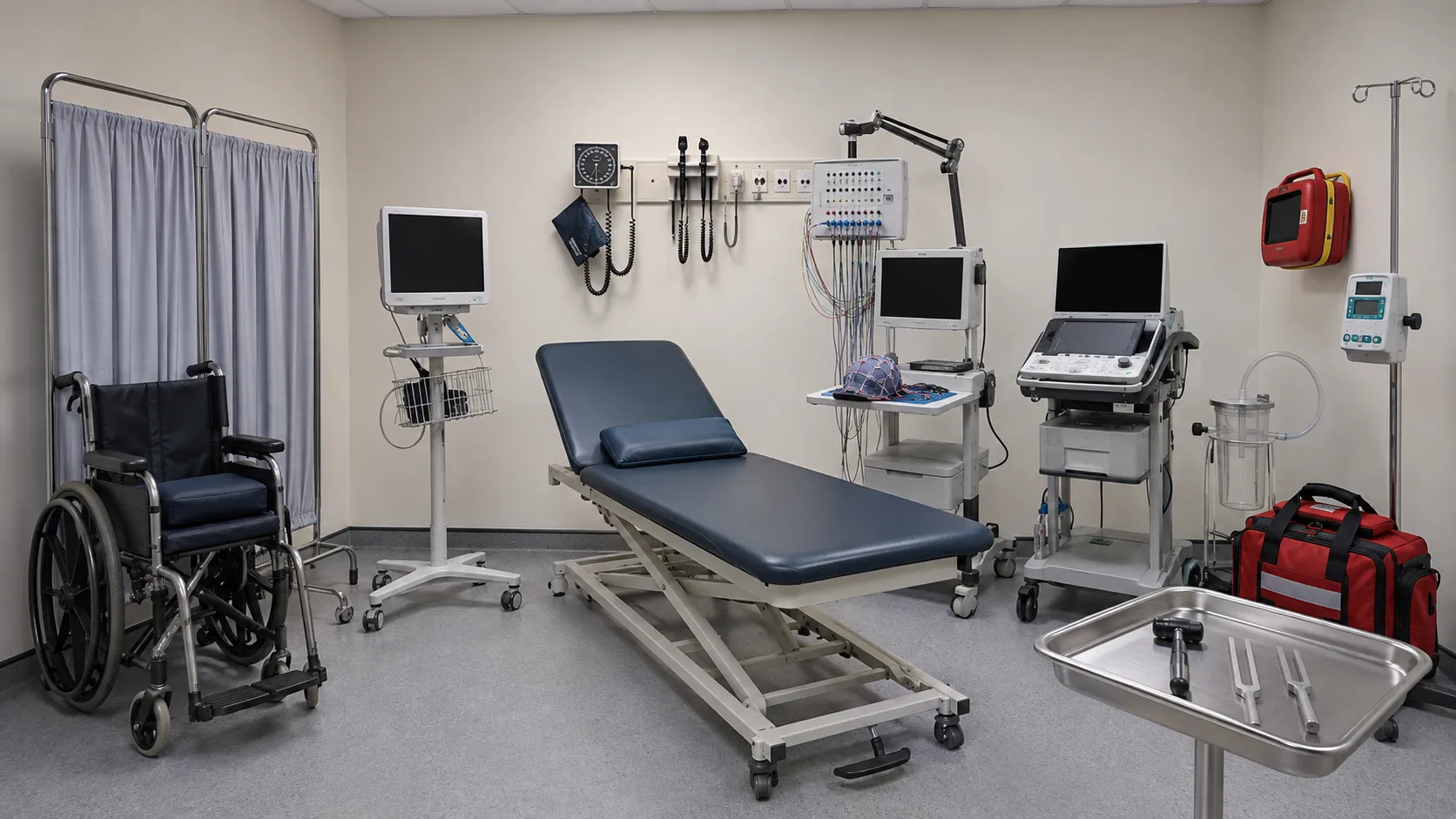
EEG & neurophysiology. EEG systems to record the brain's electrical activity, with video EEG where offered. It diagnoses epilepsy and more. Neurophysiology is central to neurology. Testing drives the diagnosis, revealing the cause.
-
Nerve conduction & EMG. Nerve conduction and EMG equipment to test nerves and muscles. These pinpoint nerve and muscle disorders. Careful testing guides the diagnosis. Precision matters here, and detail guides treatment.
-
Evoked potentials. Evoked-potential equipment to test nervous-system pathways. It measures how signals travel. It adds useful detail to a diagnosis. Pathways are mapped.
-
Imaging access. Reliable access to CT and MRI for the brain and spine. Neurology depends on imaging. The link to radiology is planned closely. Neurology leans on imaging. It cannot work without it.
-
Stroke care. Provision for acute stroke, with fast imaging and treatment pathways. In stroke, time is brain. Speed changes outcomes in stroke. Time is brain, and fast pathways save function.
-
Clinics & examination. Consulting and examination rooms with neurological assessment tools. Much neurology happens in clinic. Space is sized to clinic demand. Much work happens here, so clinics carry the load.
-
Monitoring. Monitoring for neurological patients, including long-term EEG where offered. Some patients need close observation. Monitoring supports close care, and long-term EEG helps some.
-
Infrastructure. Quiet, controlled rooms for sensitive testing, reliable power, IT and records, and links to imaging.
Neurology department equipment checklist
|
Section |
Equipment |
Notes |
|
EEG |
EEG; video EEG |
Central to neurology |
|
Nerve/EMG |
Nerve conduction; EMG |
Pinpoint disorders |
|
Evoked potentials |
Pathway testing |
Adds detail |
|
Imaging |
CT; MRI access |
Depends on it |
|
Stroke |
Fast imaging + treatment |
Time is brain |
|
Clinics |
Consulting; assessment |
Sized to demand |
|
Monitoring |
Long-term EEG; observation |
Close watch |
|
Infrastructure |
Quiet rooms; IT; imaging link |
Sensitive testing |
Scale each area to your service and case mix. A general neurology clinic and a department with epilepsy, stroke and neurophysiology services differ widely in equipment. The service sets the scale.
Planning a neurology department?
We'll help you equip it end-to-end. Tell us your service, case mix, budget and market. We'll build the equipment list, balance new and refurbished units, and make sure everything is compliant and supported.
No pressure, no obligation. → Talk to the team
What else does setting up a neurology department involve
-
Neurophysiology is central. Much of neurology is measuring how the nervous system behaves. So neurophysiology, from EEG to nerve studies, is core to the department, not an add-on. It defines neurology.
-
Imaging is essential. Neurology depends on CT and MRI to diagnose. So reliable imaging access is planned closely, because a department cannot work without it. Imaging is essential.
-
Stroke is time-critical. In stroke, time is brain. So a fast pathway with imaging and acute treatment is planned, because minutes change outcomes. Time is brain, and speed saves it.
-
Quiet, controlled testing. Neurophysiology needs a calm, controlled environment. So sensitive testing rooms shape the space as much as the equipment does. Calm rooms aid accuracy.
-
Consumables, staffing and service. Test consumables, trained neurophysiology staff, and service and calibration all shape the running model. The purchase is only the start.
Setting up a neurology department, step by step
-
Define your service and case mix. Decide the neurophysiology, imaging and stroke provision you need.
-
Confirm imaging access and infrastructure. Plan the radiology link, quiet testing rooms and stroke pathway. Start works early.
-
Build the equipment list by area, sized to your service, with the neurophysiology and monitoring you need.
-
Decide new versus refurbished per item. Plan consumables, calibration and service alongside.
-
Install, commission and test everything. Integrate imaging and the stroke pathway, and train the team before go-live.
Imaging integration, quiet-room setup and calibration take time. Build them into the schedule, so the department diagnoses well from day one rather than only being equipped.
Budget and procurement
A neurology department is equipment- and service-intensive. So the purchase price is only part of the story. Neurophysiology systems and imaging access carry ongoing costs. A common approach is to buy new for high-throughput core units and certified refurbished for ancillary equipment. Because these are regulated devices, check the device risk class and the certification for your market. Match neurophysiology, imaging and stroke provision to your service and case mix. A general clinic and a full department are then each equipped for the care they actually provide. Match kit to the service.
Approval and accreditation by region
|
Region |
Regulator |
Device requirement |
|
United Kingdom |
UKCA mark (CE accepted to 2028–2030) |
|
|
European Union |
CE marking under the MDR |
|
|
United States |
FDA clearance or approval |
|
|
Gulf (GCC) |
SFDA & GCC bodies |
National registration / GCC conformity |
|
South Africa |
Medical device licensing |
Neurophysiology and imaging devices are regulated, so confirm each is approved for your market. Neurology equipment supports sensitive diagnostic testing, so calibration and servicing matter alongside device approval. For quality standards and clinical guidance, the World Health Organisation and NICE are useful references. If you're equipping a neurology department, our buyer hub sets out how to purchase with confidence.
More from Business
-
Buyers — source a full neurology department equipment package for your hospital.
-
Suppliers — list your equipment and reach buyers worldwide.
-
Advertise — promote your products and services to a clinical audience.
-
Business overview — explore everything MediGear offers healthcare organisations.
Disclaimer
This article is for general information only. It is not clinical, medical, procurement, engineering or regulatory advice. Neurology department design, equipment, imaging access and safety requirements vary by country, service and facility, and change over time. The checklist is a planning aid, not a specification. Always work with qualified clinical, biomedical, facilities and procurement professionals. And confirm every device is approved for your market — for example, UKCA, CE, FDA, SFDA/GCC or SAHPRA. Requirements change, so check the current position before you buy. medigear.uk accepts no liability for actions taken on this content.
Equip your neurology department end-to-end.
From EEG and nerve-conduction testing to imaging access, stroke care and monitoring, we help hospitals across the UK, Europe, the US, the Gulf and South Africa build neurology departments — compliant, supported and on budget.
Frequently Asked Questions
A neurology department needs neurophysiology equipment such as EEG, nerve conduction and EMG, and evoked-potential testing, since much of neurology is measuring the nervous system. It also needs reliable access to CT and MRI, provision for acute stroke, clinic and examination space, and monitoring. Neurophysiology and imaging are central to how a neurology department works.
The main areas are EEG and neurophysiology, nerve conduction and EMG, evoked potentials, imaging access, stroke care, clinics and examination, monitoring, and the supporting infrastructure. These are planned together, because neurology combines careful diagnostic testing with imaging and time-critical stroke care.
Costs depend on the services offered and the neurophysiology and stroke provision, so there is no single figure. A neurology department is equipment- and service-intensive. Weigh the purchase price against service and running costs over the life of each system rather than the upfront price alone.
Yes, for many items. Certified refurbished EEG, nerve-conduction and monitoring equipment can be sensible where it is calibrated and fully supported. Every device must be approved for your market and properly calibrated, whether new or refurbished, since neurophysiology depends on accurate measurement.
It varies with the services and imaging works, but planning, equipping, commissioning and integrating typically takes several months. Imaging integration, quiet testing rooms and the stroke pathway are the parts most often underestimated, so build them into the schedule from the start.
A neurology department needs quiet, controlled rooms for sensitive neurophysiology testing, reliable access to CT and MRI, a fast stroke pathway, reliable power, IT and records. This imaging access and controlled environment matter as much as the equipment, because neurology depends on accurate testing and fast stroke care.