What a hand therapy table is and how grip work is carried out on it
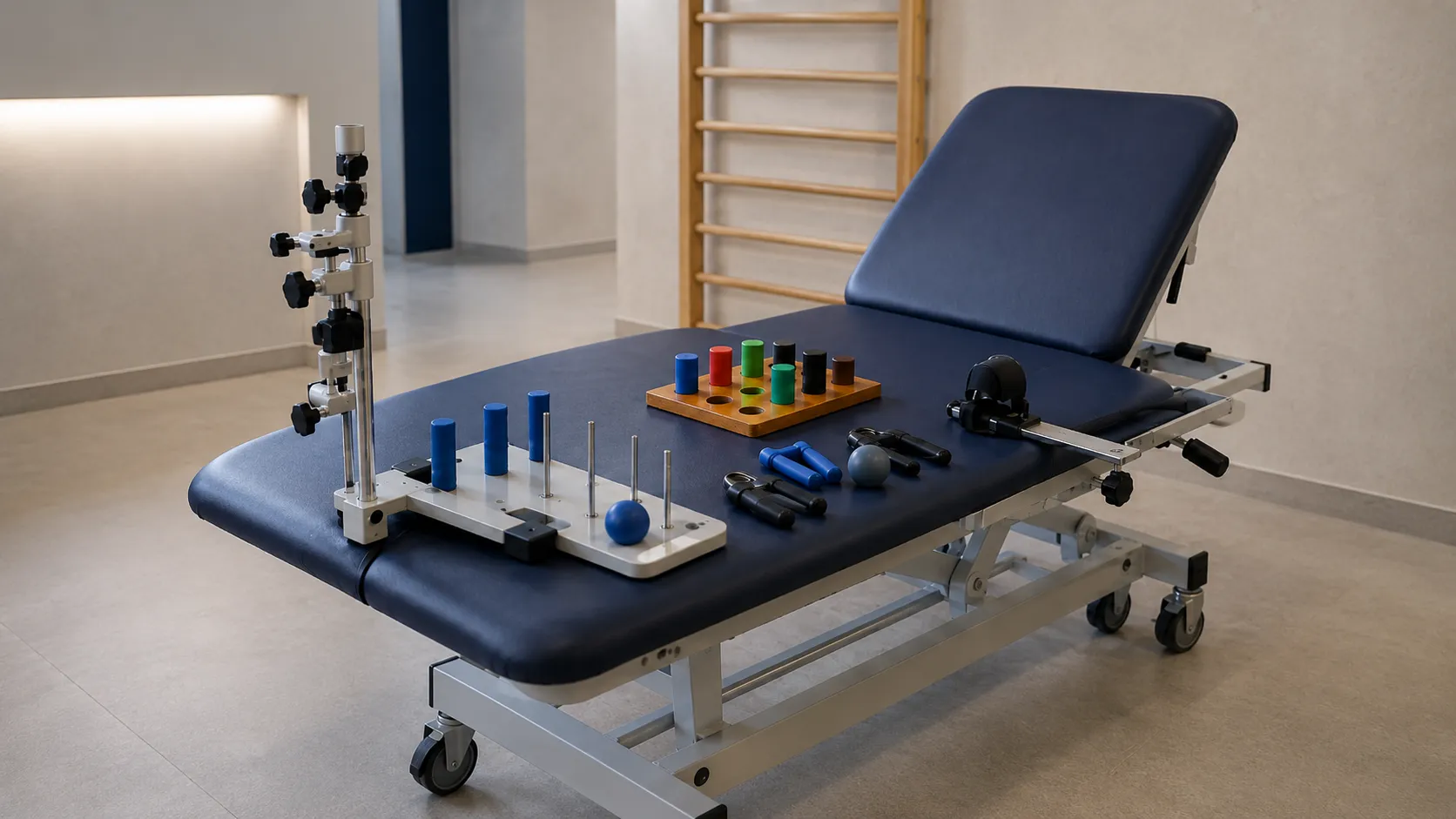
A hand therapy table is a specialised treatment surface and workstation designed for hand and upper-limb rehabilitation, where a therapist and patient sit facing one another to carry out fine-motor, grip and dexterity work. It provides a stable, properly heighted surface on which the forearm and hand can be supported. At the same time, the patient works through graded exercises – squeezing, pinching, gripping, and manipulating therapy tools – after injury, surgery, tendon repair, arthritis, or neurological impairment of the hand. Grip work is performed with the forearm supported on the table, so the effort is isolated to the hand and wrist: the surface stabilises the limb, the therapist observes and grades resistance, and hand-therapy tools such as putty, pegboards, grip aids, and manipulation kits are laid out within easy reach.
For a procurement lead, the table is best judged by how well it supports seated, close-work upper-limb therapy: the working height, the forearm support and the layout for tools are what make it fit for purpose, distinct from a general treatment couch.
How a hand therapy table differs from a general treatment table
It is worth being precise, because a standard plinth will not do this job well. A Bobath table is a wide, low platform for whole-body neurofacilitation; a treatment couch is designed for a patient lying down. A hand therapy table is a seated workstation: the patient sits at it, the working height suits close hand work at a desk-like level, and the surface is sized for tabletop tasks rather than a reclined body. Occupational therapists and hand physiotherapists use it as a focused work surface, often paired with a supportive chair for the patient and clinician. Buying a general couch where a hand therapy workstation is needed leaves the team without the right working height or forearm support for detailed grip work.
Working height and forearm support
The two features that determine clinical usefulness are the working height and the forearm support
Height adjustment
The surface should be set to a comfortable seated working height for both the patient and the therapist, with the forearm resting and the shoulder relaxed. Height-adjustable models – manual crank, gas-assist, or electric – let one table suit wheelchair users, seated patients of different statures, and standing therapists. In a shared department, adjustability is what allows a single table to serve a varied caseload.
Forearm and wrist support
Effective grip and dexterity work requires forearm support so movement is isolated to the hand and wrist. Some tables offer contoured forearm rests, padded edges or a cut-out so the patient can sit closer with the limb supported. Confirm the support arrangement suits the exercises your service delivers.
Surface, worktop and tool layout
The worktop is where the therapy happens, so its size, finish and durability matter. A firm, smooth, wipe-clean surface suits manipulation of small objects and tolerates therapy putty, without being so slick that objects slide away. Enough depth and width lets tools – pegboards, therapy putty, grip and pinch trainers, dexterity kits – sit within reach without crowding the work area. Some workstations add integrated storage, drawers, or a raised lip to prevent items from rolling off. Where a service uses heat or contrast baths, wax or messy media, a resilient, easily cleaned top is worth prioritising.
Seating, access and wheelchair use
Because hand therapy is seated work, the table cannot be considered in isolation from access. A design with clearance beneath the top, or a cantilever/adjustable base, lets a wheelchair user pull in close and rest the forearm properly. Consider whether both the patient and the clinician need to sit at the table simultaneously, how the chair heights relate to the worktop, and whether the base is stable when the patient leans on the edge. Good seated access is part of specifying the table well; a table a wheelchair user cannot get their knees under is the wrong table.
Worktop tilt and moving the table between rooms
Some hand therapy workstations offer a tilting or angled top section. A surface that angles upward can bring near work closer to the eye for detailed dexterity tasks, or hold the wrist and hand at a set angle without the patient hunching over, which helps in longer sessions and for those with limited neck or trunk movement. If graded wrist positioning features in your programmes, ask whether the section tilts, locks securely at the chosen angle and returns easily to flat for ordinary tabletop tasks.
Portability matters where therapy is not tied to one room. Community and domiciliary occupational therapists, and departments that share a single table across clinics, benefit from a lighter table on lockable castors that rolls between spaces and through standard doorways yet brakes firmly for use. Confirm the weight, the castor and brake arrangement and the transport dimensions if the table must travel, and check it stays stable once parked and leaned on.
Hygiene and cleaning between patients
Hand therapy involves close, repeated skin contact and shared tools, so the worktop and any padded supports need to withstand routine wipe-down with your infection-prevention team's disinfectants. A seam-free, non-porous top with sealed edges helps prevent the trapping of putty residue or moisture, and padded forearm rests should use a fluid-resistant, cleanable cover. Confirm the material's compatibility with cleaning agents and whether any padded parts can be replaced, since these are the elements that wear with daily use.
Conformity, UKCA marking and the MHRA
A table supplied for therapeutic hand rehabilitation in the UK is treated as a medical device and should carry the appropriate UKCA (or recognised CE) marking, with the manufacturer registered with the MHRA; as an assistive product it is designed against the general requirements of BS EN 12182, and any powered height mechanism brings the relevant electrical-safety requirements into scope. This buyer's overview is compiled from manufacturer workstation specifications and current UK device rules, written for occupational-therapy and hand-therapy purchasers rather than for patients; MediGear works as a distributor helping facilities compare verified suppliers so specifications are weighed accurately rather than taken on trust. For guidance on hand-therapy services and occupational health more broadly, national bodies such as the NHS remain the reference point.
Where hand therapy tables are used
These workstations serve hand-therapy and occupational-therapy clinics, trauma and orthopaedic outpatient services, rheumatology, burns and plastics rehabilitation, and neuro-rehabilitation upper-limb programmes. The setting shapes the specification: a busy shared OT department benefits from a height-adjustable table with good wheelchair access and integrated tool storage. At the same time, a specialist hand clinic may prioritise a durable worktop for wax and contrast-bath work. Match the surface, adjustment, and access to how your service runs its upper-limb caseload.
Specifying a hand therapy table
-
Confirm the working-height range suits seated patients, wheelchair users and standing therapists.
-
Check the forearm and wrist support arrangement matches the grip and dexterity exercises you deliver.
-
Assess worktop size, finish and durability for your therapy media and tools.
-
Verify wheelchair clearance beneath the top and stable access for both patient and clinician.
-
Confirm the surface and padded supports tolerate your routine disinfectants and that pads are replaceable.
-
Decide whether integrated storage, drawers or a raised lip for tools is needed.
-
Require UKCA/CE marking, MHRA registration and BS EN 12182 alignment, plus electrical safety on powered models.
-
Clarify warranty, the height-mechanism type and spare-part availability.
Total cost and everyday value
The purchase price is only the start. Height-adjustment mechanisms – particularly powered ones – are the components most likely to require servicing over their long life, so readily available spares help maintain uptime. The worktop finish and padded supports are effectively consumables in a busy clinic and should be replaceable. Therapy tools – putty, pegboards, grip trainers – are ongoing running costs to budget alongside the table itself. A durable, well-designed workstation with good access serves more patients comfortably and outlasts a cheaper general table pressed into a role it was not built for. Our team can help you compare hand therapy tables from verified UK suppliers or discuss requirements through the enquiries desk.
Getting the right workstation for upper-limb therapy
A hand therapy table earns its place when its working height, forearm support and access let therapists and patients do detailed grip and dexterity work in comfort, day after day. Fix the height range, support, and wheelchair access first, then weigh up worktop durability, storage, and servicing. Explore hand therapy and occupational therapy equipment and reach vetted UK suppliers through MediGear's buyer network to specify a workstation your team will rely on.
Disclaimer
This article is for informational purposes only. It is published by MediGear (medigear.uk) for general information and procurement guidance. It is not clinical, diagnostic, treatment, technical, engineering, legal or regulatory advice, nor a product endorsement, guarantee or substitute for professional assessment. MediGear does not provide medical consultations. Buyers should consult their clinical, biomedical, estates and regulatory contacts, and the manufacturer's documentation, and independently verify all specifications, certifications, compatibility and suitability before purchase. Specifications, certifications and availability are correct at the time of publication and may change without notice. MediGear is a medical-equipment distributor and does not sell medicines or pharmaceutical products.