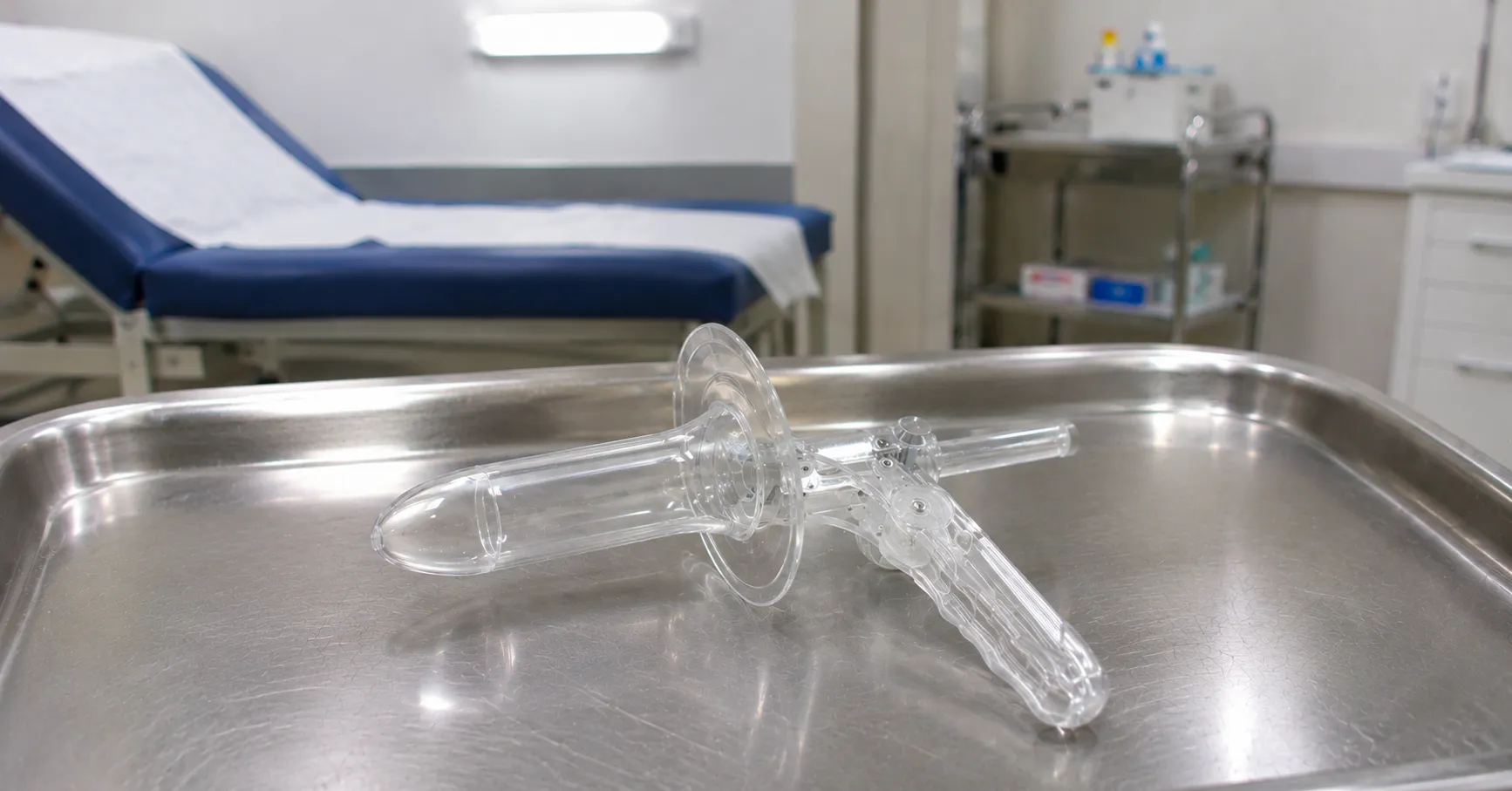
An anoscope is a short, rigid, tubular speculum inserted a few centimetres into the anal canal and lower rectum so a clinician can inspect the anal mucosa, the dentate line and the lower rectal wall under direct light. It is one of the simplest diagnostic instruments in a clinic: a tapered tube with an obturator that guides insertion and is then removed to leave a lit, open channel for viewing haemorrhoids, fissures, fistula openings and other anal pathology, and for minor procedures such as banding. Compared with a proctoscope or sigmoidoscope it examines only the lowest part of the bowel, which is exactly its purpose.
Because it is inexpensive and high-volume, procurement here is about the sensible things: reusable versus single-use, the light source, the size range, and infection control across a busy clinic. The instrument is simple; buying it well still repays attention.
How an anoscopic examination is performed
The patient is positioned, commonly in the left-lateral position, and a digital rectal examination is usually done first to assess tone and detect any obvious mass. The lubricated anoscope, with its obturator in place to give a smooth rounded tip, is inserted gently through the anal canal. The obturator is then withdrawn, leaving the hollow tube open to inspection. Illumination — from a built-in light, a fibre-optic light guide, an attached LED or a separate lamp — lights the canal, and the clinician slowly withdraws the scope to view the mucosa circumferentially. Instruments such as swabs, biopsy forceps or a banding applicator can pass down the lumen. The examination is brief and does not require sedation.
Because anatomy is viewed as the scope is withdrawn, the length and bevel of the tube determine how much of the canal and lower rectum come into view, which is why the instrument is specified by its dimensions and its opening.
Variants and how they compare
Reusable metal anoscopes
Traditional stainless-steel anoscopes are durable and give an unobstructed view, and they are economical per use over a long service life. They must be cleaned and sterilised between patients, which requires a decontamination pathway and instrument stock to cover turnaround.
Single-use plastic anoscopes
Disposable clear-plastic anoscopes remove reprocessing and cross-contamination concerns and are ready to hand in a busy or community clinic. Many come with an integrated LED or a fitting for a light source. The trade-off is a per-patient cost and a plastic optical clarity that, while good, differs from polished metal.
Illumination options
Anoscopes differ in how they are lit: an external lamp, a fibre-optic light guide from a handle, or a self-contained LED. Integrated LED versions simplify a room but tie you to that consumable or battery format, so weigh convenience against ongoing cost.
Key specifications a buyer must check
Check the length and diameter, and whether a range of sizes is offered for paediatric, standard and larger adult use. Look at the bevel and the size of the viewing aperture, the presence and type of an obturator, and the illumination method and its brightness. A wider viewing aperture and a longer bevel expose more mucosa on withdrawal, which matters when hunting for a small fissure or internal opening. For single-use models confirm the light fitting matches any handle you already own, or that an integral LED is included, and check whether the plastic is clear enough for good visualisation and free of moulding flash at the tip. For reusable models confirm the instrument is fully autoclavable and check the finish for a smooth, atraumatic edge. Confirm any working lumen admits the biopsy forceps or banding applicators your clinicians use.
Standards, regulation and documentation
An anoscope is a medical device and must carry valid UKCA or CE marking with instructions for use stating intended purpose and, for reusable versions, the validated reprocessing method. Any powered light source falls under the IEC 60601-1 electrical-safety family. Ask the supplier for the declaration of conformity and confirm Great Britain market registration. The MHRA is the UK medical-device regulator and the route for safety reporting, with general guidance on GOV.UK. Because reprocessing and sharps are involved, workplace decontamination and safety duties under the HSE framework also apply. File the instructions for use, which set the validated cleaning route for reusable instruments.
Decontamination and single-use considerations
An anoscope contacts mucosa, so between patients a reusable instrument must be decontaminated properly: cleaned to remove all soil, inspected, then sterilised, usually by steam autoclave for metal anoscopes. That demands enough instruments in circulation to cover the sterilisation cycle during a clinic, plus a compliant decontamination pathway and records. Single-use plastic anoscopes remove that burden entirely and are discarded after one patient, which suits high-throughput lists, community clinics and infection-sensitive cases at a predictable per-patient cost. Many services keep both: reusable metal instruments for routine clinics and disposables for outreach, isolation or overflow.
Use across care settings
Anoscopes are used widely: in colorectal and general-surgery outpatient clinics, in GP practices assessing rectal bleeding or haemorrhoids, in sexual-health and genitourinary-medicine services, and in A&E. GP and community settings often prefer single-use plastic anoscopes for simplicity and infection control, while a colorectal clinic performing banding and biopsy may favour reusable metal instruments with a fibre-optic light and stock disposables alongside. Veterinary practice uses analogous instruments. Matching the type and quantity to the setting avoids over-buying reusable stock a low-volume clinic cannot reprocess efficiently, or paying disposable prices in a high-volume unit. Storage and stock control matter too: single-use anoscopes need shelf space and reordering, while reusable sets need tracking through the decontamination cycle so a clinic never runs short mid-list.
Consumables, spares and total cost of ownership
For reusable anoscopes the running costs are decontamination chemicals, staff time, sterilisation capacity and occasional replacement, plus lubricant and any light-source lamps or fibre cables. For single-use anoscopes the per-patient device is the main cost, so model annual volume against unit price; add lubricant, and batteries where an integral LED is battery-powered. Across both, budget for banding rings, biopsy consumables and gloves. Light sources and handles, where used, carry their own warranty and spare-lamp costs. Our team can help you balance reusable and single-use stock for your clinic volumes — register as a buyer or contact us to compare options.
Procurement checklist
-
Choose reusable metal or single-use plastic anoscopes to match clinic volume and reprocessing capacity.
-
Confirm a suitable size range for paediatric, standard and larger adult patients.
-
Check the illumination method and that any light fitting matches handles you already own.
-
Verify reusable instruments are fully autoclavable with a smooth, atraumatic finish.
-
Confirm any working lumen admits your biopsy forceps or banding applicators.
-
Request UKCA or CE documentation and instructions for use, including reprocessing for reusables.
-
Model total cost of ownership: disposable unit price versus reusable decontamination against annual volume.
Conclusion
An anoscope is a simple instrument that earns its place by making the anal canal and lower rectum directly visible for diagnosis and minor treatment. The buying decision is mostly reusable versus single-use, shaped by clinic volume, infection control and how the instrument is lit and reprocessed. Confirm the sizes, illumination and paperwork, and cost the two routes honestly against your throughput. MediGear can supply suitable reusable and disposable options so your clinic examines confidently and buys sensibly.
Disclaimer
This article is for informational purposes only. It is published by MediGear (medigear.uk) for general information and procurement guidance, and is not clinical, diagnostic, treatment, technical, engineering, legal or regulatory advice, nor a product endorsement, guarantee or substitute for professional assessment. MediGear does not provide medical consultations. Buyers should consult their clinical, biomedical, estates and regulatory contacts, and the manufacturer's documentation, and independently verify all specifications, certifications, compatibility and suitability before purchase. Specifications, certifications and availability are correct at the time of publication and may change without notice. MediGear is a medical-equipment distributor and does not sell medicines or pharmaceutical products.