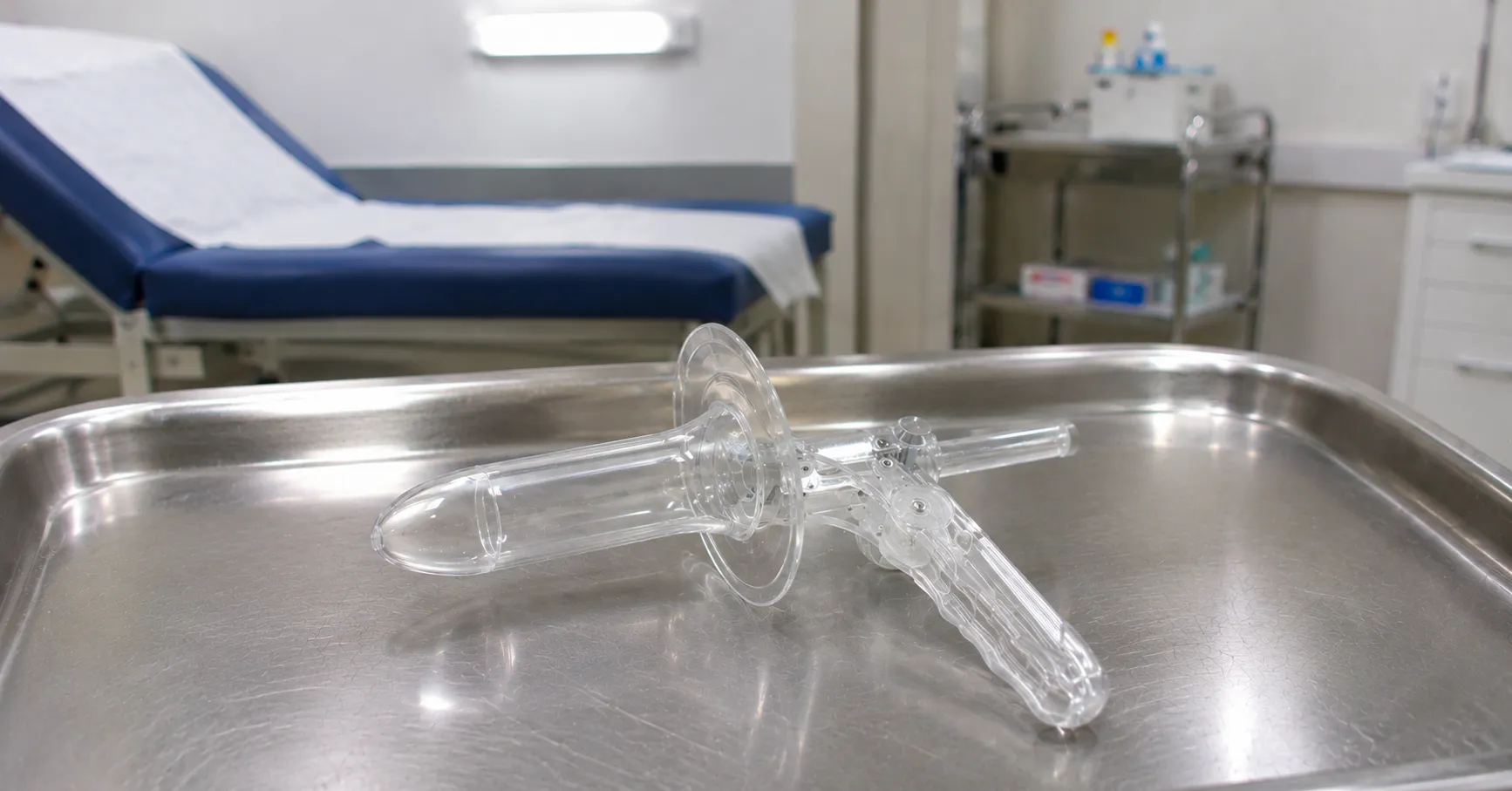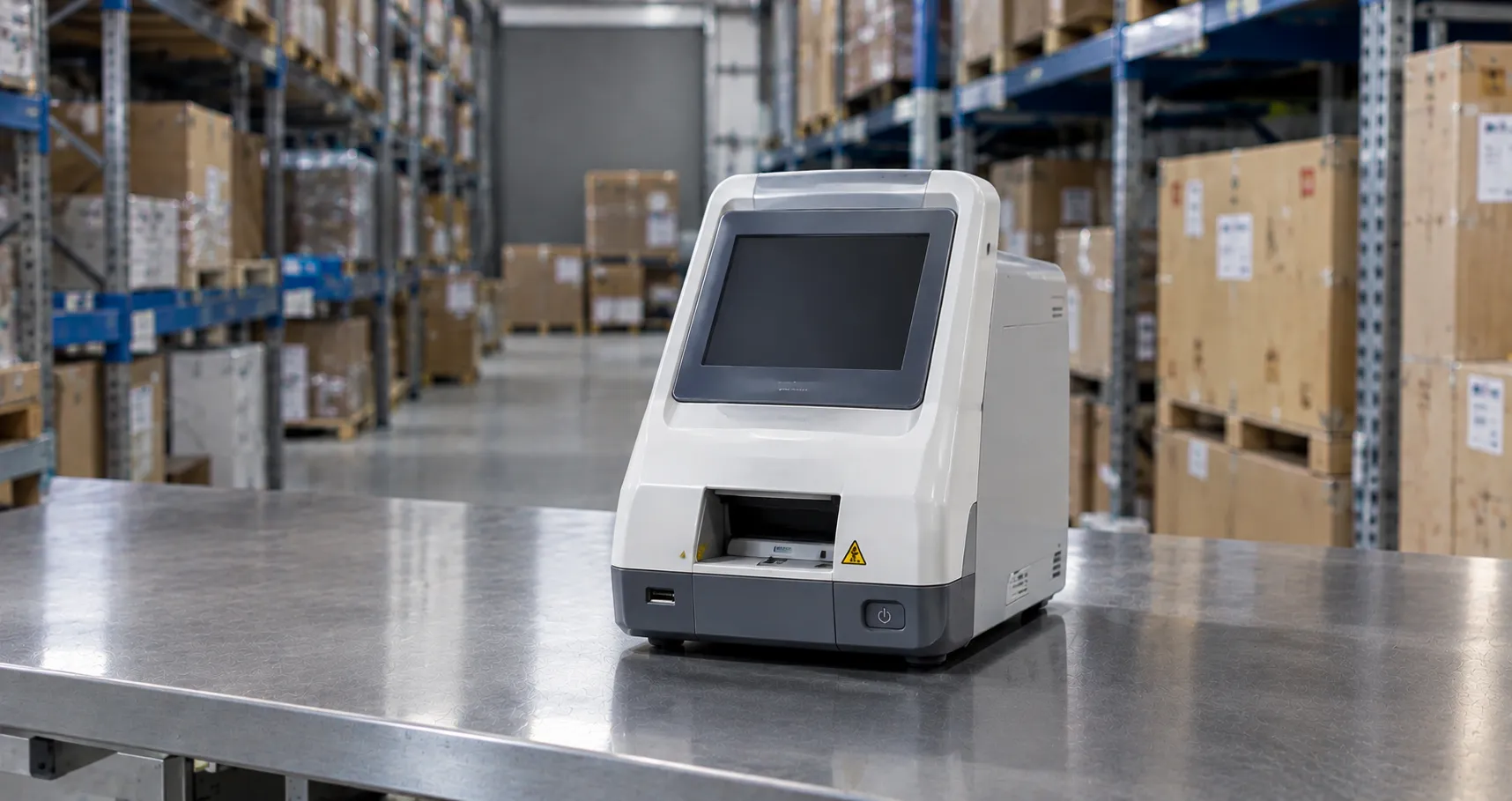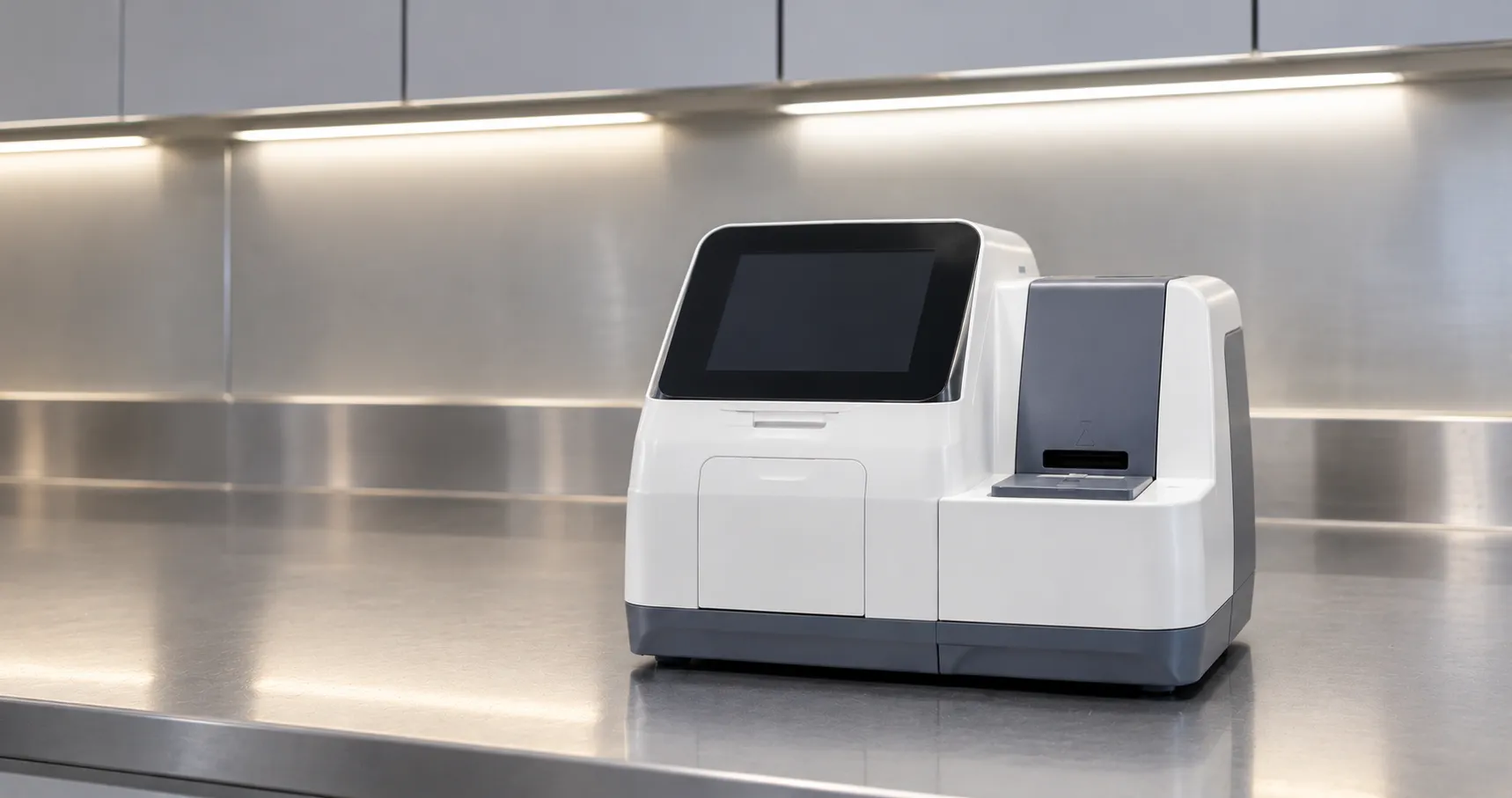

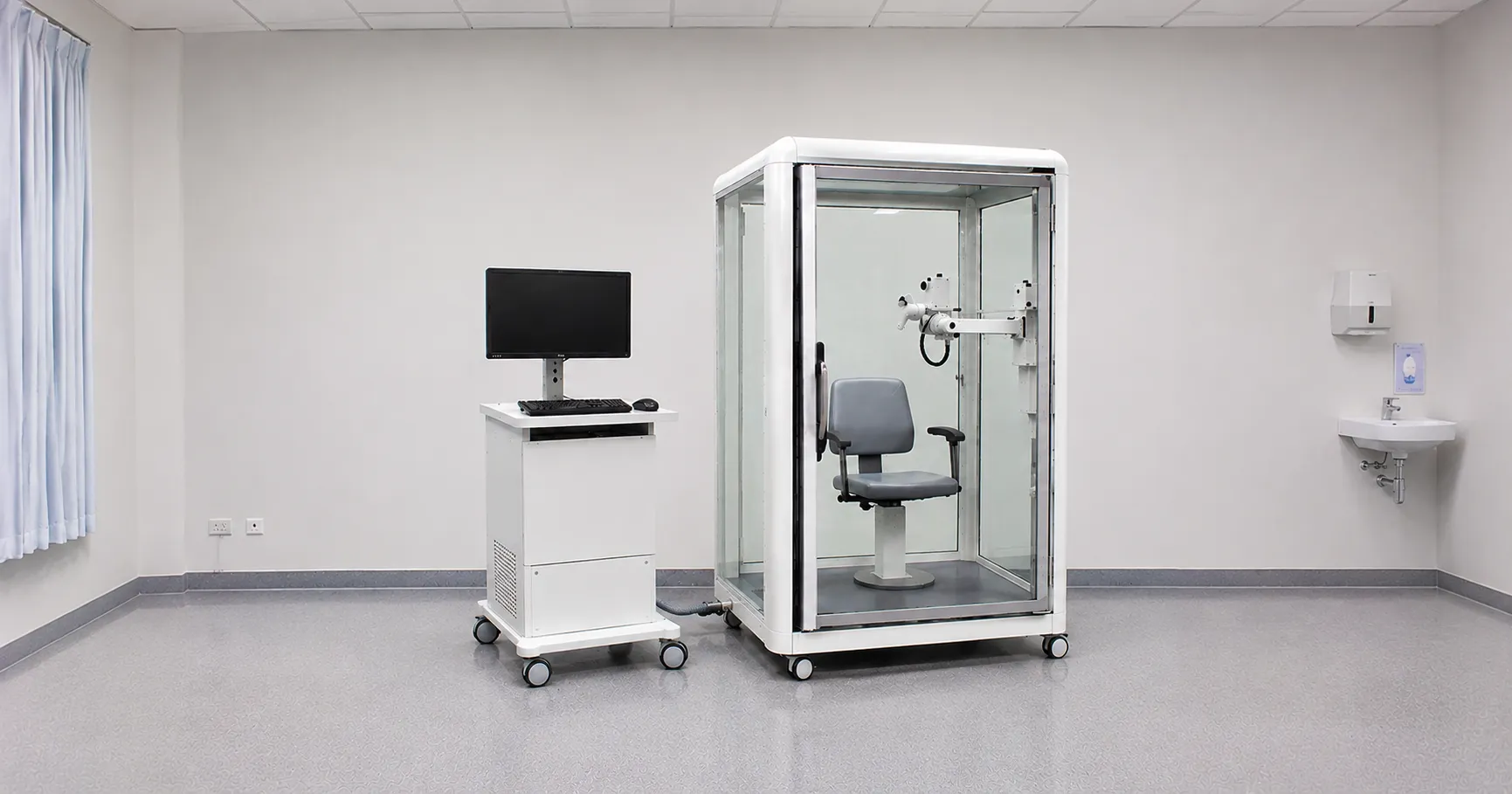
A body plethysmograph measures the lung volumes that a spirometer cannot reach — the air that stays in the chest after a full breath out. The patient sits inside a sealed, rigid cabin, breathes through a mouthpiece against a briefly shuttered airway, and the machine reads the small pressure and volume changes in the box to calculate the gas trapped in the lungs. For a procurement lead the decision turns on cabin type, the software and reference sets, calibration demands, throughput and the running cost of consumables.
Because it captures thoracic gas volume directly, plethysmography is the reference method for total lung capacity and residual volume, and it is the test biomedical and respiratory teams should specify when a full lung-function picture is needed rather than flow and forced volumes alone.
The measurement principle in detail
The technique rests on Boyle's law: at a fixed temperature the pressure of a gas multiplied by its volume stays constant. Inside the sealed cabin the patient pants gently against a closed shutter. As the chest expands and compresses the air in the lungs, it also compresses or rarefies the air in the box by an equal and opposite amount. Sensitive transducers measure mouth pressure at the shutter and the pressure or flow change in the box. From the ratio of these signals the system derives thoracic gas volume at the moment the shutter closed, and from that it computes functional residual capacity, residual volume and total lung capacity. The strength of the method is that it counts all the intrathoracic gas, including air behind narrowed or closed airways that a gas-dilution test would miss.
Body plethysmography versus gas dilution
Two families of test estimate the same volumes by different physics, and buyers should understand the trade-off. Gas-dilution methods — helium dilution or nitrogen washout — are simpler and need no cabin, but they only sample gas that communicates freely with the airways, so they under-read in obstructive disease with air trapping. Plethysmography measures compressible gas regardless of airway obstruction, so it tends to read higher and is preferred where trapping is likely. Many departments keep both, or a combined system, so a technique can be chosen to suit the patient.
Cabin variants and how they compare
Constant-volume, variable-pressure boxes
The classic design is a rigid, near-airtight cabin in which box pressure changes as the patient breathes. It gives the most direct thoracic-gas-volume reading and remains the common choice for full pulmonary-function laboratories.
Flow (variable-volume) and pressure-corrected boxes
Flow-type boxes measure the air moving through a vent in the cabin wall, while pressure-corrected flow designs blend both approaches to reduce thermal drift and speed up the return to a stable baseline. These variants shorten the settling time between manoeuvres, which matters in a high-throughput clinic. Confirm which principle a system uses, because it affects test time, thermal stability and how the cabin must be sited.
Key specifications a buyer must check
Look at the cabin volume and whether it accommodates larger patients and wheelchair access. Check the transducer resolution and the pressure and flow ranges, the shutter response time, and how quickly the box thermally equilibrates after the door closes. Confirm the integrated test suite: most cabins also run spirometry and airway resistance, and many add gas-dilution or diffusing-capacity modules. Review the reference-value sets available, including recognised European and paediatric equations, and whether the software supports quality grading against accepted acceptability and repeatability criteria. Assess the seat, door seal, patient communication and the field of view for anxious or claustrophobic patients.
Standards, regulation and documentation
A body plethysmograph is a medical device and must carry valid UKCA or CE marking with instructions for use that define its intended purpose and reprocessing. General electrical safety follows IEC 60601-1, with IEC 60601-1-2 for electromagnetic compatibility; the spirometry function should meet the current ISO 26782 performance requirements, and testing protocols should align with the joint ATS/ERS technical standards for lung-function testing. Ask the supplier for the declaration of conformity and confirm the device is registered for the Great Britain market. The MHRA is the UK regulator and the route for field-safety notices, with wider device guidance on GOV.UK. Keep the instructions for use on file, since they set the only validated calibration and cleaning methods.
Calibration and routine maintenance
Accurate volumes depend on disciplined calibration. The flow sensor is verified daily with a 3-litre calibration syringe, and a leak and volume check confirms the cabin behaves as a known sealed volume. Ambient temperature, barometric pressure and humidity are logged because BTPS corrections depend on them, and many labs run a biological control — a healthy staff member tested regularly — to catch drift the syringe cannot show. Annual manufacturer servicing covers transducer calibration, shutter function and the door seal. Budget these checks as recurring, unavoidable costs and keep the records for laboratory accreditation.
Decontamination and single-use considerations
The patient breathes through a mouthpiece and bacterial/viral filter, and both are single-use, discarded after each patient to prevent cross-infection. In-line filters also protect the flow sensor and internal tubing from contamination. The cabin interior, seat, mouthpiece assembly and any reusable tubing need a validated wipe-down between patients, agreed with infection control and following the manufacturer's cleaning list. Confirm which parts are single-use and which are reprocessed, because a system that soaks the whole flow head between patients slows throughput compared with one protected by a disposable filter.
Care settings and connectivity
Full plethysmography lives in hospital pulmonary-function laboratories and larger respiratory clinics, where space, a stable environment and trained physiologists are available; the cabin is not a domiciliary or routine GP device. Community and primary-care respiratory services more often use handheld spirometers and refer on for full lung-volume testing. Veterinary and research laboratories use dedicated variants. Confirm how results leave the system: export to the respiratory reporting platform and the electronic patient record, networked storage for trend comparison, and compatibility with your laboratory information system all matter for a busy department.
Consumables, total cost of ownership and servicing
The headline price is only part of the picture. Recurring costs include single-use mouthpieces, filters, nose clips and any calibration-syringe servicing, plus annual calibration and preventive maintenance, and the gas supply if a dilution or diffusing-capacity module is fitted. Ask suppliers for warranty length, whether the first service is included, typical repair turnaround, loan-unit availability and the cost of the parts most likely to need replacement, such as transducers and the shutter mechanism. A cabin that is out of action stops a whole clinic list, so a fast repair route protects throughput. Standardising software and reference sets across a department simplifies training and reporting. The MediGear buyers team can compare configurations, or contact us to check current availability and support.
Procurement checklist
-
Confirm the cabin type — constant-volume, flow or pressure-corrected — and its settling time.
-
Check cabin size, wheelchair access and comfort for claustrophobic patients.
-
Verify the integrated test suite: spirometry, airway resistance and any dilution or diffusing-capacity modules.
-
Confirm reference-value sets, including paediatric equations, and quality-grading software.
-
Verify UKCA/CE marking, IEC 60601 and ISO 26782 compliance and certificates.
-
Agree daily syringe calibration, leak checks, biological controls and annual servicing.
-
Confirm single-use filters and mouthpieces and the cabin cleaning method with infection control.
-
Get warranty, transducer and shutter part costs and repair turnaround in writing.
Conclusion
A body plethysmograph is the reference tool for measuring the lung volumes a spirometer leaves out, and its value rests on cabin design, calibration discipline and the right software for your patients. Match the configuration to your laboratory's caseload, plan for filters and annual calibration, and confirm standards and servicing in writing. Comparing verified specifications through MediGear helps your respiratory service buy a cabin that delivers dependable lung-volume data year after year.
Disclaimer
This article is for informational purposes only. It is published by MediGear (medigear.uk) for general information and procurement guidance, and is not clinical, diagnostic, treatment, technical, engineering, legal or regulatory advice, nor a product endorsement, guarantee or substitute for professional assessment. MediGear does not provide medical consultations. Buyers should consult their clinical, biomedical, estates and regulatory contacts, and the manufacturer's documentation, and independently verify all specifications, certifications, compatibility and suitability before purchase. Specifications, certifications and availability are correct at the time of publication and may change without notice. MediGear is a medical-equipment distributor and does not sell medicines or pharmaceutical products.