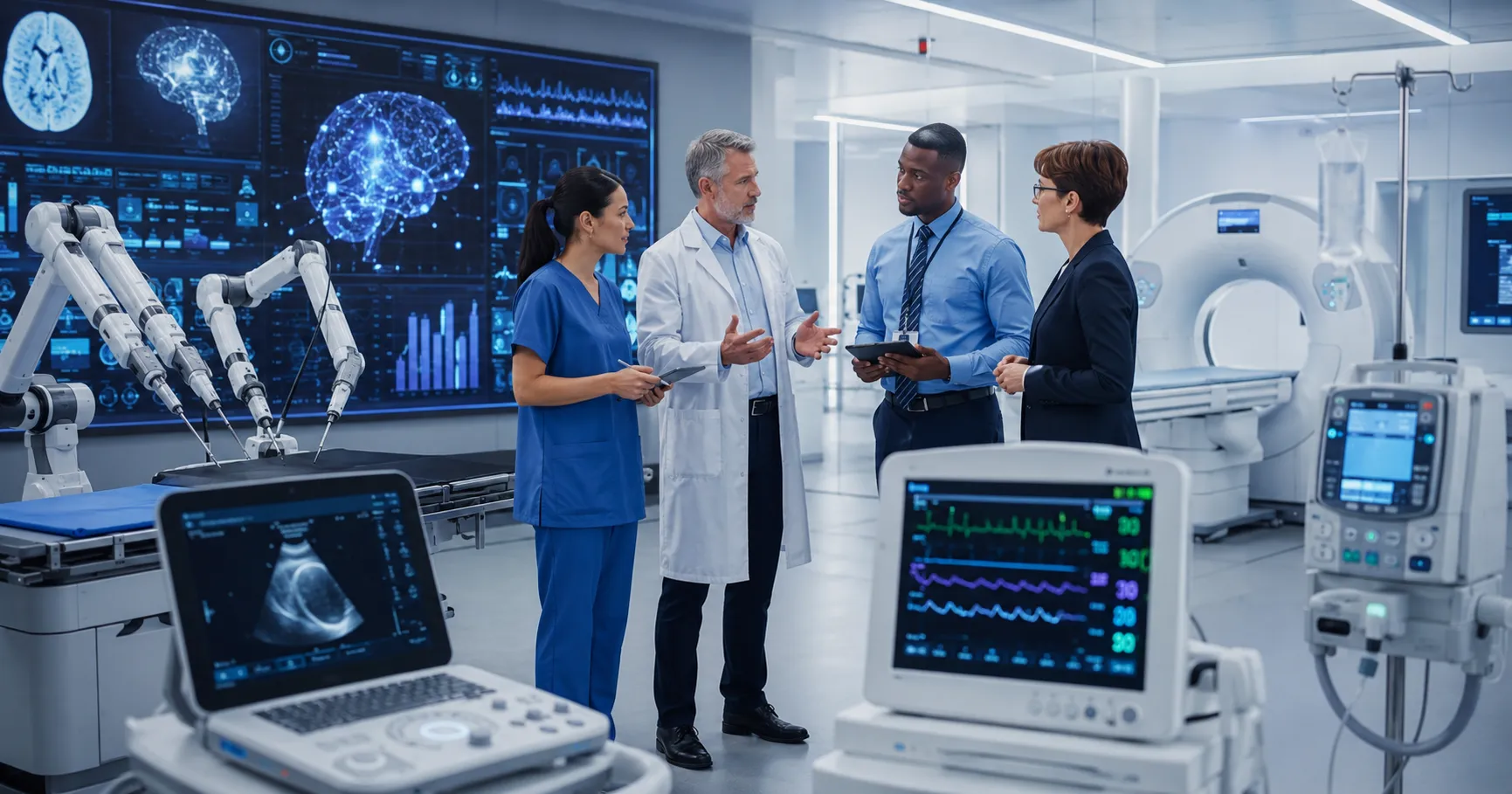
Medical devices are evolving faster than ever before. Advances in computing power, artificial intelligence, connectivity, sensor technology, robotics, and digital healthcare systems are transforming how medical devices are designed, deployed, and used in clinical environments.
Healthcare providers increasingly require technologies that improve patient outcomes, enhance operational efficiency, support data-driven decision-making, and integrate seamlessly into connected healthcare ecosystems.
For healthcare facility procurement decision-makers, understanding the technologies driving medical device innovation is essential for developing future-ready procurement strategies and healthcare infrastructure plans.
Healthcare organisations increasingly rely on buyer services to evaluate emerging technologies and identify solutions that support long-term clinical and operational objectives.
Artificial Intelligence Is Transforming Medical Devices
Artificial intelligence has become one of the most influential technologies shaping next-generation healthcare equipment.
AI-Assisted Diagnostics- Medical devices increasingly use artificial intelligence to analyse patient data, identify patterns, and support diagnostic decision-making.
Clinical Decision Support- AI-enabled systems provide healthcare professionals with additional insights that support treatment planning and patient management.
Predictive Analytics- Artificial intelligence helps identify potential health risks, predict equipment failures, and improve operational planning.
Workflow Automation- AI-powered technologies automate repetitive processes, reducing administrative burdens and improving efficiency.
Healthcare facilities that source technologies through business suppliers are increasingly evaluating AI capabilities when planning future technology investments.
The Internet of Medical Things (IoMT) Is Creating Connected Healthcare
Connectivity has become a defining feature of modern medical devices.
Real-Time Data Exchange- Connected devices continuously communicate with healthcare information systems and clinical platforms.
Remote Monitoring Capabilities- Healthcare providers can monitor patients and equipment from multiple locations.
Improved Clinical Visibility- Connected systems provide healthcare teams with access to real-time information and operational insights.
Enhanced Care Coordination- Data sharing across departments supports more efficient healthcare delivery.
The Internet of Medical Things is expected to remain a major driver of healthcare innovation for years to come.
Advanced Sensors Are Improving Accuracy and Performance
Sensor technology continues to advance rapidly across healthcare applications.
Higher-Precision Monitoring: Modern sensors provide more accurate measurements and clinical data.
Continuous Data Collection- Wearable and connected devices can continuously monitor patient conditions.
Miniaturisation- Smaller sensors enable more compact, portable, and patient-friendly medical devices.
Enhanced Clinical Insights- Advanced sensing technologies provide healthcare professionals with deeper visibility into patient health and device performance.
Sensor innovation continues to drive the development of smarter, more responsive healthcare technologies.
Wearable Medical Technologies Continue to Expand
Wearable healthcare devices are becoming increasingly important within modern healthcare systems.
Remote Patient Monitoring- Wearable devices help healthcare providers monitor patients outside traditional healthcare settings.
Preventive Healthcare Support- Continuous monitoring can support earlier detection of potential health concerns.
Improved Patient Engagement- Wearable technologies encourage greater patient participation in healthcare management.
Data-Driven Care- Healthcare professionals can use wearable device data to support clinical decision-making.
Wearable technologies are expected to play an increasingly important role in the delivery of personalised healthcare.
Robotics and Automation Are Advancing Medical Device Capabilities
Robotics and automation technologies are becoming increasingly integrated into modern healthcare environments.
Robotic-Assisted Procedures- Advanced robotic systems support precision, consistency, and enhanced visualisation during complex medical procedures.
Automated Healthcare Workflows- Automation helps reduce repetitive administrative and operational tasks, allowing healthcare professionals to focus more on patient care.
Rehabilitation Robotics- Robotic rehabilitation devices assist patients during recovery while providing consistent therapy support.
Laboratory Automation- Automated laboratory systems improve testing efficiency, throughput, and accuracy.
Healthcare leaders continue monitoring robotics as these technologies become more sophisticated and widely adopted.
Digital Healthcare Platforms Are Connecting Medical Devices
Modern medical devices increasingly operate within broader digital healthcare ecosystems.
Integrated Healthcare Information Systems- Medical devices now exchange information with electronic health records, clinical databases, and healthcare management platforms.
Cloud-Based Healthcare Solutions- Cloud technologies enable secure data storage, remote access, and enhanced collaboration between healthcare teams.
Real-Time Analytics- Healthcare providers can analyse clinical and operational data more effectively through connected digital platforms.
Improved Operational Visibility- Digital healthcare systems provide better visibility into equipment performance, utilisation, and maintenance requirements.
Digital platforms are becoming essential components of next-generation healthcare technology infrastructure.
Precision Medicine Technologies Are Supporting Personalised Care
Healthcare is moving toward more individualised treatment approaches, and medical devices are evolving to support this transition.
Patient-Specific Data Analysis- Advanced technologies help healthcare providers evaluate patient-specific information more effectively.
Targeted Treatment Planning- Medical devices increasingly support treatment approaches tailored to individual patient characteristics.
Genomic and Diagnostic Integration- Emerging technologies help integrate diagnostic data with treatment planning and disease management strategies.
Improved Clinical Outcomes- Personalised healthcare approaches aim to improve treatment effectiveness while reducing unnecessary interventions.
Precision medicine is expected to remain a major area of healthcare innovation and investment.
Innovation Is Influencing Healthcare Procurement Strategies
Healthcare organisations are adapting procurement strategies to address rapid technology advancement.
Future-Proofing Investments- Healthcare providers increasingly evaluate whether medical devices can support future upgrades and evolving clinical requirements.
Interoperability Requirements- Connected healthcare ecosystems require technologies capable of communicating across multiple platforms and systems.
Cybersecurity Considerations- As devices become more connected, healthcare organisations place greater emphasis on cybersecurity and data protection capabilities.
Lifecycle Value Assessment- Healthcare buyers increasingly evaluate long-term operational value rather than focusing solely on acquisition costs.
Healthcare organisations often review information from business advertisements when assessing emerging technologies, innovative healthcare solutions, and future investment opportunities.
Strategic Partnerships Support Technology Adoption
The successful adoption of next-generation medical devices often depends on collaboration between healthcare providers and trusted sourcing partners.
Technology Evaluation Support- Healthcare organisations frequently seek assistance when assessing new and emerging technologies.
Implementation Planning- Strategic partners can help healthcare providers integrate innovative technologies into existing healthcare environments.
Training and Knowledge Transfer- Education and training programmes help healthcare professionals maximise the benefits of advanced technologies.
Long-Term Innovation Strategies- Collaboration supports future healthcare planning and technology roadmap development.
Healthcare systems investing in advanced technologies frequently benefit from establishing business partners that support access to technology, procurement planning, implementation support, and lifecycle management.
Future Outlook for Medical Devices
Several technologies are expected to shape the future of healthcare equipment.
Expanded Artificial Intelligence Applications- AI will likely become increasingly integrated into diagnostics, monitoring, clinical decision support, and healthcare operations.
Greater Device Connectivity - Medical devices will continue to become more interconnected through IoMT ecosystems and healthcare information networks.
Advanced Robotics- Robotic technologies are expected to expand across surgery, rehabilitation, diagnostics, logistics, and patient support functions.
Smarter Sensors and Wearables- Next-generation sensors will provide more accurate, continuous, and actionable healthcare data.
Sustainable Medical Device Design- Manufacturers are expected to place greater emphasis on energy efficiency, sustainability, and lifecycle optimisation.
These innovations will continue transforming healthcare delivery and medical technology development worldwide.
Final Thoughts
Technologies driving the next generation of medical devices are reshaping healthcare in profound ways. Artificial intelligence, IoMT connectivity, advanced sensors, wearable technologies, robotics, automation, digital healthcare platforms, and precision medicine are creating smarter, more connected, and more capable healthcare systems.
For healthcare facility procurement decision-makers, understanding these innovations is essential for making informed investment decisions and preparing healthcare organisations for future technology requirements. Modern procurement strategies increasingly focus on interoperability, cybersecurity, lifecycle value, sustainability, and long-term operational performance alongside traditional clinical considerations.
Healthcare organisations that work with regulated and certified equipment suppliers worldwide, evaluate emerging technologies strategically, and invest in future-ready healthcare infrastructure will be better positioned to benefit from the next wave of medical device innovation while improving patient outcomes and operational efficiency.
Disclaimer
Medigear.uk is a global medical equipment supplier, exporter, and distributor. The content published on this site is intended for educational and informational purposes only. Nothing on this page constitutes medical advice, clinical guidance, treatment recommendations, or procurement advice. All healthcare procurement and clinical decisions should be made by qualified medical professionals and authorised procurement teams operating within the regulatory frameworks of their respective countries.