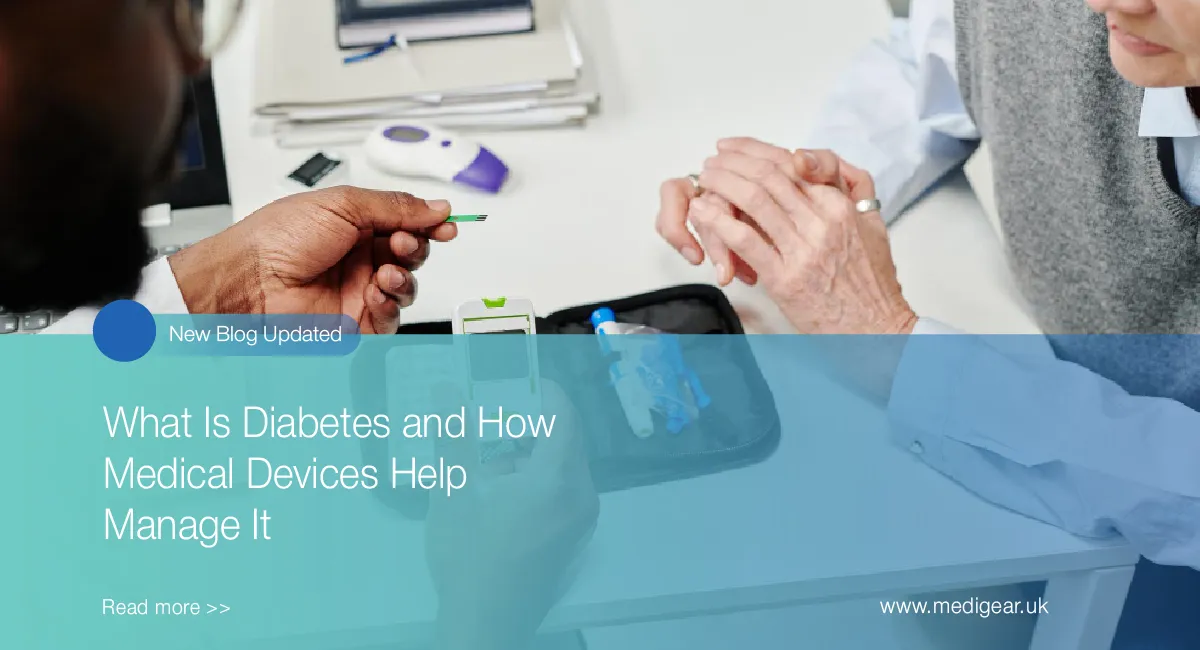
What does diabetes do to the body — and why does a device on the arm or a pump on the abdomen make the difference between a life managed and a life interrupted? Diabetes is not just about sugar. It is about the hormone that moves sugar from blood into cells. When missing or ignored, sugar builds up in the blood while the cells starve. High blood glucose damages vessels, nerves, kidneys, eyes, and heart over time. Silently. Medical devices for diabetes do not cure. They give the patient information and tools to manage it — so complications arrive later, or not at all.
He was forty-seven. Type 2. Managed with metformin for three years. HbA1c climbing. GP added a CGM — continuous glucose monitor — a small sensor on the upper arm. Within two weeks, he could see what his morning porridge did to his glucose. What stress did. What walking thirty minutes did. Numbers on a phone. Patterns never seen before. He changed his breakfast. Increased his steps. Saw his post-meal spike reduce. His next HbA1c dropped by 14 mmol/mol. Not because a new drug was added. Because the device gave him data he never had — and he acted.
This guide covers what diabetes is and how medical devices help manage it with the honest detail that patients, clinicians, and procurement teams need. Medigear supplies certified diabetes medical devices to hospitals, clinics, and community teams across the UK, and every point here comes from real clinical demand. Clinics sourcing certified diabetes medical devices can explore the Medigear buyers portal for pricing, availability, and procurement built for diabetes care purchasing.
What Is Diabetes
Diabetes mellitus is a chronic condition defined by persistently high blood glucose. Two main types. Type 1 — autoimmune destruction of the beta cells. No insulin made. Replacement essential from day one. Without it, DKA and death. Type 2 — insulin resistance. Cells resist the signal. Pancreas compensates — until it cannot. Glucose builds. Damage accumulates. Linked to obesity, inactivity, and age. But also in lean, active, and younger patients. Type shapes treatment. Medical devices differ by type and stage.
Blood Glucose Meters
Blood glucose meters are the foundation. Fingerprick. Drop of blood. Number in seconds. Self-monitoring allows checking before meals, after meals, before bed, and before driving. The number tells them what to do. Eat. Inject. Rest. Wait. Used for decades in Type 1. In Type 2, when insulin or sulphonylureas create a hypoglycaemic risk. Simple device. Drives decisions that protect from hypo and hyper within the hour. Medical device manufacturers wanting to list glucose meters, CGM systems, and insulin delivery devices where diabetes clinics are searching can reach buyers through the Medigear advertising platform.
CGM
Continuous glucose monitors — CGMs — are the most significant advance in diabetes management in decades. A tiny sensor under the skin — in the upper arm or abdomen — measures glucose every 1 to 5 minutes. Reading on a phone or a reader. Trends visible. Arrows show rising or falling. Alarms before the hypo arrives. Glucose falling at two in the morning — wake up before the seizure. Or not at all. CGM has transformed Type 1 management. Increasingly available for Type 2. Turns the single snapshot into a continuous film.
Insulin Pumps
Insulin pumps — continuous subcutaneous insulin infusion, CSII — deliver basal insulin continuously through a cannula under the skin. Patient programmes basal rate. Boluses for meals. Adjusts for exercise. Replaces multiple daily injections. Finer control than injections allows. Unpredictable glucose on injections? The pump delivers in exact, programmable amounts around the clock. Reach out to our team for guidance on matching diabetes medical devices to your clinic's patient population and prescribing protocols.
Hybrid Closed-Loop
Hybrid closed-loop systems — artificial pancreas technology — combine the CGM and the insulin pump with an algorithm that automatically adjusts insulin delivery in response to glucose readings. Reads the glucose. Calculates insulin needed. Delivers. Patient does nothing. Patient still boluses for meals. Between meals and overnight — automated. Closest thing to a working artificial pancreas outside a trial. For Type 1 patients whose glucose affects every hour — transformative.
HbA1c
HbA1c testing measures average blood glucose over the previous two to three months. Percentage of haemoglobin with glucose attached. Target below fifty-three. Above — complications accumulate. HbA1c is the long-term report card. CGM shows day to day. Neither replaces the other. Our guide to Creutzfeldt-Jakob disease covers the diagnostic monitoring used in complex neurological conditions — the same precision in tracking disease progress applies when HbA1c and CGM data must be reviewed together to assess diabetes control over time.
Smart Insulin Pens
Smart insulin pens record the dose and the time of every injection. Cannot remember if you injected this morning? The smart pen shows — dose, time, type. Connects to a phone app. Gives the team a record that the diary never could. Alongside CGM, it closes the loop between what was seen and what was done. Our guide to essential eye screening devices covers the ophthalmic equipment that detects diabetic retinopathy — the eye complication that high blood glucose causes and that regular screening prevents from causing blindness.
CGM Data Review
Can your diabetes clinic review CGM data with every patient at every appointment — not just HbA1c? The ambulatory glucose profile (AGP), generated from CGM data, shows the full glucose picture. Time in range. Time above. Time below. Variability. Patterns by day and by time of night. Review AGP — adjust on data. See only HbA1c — adjust on average. Averages hide the highs and lows. Suppliers of CGM systems, insulin pumps, glucose meters, and diabetes monitoring devices can register through the Medigear supplier portal to connect with hospitals, clinics, and community teams building or upgrading their diabetes care pathway.
NHS Eligibility
Does your prescribing team know which patients qualify for CGM on the NHS — and refer them before the complications arrive? Type 1 — automatic entitlement. Type 2 on insulin with recurrent hypo or pregnant — qualify. Criteria expanding. A patient who qualifies and is not referred waits for a device already changing lives like theirs. Companies seeking long-term collaboration on diabetes device supply, servicing, and monitoring programmes can explore the Medigear partnership programme for ongoing opportunities beyond a single order.
Device Education
Does your clinic educate every patient with a new diabetes medical device before they leave with it? CGM miscalibrated — wrong readings. Pump poorly set up — wrong dose. Meter with wrong strip — inaccurate. Devices without education fail due to use error. Not a technical fault.
Structured Education
Does your diabetes team offer structured education — DESMOND for Type 2, DAFNE for Type 1 — alongside every new medical device? The patient who understands why they are checking their glucose checks it more consistently. The one who understands what the CGM arrow means acts on it faster. The device without the education is a tool without a user manual. Both together change behaviour. Behaviour change changes outcomes.
CGM Before Intensification
Can your clinic identify patients on insulin whose HbA1c is above target and offer CGM assessment before adding more drugs? The patient whose HbA1c is not improving on injections may not need a new drug. They may need a device that shows them what the injections are doing — and when they need to act. CGM before intensification is often more effective than intensification without CGM.
Two-Week Follow-Up
Does your diabetes team follow up within two weeks of every new CGM or pump start? The first two weeks reveal whether the device is being used correctly, whether the settings are right, and whether the patient is confident. Problems caught in week two are solved before they become habits the clinic cannot change at the three-month review.
Inpatient Diabetes
What does your team do for the patient with diabetes who is admitted to the hospital for another condition? Glucose goes out of range. The ward team may not understand the pump. The CGM may not be trusted. A protocol for the admitted diabetes patient — who manages the device, who adjusts the dose, when to suspend the pump — protects the glucose the patient had spent years stabilising.
Device Reconciliation
Does your pharmacy team reconcile diabetes medical devices at every admission and discharge? The patient who comes in with a pump needs to leave with the same pump, settings, and supplies. The one who is discharged without their CGM sensor loses the visibility that was protecting their glucose at home. Device reconciliation is as important as medication reconciliation.
Remote Monitoring
Can your team provide remote CGM monitoring for patients in care homes or with reduced capacity to self-manage? The shared CGM view — caregiver or nurse is able to see the glucose on their own device — protects the patient whose own device they cannot check. The care home resident with diabetes whose glucose is monitored remotely avoids the hypoglycaemia that the finger-prick-once-a-day check misses at three in the morning.
Why Choose Medigear
Medigear supplies certified glucose meters, CGM systems, insulin pumps, HbA1c analysers, and diabetes monitoring accessories to hospitals, clinics, and community teams across the UK. Whether you are equipping a diabetes service, upgrading monitoring capability, or building a structured education and device pathway, our team matches the right medical devices to your patients and your practice. Reach out to our team for guidance built around the patients whose glucose must be managed every hour — and the medical devices that make that possible.
Conclusion
What does diabetes do to the body — and why does the device make the difference? Sugar builds. Vessels damage. Complications accumulate. Silently. He was forty-seven. CGM on the arm. Two weeks of data he had never seen. Changed his breakfast. Increased his steps. HbA1c dropped fourteen millimoles. Not a new drug. A device that gave him the information — and he acted. Blood glucose meter for the decision in the moment. CGM for the continuous picture. Insulin pump for exact delivery. Hybrid closed-loop for automated overnight control. HbA1c for the long-term view. Smart pen for the dose log. AGP for the data behind the average. Education behind every device. Follow-up within two weeks. Reconcile at every admission. Monitor remotely where needed. Medigear stands alongside diabetes teams with certified devices and the honest support that glucose management demands. Speak to our team today — because the patients whose glucose must be managed every hour deserve the medical devices that make it possible.
⚠️ This post is for general information only. We do not sell medications or provide prescriptions — Medigear.uk is a medical equipment supplier only.