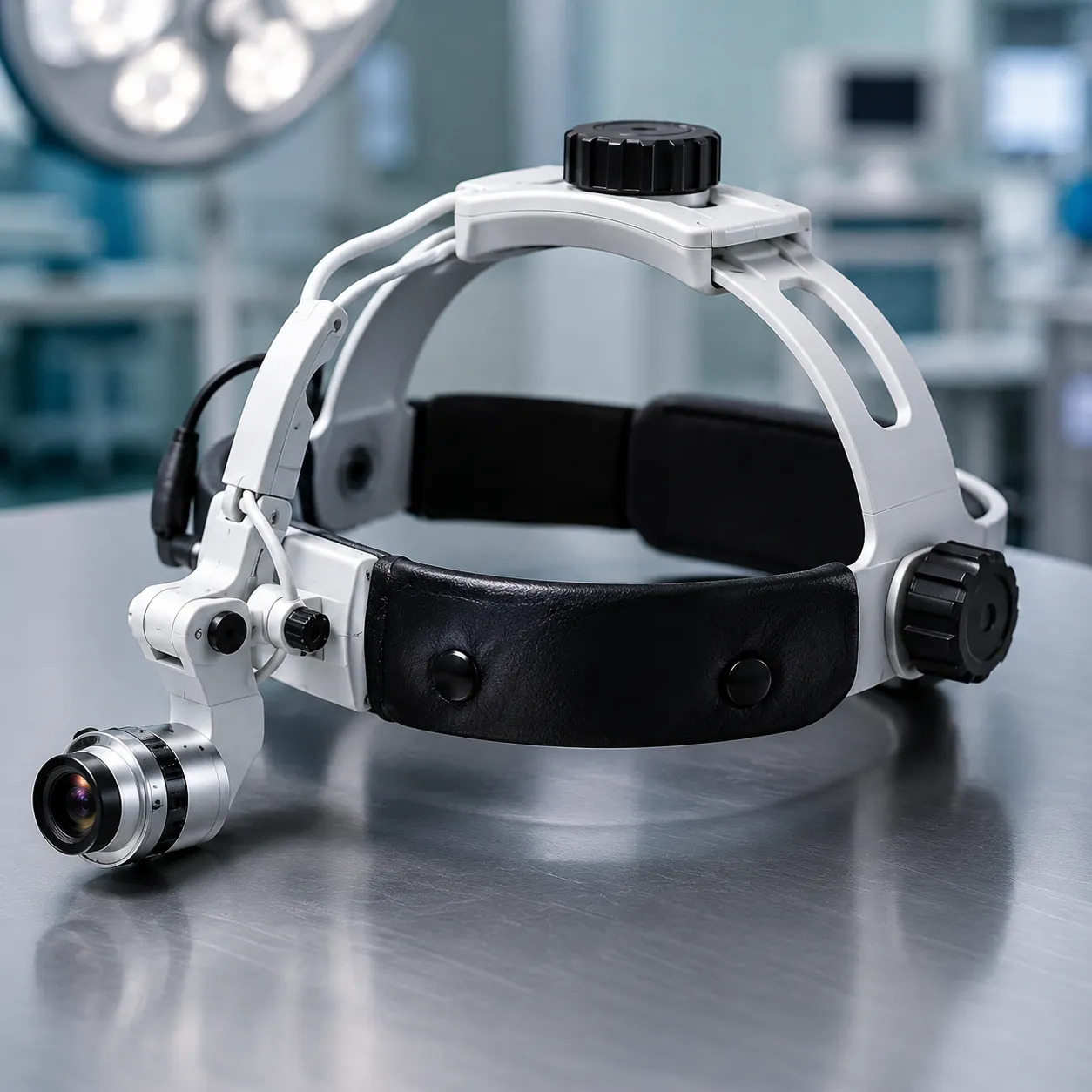
A surgical headband camera is a small, high-resolution camera worn on the surgeon's head, aligned with their line of sight, that records or streams the operation from the operator's own point of view. Because it moves with the surgeon's gaze, it captures what they actually see, including the depth of a wound that an overhead theatre camera cannot reach. The footage is used for teaching, training, case documentation, second opinions and live streaming to a lecture theatre or remote audience.
For a buyer, a head-worn camera is a modest purchase with outsized value for education and record-keeping, but the details, image quality, comfort, sterility and above all data governance, decide whether it earns its place. This guide covers how these cameras work and what to check before rolling them out.
Why a head-worn viewpoint is useful
Overhead and boom-mounted theatre cameras give a wide room view but are frequently blocked by the surgeon's head and hands and cannot see into a deep or narrow field. A head-mounted camera solves that by sharing the surgeon's exact perspective, so a trainee or remote observer sees the anatomy as the operator sees it. For open procedures, this point-of-view footage is far more instructive than a ceiling shot, and it complements, rather than replaces, endoscopic and microscope video for cases that already have an internal camera. The recording also supports objective case documentation and reflective practice.
How surgical headband cameras work
The camera sits on an adjustable headband or clips to a surgical headlight or loupes, positioned so its field matches the surgeon's gaze. A lightweight sensor and lens capture the image, which is sent by a slim cable or wirelessly to a recorder, control unit,t or streaming device. Many systems pair the camera with an LED headlight so the illuminated area and the recorded area coincide, and some allow the surgeon to adjust framing or trigger recording hands-free with a foot switch or voice control to preserve sterility. The captured video is stored locally or on a networked recorder for later editing and review.
Key features and how models compare
Resolution and image quality
Resolution ranges from high-definition to 4K, and higher resolution allows cropping and zooming in review without losing detail. Colour accuracy and low-light performance matter because the surgical field is deep and shadowed, and sensor quality often distinguishes a usable recording from a disappointing one.
Field of view and focus
A field of view matched to the working distance keeps the relevant anatomy framed without excessive background, and reliable autofocus or a fixed focus set to the operating distance keeps the target sharp as the surgeon moves.
Weight, balance and comfort
The camera is worn for hours, so weight and balance directly affect neck fatigue. A well-balanced headband with a lightweight head, or integration into loupes or a headlight the surgeon already wears, is more likely to be used consistently.
Stabilisation and framing control
Head movement introduces shake, so image stabilisation improves watchability. Hands-free framing, zoom and record controls preserve the sterile field and let the surgeon manage the shot without breaking scrub.
Recording, streaming and connectivity
How the video leaves the camera shapes the whole workflow. Wired systems are stable and simple; wireless systems remove a tether but need reliable bandwidth and secure pairing. Outputs should match your recording and AV infrastructure, whether that is a standalone recorder, an integrated theatre AV system or a streaming platform for teaching. Consider storage capacity and format, whether footage can be tagged to a case, and how it is transferred off the device. For live teaching, latency and connection stability matter more than peak resolution. Integration with an existing operating-theatre video system is often more valuable than a standalone recorder that creates yet another data silo.
Sterility, cleaning and use in the field
The camera sits at the edge of the sterile field on the surgeon's head, so it must be cleanable and, where it or its controls could be touched, coverable with a sterile drape or sleeve. Check the manufacturer's decontamination instructions, whether components are wipeable with theatre-grade disinfectants, and whether a sterile cover is available for controls the surgeon operates. Cable routing must not compromise the sterile field, and any foot-switch or hands-free control should be usable without breaking scrub. Devices designed for theatre make this straightforward; consumer action cameras generally do not and should be assessed carefully before clinical use.
Data governance and patient confidentiality
Recording a procedure creates identifiable clinical data, so governance is not optional. Any recording that could identify a patient is personal data under UK data protection law, which means a lawful basis, appropriate consent where required, secure storage, access control and defined retention all have to be in place before recording starts. Footage used for teaching should be anonymised or consented for that purpose. Because these are potentially sensitive recordings, involve your information governance team early, and confirm that storage, transfer and any streaming are encrypted and auditable. Guidance on health and care records and confidentiality is available through the NHS and wider material on GOV.UK. Getting governance right is as important as image quality.
Standards, regulation and procurement
Where a head-worn camera is marketed for a clinical or surgical purpose,se it is a medical device and should carry valid UKCA or CE marking with instructions for use, and any electrically powered unit used in the theatre environment should meet the relevant IEC 60601 safety requirements. The MHRA regulates medical devices in the UK. When comparing options, weigh warranty, the availability of headbands, batteries, cables and mounts as spares, and whether the supplier can integrate the camera with your theatre AV and information systems. A camera that is comfortable, cleanable, well-supported and properly governed will be used; one that fails on any of those will sit in a drawer.
Use across surgical settings.ngs
Head-worn cameras suit open surgery across general, orthopaedic, plastic, cardiac, vascular and ENT work, and are widely used in teaching hospitals to feed operations to a seminar room or a wider audience. In a training centre they capture a library of reference cases; in a district general hospital they support documentation and multidisciplinary review. Dental and veterinary surgery use the same devices for education. Where a case is already served by an endoscope or operating microscope with its own camera, the headband view adds the surgeon's wider perspective rather than replacing the internal image. Match the specification and the governance wrapper to how the footage will actually be used.
Procurement checklist
-
Match resolution, field of view and focus to your open-surgery working distances.
-
Prioritise light weight and balance so surgeons will wear it through long cases.
-
Check image stabilisation and hands-free framing, zoom and record controls.
-
Confirm cleaning instructions and availability of sterile covers for controls.
-
Match recording and streaming outputs to your theatre AV and storage systems.
-
Put a data-governance framework, lawful basis, consent, sand ecure storage in place first.
-
Confirm UKCA or CE marking and IEC 60601 compliance for a clinical device.
-
Check warranty and the supply of spare headbands, batteries, cables and mounts.
Conclusion
Surgical headband cameras capture the operation from the surgeon's own eyeline, giving teaching, documentation and remote observation a viewpoint no ceiling camera can match. The buying decision rests on image quality and field of view, on weight and comfort that keep the device in use, on sterility and cleaning, on connectivity that fits your AV system, and above all on data governance that treats the footage as the sensitive clinical record it is. Confirm the device is a properly marked medical device, then check the spares and support. MediGear can supply head-worn surgical cameras and recording accessories for your theatres and training rooms — register as a buyer or contact our team to discuss the right setup.
Disclaimer
This article is for informational purposes only. It is published by MediGear (medigear.uk) for general information and procurement guidance, and is not clinical, diagnostic, treatment, technical, engineering, legal or regulatory advice, nor a product endorsement, guarantee or substitute for professional assessment. MediGear does not provide medical consultations. Buyers should consult their clinical, biomedical, estates and regulatory contacts, and the manufacturer's documentation, and independently verify all specifications, certifications, compatibility and suitability before purchase. Specifications, certifications and availability are correct at the time of publication and may change without notice. MediGear is a medical-equipment distributor and does not sell medicines or pharmaceutical products.