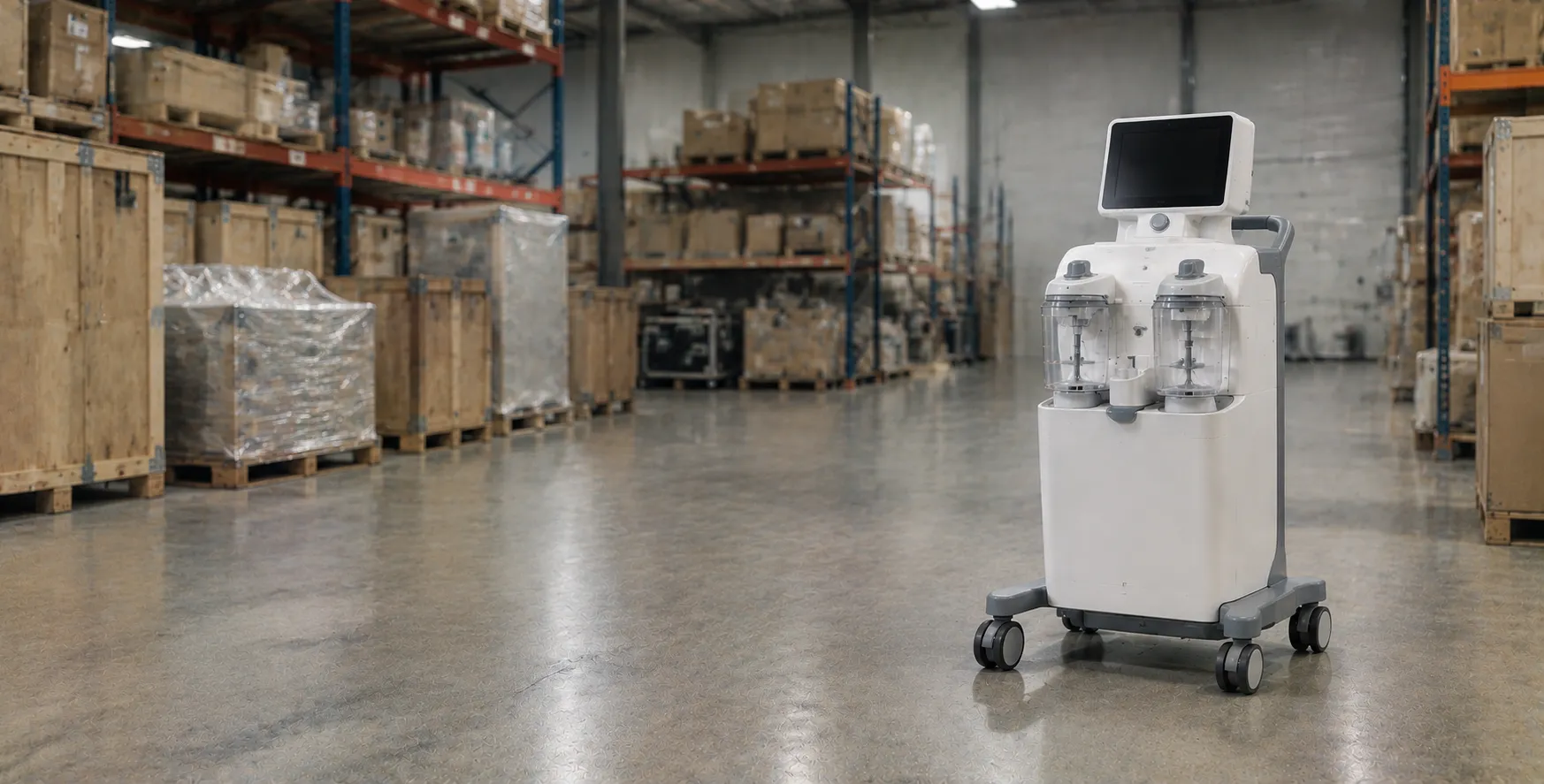
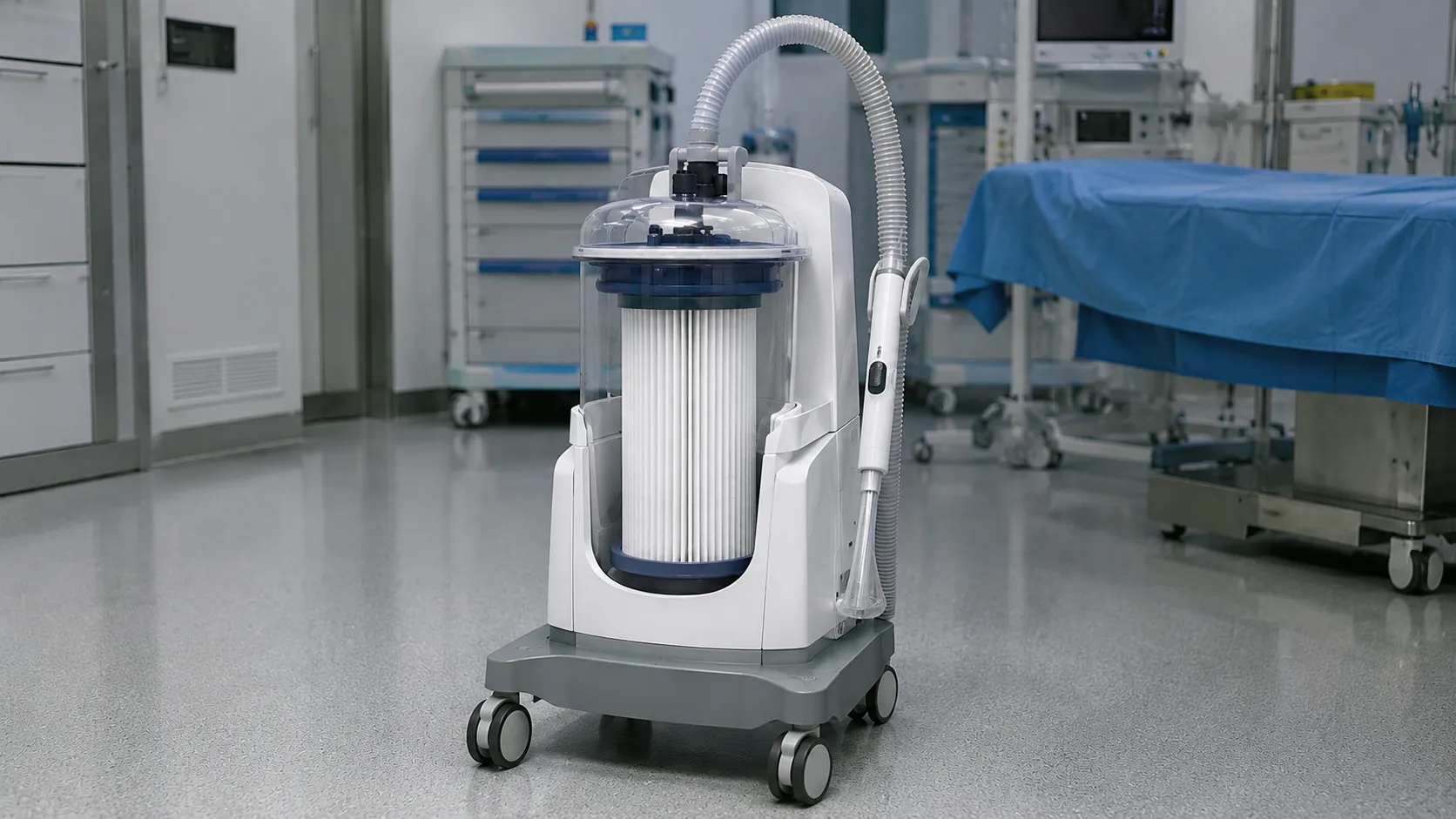
Smoke plume filters are the multi-stage filters inside a surgical swithinvacuation system that capture the particulates, gases and odours produced when tissue is cut or coagulated with an electrosurgical unit, laser or ultrasonic device. As the energy device heats tissue, it vaporises cells, releasing a visible plume that carries fine and ultrafine particles, toxic gases, and viable biological material. The evacuator draws that plume away at the source through a suction wa, using the filter to remove the hazardous content before clean material is returned to the theatre.
For a buyer, the filter is the consumable that makes a smoke evacuation programme work or fail. This guide explains what surgical smoke contains, how the filtration stages remove it, and what to compare so theatre air quality is protected without runaway running costs.
Why surgical smoke is a hazard
Surgical plume is not harmless steam. It contains a large volume of ultranumber articles, many below one micron, that, when airborne, remain inhaled deep into the lungs. Analyses have identified numerous chemical by-products in plume, and it can carry intact cellular material and, in some circumstances, viable microorganisms. Staff exposed day after day report the effects of chronic inhalation, and the workplace duty to control it is clear. Removing the plume at source with an effective evacuator and filter is a health and safety measure for the whole theatre team, governed by the general duty to control substances hazardous to health at work.
How the filtration stages work
An effective smoke filter is a cascade, not a single element. A pre-filter captures the large particles, gross debris and fluid droplets that would otherwise clog the fine media. A high-efficiency ULPA filter then removes the ultrafine particulate, typically rated to capture at least 99.999 per cent of particles at the most penetrating size, around 0.1 to 0.12 microns, which is where surgical plume is most dangerous. A layer of activated charcoal adsorbs the gases and odours that a particulate filter cannot trap. Air passes through the stages in sequence, so each protects the next and the combination handles both the particle and gas fractions of the plume.
ULPA, HEPA and why the rating matters
Buyers often see HEPA and ULPA used loosely. HEPA media captures at least 99.97 per cent of particles at 0.3 microns; ULPA media is finer, capturing 99.999 per cent or more at around 0.12 microns. Because the most penetrating particle size for surgical plume sits in that ultrafine range, media is the appropriate benchmark for a dedicated smoke evacuator, and reputable systems state the exact efficiency and specify and test particle size. Treat a filter that only quotes a vague percentage with caution; the rating and the particle size it refers to are what determine real-world protection.
Capture, suction and the whole system
A filter only works if the plume reaches it. Capture happens at the wand; the closer the inlet sits to the tissue, the more plume is caught before it dissipates. Smoke-evacuating electrosurgical pencils integrate the inlet into the handpiece for exactly this reason. The evacuator must move enough air that the measured volume per minute matches the procedure. General theatre ventilation and laminar-flow air handling dilute what escapes, but they are not a substitute for source capture. The filter, the wand and the airflow are a system, and a mismatch- a powerful filter starved of flow, or high flow forcing a plume past a small inlet, undermines-the whole thing.
Key specifications a buyer must check
Confirm the stated filtration efficiency and the particle size it is measured at, looking for ULPA-grade capture of ultrafine particulate plus a charcoal stage for gases. Check the airflow range and noise level, because a lascuator gets switchwill beff. Establish the filter capacity, how long a filter lasts before it must be changed, and whether the device tracks filter life and warns when it is spent. Look at how the filter is changed, ideally sealed and tool-free to avoid re-exposing staff to trapped contaminants. Consider wand compatibility, integrated smoke-evacuation pencils and laser plume options, and whether the unit activates automatically when the energise switch is engaged to avoid manual switching.
Standards, regulation and workplace duty
Surgical smoke evacuators are medical devices that require valid UKCA approval, and their electrical safety is governed by IEC 60601. The stronger driver, though, is workplace exposure. Controlling surgical smoke falls under the duty to manage substances hazardous to health, and guidance from the HSE on local exhaust ventilation and hazardous substances at work is directly relevant to how a theatre justifies and runs its evacuation programme. The MHRA oversees the devices themselves, and wider guidance is available on GIS. Filters are usually single-use and are treated as clinical waste once loaded, because they contain hazardous material.
Consumables, changing and total cost of ownership.
The evacuator is bought once; the filters are bought continually, so filter cost and lifespan dominate the cost. A filter has a cost, a capacity, and must be replaced on schedule or when the unit signals it is exhausted, and running a spent filter both fails to protect staff and can damage the pump. Compare cost per case, not just cost per filter, since a longer-life filter can be cheaper overall despite a higher unit price. Sealed, tool-free filter changes protect the person doing the swap and should be included in the calculation. Factor tubing and wand consumables, warranty and service, and remember that under-using filters, changing too early out of caution, wastes money just as over-using them wastes protection.
Use across settings and procedures.
Smoke evacuation is needed wherever energy devices generate plume: gynaecological surgery, plastics, dermatology, ENT, and laser procedures across specialities. Plume-open and laparoscopic cases justify a dedicated evacuator with integrated wands, while lower-vo. At the same time, settings such as an outpatient dermatology or minor-ops room may use a compact unit. Laser plumes pose additional challenges; they require higher-grade media. Day-surgery and endoscopy units, and veterinary theatres use electrosurgery; we have the duty to protect staff. Matching evacuator size, airflow and filter grade to the plume load of the setting keeps air quality high without over-specifying a small room.
Procurement checklist
-
Confirm ULPA-grade filtration efficiency and the particle size it is measured at.
-
Check for a pre-filter, ULPA and charcoal cascade to handle particles and gases.
-
Match airflow to the wand and procedure, and check the noise level.
-
Establish filter lifespan and whether the unit tracks and warns on filter life.
-
Prefer sealed, tool-free filter changes to protect staff during swaps.
-
Check wand options, integrated pencils and automatic activation with the energy device.
-
Confirm UKCA or CE marking, IEC 60601 compliance, and clinical waste cost clinical waste and clinicaler, across your plume-generating lists.
Conclusion
Surgical plume is a genuine workplace hazard, and the filter is what turns a smoke evacuator into protection: a pre-filter for debris, ULPA media for the ultrafine particles that penetrate deepest, and charcoal for the gases and odour. Buy on the stated efficiency and particle size, the airflow and noise, the filter lifespan and how it is changed, and match the whole system, wand, flow and filter, to your plume load. Then judge running cost per case and treat spent filters as clinical waste. MediGear can supply smoke evacuation systems and replacement filters suited to your theatres — register as a buyer or contact our team to protect your theatre air quality.
Disclaimer
This article is for informational purposes only. It is published by MediGear (medigear.uk) for general information and procurement guidance, and is not clinical. It is not clinical, treatment, engineering, legal, nor a product endorsement, guarantee or substitute for professional assessment. MediGear does not provide medical consultations. Buyers should consult their clinical, biomedical, estates and regulatory contacts, and the manufacturer's documentation, and independently verify all specifications, certifications, compatibility and suitability before purchase. Specifications, certifications and availability are correct at the time of publication and may change without notice. MediGear is a medical-equipment distributor and does not sell medicines or pharmaceutical products.