Robotic surgery is a form of minimally invasive surgery in which the surgeon operates through a set of computer-controlled robotic arms rather than holding the instruments directly. Sitting at a console, the surgeon moves hand controls while watching a magnified view of the operative site, and the system translates those movements into the actions of wristed instruments passed through small ports in the patient. It is a telemanipulation system: the surgeon is always in control, and the robot reproduces their hand movements with scaling and tremor filtering.
For a buyer, a surgical robot is one of the largest capital and consumable commitments a theatre will make, so understanding how the platforms differ and what drives the true cost matters more than marketing. Tguide focuses on the platforms themselves: the console, the arms, instrument articulation, docking, and how competing systems compare.
How a robotic platform works
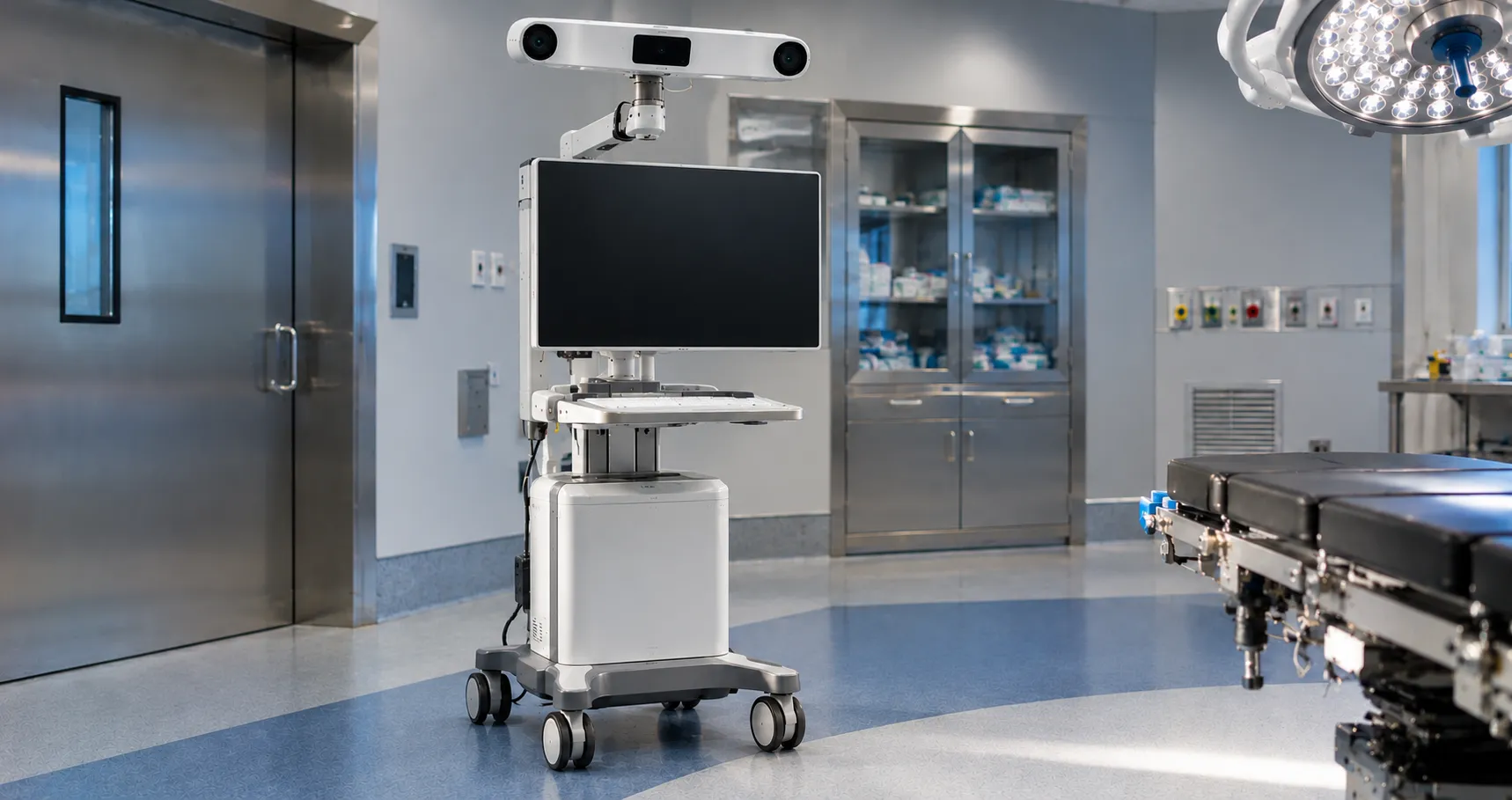
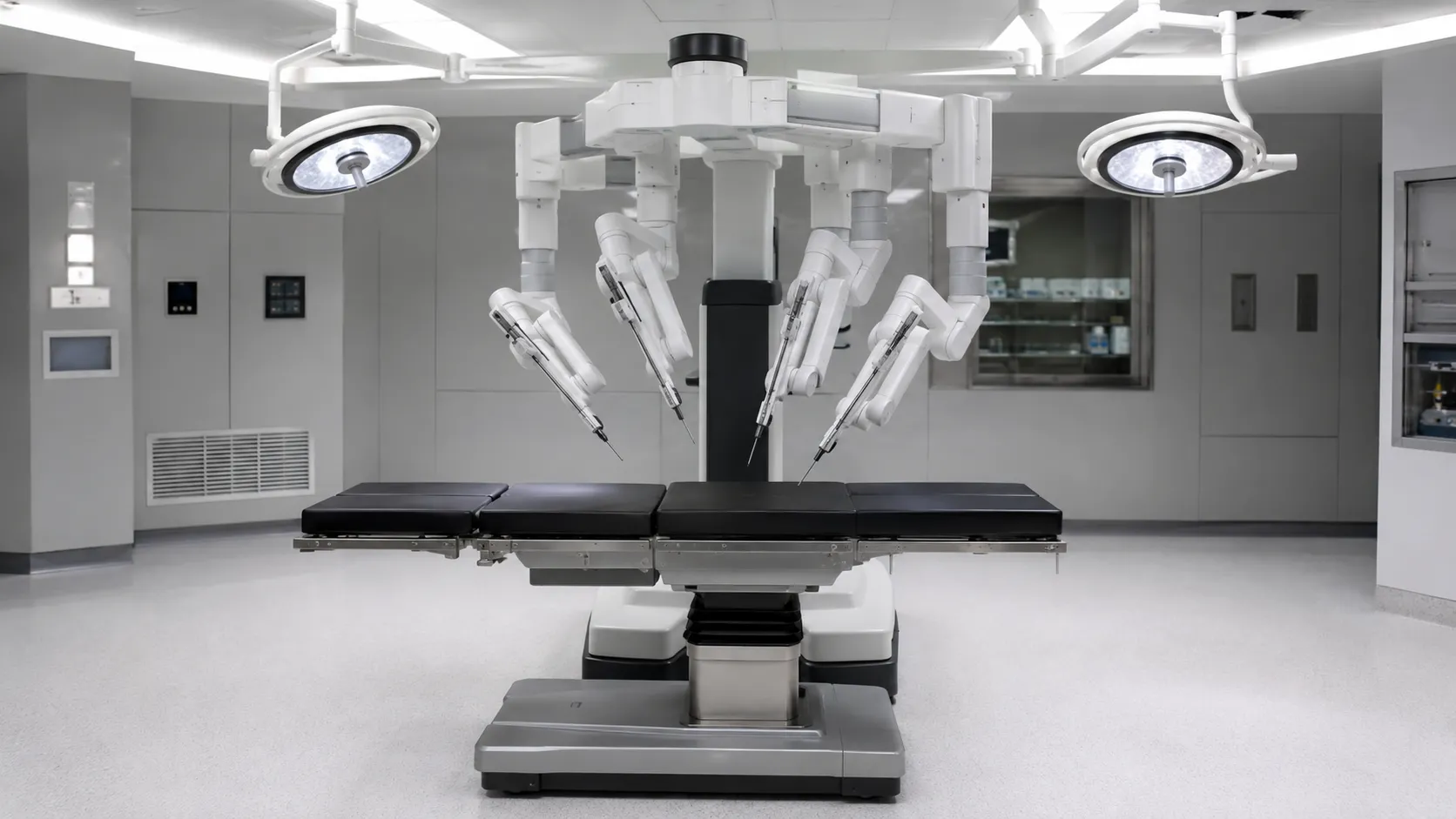
A typical platform has three parts. The surgeon console houses the hand controls, foot pedals and a stereoscopic display, and is where the surgeon sits, often away from the sterile field. The patient-side cart or robotic tower carries the arms that hold the camera and instruments and dock to the ports. A vision system processes the endoscopic image, usually in high-definition three-dimensional stereo. The surgeon's movements at the console are digitised, scaled and filtered, then executed by the arms in real time. This master-slave arrangement is the defining feature: the machine has no autonomy; it mirrors the operator.
Robotic arms and instrument articulation
The advantage a robot adds over conventional laparoscopy is at the instrument tip. While a rigid laparoscopic instrument has limited degrees of freedom, robotic instruments carry a small wrist near the tip that articulates, giving the surgeon roughly the range of motion of a human wrist inside the body. Combined with motion scaling, where a large hand movement becomes a fine-tip movement, and fine-tip logical tremor filtering, this allows for precise dissection and suturing in confined spaces such as the pelvis or mediastinum. The arms themselves must move without colliding, so arm geometry, reach and how the software manages collisions are real differentiators between systems.
Docking, ports and set-up
Before operating, the arms are positioned and connected to the ports in a step called docking. How quickly and easily a platform docks affects theatre turnaround and staff workload. Some systems use a single large boom from which all arms extend; others use a mobile cart that is wheeled to the table. Newer designs aim to reduce the bulk and the docking time that older platforms were criticised for. Undocking to convert to open surgery in an emergency must also be fast, and the team's ability to do it quickly is part of the safety case for any platform.
How platforms differ today
Multiport systems
The established design uses several separate ports, one for the camera and one for each instrument arm, spread across the abdomen or chest. Multiport systems suit a wide range of general, urological, gynaecological and thoracic procedures and are the most widely adopted configuration.
Single-port systems
Single-port platforms pass the camera and all instruments through a single larger incision, a natural orifice, to place them inside the body. This is done to reduce the number of incisions and suit confined anatomical spaces, at the cost of more complex instrument choreography.
Open versus closed consoles
Some consoles are immersive and enclosed, with the surgeon's head in a hooded stereoscopic viewer; others use an open display with polarised glasses or a large screen, which can improve communication with the theatre team and awareness of the room. Neither is universally better; it is a choice of low and ergonomic feedback and specialisation.
Most current platforms give little or no force feedback, so surgeons judge tension visually; a few systems and newer entrants are adding haptic cues. Other platforms are purpose-built for a niche such as orthopaedic joint replacement or spinal work, where the robot constrains a tool to a planned path rather than fully telemanipulating instruments. These are different machines for different jobs and should not be compared on price alone.
Key specifications a buyer must check
Look beyond the console at the whole system: the range of validated procedures, the instrument portfolio for your specialities, the vision quality. Check arm reach, footprint and docking time against your theatre size and case list. Establish the instrument-anife model because most robotic instruments have a fixed number of uses before they lock out, which drives ongoing costs. Confirm cost segregation with theatre imaging and stacks, the training pathway and proctoring requirements, and the service and uptime guarantees. For constrained-path orthopaedic or spinal robots, the planning software and imaging workflow matter as much as the arm.
The economics: capital, consumables and training
The purchase price is only the start. Robotic instruments and accessories are recurring costs that often cost the largest item over a system's life because usage-limited instruments must be replaced on a schedule. Add the annual service contract, which can be a substantial percentage of capital, plus draping and other per-case consumables. Then factor the hidden costs: theatre time for docking and set-up, the training and credentialing pathway for surgeons and scrub teams, and the case volume needed to justify the investment. A realistic business case models cost per case across a credible annual throughput, not just the headline capital figure.
Standards, regulation and governance
Surgical robots are active medical devices and must hold valid UKCA or CE marking, with the manufacturer's declaration of conformity and instructions for use. Their electrical and functional safety is based solely on IEC-based standards, including the general standard IEC 60601-1 and relevant collating and particular standards. Post-market oversight in the UK sits with the MHRA, and adopting a new platform involves local governance: credentialing, a proctored introduction, audit of outcome audits, conversion protocols. Clinical guidance: NICE may publish clinical guidance on specific robotic procedures. Information sits on the NHS. Confirm the training and governance framework is in place before the first case.
Use across specialities
Robotic surgery is most established in urology, particularly radical prostatectomy, and is widely used in. It is also used in gynaecological, upper gastrointestinal, and thoracic surgery, with increasing use in head and neck and hernia surgery. Constrained-path surgery has its own foothold in orthopaedic joint replacement and spinal instrumentation. The right platform depends on which specialities will drive your specialities, since a general soft-tissue telemanipulation system and an orthopaedic planning robot solve different problems—a shared multi-speciality system, instrument portfolio and a scheduling model that keeps utilisation high.
Procurement checklist
-
Confirm UKCA or CE marking, IEC 60601-series compliance and instructions for use.
-
Match the platform to the specialities that drive your case volume.
-
Check arm reach, footprint and docking time against your theatre and list.
-
Model instrument life and per-case consumable cost, not just capital price.
-
Include the annual service contract and uptime guarantee in the business case.
-
Confirm the surgeon and team training, proctoring and credentialing pathway.
-
Agree emergency undocking and conversion-to-open protocols.
-
Estimate cost per case across a realistic annual throughput.
Conclusion
Robotic surgery puts a telemanipulation system between the surgeon and the patient, adding wristed articulation, motion scaling and tremor filtering to minimally invasive work. Platforms differ in real ways: multiport versus single-port, open versus closed consoles, general telemanipulation versus constrained-path orthopaedic robots, and those differences should map to the specialities that will use them. Judge the whole cost, capital, usage-limited instruments, service and training, over a credible throughput, and confirm the regulatory and governance framework before the first case. To scope options and build a business case, contact our team or register as a buyer with MediGear.
Disclaimer
This article is for informational purposes only. It is published by MediGear (medigear.uk) for general information and procurement guidance and is not clinical. It is not clinical engineering, legal, or regulatory advice, nor a product endorsement, guarantee, or substitute for professional assessment. MediGear does not provide medical consultations. Buyers should consult their clinical, biomedical, estates and regulatory contacts, and the manufacturer's documentation, and independently verify all specifications, certifications, compatibility and suitability before purchase. Specifications, certifications and availability are correct at the time of publication and may change without notice. MediGear is a medical-equipment distributor and does not sell medicines or pharmaceutical products.