A surgical draping system is the set of sterile drapes, adhesive films, and fluid pouches. It covers and isolates the operative site and establishes a sterile field around the patient, instruments, and equipment. It creates a controlled barrier between the prepared skin at the incision site and everything that is not sterile, preventing bacteria from migrating onto the instruments during the case. Get the draping right, and the whole aseptic technique holds; get it wrong, and the field is compromised before the first cut.
For a theatre buyer, draping is a high-volume consumable that touches every operation, so the choices you standardise on affect infection control, set-up time, waste and cost across thousands of cases a year. This guide explains how draping systems are put together and what to compare before you commit to a speciality or a supplier.
Why draping defines the sterile field
Surgical site infection is one of the most costly and preventable complications in theatre, and the drape is the physical barrier that helps maintain the sterile field. A good draping system does three jobs at once: it maintains a sterile barrier that fluids and microbes cannot pass, it fr through;mes a fenestration that exposes only the prepared incision; and it manages the blood, irrigation and prep fluid that would otherwise soak the field and carry contamination through a wet drape. Because the drape is the last defence between non-sterile surroundings and an open wound, its material, its adhesion and its fluid handling are clinical decisions, not just stores line items.
The draping system is built up
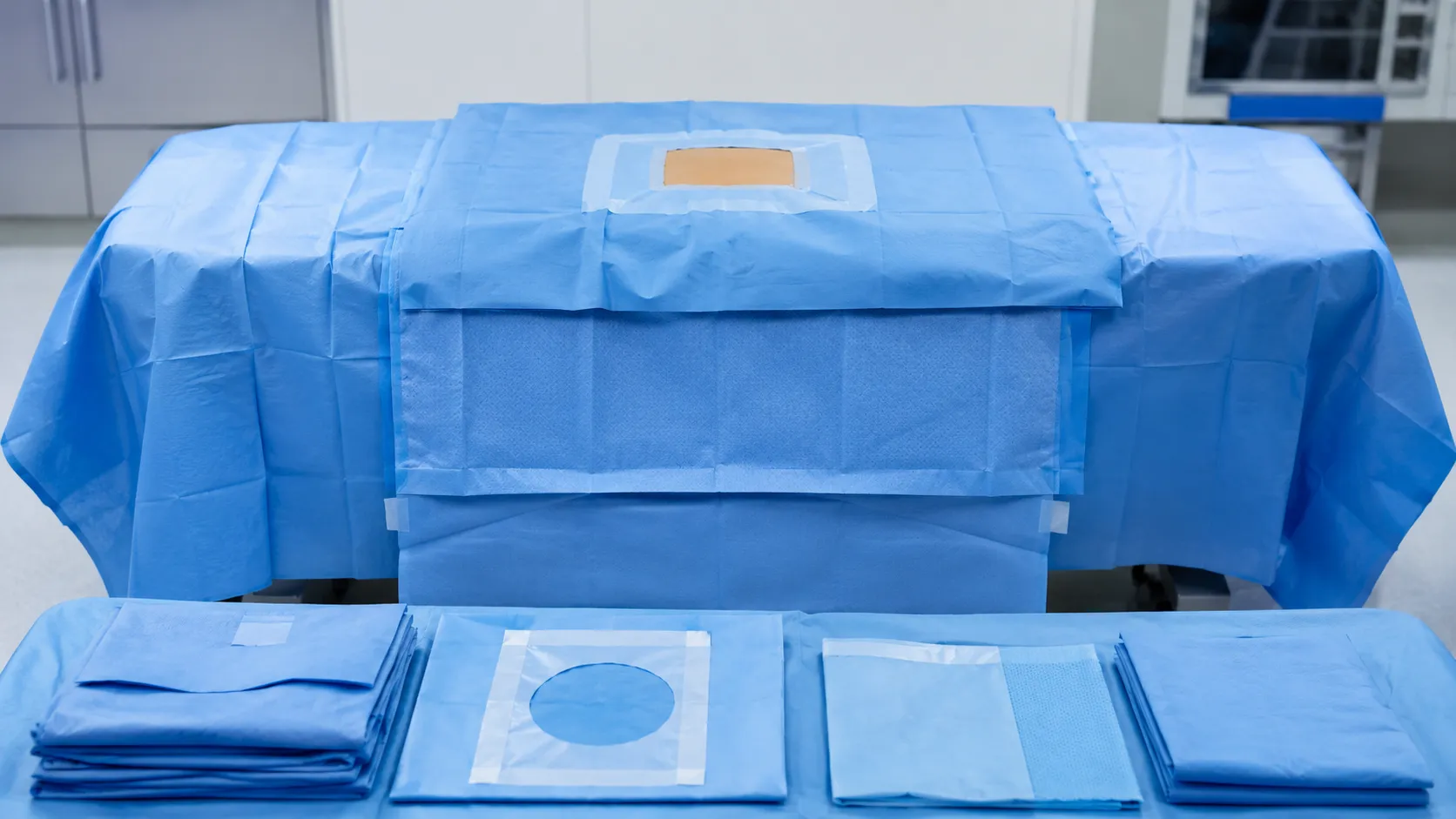
Draping follows a sequence. After skin preparation, the team lays out the sterile field from the incision outward, applying a fenestrated drape with an opening over the site and whose inner edge holds that to the skin. Additional drapes cover the rest of the patient, the arm boards, the Mayo stand and any equipment brought into the field. Many specialities use a specially assembled procedure pack that layers the drapes in the order they are applied. Hence,o the scrub team peels them off in sequence without reaching across sterile areas. Once complete, the drape defines a continuous sterile surface from the patient to the instrument tables.
Materials and construction
Modern surgical drapes are single-use nonwovens engineered as fluid barriers. The most common construction is an SMS or SMMS laminate, spunbond and meltblown polypropylene layers bonded together to combine strength, drapeability and resistance to strike-through, the passage of fluid through the fabric. High-risk zones around the fenestration are usually reinforced with an impervious polyethene film and a polyethene layer, so blood and irrigation are soaked up and held rather than wicking across the field. Low-linting materials matter because loose fibres can settle in a wound, and a degree of static control helps drapes lie flat. The balance a buyer is really judging is the barrier between performance and handling: a heavier, reinforced drape resists strikethrough, but a lighter one is easier to position.
Procedure packs versus universal drapes
Procedure-specific packs
Custom or standard procedure packs contain the drapes, gowns, swabs and accessories for a named operation, arranged for the workflow. They cut set-up time, reduce the number of separate items opened, and standardise practice across lists. The trade-off is that the pack contents must closely match your technique, so as not to open extras and waste the surplus.
Universal and single drapes
Universal drapes, side sheets and fenestrated sheets are bought individually and combined to suit any case. They give flexibility for offer volume or unusual procedures and let a theatre build its own configuration, at the cost of more individual items to open and manage.
Specialty designs
Many drapes are shaped for a speciality: a speciality drape with integrated leg covers, an extremity drape with a stockinette and elastic aperture for a limb, an ophthalmic drape with a small aperture and fluid pouch, a cranial or spinal drape with a large fluid-collection area, and cardiovascular drapes with multiple fenestrations and tubing organisers. Matching the drape geometry to the procedure keeps exposure clean and the field tidy.
Incise films and fluid management
An incise film is a thin adhesive drape applied directly over the prepared skin, through which the surgeon cuts, sealing the wound edges and reducing skin flora migration; antimicrobial versions contain an iodophor in the adhesive. Fluid control features, collection pouches, moulded troughs, drainage ports, and suction fittings capture irrigation and blood so the floor stays dry and the team is not standing in fluid, which is both an infection and a slip hazard. For wet cases such as urology, arthroscopy and obstetrics, fluid handling is often the deciding factor between two otherwise similar drapes.
Key specifications a buyer must check
Confirm the barrier performance and whether the drape meets the high-performance requirements of the relevant standard for the zones you need. Check the fenestration size and shape against your incisions, the adhesive type and skin-friendliness, and whether an antimicrobial incise option is available. Look at fluid-control features for wet specialities, the specialities around the critical area, and low-lint, tear-resistant construction. For packs, scrutinise the component list against your actual technique, the sterility issue, shelf life, and the folding sequence for aseptic presentation. Finally, weigh pack size and packaging bulk, because storage and waste volumes scale with every case.
Standards, regulation and assurance
Surgical drapes and gowns in the UK are regulated medical devices and must carry a valid UKCA or CE marking with a declaration of conformity and instructions for use. Their barrier performance is assessed against BS EN 13795, the standard for surgical drapes, gowns and clean-air suits, which sets requirements and test methods for resistance to microbial and fluid penetration, cleanliness and strength, and distinguishes standard from high-performance products by zone. Sterility is validated to recognised sterility standards, and packaging should show the method, batch number and expiry for traceability. Guidance on surgical site infection prevention from NICE and general device oversight from the MHRA underpin these choices, which in turn underpin wider infection-control material on the NHS.
Guidance on reusable and sustainability
Most UK theatres use single-use nonwoven drapes for guaranteed sterility and no reprocessing burden. Still, reusable woven-barrier drape systems exist and are laundered and sterilised between ses. Reusables can reduce waste and long-term costs when a validated sterilisation service is in place. However, they require tracking of wash cycles because barrier performance degrades over time. Single-use drapes remove that management overhead but generate clinical waste, so sustainability programmes increasingly weigh packaging reduction, right-sizing packs to cut surplus, and segregating waste streams. The greener choice depends on your local reprocessing capacity and case mix rather than a blanket rule.
Procurement checklist
-
Confirm UKCA or CE marking, BS EN 13795 barrier class and sterility documentation.
-
Match fenestration size, shape and drape geometry to each specialty.
-
Speciality reinforcement and impervious zones around the critical incision area.
-
Assess fluid-collection features for wet specialities such as urology and arthroscopy.
-
Review procedure-pack content; the procedure pack's actual technique to avoid waste.
-
Consider antimicrobial incise film options when skin flora are present.
-
Verify low-lint, tear-resistant construction and aseptic folding sequence.
-
Weigh single-use versus reusable against your reprocessing capacity and waste goals.
Conclusion
Draping is the quiet foundation of every operation: it builds the sterile field, exposes only the incision and controls the fluid that would otherwise carry contamination across it. The buying decision turns on barrier class to BS EN 13795, fenestration and geometry matched to the speciality, reinforced speciality and fluid control where it counts, and pack contents that fit how your teams actually work. Confirm the certification and sterility documentation, right-size the packs, and decide on single-use versus reusable based on your capacity. MediGear can supply drapes, incise films and procedure packs matched to your case mix — register as a buyer or contact our team to standardise draping across your theatres.
Disclaimer
This article is for informational purposes only. It is published by MediGear (medigear.uk) for general information and procurement guidance. It is not clinical, diagnostic, treatment, technical, engineering, legal, or regulatory advice, nor a product endorsement, guarantee, or substitute for professional assessment. MediGear does not provide medical consultations. Buyers should consult their clinical, biomedical, estates and regulatory contacts, and the manufacturer's documentation, and independently verify all specifications, certifications, compatibility and suitability before purchase. Specifications, certifications and availability are correct at the time of publication and may change without notice. MediGear is a medical-equipment distributor and does not sell medicines or pharmaceutical products.